

Cricket is often described as a game of skill, strategy, and patience, but it is also a game of communication. While players express themselves through bat and ball, umpires communicate with a language understood around the world: hand signals. From the iconic raised finger that sends a batter back to the pavilion to the outstretched arms signalling a wide ball, these gestures help players, scorers, commentators, and fans understand every decision instantly.
Whether you are new to cricket or a passionate follower of the game, understanding cricket umpire hand signals can significantly enhance your viewing experience. This guide explains every important umpire signal, its meaning, and when it is used.
What Are Cricket Umpire Hand Signals?
Cricket umpire hand signals are standardised gestures used by umpires to communicate decisions on the field. Recognised worldwide and based on the Laws of Cricket maintained by the Marylebone Cricket Club (MCC), these signals ensure that players, scorers, broadcasters, and spectators receive the same information, regardless of language or crowd noise. International and domestic competitions, including Test matches, ODIs, T20Is, and franchise leagues like the IPL, follow these common standards.
These hand signals are essential for maintaining clarity and consistency throughout a match. They help communicate decisions clearly, ensure scorers record runs and dismissals accurately, reduce confusion among players and spectators, and maintain uniformity across different formats of the game. Without these gestures, keeping track of runs, extras, and dismissals would be far more difficult.
Complete Cricket Umpire Hand Signals
1. Out Signal
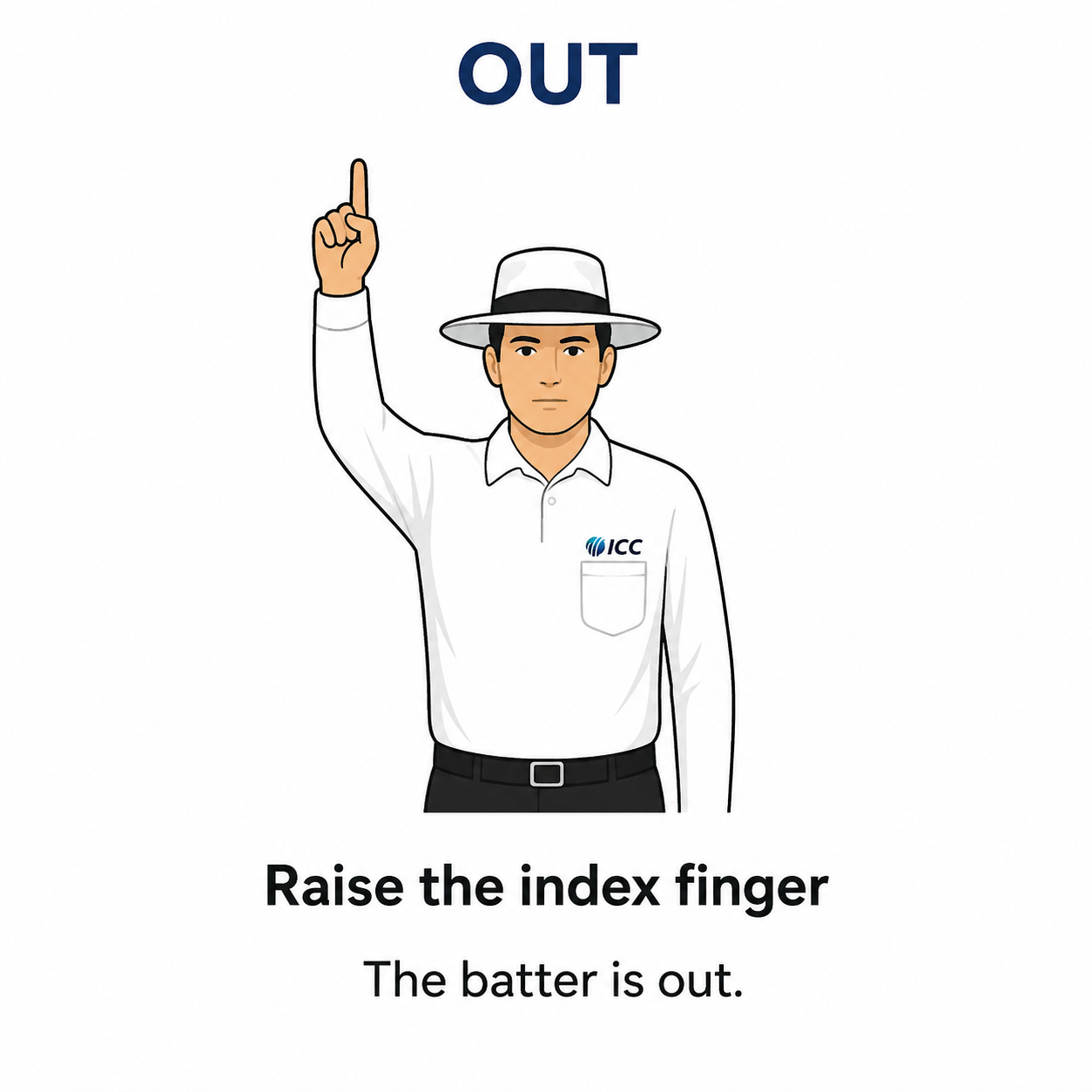
The raised finger is perhaps the most famous gesture in cricket. Whenever an umpire decides that a batter is out, they raise their index finger vertically above their head. It is one of the most recognisable moments in the sport and is often followed by celebrations from the fielding team.
Gesture: Raise the index finger.
Meaning: The batter is dismissed.
This signal can be used for various modes of dismissal, including bowled, caught, leg before wicket (LBW), stumped, hit wicket, and run out after a successful review.
2. No Ball Signal
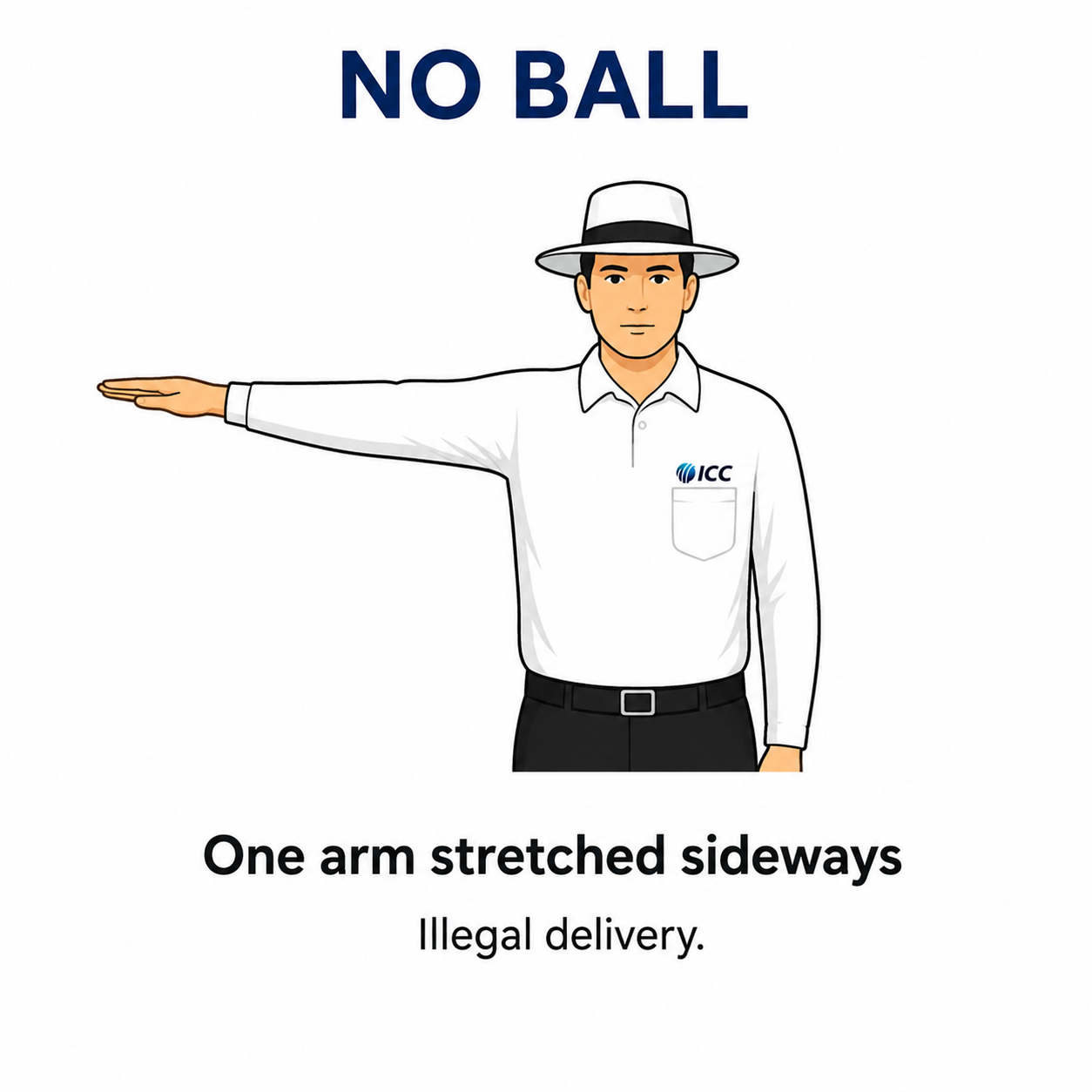
A no-ball indicates that the delivery was illegal. The umpire communicates this by extending one arm horizontally to the side.
Gesture: One arm stretched sideways.
Meaning: Illegal delivery.
A no-ball can be called for several reasons, such as overstepping the popping crease, bowling dangerous full tosses, or violating fielding restrictions. The batting team receives one extra run, and the delivery must be bowled again. In limited-overs cricket, a no-ball is usually followed by a free hit.
3. Wide Ball Signal
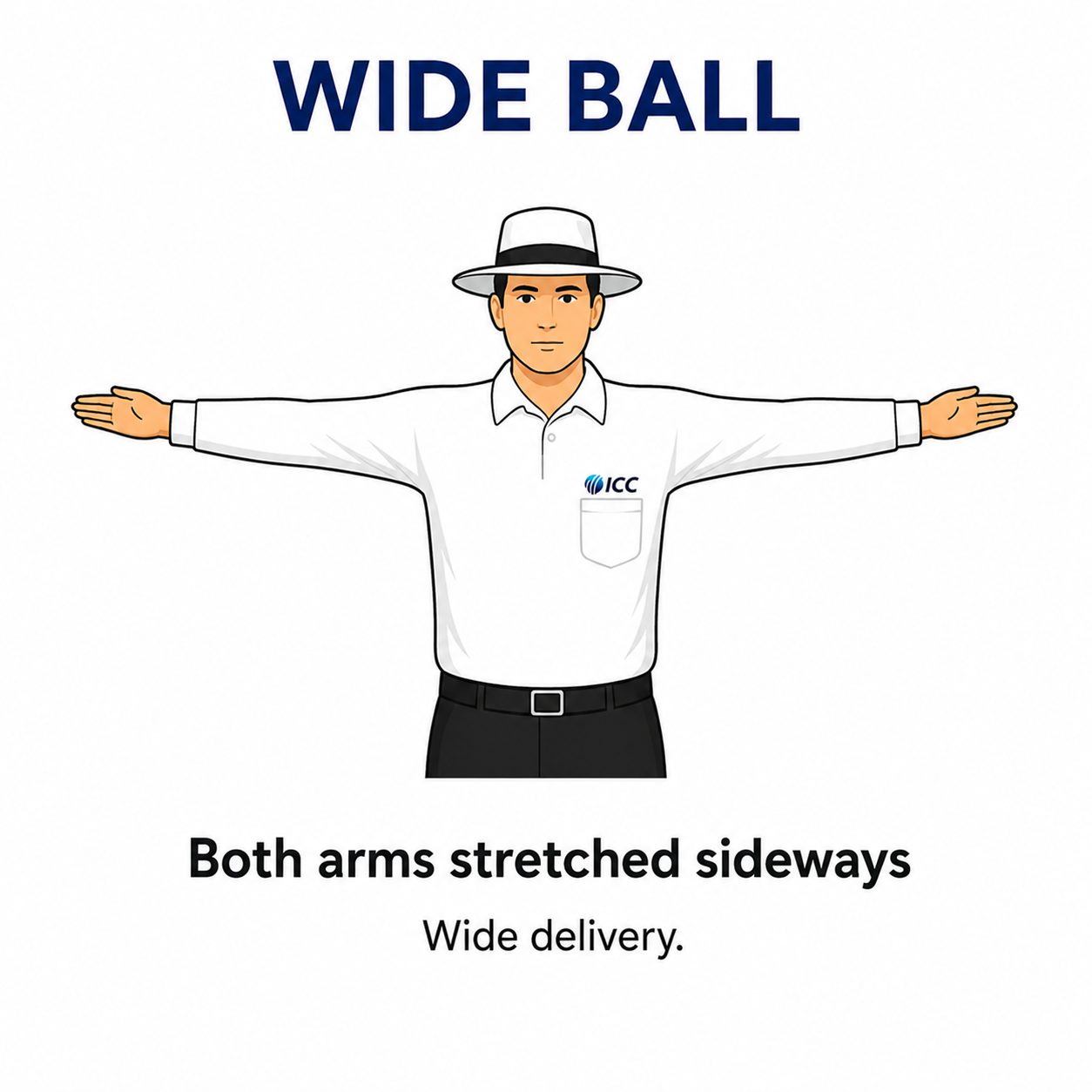
When a delivery is considered outside the batter’s normal reach, the umpire signals a wide ball by extending both arms horizontally.
Gesture: Both arms stretched sideways.
Meaning: Wide delivery.
The batting side receives one extra run, and the ball does not count as one of the six deliveries in the over. Additional runs can also be scored if the wicketkeeper fails to collect the ball cleanly.
4. Four Signal
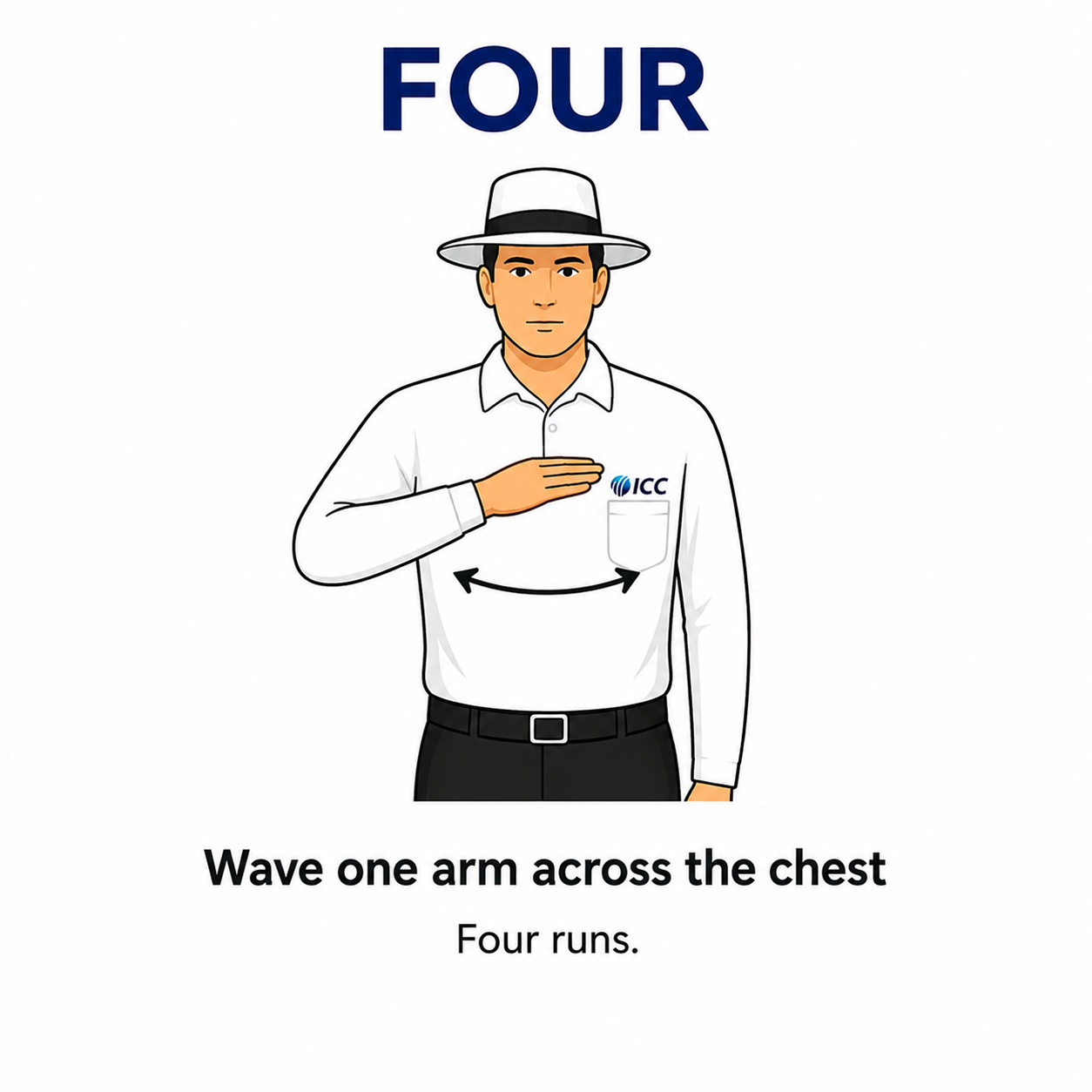
Boundary fours are among the most common scoring shots in cricket. When the ball reaches the boundary after touching the ground, the umpire waves one arm back and forth across the chest.
Gesture: Waving one arm across the chest.
Meaning: Four runs awarded.
The batter receives four runs regardless of how many runs were completed before the ball crossed the boundary rope.
5. Six Signal
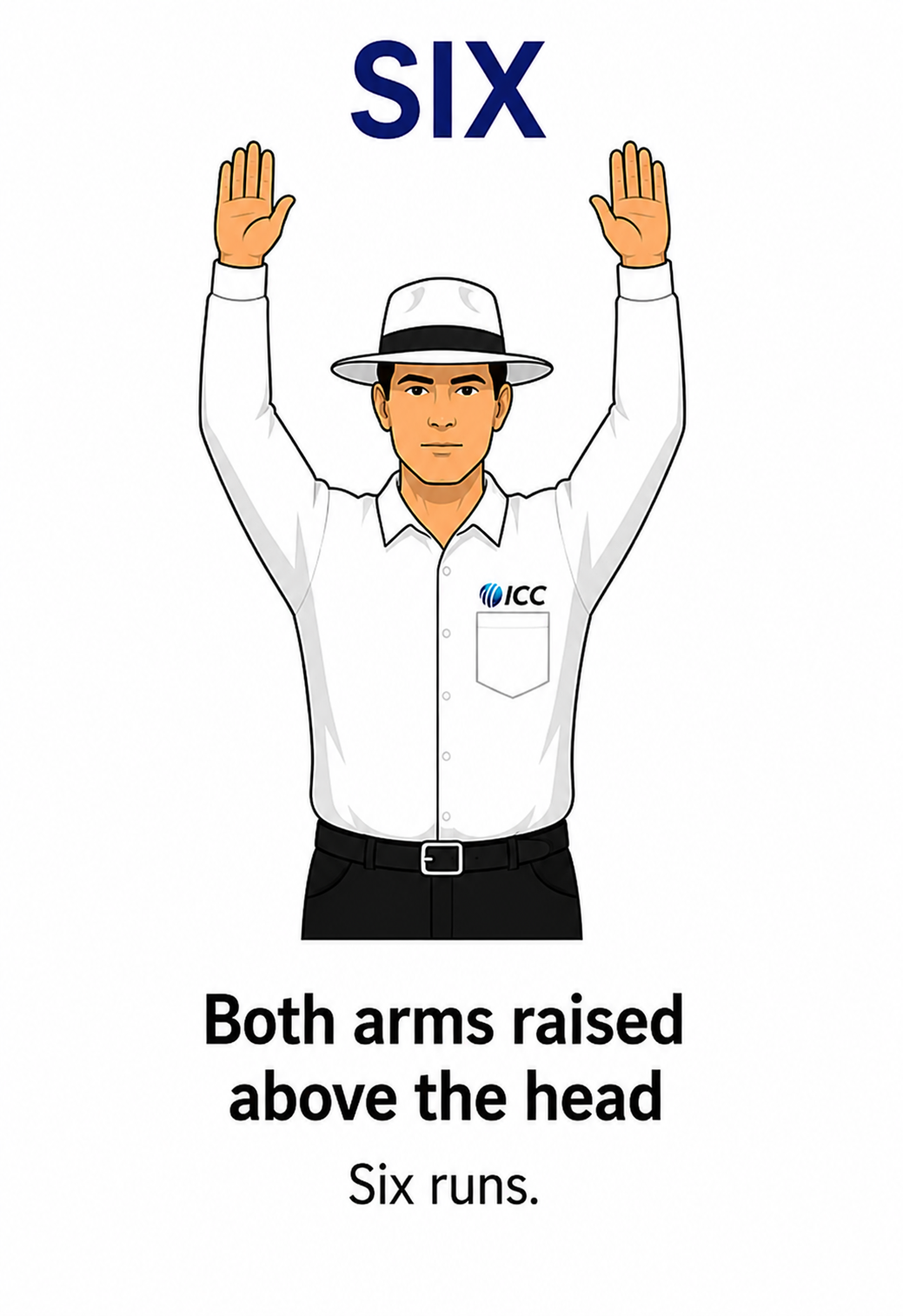
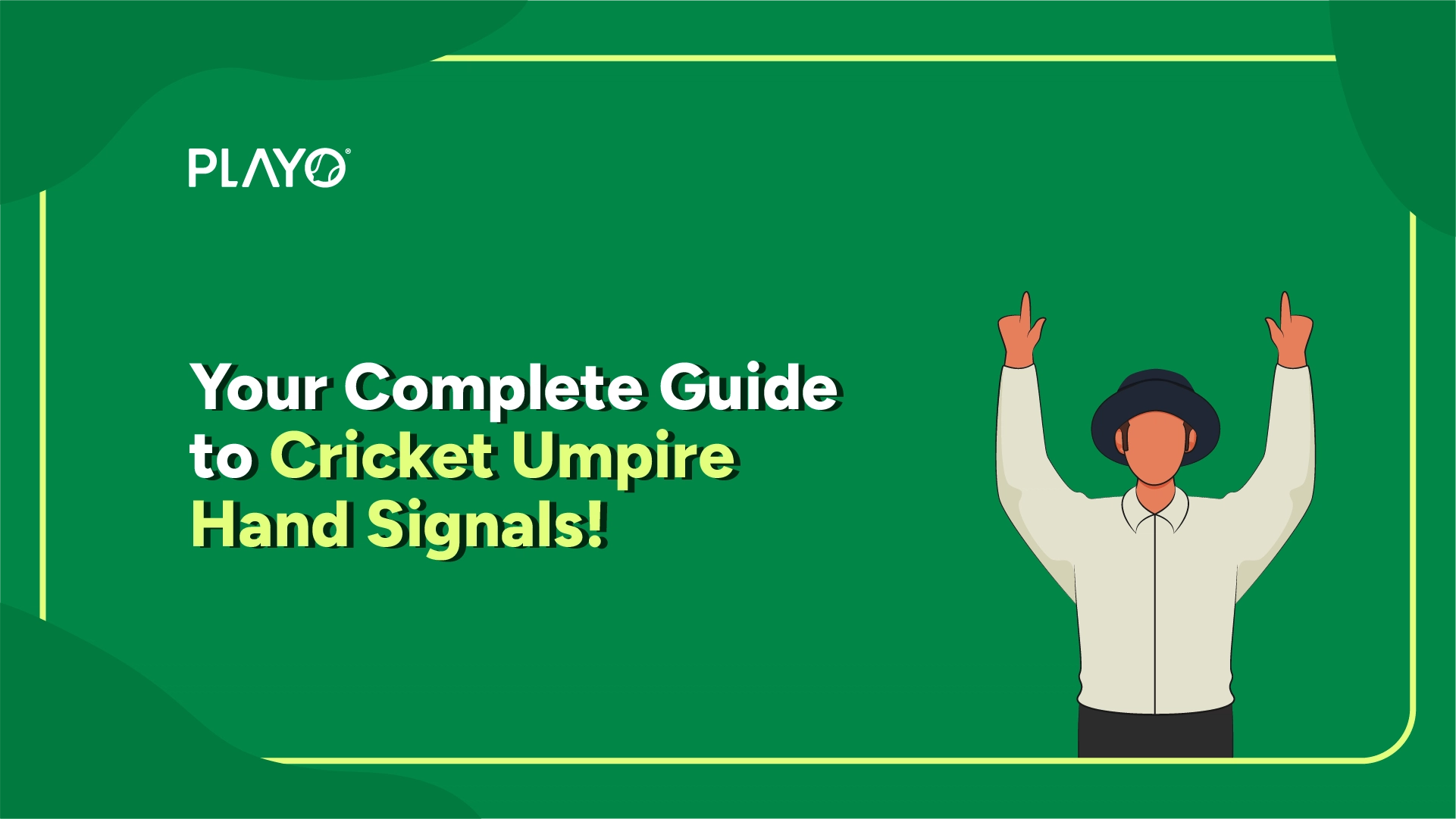
A six is awarded when the ball clears the boundary without bouncing inside the field of play. To indicate this, the umpire raises both arms straight above the head.
Gesture: Both arms raised above the head.
Meaning: Six runs awarded.
This signal usually accompanies some of the most exciting moments in the game, especially in T20 cricket.
6. Bye Signal
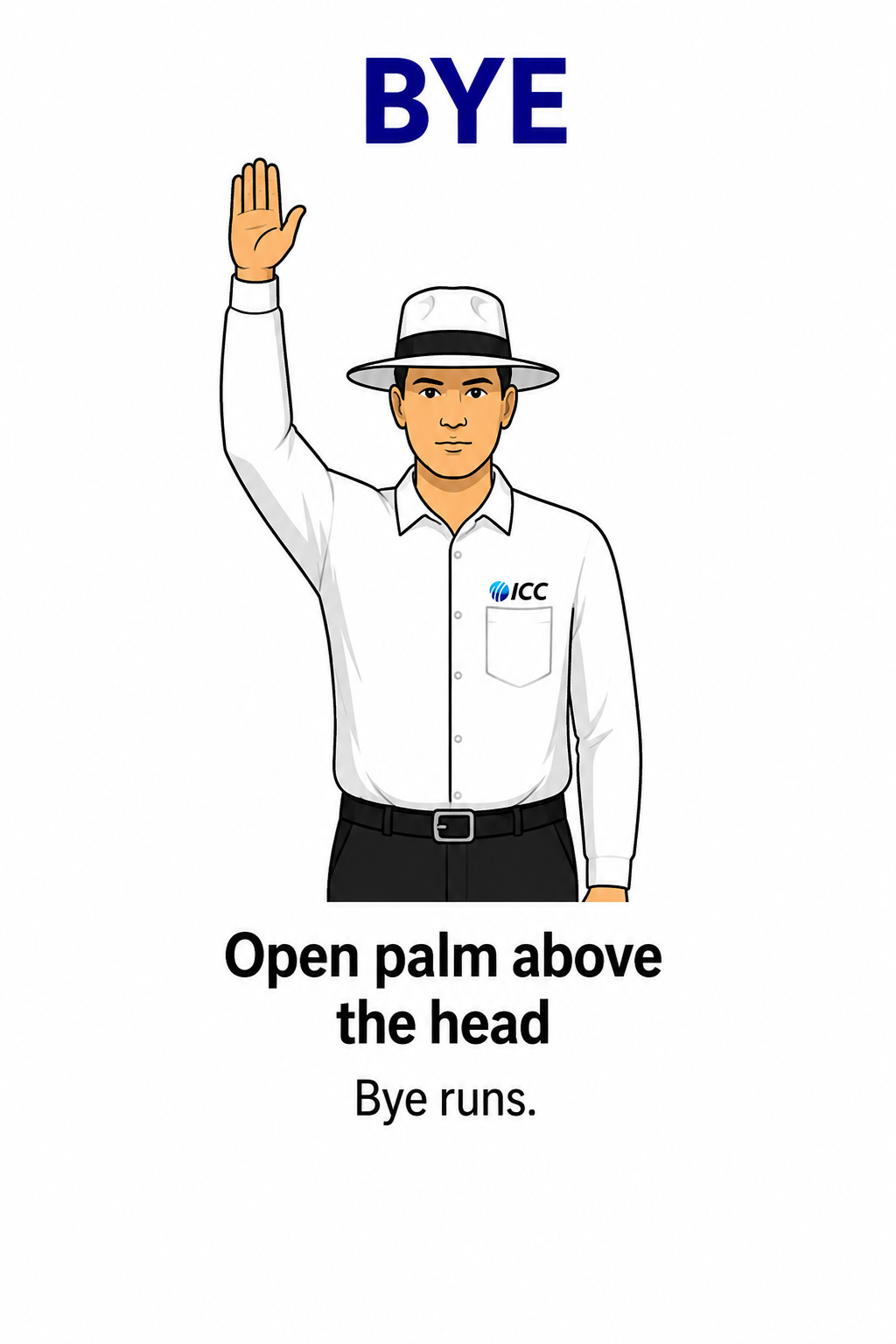
Not every run scored comes from the bat. When the ball passes the batter without touching either the bat or body, and the batter completes runs, these are recorded as byes.
Gesture: Raise an open palm above the head.
Meaning: Bye runs.
Since these runs are classified as extras, they are not added to the batter’s individual score.
7. Leg Bye Signal
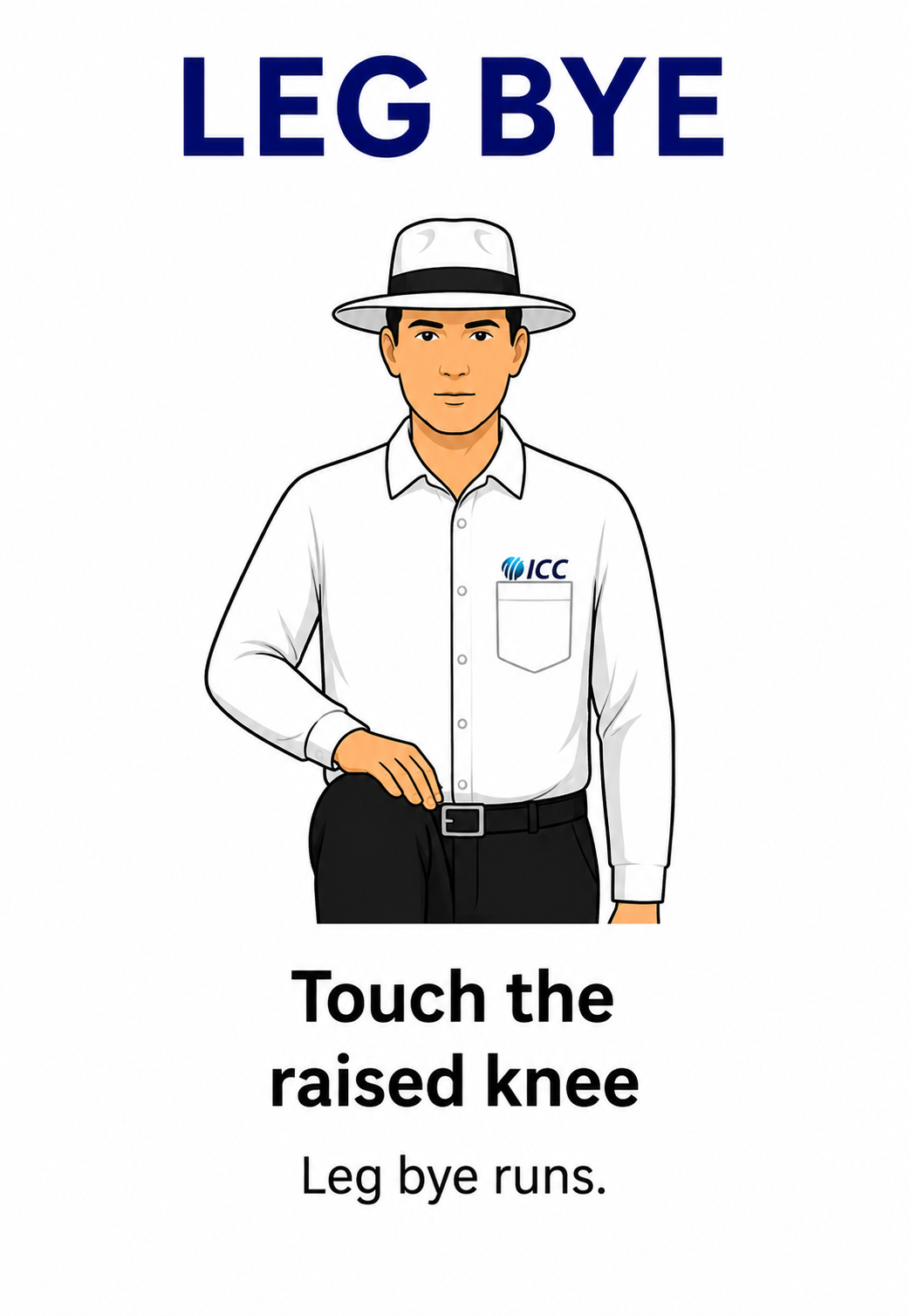
Leg byes occur when the ball strikes the batter’s body, and the players successfully run between the wickets.
Gesture: Touch a raised knee.
Meaning: Leg-bye runs.
Like byes, these runs are recorded as extras and do not contribute to the batter’s personal tally.
8. Dead Ball Signal
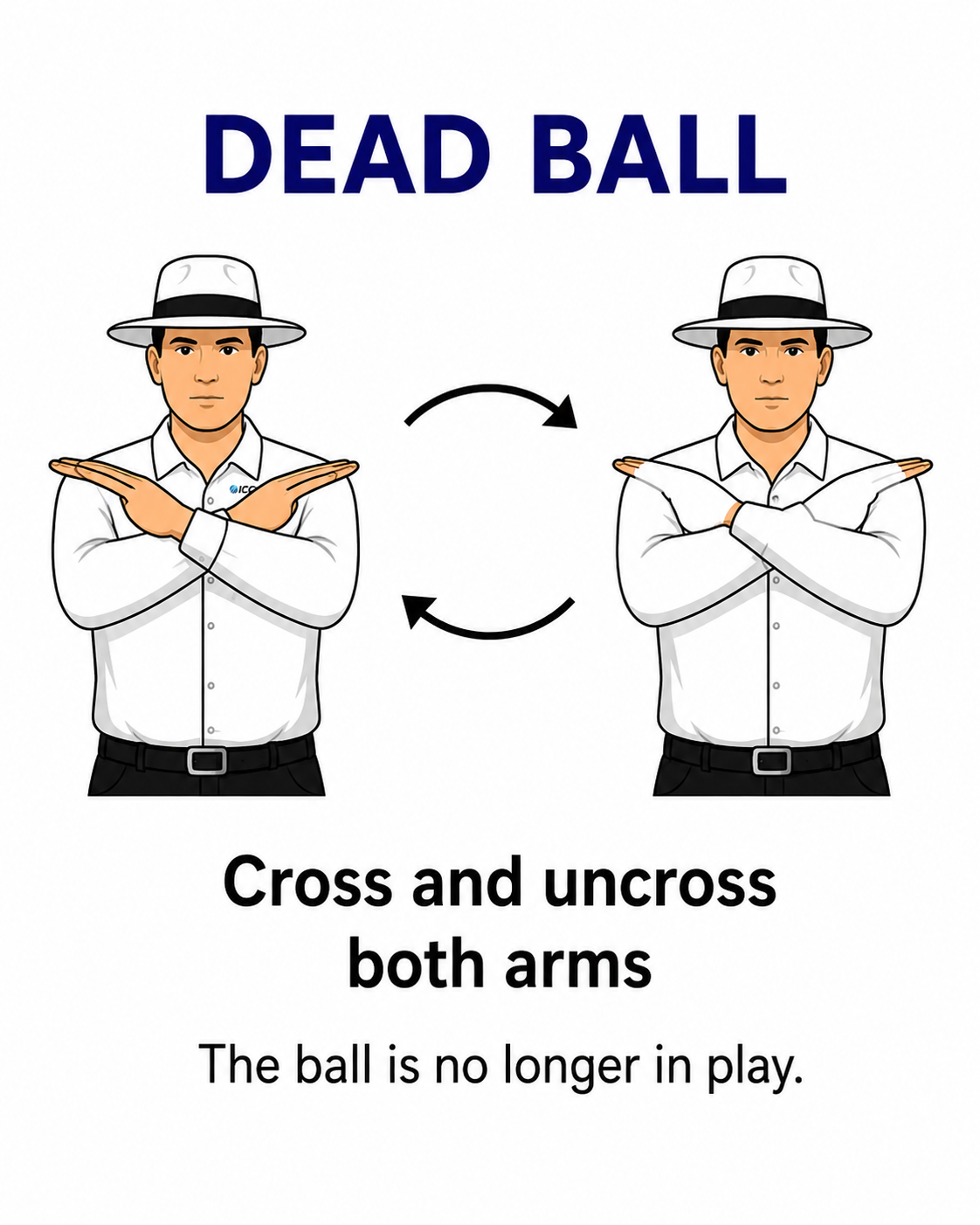
There are situations when play must be stopped, and the ball is declared dead. In such cases, the umpire crosses and uncrosses both arms in front of the body.
Gesture: Cross and uncross both arms.
Meaning: The ball is no longer in play.
A dead ball may be called due to:
- Injury to a player.
- External interference.
- A distraction during play.
- The ball becomes trapped in the equipment.
Once the ball is dead, no further runs or dismissals can occur.
9. Short Run Signal
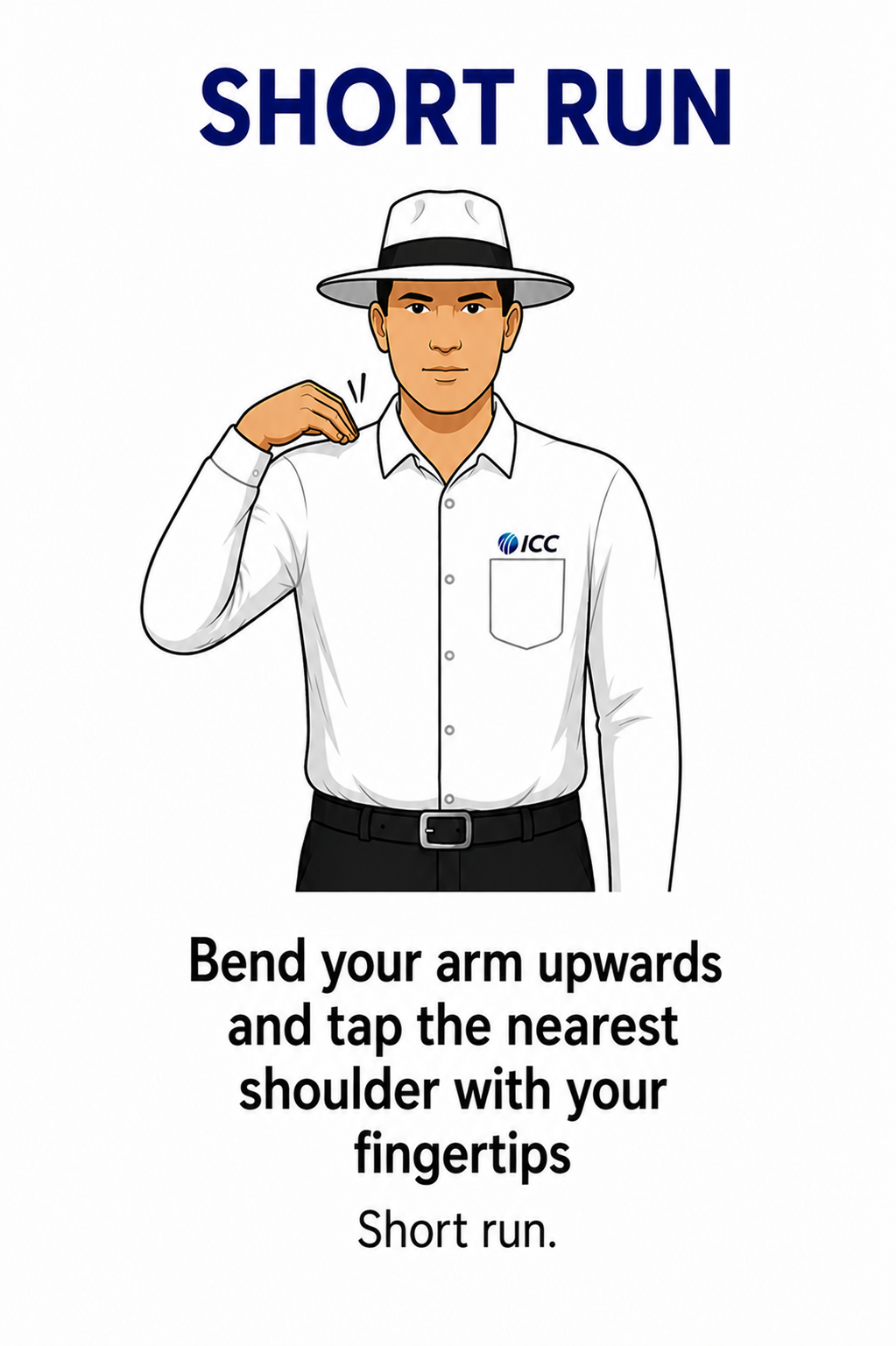
A short run occurs when one of the batters fails to make ground while completing a run. The umpire communicates this by touching one shoulder with the fingertips.
Gesture: Touch one shoulder.
Meaning: One run has been disallowed.
This ensures that scorers record the correct number of runs.
10. Free Hit Signal

The free hit is a relatively modern addition to cricket and is primarily seen in white-ball formats. The umpire signals a free hit by rotating one arm in a circular motion above the head.
Gesture: Circular motion above the head.
Meaning: Next delivery is a free hit.
A batter cannot be dismissed in most conventional ways on a free-hit delivery, making it one of the most exciting moments in limited-overs cricket.
11. Penalty Runs Signal
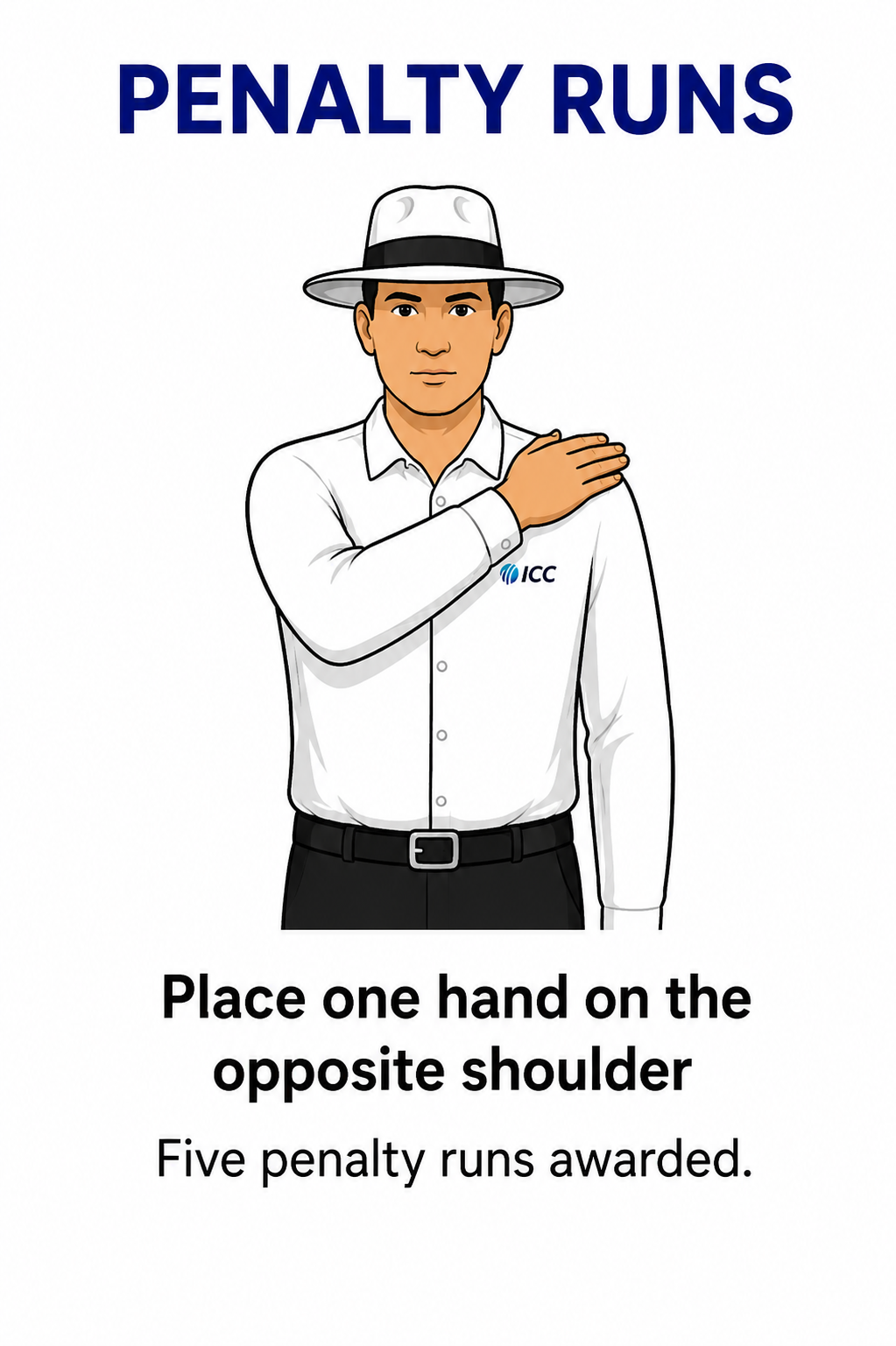
In certain cases involving unfair play or breaches of the laws, the umpire may award penalty runs.
Gesture: Place one hand on the opposite shoulder.
Meaning: Five penalty runs awarded.
Penalty runs can be given for reasons such as:
- Ball tampering.
- Deliberate obstruction.
- Unfair conduct.
- Damage to the pitch.
These runs may be awarded to either side.
12. Third Umpire Referral Signal
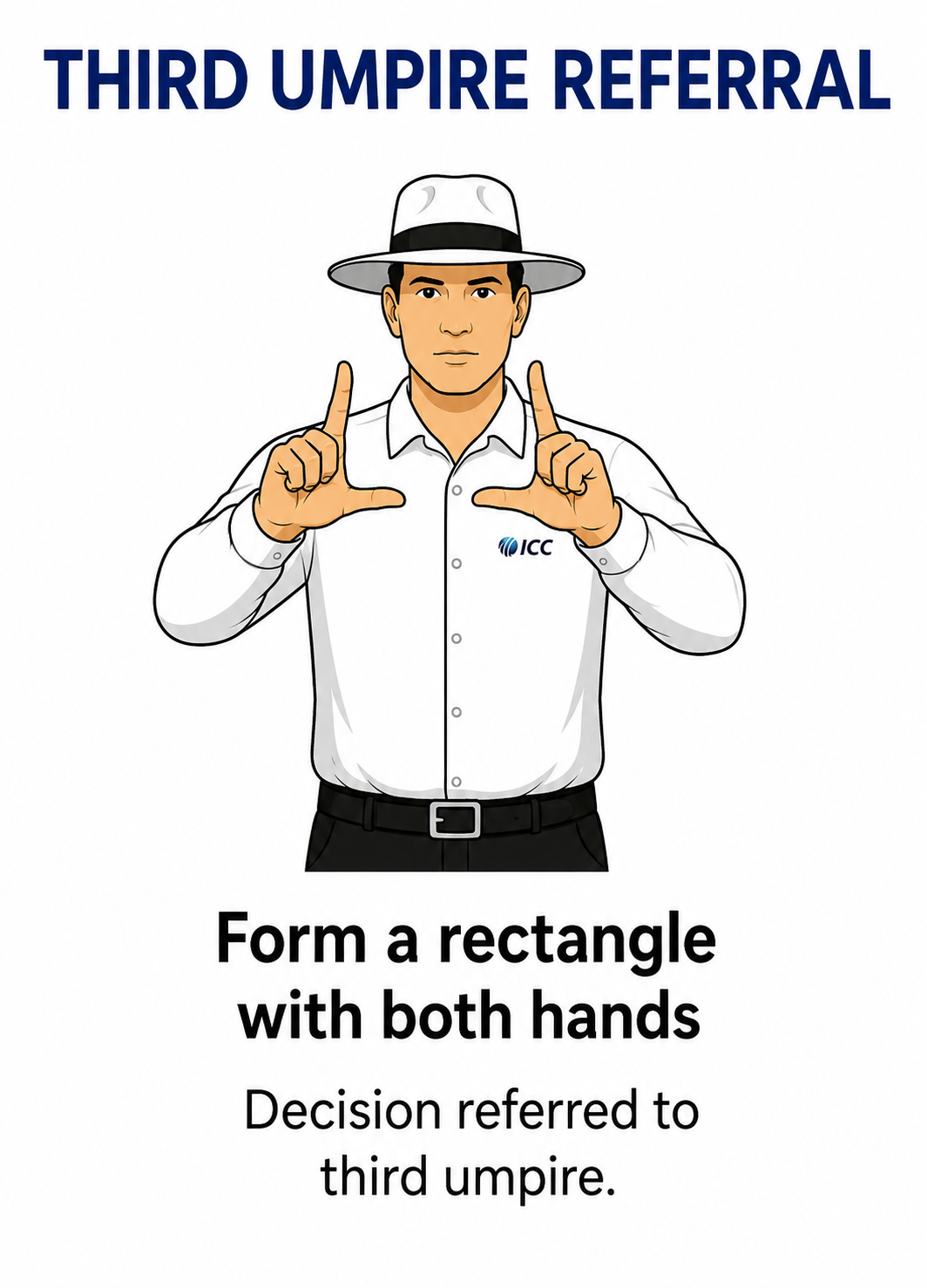
Modern cricket relies heavily on technology. When the on-field umpire requires assistance from the television umpire, they make a rectangle shape with both hands.
Gesture: Rectangle formed with both hands.
Meaning: Decision referred to the third umpire.
This signal is commonly used for run-outs, stumpings, catches near the boundary, and disputed catches.
13. New Ball Signal
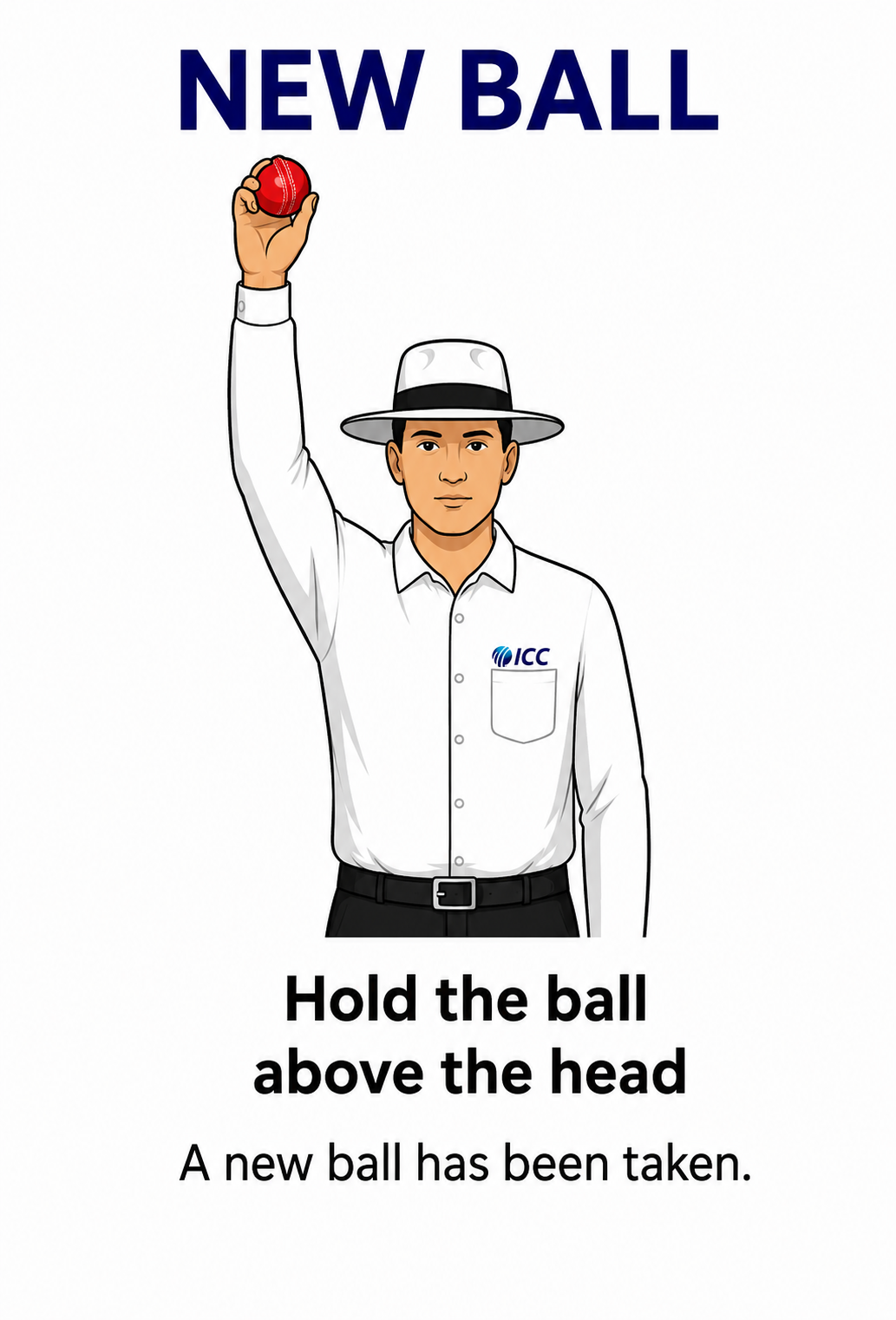
In Test cricket, the fielding side becomes eligible to take a new ball after 80 overs. The umpire indicates this by holding the ball above the head.
Gesture: Ball held above the head.
Meaning: A new ball has been taken.
The new ball generally offers greater pace and movement, making it an important tactical decision.
14. Revoke Last Signal
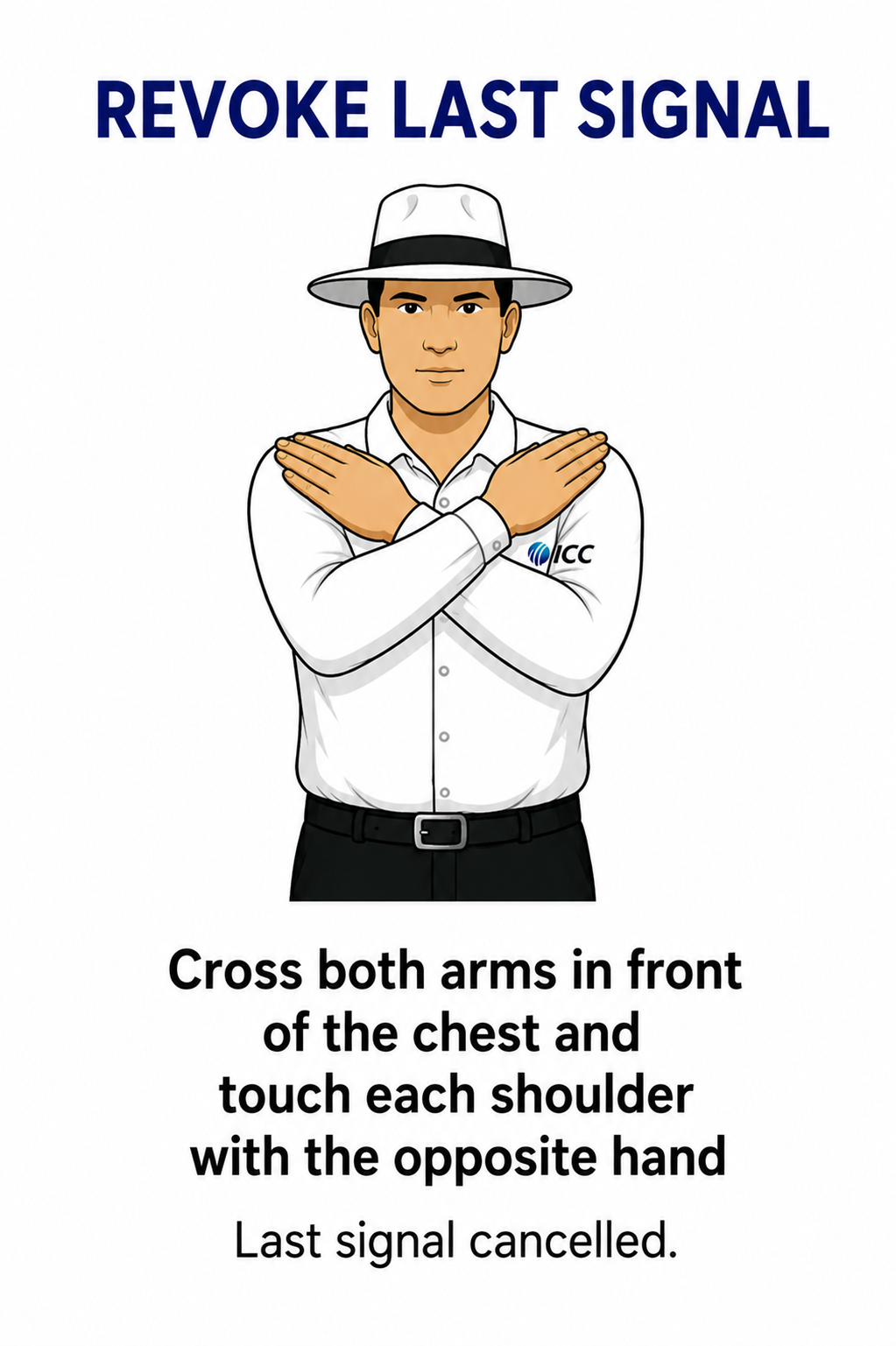
Occasionally, an umpire may need to cancel a previously given signal due to an error or a change in the decision. To indicate this, the umpire crosses both arms in front of the chest and touches each shoulder with the opposite hand.
Gesture: Cross both arms in front of the chest and touch each shoulder with the opposite hand.
Meaning: The previous signal is cancelled.
This signal ensures that scorers, broadcasters, and players are informed that the earlier signal should be disregarded. Although rarely seen, it plays an important role in maintaining accuracy and avoiding confusion during a match.
15. Powerplay Signal
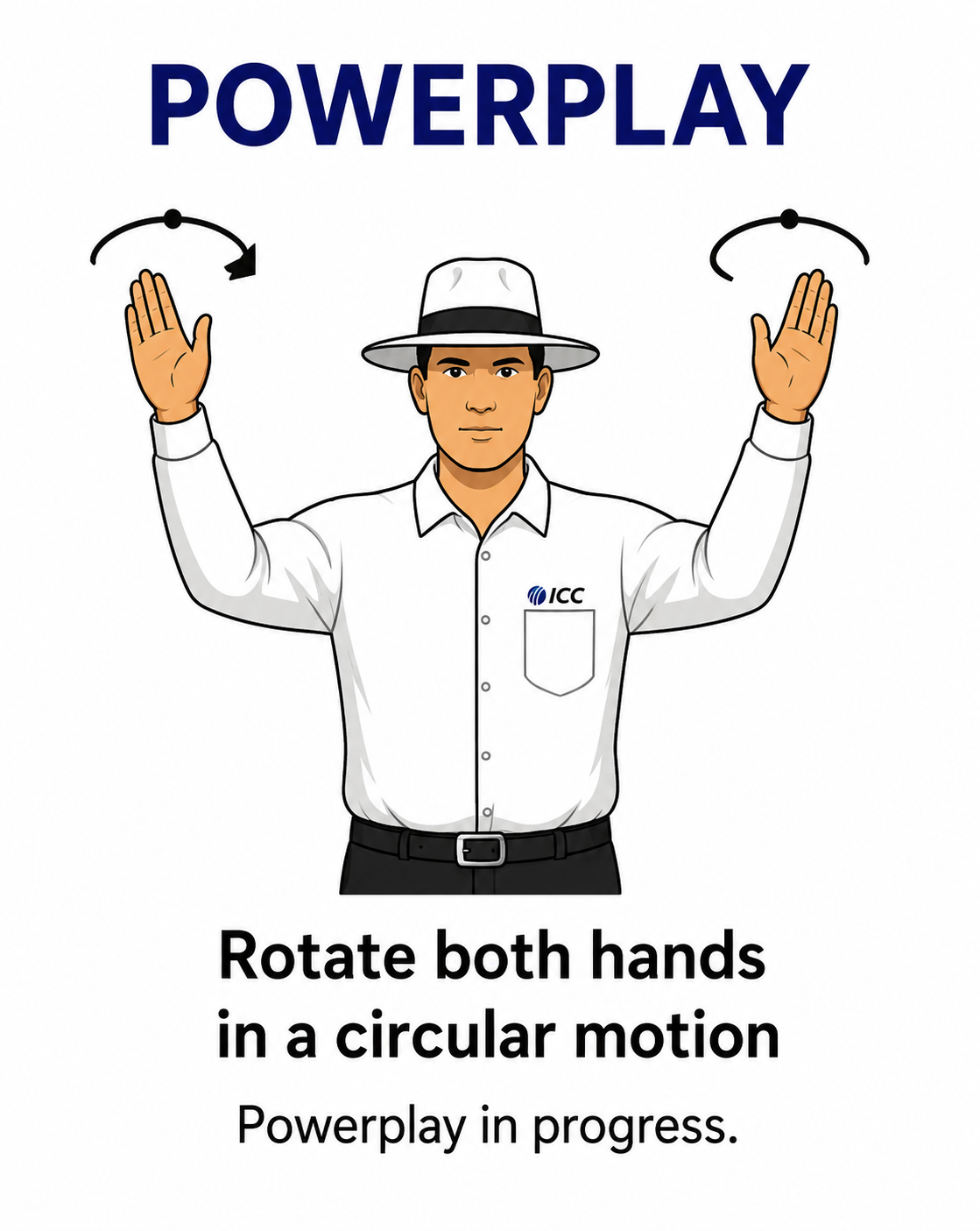
Powerplay periods are an integral part of limited-overs cricket and involve restrictions on the number of fielders allowed outside the 30-yard circle. The umpire signals the start of a powerplay by rotating both hands in a circular motion.
Gesture: Rotate both hands in a circular motion.
Meaning: Powerplay in progress.
This signal is commonly seen in ODI and T20 cricket and helps players, broadcasters, and spectators identify the active fielding restrictions.
Difference Between Bye and Leg Bye Signals
Although both are classified as extras, there is a key distinction between byes and leg byes. Neither type of run is credited to the batter.
| Signal | Gesture | Meaning |
| Bye | Open palm above the head | Ball misses bat and body |
| Leg Bye | Touch raised knee | Ball strikes the batter’s body |
Difference Between No Ball and Wide Ball
No-ball and wide are two of the most common extras in cricket, but they differ in terms of the nature of the delivery.
| Signal | Gesture | Extra Run Awarded | Delivery Rebowled |
| No Ball | One arm stretched sideways | Yes | Yes |
| Wide Ball | Both arms stretched sideways | Yes | Yes |
According to the Laws of Cricket, if a delivery qualifies as both a no-ball and a wide, the no-ball takes precedence.
Evolution of Cricket Umpire Signals
Cricket umpire signals have evolved over time alongside the sport itself. In the early years of cricket, communication between umpires and scorers was relatively informal. As the game became more organised, standardised gestures were introduced to ensure consistency.
Today, the Marylebone Cricket Club (MCC) serves as the custodian of the Laws of Cricket, while the International Cricket Council (ICC) applies these standards across international competitions.
Modern cricket has also introduced new signals to reflect changes in the game. Free-hit gestures, third-umpire referrals, and technology-assisted decisions are examples of how umpiring has evolved alongside innovations such as DRS, Hawk-Eye, and UltraEdge.
Interesting Facts About Cricket Umpire Hand Signals
- The raised finger for “Out” is one of the most recognisable gestures in world sport.
- Umpires repeat signals to scorers after the ball becomes dead to ensure accuracy.
- The same signal system is used across international and domestic cricket.
- Modern additions, such as the free-hit signal, did not exist in traditional cricket.
- Hand signals make it possible for millions of spectators to understand decisions instantly, even in packed stadiums.
Conclusion
Cricket umpire hand signals are the game’s universal language. They allow players, scorers, broadcasters, and spectators to understand what is happening on the field without a single word being spoken.
From the famous raised finger that signals an out to the rotating arm indicating a free hit, every gesture serves a specific purpose. Learning these signals not only helps beginners understand the game better but also allows seasoned fans to appreciate the finer details of cricket.
The next time you watch a match, you’ll be able to interpret every decision with confidence and enjoy the game from an entirely new perspective.
Download Playo on Android or iOS, or visit playo.co to start playing!
Frequently Asked Questions
There are more than a dozen official cricket umpire signals, including signals for out, no ball, wide ball, four, six, byes, leg byes, dead ball, and penalty runs.
A raised index finger indicates that the batter has been declared out.
The umpire stretches both arms horizontally to indicate a wide ball.
A no-ball is signalled by extending one arm sideways.
Cricket umpires use hand signals to communicate decisions clearly and ensure that players, scorers, broadcasters, and spectators receive accurate information.
An umpire signals a four by waving one arm from side to side across the chest, indicating that the ball reached the boundary after touching the ground.