

Hockey shoes are designed for the specific demands of field hockey, including acceleration, sudden braking, lateral movement, sharp turns and constant changes of direction on artificial turf. Unlike running shoes, they need to provide both reliable grip and stability during multidirectional movement.
A hockey shoe’s outsole, midsole, upper, heel structure, toe protection and fit all affect traction, comfort and how securely the foot stays connected to the turf. Modern models typically combine a turf-specific rubber outsole, cushioned midsole, supportive upper and reinforced toe and heel areas.
For example, selected ASICS hockey models use Turf Stud sole configurations, TRUSSTIC stability technology and FLYTEFOAM cushioning. The right pair depends on factors such as the playing surface, playing style, fit, traction, stability, cushioning and durability. This guide covers these features, different types of hockey shoes, buying considerations and top models to consider.
Why are Hockey Shoes Different From Regular Sports Shoes?
The biggest difference is the type of movement they are designed to support. Running shoes are primarily optimised for forward movement. Hockey shoes need to handle forward, backwards, and side-to-side movement, often while the player is changing direction at speed.
This affects almost every part of the shoe.
1. The Outsole is Designed for Turf
The outsole is particularly important because most modern field hockey is played on artificial turf. A hockey outsole needs to provide enough grip to help with acceleration and braking without feeling excessively aggressive against the surface.
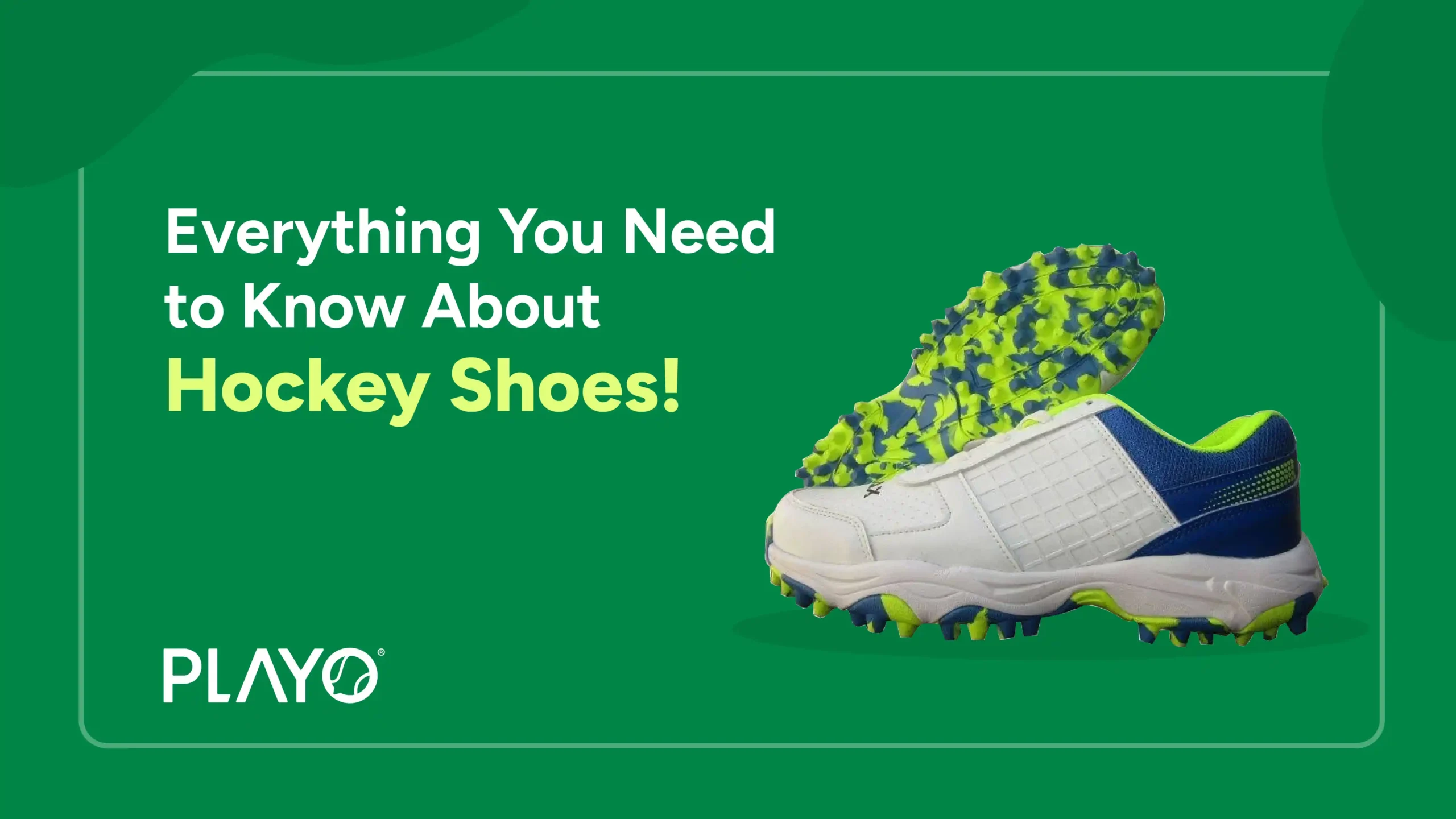
The tread pattern can include small lugs, studs or other rubber traction elements. The exact design varies between models and is intended to balance grip, release and movement.
A shoe with excellent straight-line grip but poor lateral traction is not necessarily a good hockey shoe. The player needs predictable grip when pushing sideways, cutting across the pitch and stopping.
2. Hockey Shoes Need Lateral Stability
One of the biggest differences between hockey and running is the amount of lateral movement.
When a player changes direction, the foot can experience significant sideways forces. A shoe with insufficient lateral support may allow the foot to move excessively inside the shoe or make the player feel unstable during a hard cut.
That is why hockey shoes often use supportive sidewalls, structured uppers, heel counters and stabilising midsole components. ASICS, for example, uses midfoot TRUSSTIC technology in the Field Ultimate FF 2 to increase stability during acceleration and quick cuts and turns.
Read More: Field Hockey Rules and Regulations
Understanding the Construction of a Hockey Shoe
Knowing what each part does makes it easier to compare different hockey shoes.
Outsole
The outsole is the bottom section that makes contact with the turf. For hockey, it is responsible primarily for traction and grip. Look for a tread pattern specifically intended for artificial hockey surfaces rather than assuming any athletic shoe with rubber on the bottom will perform similarly.
The outsole should also provide controlled release. Excessively aggressive grip can make movement feel less natural, particularly when pivoting.
Midsole
The midsole sits between the outsole and your foot and is responsible for much of the shoe’s cushioning and stability. Hockey players need cushioning because artificial turf can feel considerably firmer than natural grass. However, maximum softness is not automatically desirable.
A very soft or excessively high platform can compromise the stable feel a player wants when making lateral movements. The ideal midsole balances impact protection, responsiveness and stability.
Current hockey shoes use technologies including adidas’ Lightstrike and Repetitor systems, ASICS FLYTEFOAM and Mizuno Wave constructions to achieve different combinations of cushioning and responsiveness.
Upper
The upper holds the foot in place and contributes to breathability, protection and durability. A good hockey upper should provide secure lockdown without creating pressure points. Reinforced sections can also help protect the foot from contact with the ball or stick.
Some current adidas hockey shoes, for example, use breathable ripstop uppers and TPU toe protection.
Heel Counter
The heel counter is the structured section around the rear of the shoe. It helps keep the heel securely positioned when the player accelerates, brakes and changes direction. A well-fitting heel counter should prevent excessive heel movement without feeling restrictive.
Toe Area
The front of a hockey shoe needs to withstand repeated contact with the turf and everyday wear. Some models include reinforced toe sections for additional durability and protection. This can be particularly useful for players who spend a lot of time in low positions or frequently make lunging movements.
Key Features to Look for in Hockey Shoes
Not every player needs exactly the same type of shoe. However, these are the main features worth evaluating.
1. Turf-Specific Grip
Grip should be your first consideration. Look for an outsole designed specifically for the type of artificial turf you regularly play on. Modern hockey footwear can use different lug and stud configurations to provide traction during acceleration, braking and cutting.
Do not judge grip simply by how aggressive the tread looks. What matters is how predictably the outsole behaves when you change direction.
2. Lateral Stability
For hockey, lateral stability is arguably as important as cushioning. Look for a shoe that keeps the foot securely positioned over the outsole during sideways movements. A stable platform can feel particularly useful for defenders and midfielders who frequently make repeated lateral movements.
3. Responsive Cushioning
Hockey requires repeated short bursts rather than continuous long-distance running. A responsive midsole can help the shoe feel quicker when pushing off, while sufficient cushioning can make repeated running on turf more comfortable.
The best balance depends on the player. Speed-focused players may prefer a lighter, more responsive shoe, while players who spend long training sessions on the pitch may prioritise cushioning and stability.
4. Secure Heel Lockdown
Your heel should stay firmly in place when you sprint and stop. If your heel slides inside the shoe, you may lose confidence during quick movements and experience unnecessary friction. When trying on hockey shoes, pay particular attention to heel movement rather than focusing only on how the toe box feels.
5. Breathability
Hockey sessions can involve significant running, particularly in warm conditions. A breathable upper can improve comfort by allowing better airflow around the foot. Mesh and engineered textile materials are commonly used for this purpose.
However, breathability should not come at the expense of the secure structure needed for lateral movement.
6. Weight
A lighter shoe can feel faster and less tiring, particularly for players who rely heavily on acceleration. But reducing weight usually involves trade-offs. A highly lightweight shoe may offer less material, cushioning or structural reinforcement than a more substantial stability-focused model.
Therefore, don’t simply choose the lightest hockey shoe available. Choose the lightest shoe that still provides the level of support, protection and cushioning you need.
Hockey Shoes for Different Playing Styles
Your position and style of play can influence which characteristics you should prioritise.
For Speed-Focused Players
Forwards and attacking midfielders who frequently sprint into space may prefer a lightweight shoe with responsive cushioning and efficient traction. The adidas Adizero range and ASICS Field Speed models are examples of footwear positioned toward players who value speed and multidirectional movement.
For Defenders and Physical Players
Defenders often perform repeated tackles, lateral movements and changes of direction while competing for position. A more structured shoe with strong lateral support, cushioning and durability can therefore be a better fit than an ultra-lightweight model.
The adidas Adipower range, for example, is positioned as a more supportive option for players who want stability during changes of direction.
For All-Round Club Players
If you play regularly but do not have a highly specialised playing style, look for a balanced shoe that combines traction, cushioning, stability and durability. This is often the safest option for club players who train and play matches throughout the season.
Top 5 Hockey Shoes to Consider
The “best” hockey shoe ultimately depends on your foot shape, playing surface and playing style. However, these models are worth considering when comparing current hockey footwear.
| Hockey Shoe | Best For | Key Strength |
| adidas Adipower Hockey 4 | Stability-focused players | Lateral support and structured feel |
| adidas Adizero Lux 3 | Speed-focused players | Lightweight, agile feel |
| ASICS Field Speed FF 2 | Fast, multidirectional players | Traction and responsive movement |
| ASICS Field Ultimate FF 2 | Competitive all-round players | Stability, cushioning and grip |
| Mizuno Wave Panthera 2 | Club and technical players | Balance of stability and cushioning |
How Should Hockey Shoes Fit?
Fit is just as important as technology. A hockey shoe should hold your foot securely without feeling painfully tight. Your heel should remain locked in place, while the forefoot should have enough room for natural toe movement.
Avoid buying a shoe that is significantly larger because you think extra space will improve comfort. Excess movement inside the shoe can reduce stability during sharp turns.
At the same time, your toes should not press against the front of the shoe when you move. Try hockey shoes while wearing the socks you normally use for training or matches. Walk, jog and perform a few side-to-side movements if possible before deciding on the size.
Should You Buy Hockey Shoes Based on Your Pitch Type?
Yes. Your playing surface should influence your outsole choice. Different artificial pitches can have different levels of grip and water use. Sand-based, semi-watered and fully watered surfaces can feel different underfoot.
A shoe that feels excellent on one pitch may not feel identical on another. This is why it is useful to consider where you play most frequently rather than choosing a shoe purely because it is popular.
For players who regularly move between different surfaces, check the manufacturer’s intended surface range before buying.
Hockey Shoes vs Football, Running and Tennis Shoes
Hockey shoes should not be confused with other sports footwear.
- Running shoes are optimised mainly for forward running and generally do not provide the same lateral support or hockey-specific traction.
- Football boots are built around studded traction and natural or specialised football surfaces. Their studs can be inappropriate for artificial hockey turf.
- Tennis shoes do provide strong lateral support, but their outsole geometry is designed around tennis court surfaces rather than hockey turf.
A hockey-specific shoe is therefore the most appropriate option when you regularly play field hockey.
When Should You Replace Hockey Shoes?
Do not wait until the shoe completely falls apart.
Check the outsole for worn-down traction, especially in areas where you push off or brake frequently. Also inspect the upper, heel structure and midsole. It may be time for a replacement if:
- The outsole has lost significant tread.
- Your grip on the turf feels noticeably worse.
- The midsole has become compressed or feels unusually flat.
- The upper is separating from the outsole.
- Your heel no longer feels securely supported.
- The shoe has developed structural damage.
How long a pair lasts depends heavily on how often you play, the surface you use and how you maintain the shoes.
How to Maintain Your Hockey Shoes
- Clean after every use: Remove dirt, grass and turf particles from the outsole and upper after playing.
- Dry naturally: If the shoes get wet, let them air-dry in a well-ventilated area. Avoid direct heat, which can damage the materials.
- Avoid rough surfaces: Do not regularly wear hockey shoes on roads, concrete or other abrasive surfaces, as this can wear down the outsole faster.
- Check the outsole: Inspect the traction pattern regularly for signs of excessive wear or damage.
- Monitor grip: Reduced outsole traction can affect your ability to accelerate, brake and change direction confidently.
- Check the upper and heel: Look for loose stitching, cracks, separation or reduced heel support.
- Store them properly: Keep hockey shoes in a cool, dry and well-ventilated place between uses.
Conclusions
The right hockey shoes should be selected around the demands of field hockey rather than general athletic comfort. The most important factors are turf-specific traction, lateral stability, responsive cushioning, secure heel lockdown, fit, durability and weight.
Start with your playing surface, then consider how you move on the pitch. Speed-focused players may prefer lightweight footwear, while defenders and players who prioritise stability may benefit from a more structured construction.
Most importantly, don’t choose a hockey shoe solely because it is expensive, popular or visually appealing. The best pair is the one that fits your foot securely, provides predictable traction on your usual turf and gives you the right balance of stability, cushioning and responsiveness for your style of play.
Download Playo on Android or iOS, or visit playo.co to start playing!
Frequently Asked Questions
Running shoes can be used for casual play, but they are not designed for hockey’s frequent lateral movements, quick stops and turf-specific traction requirements.
Look for good turf grip, lateral stability, cushioning, a secure heel fit, breathability, durability and a comfortable overall fit.
Some hockey shoes have small rubber studs or lugs, while others use specialised tread patterns. The outsole design depends on the playing surface and shoe model.
Their lifespan depends on playing frequency, surface and maintenance. Replace them when the outsole loses significant grip, or the cushioning, upper or structural support becomes noticeably worn.
Yes. Most field hockey shoes are specifically designed for artificial turf, but you should check the manufacturer’s recommended surface before using a particular pair.