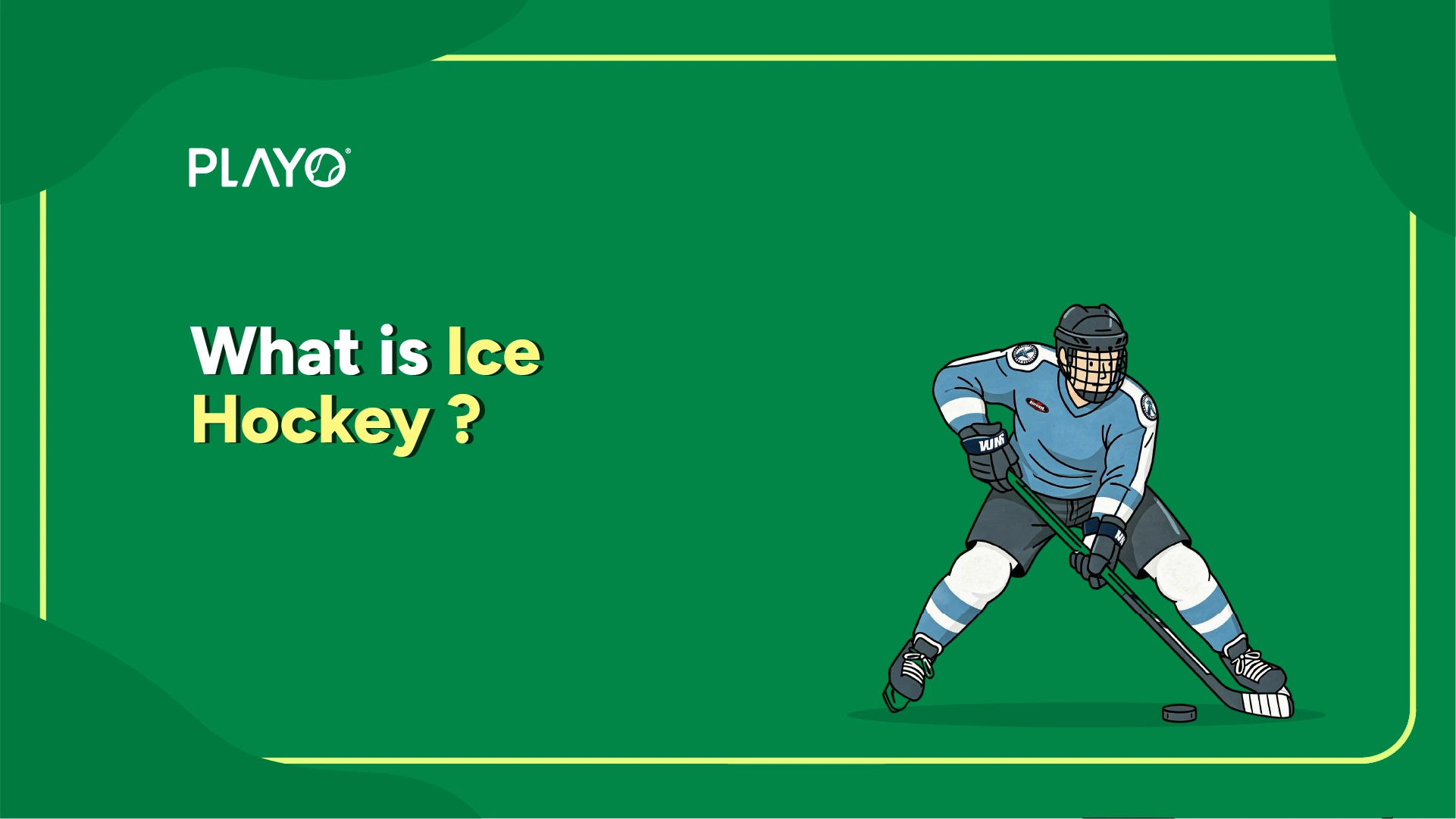


Ice hockey is played between two teams on an ice rink, with each team trying to control the puck through passing, skating, and shooting to create scoring chances. The game is divided into three timed periods, and play is continuous, with frequent line changes and rapid transitions between offence and defence. Physical contact, such as body checking (within the rules), is a legal part of the game, making puck battles along the boards and in front of the goal crucial. Success in ice hockey depends on skating speed, positional awareness, disciplined defending, and teamwork, as players must constantly react to the puck’s movement and the opposition’s tactics.
Widely recognised as Canada’s national winter sport, ice hockey enjoys significant global popularity, especially in North America, Europe, and parts of Asia. It is played at professional, international, and Olympic levels, attracting millions of fans worldwide.
History of Ice Hockey
The history of ice hockey traces back centuries, evolving from ancient stick-and-ball games. Indigenous Mi’kmaq people in Nova Scotia, Canada, played with sticks and wooden balls, which influenced early forms such as hurling, field hockey, and lacrosse. These morphed into informal “shinny” on frozen ponds.
The first recorded indoor game took place at Montreal’s Victoria Skating Rink in 1875. Key milestones followed: the puck replaced balls around 1860, McGill University codified rules in 1877, and the Amateur Hockey Association (AHA) was formed in 1885. The National Hockey Association (NHA) in 1910 paved the way for the NHL in 1917.
Lord Stanley donated the iconic Stanley Cup in 1893—now the NHL’s championship prize. Leagues like the Pacific Coast Hockey Association (PCHA) innovated with six-player teams, offside zones, and assists. Today, it’s a billion-dollar industry with pro leagues worldwide.
How Many Players are on an Ice Hockey Team?
In ice hockey, each team has six players on the ice at any given time—five skaters and one goaltender. This standard structure is followed at all professional and international levels.
A full team roster typically includes 18 to 22 players, allowing regular rotation during the game. Substitutions are unlimited and can be made while play is ongoing, ensuring players remain fresh and the pace stays high. The only exception is during icing situations, when the offending team cannot change players.
In short, ice hockey is played with six players per team on the ice, supported by a larger rotating squad.
Read More: Hockey Field Dimensions
Positions and Roles in Ice Hockey
Each position has distinct duties, balancing offence and defence.
- Forwards (Centre, Left Wing, Right Wing): These three players drive scoring. The centre controls faceoffs and playmaking, while wings flank for shots and cycles.
- Defensemen (Left D, Right D): Two per side, they block shots, clear the zone, and join rushes to support offence—key to “how many players in ice hockey” working in harmony.
- Goaltender (Goalie): The lone defender guards the net, facing 30+ shots per game with acrobatic saves.
Understanding these roles reveals why ice hockey demands versatility from all six players on the ice.
Ice Hockey in India
India does have a national ice hockey team, which represents the country in international competitions, primarily in the lower divisions of global tournaments. The team mainly comprises players from Himalayan regions such as Ladakh, where natural ice forms during winter and the sport has developed a small but active grassroots base.
Ice hockey in India is governed by the Ice Hockey Association of India (IHAI), the national governing body responsible for organising domestic championships, overseeing player development, and managing international participation. The Indian team has competed in tournaments organised by the International Ice Hockey Federation (IIHF), including Division IV of the IIHF World Championships.
Although challenges such as limited infrastructure, high operational costs, and climate constraints persist, the presence of an established governing body and regular international exposure shows that ice hockey in India is organised and gradually progressing, even though it remains a niche sport.
Rules and Gameplay of Ice Hockey
Ice hockey unfolds over three 20-minute periods, totalling 60 minutes of stop-clock play, with intermissions for ice resurfacing. This structure keeps games intense for around two to three hours total.
Key terms of Ice hockey:
- Faceoff: Play starts or restarts when a referee drops the puck between opposing centres.
- Offside: Skaters can’t cross the opponent’s blue line before the puck.
- Icing: Shooting the puck from behind your centre red line across the opponent’s goal line (untouched) triggers a stoppage.
- Power Play & Penalty Kill: Penalties send players to the box, giving one team a numbers advantage (e.g., 5-on-4).
- Penalty Box: Offenders serve 2-5 minutes for infractions like tripping or slashing.
How Scoring Works in Ice Hockey
A goal in ice hockey is officially counted when the entire puck completely crosses the goal line and enters the net between the goalposts and under the crossbar, provided no rules were broken during the play (like kicking it in with a skate or using a high stick).
Each goal counts as one point for the team that scores. Unlike many sports, there are no multi-point shots- every goal, whether it’s a breakaway snipe or a chaotic scramble in front of the net, is worth exactly 1 point.
But scoring isn’t just about the shooter. Ice hockey celebrates teamwork through assists.
- The last player to pass the puck to the goal scorer gets the primary assist.
- The player who passed it before them (if applicable) earns the secondary assist.
Essential Ice Hockey Equipment
Safety gear is non-negotiable in this contact sport. Here’s vital “ice hockey information” on what you need:
- Helmet with face shield/cage: Protects against high-speed pucks (up to 100 mph).
- Pads and guards: Shoulder pads, elbow pads, gloves, shin guards, knee pads, jockstrap/cup, and neck guard.
- Skates: Hockey-specific with sharp blades for agility.
- Stick: Wood, composite, or one-piece; curved for positions.
- Puck: Vulcanised rubber, 1-inch thick, 3-inch diameter, 170g—frozen for less bounce.
- Goalie gear: Massive leg pads, blocker, catcher, chest protector.
- Optional mouthguards add protection. Rent first to test fits.
Tips for New Fans and Players of Ice Hockey
- For New Fans: Start by following the puck to understand the flow of the game. As you get comfortable, pay attention to quick transitions between attack and defence and the battles for puck possession along the boards. Power plays are key moments—teams have a numerical advantage, often leading to goals and momentum shifts.
- For Aspiring Players: Strong skating skills are essential, as speed and balance define the sport. Joining a local club or training program helps build fundamentals. Invest in properly fitted protective gear for safety, and regularly practice stickhandling and shooting to improve control and accuracy.
Conclusion
Ice hockey is a fast, physical, and highly skilled sport defined by its rules, team structure, and specialised equipment. From understanding the six-player format to learning about its history and growth in India, knowing the basics enhances both viewing and playing experiences. Whether you’re watching a professional match or stepping onto the ice for the first time, ice hockey rewards knowledge with deeper enjoyment.
Download Playo on Android or iOS, or visit playo.co to start playing!
Frequently Asked Questions
Yes. Ice hockey has been part of the Olympic Games since 1920, with both men’s and women’s tournaments now firmly established in the Winter Olympics.
The two main forms are ice hockey, played on ice with a puck, and field hockey, played on grass or artificial turf with a ball.
The slapshot is considered the hardest shot, generating maximum power through a full backswing. At the professional level, slapshots can exceed 100 mph.
Ice hockey is widely regarded as Canada’s national winter sport, reflecting its cultural and historical importance.
Modern ice hockey developed in Canada during the 19th century, evolving from Indigenous stick-and-ball games and early European influences.
The goaltender is widely considered the toughest position, as it demands constant focus, rapid reflexes, physical endurance, and mental resilience under sustained pressure.