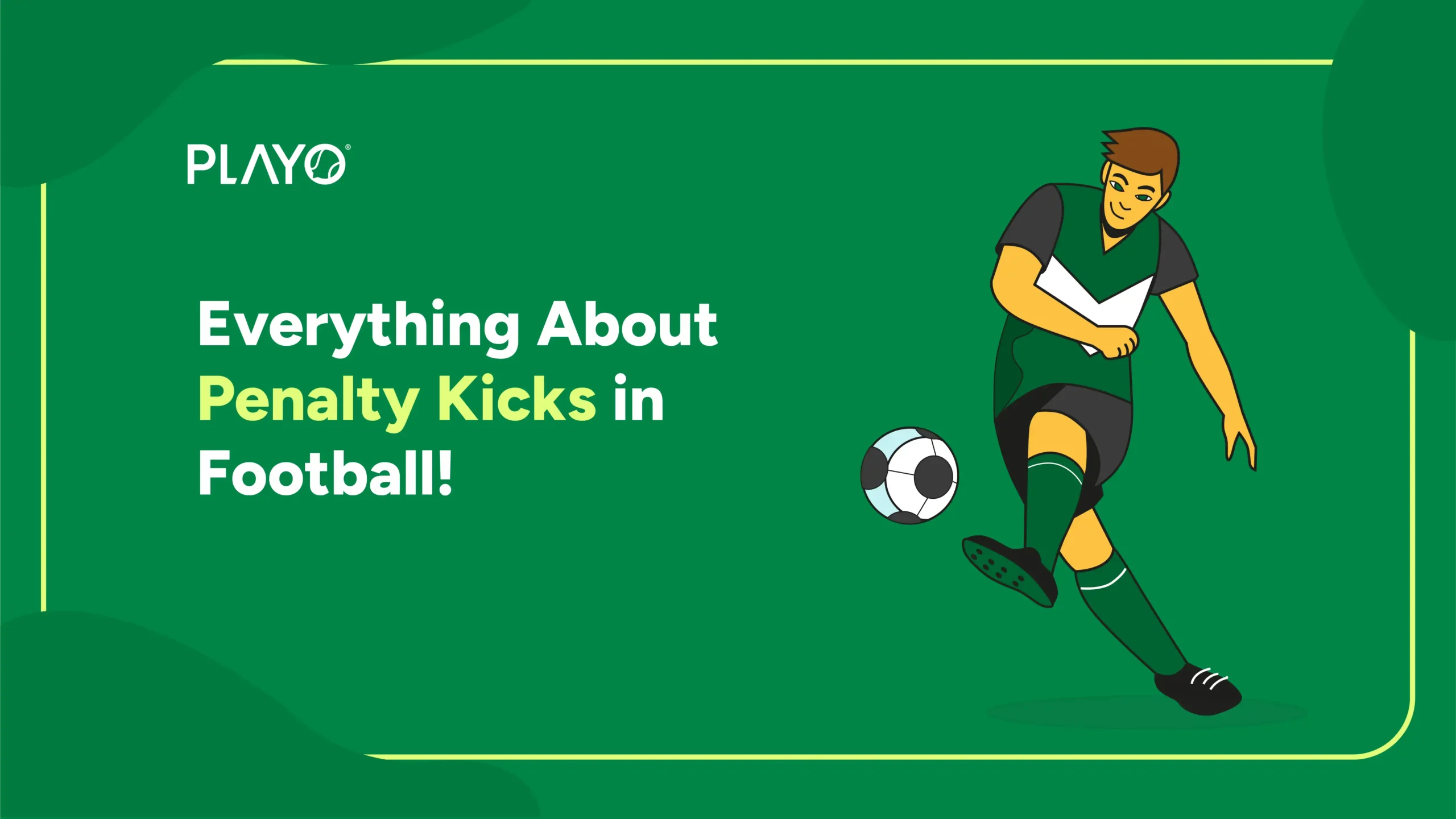


A penalty kick is one of the most influential decisions a referee can make in football. Awarded when a defending player commits a direct free-kick offence inside their own penalty area while the ball is in play, it gives the attacking team a direct shot at goal from the penalty mark with only the goalkeeper to beat. Because of the short distance of 12 yards (11 metres), penalty kicks are among the highest-percentage scoring opportunities in the sport.
Governed by Law 14 of the IFAB Laws of the Game, penalty kicks follow strict regulations covering player positioning, goalkeeper movement, and the procedure for taking the kick. These rules ensure fairness while penalising serious defensive infringements inside the penalty area.
This guide explains what a penalty kick is, why it was introduced, when it is awarded, the official rules, the step-by-step procedure, common infringements, and how it differs from a penalty shootout.
What is a Penalty Kick in Football?
A penalty kick is a method of restarting play awarded when a defending player commits a direct free-kick offence inside their own penalty area while the ball is in play. It allows the attacking team to take a direct shot at goal from the penalty mark, with only the goalkeeper permitted to defend. Unlike other restarts, the outcome depends solely on the kicker and the goalkeeper, making it one of the most significant set pieces in football.
Every penalty kick is taken from the penalty mark, located 11 metres (12 yards) from the centre of the goal line, regardless of where the offence occurs within the penalty area. The procedure is governed by IFAB Law 14, which defines player positioning, goalkeeper movement, and the conditions for retakes following infringements. Due to the short distance from goal, professional players convert approximately 75–80% of penalty kicks.
History of the Penalty Kick
The penalty kick was introduced to football in 1891 following a proposal by Irish goalkeeper and businessman William McCrum. Before its introduction, defenders could deliberately foul attackers near the goal with relatively minor consequences, often preventing clear scoring opportunities.
Initially, the penalty could be taken from any point along a line 12 yards from the goal. However, in 1902, the modern penalty mark and penalty area were introduced, standardising where penalties are awarded and taken. Over time, the Laws of the Game have continued to evolve, notably with the introduction of the Video Assistant Referee (VAR) to assist officials in making accurate penalty decisions.
Read More: What is a Panenka Penalty in Football?
When is a Penalty Kick Awarded?
For a referee to award a penalty kick, specific conditions must be met simultaneously. A penalty is awarded when:
- A direct free-kick offence is committed: Such as tripping, pushing, holding, kicking, or a deliberate handball.
- The foul occurs inside the penalty area: The infringement must happen within the boundaries of the defending team’s 18-yard box.
- The ball is in play: The incident must occur while the ball is actively in the game.
- It is committed against an opponent: The foul must be committed by a defending player against an attacking player.
Note: The location of the foul, not the position of the attacker, determines whether a penalty is awarded. If an attacker is fouled just outside the penalty area, play is restarted with a direct free kick instead of a penalty kick.
Situations That Do Not Result in a Penalty
Not every incident inside the penalty area leads to a penalty. Referees will not award a penalty for fair shoulder-to-shoulder challenges, accidental collisions where neither player commits an offence, or handball situations that do not meet the criteria of making the body “unnaturally bigger.”
Official Penalty Kick Rules and Procedure
The procedure for taking a penalty kick is governed by the IFAB Laws of the Game (Law 14), ensuring consistency across all levels of football.
The Setup
- Ball Placement: The ball must be stationary and placed exactly on the penalty mark.
- The Kicker: The player taking the penalty must be clearly identified to the referee. Only the identified player may take the initial kick.
- Goalkeeper Position: The defending goalkeeper must remain on the goal line, facing the kicker, between the goalposts. They may move laterally but must keep at least part of one foot touching, or in line with, the goal line until the ball is kicked.
- Other Players: All players other than the kicker and goalkeeper must remain inside the field of play, outside the penalty area, outside the penalty arc, and at least 10 yards (9.15m) from the penalty mark.
Step-by-Step Procedure
- Award the Penalty: The referee points to the penalty mark.
- Position the Ball & Players: Place the ball on the spot, and all players take their assigned positions.
- Referee Signals: Once everyone is correctly positioned, the referee blows the whistle to authorise the kick.
- The Kick: The kicker must strike the ball forward. Backward passes are not permitted. Once the ball is kicked and clearly moves, it is in play.
Penalty Infringements and Retakes
If players fail to follow the prescribed procedure, the referee will apply specific sanctions based on who infringed and the outcome of the kick.
Goalkeeper Moves Too Early
If the goalkeeper leaves the goal line before the ball is kicked:
- Goal scored: The goal stands.
- Penalty missed or saved: The kick is automatically retaken. The goalkeeper may be cautioned (yellow card) for persistent offences.
Attacker Encroaches
If an attacking player enters the penalty area or arc before the ball is kicked:
- Goal scored: The goal is disallowed, and an indirect free kick is awarded to the defending team.
- Penalty missed: An indirect free kick is awarded to the defending team.
Defender Encroaches
If a defending player enters the penalty area too early:
- Goal scored: The goal stands.
- Penalty missed or saved: The penalty is retaken.
Both Teams Encroach
If players from both teams infringe the rules before the kick, the penalty is retaken regardless of the outcome.
Illegal Feinting by the Kicker
A player may use a stutter-step during their run-up, but feinting to kick the ball after completing the run-up is prohibited. If this occurs, the kicker is shown a yellow card, the goal is disallowed (if scored), and an indirect free kick is awarded to the defending team.
Penalty Kick vs. Penalty Shootout
Although they involve kicks from the penalty mark, a penalty kick and a penalty shootout are fundamentally different.
- Penalty Kick: Awarded during normal or extra time after a foul inside the penalty area. Play continues if the ball rebounds, and the goal counts toward the final match score. Governed by Law 14.
- Penalty Shootout (Kicks from the Penalty Mark): Used after extra time to determine the winner of a tied knockout match. Each kick is a separate, dead-ball attempt (rebounds are not allowed). It does not count toward the match score but decides which team advances.
Conclusion
A penalty kick is one of football’s most influential set pieces, often deciding the outcome of closely contested matches. Awarded for direct free-kick offences committed inside the defending team’s penalty area, it gives the attacking side a valuable opportunity to score from 12 yards with only the goalkeeper to beat.
Understanding when a penalty is awarded, the official IFAB procedure, player positioning, and the strict rules surrounding infringements helps players, coaches, and fans better appreciate one of the game’s most dramatic moments. Whether you are learning the sport or following professional competitions, knowing the laws governing penalty kicks provides a clearer understanding of how crucial decisions are made on the pitch.
Download Playo on Android or iOS, or visit playo.co to start playing!
Frequently Asked Questions
It is awarded when a defender commits a direct free-kick offence, such as tripping, pushing, holding, or a deliberate handball, inside their own penalty area while the ball is in play.
The penalty mark is exactly 12 yards (11 metres) from the centre of the goal line.
No. Before the ball is kicked, the goalkeeper must keep at least part of one foot touching or directly in line with the goal line. Stepping off the line early results in a retake if the penalty is missed.
Yes. If the goalkeeper or goal frame rebounds the ball into play, the kicker may play it again, provided they do not touch the ball a second time before another player (teammate or opponent) has touched it.
A penalty kick is awarded during a match because of a foul inside the box. A penalty shootout is a tie-breaking mechanism used after a match ends in a draw to decide the winner of a knockout tournament.