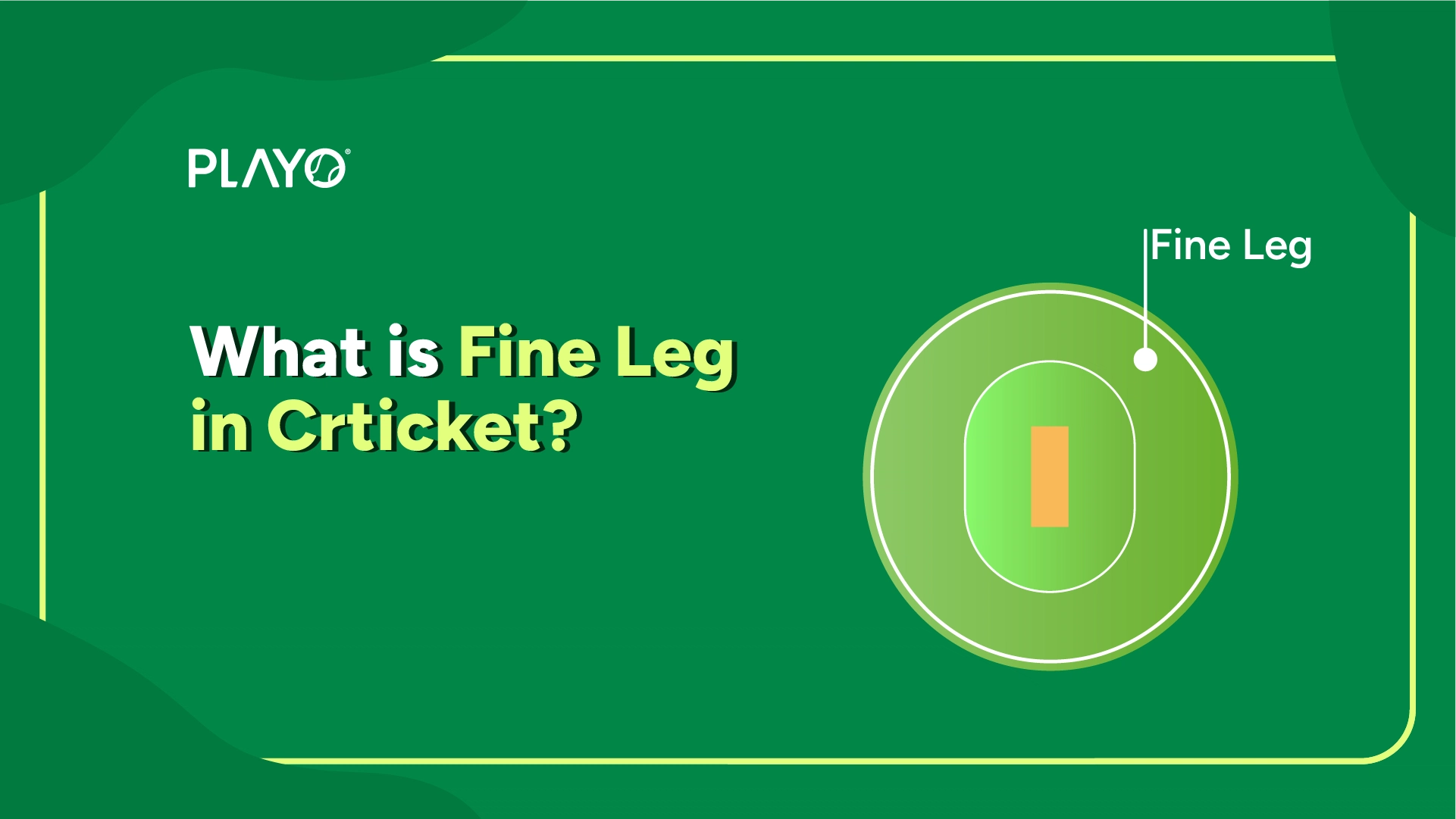


Cricket is filled with unique fielding positions, and fine leg is one of the most important among them. If you are new to the sport, you have probably heard commentators mention this position during fast bowling spells or while discussing field placements. Fine leg is located on the leg side of the batter, behind square, usually at a sharp angle between the wicketkeeper and square leg. The term “fine” refers to its narrow alignment close to the batting line, making it different from positions like square leg or mid-wicket.
This region is commonly targeted with shots like leg glances, flicks, hook shots, pull shots, paddle sweeps, and deflections off the bat or gloves. As a result, the fine leg fielder plays a major defensive and tactical role in modern cricket by stopping boundaries, taking catches off top edges, and supporting aggressive bowling strategies, especially in ODIs and T20s where batters frequently attack the leg side. In this comprehensive guide, we will break down everything you need to know about the fine leg position in cricket, including its role, fielding tactics, variations, and importance in modern-day matches.
Fine Leg Field Placement in Cricket
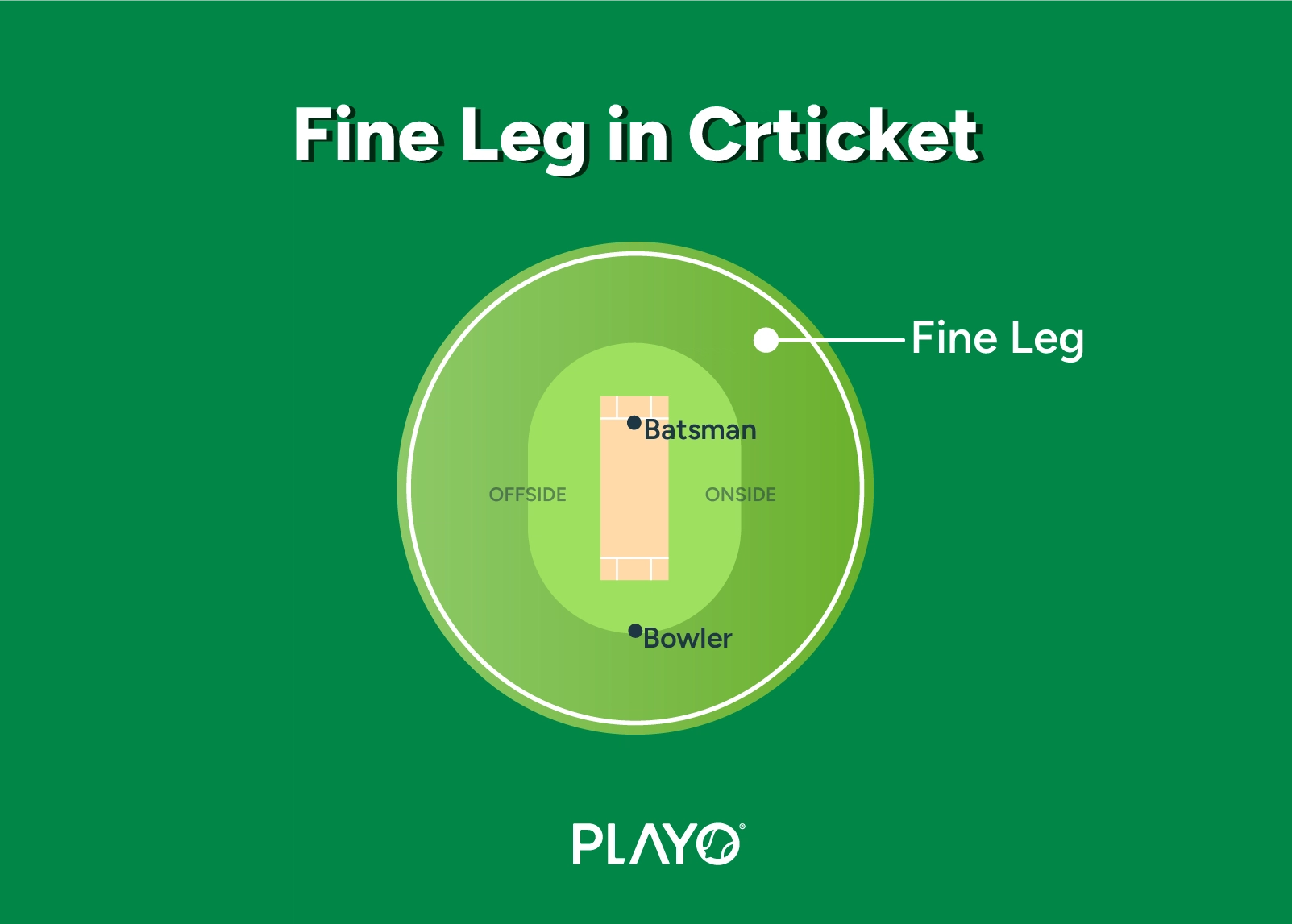
The fine leg position is located behind square on the leg side of the batter, usually between the wicketkeeper and square leg. Depending on the match situation and bowling strategy, the fielder may stand either inside the circle or closer to the boundary rope as deep fine leg. This position becomes especially important against fast bowlers, as batters frequently play leg glances, hook shots, pull shots, and deflections toward this region.
Why is it Called “Fine Leg”?
The name “fine leg” might seem puzzling to cricket newcomers, but it actually follows a logical naming convention rooted in cricket’s traditional fielding terminology. Breaking down the term reveals both its positional meaning and strategic purpose.
The “Leg” Component
The word “leg” simply refers to the leg side of the field—the half of the playing area that lies behind the batter’s legs when they take their stance. For a right-handed batter, this is the left side of the field from the bowler’s perspective. For a left-hander, it’s the right side. This distinguishes it from the “off side,” which is the opposite half of the field.
The “Fine” Component
In cricket fielding language, “fine” describes the angle at which a fielder is positioned relative to the pitch. When a position is described as “fine,” it means the fielder stands at a narrow or acute angle to the line of the pitch, closer to the imaginary centre line that runs from wicket to wicket. Think of it this way:
- “Fine” positions are closer to straight behind the batter (narrow angle)
- “Square” positions are at roughly 90 degrees to the pitch (wider angle)
So when a ball is hit straight to a fielder standing right next to the stumps behind the batter, it’s said to have been hit “fine.” If it’s hit toward the side at a wider angle, that’s called “square.”
Read More: What is Cow Corner in Cricket?
Fine Leg vs Square Leg
The difference between fine leg and square leg mainly comes down to the angle at which the fielder is positioned. The fine leg is placed behind square on the leg side at a narrower angle closer to the batter, while the square leg stands almost at a 90-degree angle to the batter on the leg side.
This naming pattern also applies to fielding positions on the off side:
- Fine Leg – Narrow angle behind square on the leg side
- Third Man – Narrow angle behind square on the off side
- Square Leg – Positioned square to the batter on the leg side
- Point – Positioned square to the batter on the off side
Understanding these terms makes cricket field placements much easier to follow. In simple words, “fine” refers to a straighter or sharper angle behind the batter, while “square” refers to positions placed directly sideways to the batter.
Fine Leg vs Deep Fine Leg
One of the most common cricket fielding confusions is the difference between fine leg and deep fine leg. While both positions are located behind square on the leg side, the main difference lies in how far the fielder stands from the batter and the role they play in the field setup.
- Fine Leg: Positioned closer to the batter, usually around 15–25 metres away. This position is mainly used for stopping quick singles, catching deflections, and supporting close fielding tactics, especially against spinners or disciplined bowling attacks.
- Deep Fine Leg: Positioned much farther back, typically near the boundary rope, around 40–50 metres from the batter. This role is more defensive and is mainly used to stop boundaries and catch aerial shots like hooks, pulls, and top edges against fast bowlers or aggressive batters.
In simple terms, the word “deep” in cricket means the fielder is stationed closer to the boundary. Deep fine leg has become especially important in ODIs and T20s, where batters frequently target the leg side with attacking shots.
Why is Fine Leg Important in Cricket Tactics?
Fine leg is much more than just a fielding position. It is a key tactical tool used by captains to control scoring, create wicket-taking opportunities, and support different bowling strategies. Since many batters naturally target the leg side, especially against short balls or deliveries aimed at the pads, fine leg becomes an essential part of the field setup in every format of cricket.
1. Helps Prevent Easy Runs
One of the primary responsibilities of a fine leg fielder is stopping easy runs on the leg side. Shots like leg glances, flicks, deflections, paddle sweeps, and top edges often travel in this direction. Without a properly placed fine leg fielder, these shots can quickly race away for boundaries.
2. Creates Catching Opportunities
Fine leg is also an important catching position, particularly against fast bowlers using short-pitched tactics. Batters attempting hook shots or pull shots can mistime the ball, resulting in top edges that travel toward deep fine leg. A well-positioned fielder can turn these mistakes into crucial wickets.
3. Supports Different Bowling Strategies
Captains often adjust the fine leg position depending on the bowler’s plan. Bowlers targeting the leg stump or bowling inswing deliveries rely on fine leg to stop edges and deflections. Against spinners, fine leg may move closer inside the circle to cut off singles and build pressure on the batter.
4. Adapts Across All Cricket Formats
Fine leg remains important in every format of cricket, but its role changes depending on the situation. In Test cricket, the fielder may stand finer or slightly closer to catch gloved edges and save singles. In ODIs and T20s, deep fine leg is commonly used near the boundary to stop aggressive shots and prevent easy boundaries during power-hitting phases.
How to Field Effectively at Fine Leg
Fielding at fine leg requires sharp awareness, good anticipation, and excellent reflexes. Since the ball can travel at awkward angles, fielders must stay alert throughout the game.
- Anticipation and Positioning: A good fine leg fielder carefully watches the batter’s stance, movement, and the bowler’s line. Deliveries aimed at the pads or short-pitched balls are more likely to produce leg-side shots or deflections toward fine leg.
- Quick Reflexes: Edges and deflections can change direction suddenly, especially against fast bowling. Reacting quickly is essential to stop boundaries or complete difficult catches near the boundary rope.
- Strong Throwing Ability: Fine leg fielders often need to throw quickly toward the wicketkeeper or bowler’s end after stopping the ball. A fast and accurate throw can prevent extra runs and even create run-out opportunities.
- Communication with Other Fielders: The fine leg fielder must coordinate with nearby fielders like square leg and the wicketkeeper to avoid confusion, especially when chasing catches or saving boundaries.
Common Mistakes to Avoid at Fine Leg
Even experienced players can struggle at fine leg if their positioning or concentration slips.
- Standing Too Square: If the fielder stands too square to the batter, balls played finer behind the batter can easily escape toward the boundary. Correct angles are crucial at the fine leg.
- Incorrect Positioning for Different Bowlers: The fine leg position should change depending on whether the bowler is left-arm or right-arm, and whether they bowl pace or spin. Poor positioning can leave large gaps in the field.
- Losing Concentration: Fine leg may sometimes seem quiet for several deliveries, but one moment of lost focus can cost important runs or dropped catches. Staying mentally alert on every ball is essential.
Conclusion
Fine leg is one of the most strategically important fielding positions in cricket, playing a crucial role in both run prevention and wicket-taking opportunities. Positioned behind the square on the leg side, the fielder is responsible for stopping glances, flicks, hooks, pulls, and deflections that regularly occur in modern cricket. From Test matches to high-scoring T20 games, captains constantly adjust the fine leg position based on bowling plans, batter strengths, and match situations. Understanding how fine leg works not only helps fans follow field placements better but also reveals the tactical depth and precision involved in cricket strategy.
Download Playo on Android or iOS, or visit playo.co to start playing!
Frequently Asked Questions
Fine leg is a fielding position located behind square on the leg side of the batter. It is mainly used to stop leg-side shots, deflections, and top edges.
The word “fine” refers to the narrow angle behind the batter, while “leg” indicates the leg side of the field. Together, the term describes the fielder’s position behind square on the leg side.
Fine leg stands closer to the batter, while deep fine leg is positioned near the boundary rope to stop boundaries and catch aerial shots.
Shots like leg glances, flicks, hook shots, pull shots, paddle sweeps, and deflections commonly travel toward the fine leg region.
Fine leg is mostly considered a defensive position, but it can also become an attacking fielding spot when used for catching top edges or mistimed hook shots.