

A boundary catch in cricket is one of the most exciting fielding moments in the game. It occurs when a fielder catches the ball close to or beyond the boundary rope, often while jumping or diving to prevent a six. However, not every catch near the boundary is considered legal.
According to the Marylebone Cricket Club (MCC) Laws of Cricket, a boundary catch is valid only when the fielder meets specific conditions regarding their position, contact with the ground and control of the ball. The rules also explain when a fielder can jump from outside the boundary, touch the ball in the air and complete a catch inside the playing area.
Understanding the cricket boundary catch rule helps players, umpires and spectators determine whether a batter is out, scores a six or remains at the crease.
What is the Cricket Boundary Catch Rule?
The cricket boundary catch rule determines whether a fielder can complete a catch when the ball is close to or beyond the boundary rope.
Under Law 19 (Boundaries) and Law 33 (Caught) of the MCC Laws of Cricket, a catch is fair only when neither the ball nor a fielder in contact with it is grounded beyond the boundary before the catch is completed.
The rule also allows certain airborne fielding techniques. A fielder can jump from outside the boundary and touch the ball while airborne, but they must follow specific conditions to prevent a boundary from being awarded.
The MCC’s fourth edition of the 2017 Code, published in October 2026, incorporates the updated boundary-catch provisions.
Official Rules for a Boundary Catch in Cricket
The following are the key conditions governing boundary catches under the current Laws of Cricket.
1. The Fielder Must Not Be Grounded Beyond the Boundary
A fielder cannot complete a legal catch if any part of their body is in contact with the boundary rope, the ground outside the boundary or an object grounded beyond it while they are in contact with the ball.
For example, if a fielder catches the ball while standing inside the boundary but their foot touches the boundary rope before completing the catch, the catch is not valid. The same applies if the fielder touches an object outside the boundary while holding the ball.
However, accidental contact between two fielders does not automatically make both of them grounded beyond the boundary. The umpire considers whether the contact was intentional and intended to assist in fielding the ball.
2. Fielder’s First Contact with the Ball Matters
A fielder’s final contact with the ground before their first contact with the ball must be entirely within the boundary. If the fielder’s last contact with the ground was outside the boundary, they are considered grounded beyond it, even if they are airborne when they touch the ball.
This condition prevents fielders from gaining an unfair advantage by starting their fielding attempt from outside the playing area.
3. A Fielder Can Jump from Outside the Boundary
The updated boundary catch rule allows a fielder to jump from outside the boundary and touch the ball while airborne, provided their first contact with the ball did not violate the previous condition. However, after making this airborne contact, the fielder must land and remain within the field of play until the ball becomes dead.
If the fielder touches the ground outside the boundary again during the same delivery, a boundary is awarded. This applies whether or not the fielder is holding the ball at the time of landing.
4. The Fielder Cannot Keep Returning to the Ball from Outside
The updated rule also limits repeated airborne touches beyond the boundary. Once a fielder has made their first contact with the ball and subsequently left the field of play, they can make only one further contact with the ball while airborne beyond the boundary.
After this contact, they must land and remain entirely within the boundary until the ball becomes dead. This restriction also applies when another fielder completes the catch after the ball has been returned into the field of play.
Read More: Test Cricket vs ODI
What Happens If a Fielder Catches the Ball Outside the Boundary?
If a fielder touches the ball while grounded beyond the boundary, the ball is considered to have been grounded beyond the boundary under Law 19.4. The outcome depends on how the ball reached the boundary:
- Six runs: If the batter hits the ball with the bat and it first touches the ground beyond the boundary without previously touching the ground inside the field of play, six runs are awarded.
- Four runs: If the ball first touches the ground within the boundary before going beyond it, four runs are awarded.
- Not out: If the ball is not legally caught and has not already resulted in a dismissal, the batter is not out caught.
A boundary can also be awarded when a fielder catches the ball inside the boundary but becomes grounded beyond it while still in contact with the ball before completing the catch.
What is the Difference Between the Old and New Boundary Catch Rules?
The ICC introduced changes to the boundary catch rule in June 2025, which came into effect during the Sri Lanka-Bangladesh series. The updated rule limits repeated airborne touches beyond the boundary and requires fielders to land and remain inside the playing area. These changes were incorporated into the MCC Laws of Cricket in October 2026.
| Aspect | Previous Rule | Updated Rule |
| First contact | Must be made while the fielder is legally positioned. | Same condition applies. |
| Airborne contact | Multiple airborne touches were permitted. | Only one further airborne touch is allowed beyond the boundary. |
| Landing | Must not be grounded beyond the boundary while in contact with the ball. | Must land and remain inside the boundary. |
| Team involvement | No specific limit on combined fielding efforts. | The restriction applies even when another fielder completes the catch. |
Examples of Boundary Catches in Cricket
The following examples illustrate different boundary-catching situations and their outcomes.
Example 1: Catch completed inside the boundary
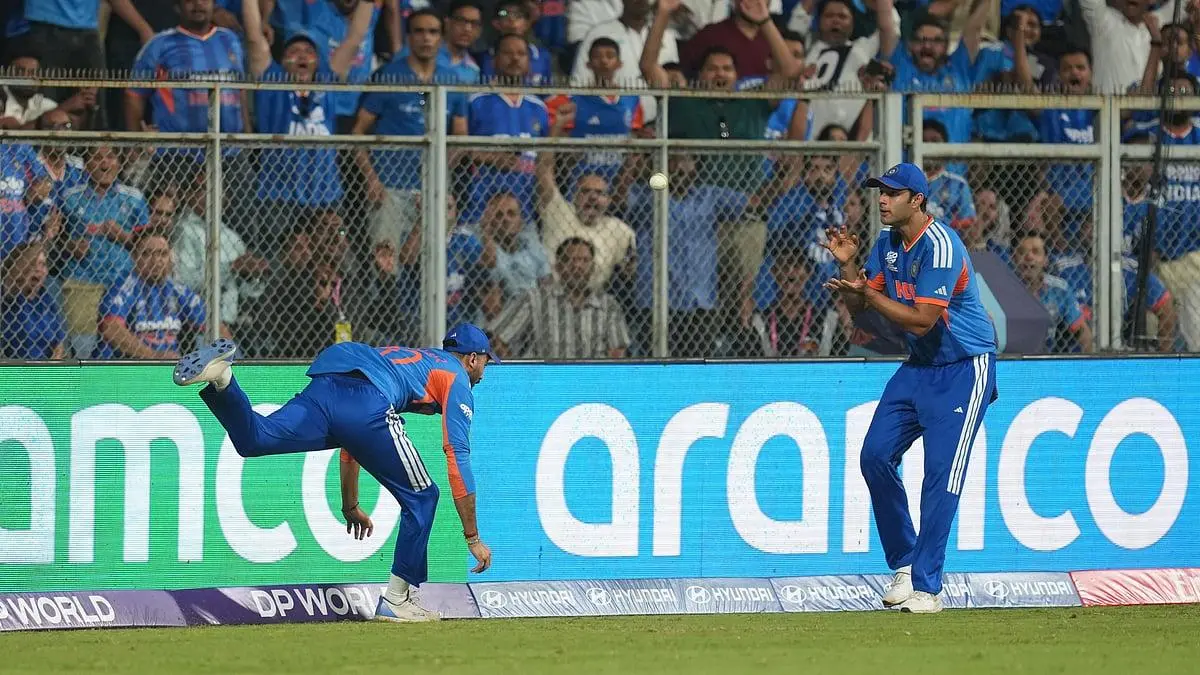
A fielder catches the ball while standing inside the boundary and maintains control of both the ball and their movement without touching the boundary rope or ground outside.
Out: Caught
Example 2: Fielder touches the ball while grounded outside
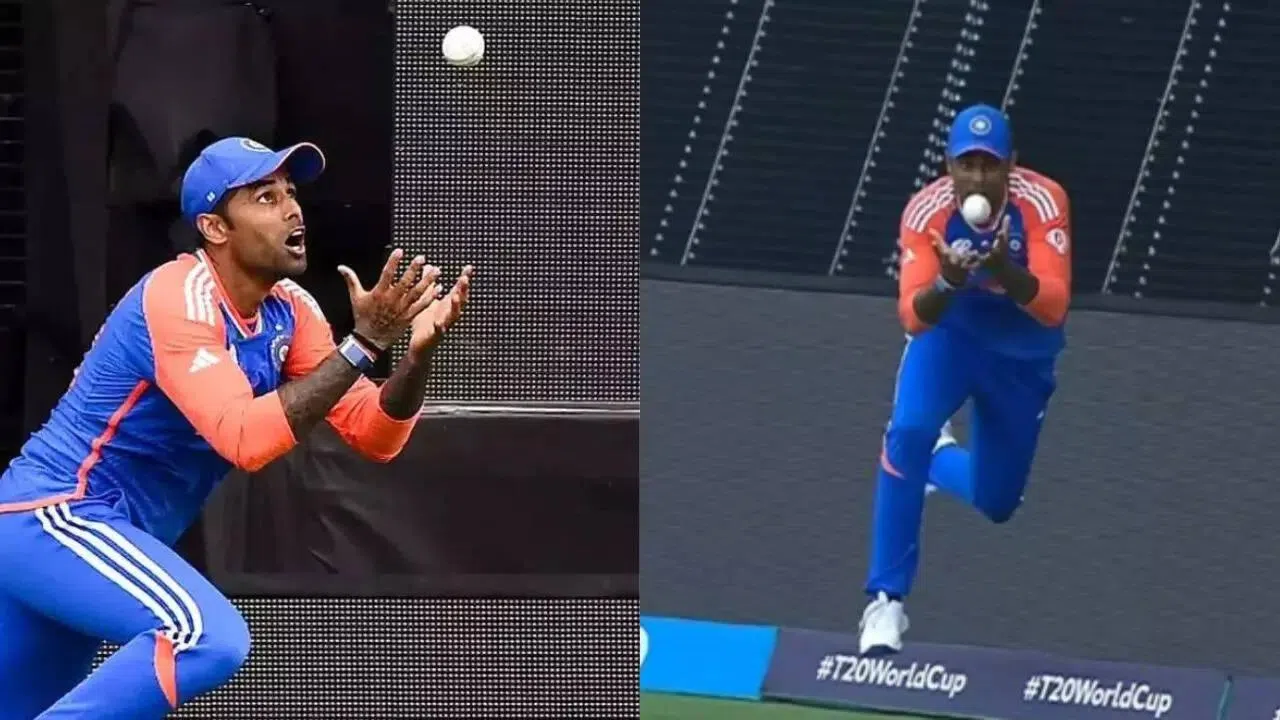
If a fielder touches the ball while grounded beyond the boundary, it is a boundary. Six runs are awarded if the ball has not touched the ground inside the field.
Boundary awarded
Example 3: Fielder jumps from outside the boundary

A fielder makes their first contact with the ball legally, leaves the field of play and makes one further contact while airborne beyond the boundary. They then land and remain inside the playing area. The catch can be completed legally if all the other catching conditions are satisfied.
Legal fielding attempt
When is a Batter Out Caught in Cricket?
According to Law 33 of the MCC Laws of Cricket, a batter is out caught when:
- The delivery is not a No ball.
- The ball touches the striker’s bat without previously touching a fielder.
- A fielder catches and holds the ball before it touches the ground.
- The catch meets the fair-catch conditions under Laws 19 and 33.
The catch is considered complete when the fielder has complete control over both the ball and their own movement.
Therefore, simply touching or momentarily holding the ball does not automatically complete a catch. The fielder must establish control while complying with the boundary restrictions.
Conclusion
The cricket boundary catch rule ensures that fielders cannot gain an unfair advantage by using the area outside the playing field to complete a catch. While players can use athletic jumps and airborne touches to prevent a boundary, they must follow the conditions specified under Law 19.
The updated rule introduced in 2025 and incorporated into the MCC’s 2026 Laws places additional restrictions on repeated airborne touches beyond the boundary. Understanding these conditions helps determine whether a boundary catch is legal, a batter is out, or the batting team receives four or six runs.
Download Playo on Android or iOS, or visit playo.co to start playing!
Frequently Asked Questions
Yes. A fielder can jump from outside the boundary and touch the ball while airborne, provided their first contact complies with Law 19.5.2. They must then land and remain inside the boundary.
A fielder can make only one further airborne contact beyond the boundary after their initial contact and departure from the field. They must then land and remain inside the playing area.
Yes. If the fielder touches the boundary rope while in contact with the ball before completing the catch, it is a boundary. Six runs are awarded if the ball was hit by the bat and had not touched the ground inside the field.
Yes. Multiple fielders can participate, but each must follow the boundary restrictions. A fielder cannot intentionally use contact with a teammate grounded beyond the boundary to assist in fielding.
Yes. The updated rule applies to international Tests, ODIs and T20Is under ICC playing conditions. Other formats follow the MCC Laws, subject to their competition-specific regulations.