

The Decision Review System (DRS) in cricket allows teams to challenge certain decisions made by on-field umpires using technology and the assistance of the third umpire. It helps officials make more accurate decisions in situations involving LBW appeals, caught-behind dismissals, run-outs and other incidents covered by the applicable playing conditions.
Introduced to reduce umpiring errors in international cricket, DRS combines video replays, ball-tracking technology and sound-based edge detection to examine disputed decisions. However, teams cannot challenge every decision, and specific rules govern when a review can be requested, how many reviews are available and how the final decision is reached.
The International Cricket Council (ICC) establishes the DRS protocols for international matches, while the Marylebone Cricket Club (MCC) maintains the Laws of Cricket. Here is how the Decision Review System works, including its rules, technology, review process and the meaning of Umpire’s Call.
What is DRS in Cricket?
DRS stands for Decision Review System. It is a technology-assisted process that enables players to request a review of eligible on-field umpiring decisions. The third umpire examines the available evidence and communicates the findings to the on-field officials, who make or confirm the decision according to the applicable playing conditions.
The system has two main components: Player Reviews and Umpire Reviews.
- Player Review: A batter or the fielding team challenges an eligible decision made by an on-field umpire.
- Umpire Review: An on-field umpire refers an incident to the third umpire for assistance, such as checking a run-out or stumping.
DRS is designed to support the umpires rather than replace their authority. Its precise procedures, available technologies and review limits depend on the competition’s playing conditions.
How Does DRS Work in Cricket?
The DRS process follows a defined sequence, from the original umpiring decision to the announcement of the final outcome. The following steps describe a typical Player Review in an international match.
1. The on-field umpire makes a decision: The umpire gives a decision, such as Out or Not out, following an appeal from the fielding side.
2. A team requests a review: If the decision is eligible for review, the appropriate player or captain signals a T with both forearms. The request must meet the applicable time limit.
3. The third umpire examines the evidence: The third umpire reviews relevant footage and uses the available approved technologies, such as ball tracking or sound-based edge detection.
4. The evidence is assessed: The third umpire checks whether the available evidence supports changing the original decision. If it is inconclusive, the original decision generally stands.
5. The decision is communicated: The on-field umpire communicates the final outcome, confirming or overturning the original decision as appropriate.
Read More: Cricket Googly Bowling
Types of Technology Used in DRS
DRS uses different technologies to investigate different types of cricketing decisions. The technology available depends on the competition’s approved setup.
1. Ball-tracking Technology
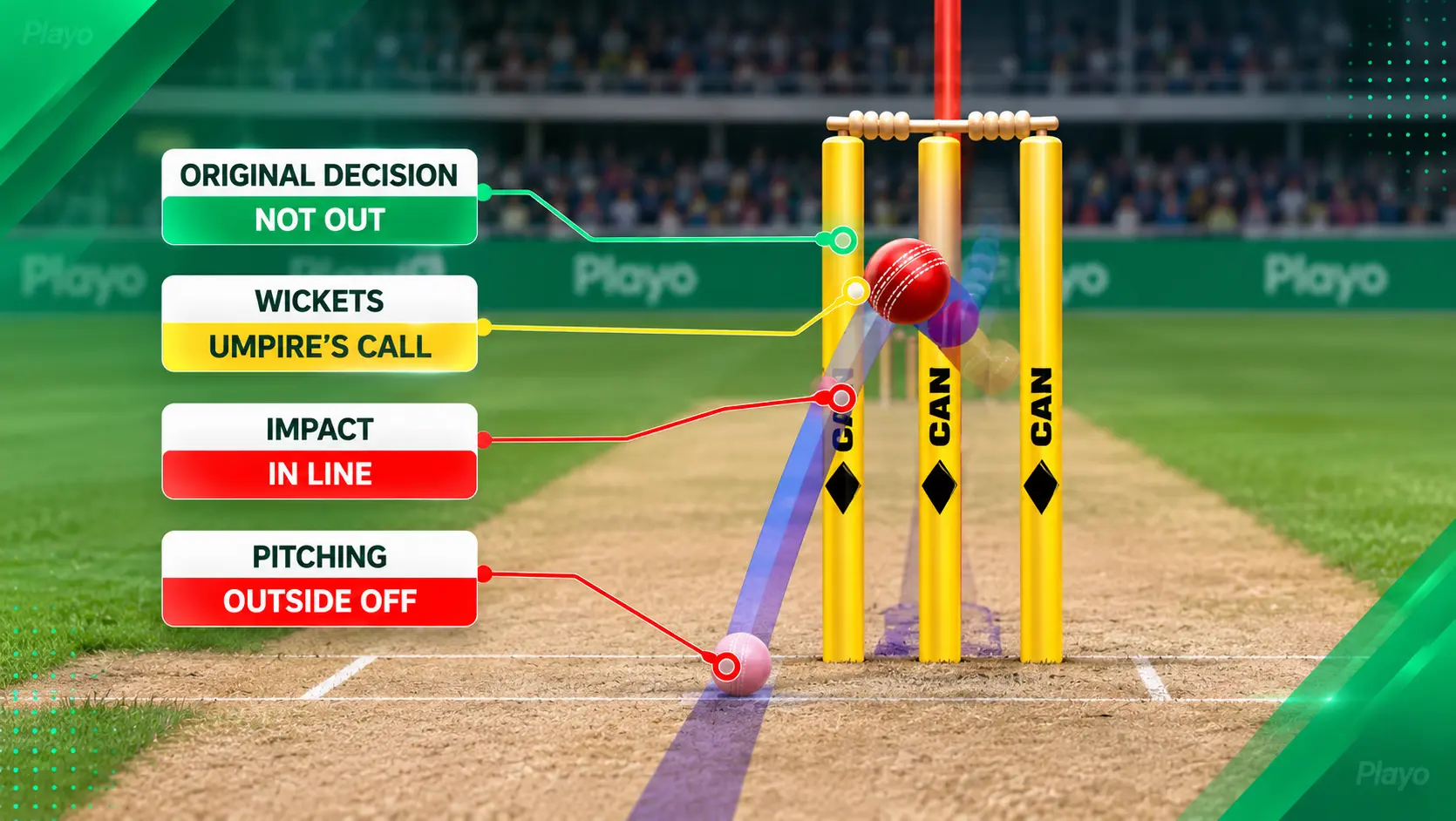
Ball tracking reconstructs the ball’s trajectory to help determine where it pitched, where it hit the batter and whether it would have hit the stumps. It is particularly important for reviewing LBW decisions.
2. Sound-based Edge Detection
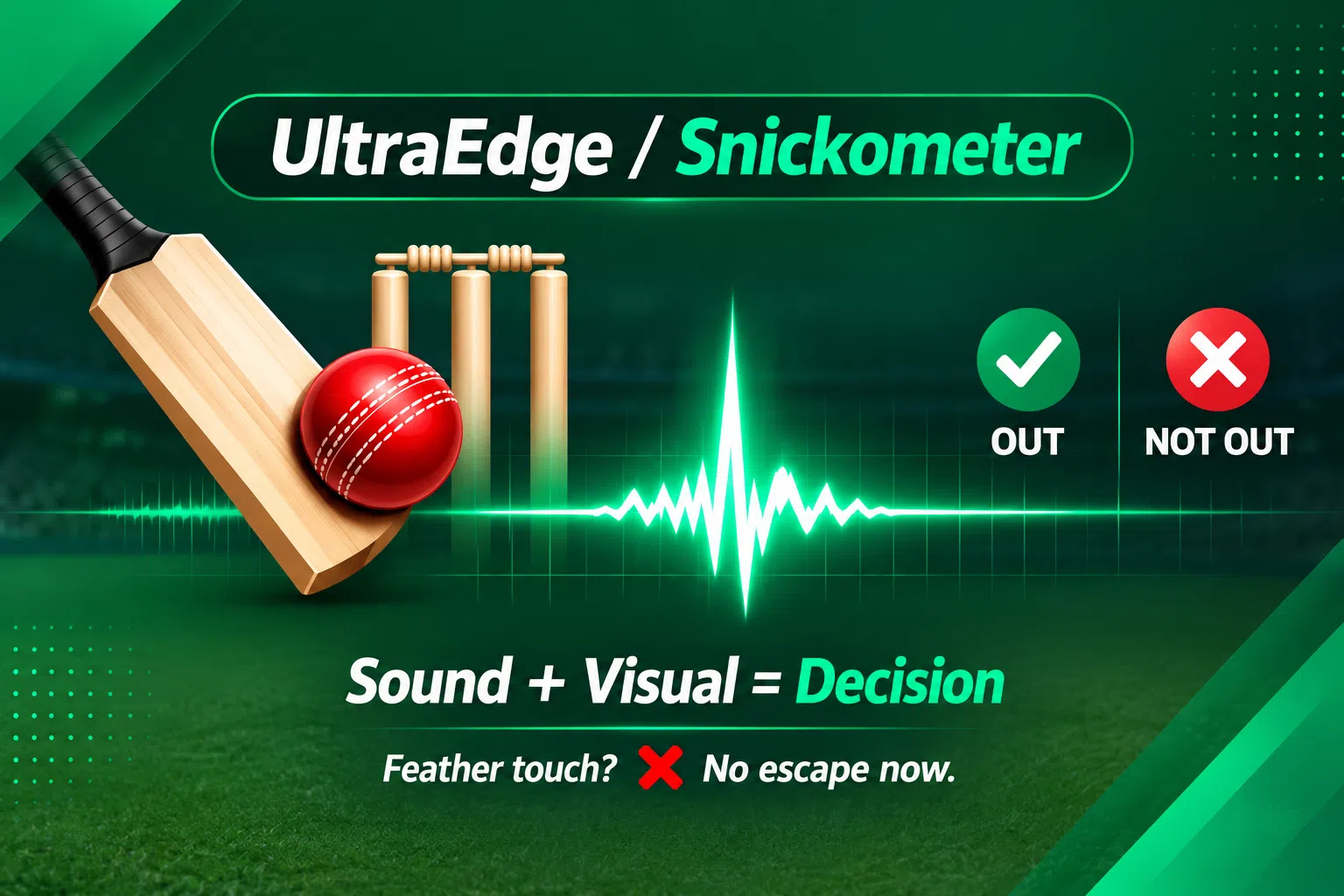
Systems such as UltraEdge analyse audio associated with the ball’s passage near the bat and pad. This helps the third umpire assess whether the ball made contact with the bat, particularly in caught-behind appeals.
3. Video Replays and Camera Footage
Multiple camera angles and slow-motion replays help officials examine run-outs, stumpings, catches and other incidents. Stump-camera footage and audio may also be used where permitted.
These technologies provide evidence to assist the third umpire. They do not independently make the official decision; the decision is made through the umpiring process.
What is Umpire’s Call in DRS?
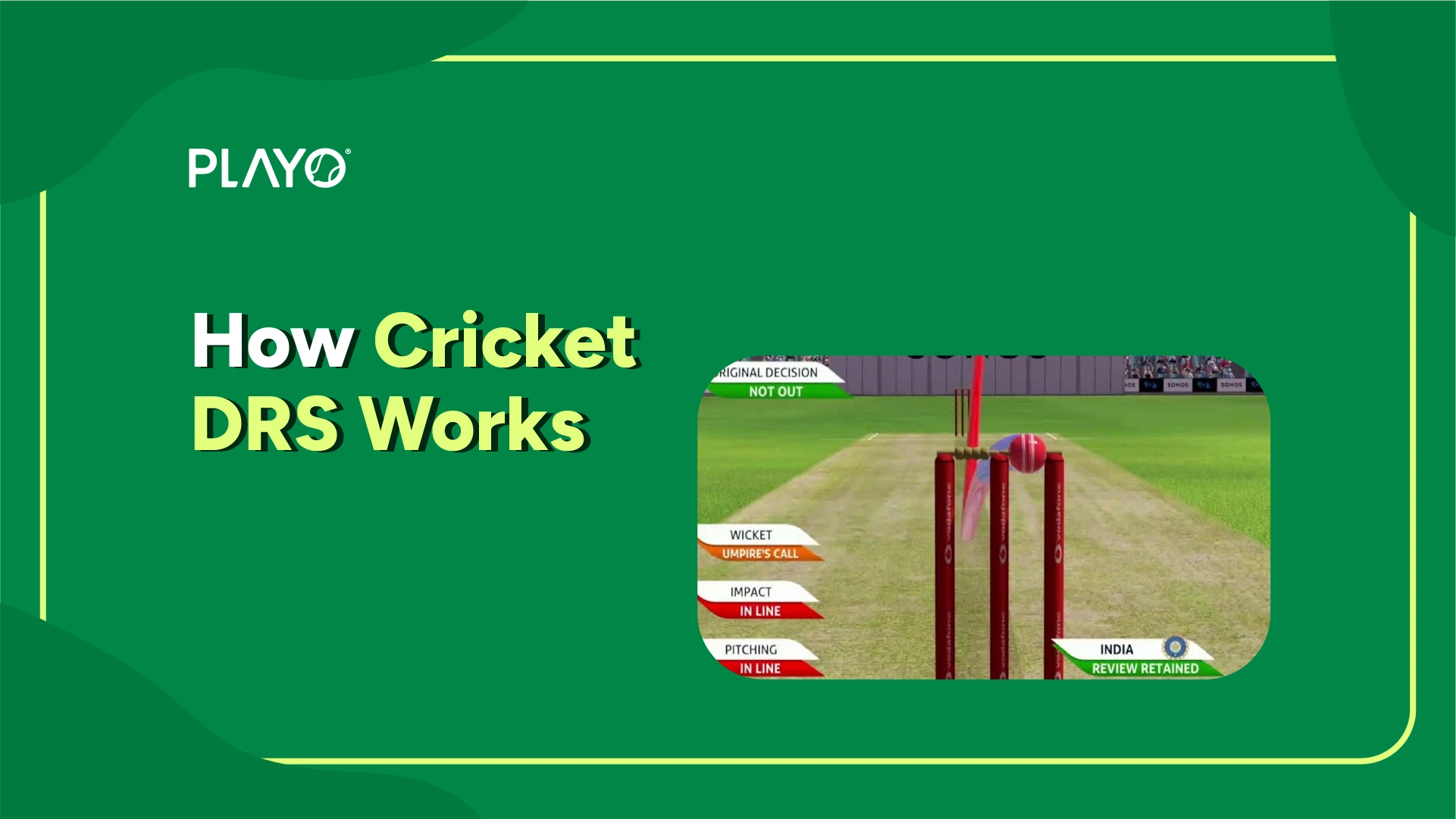
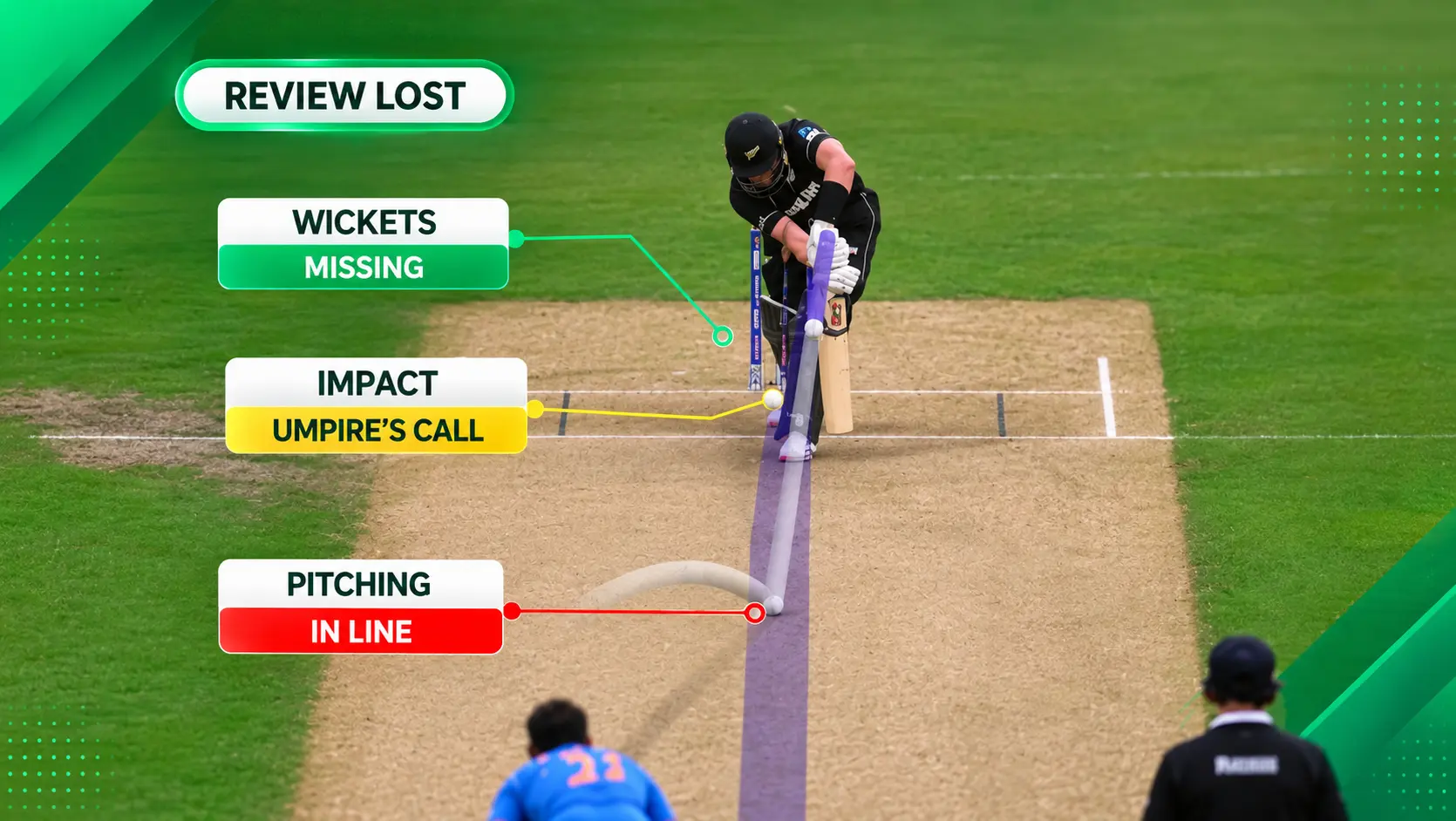
Umpire’s Call is a category used in certain marginal LBW reviews. It applies when ball-tracking indicates that the relevant part of the decision falls within a specified marginal zone, such as the point of impact or the predicted contact with the stumps.
An LBW review examines three key elements:
- Pitching: Where the ball pitched.
- Impact: Where the ball first hit the batter’s person, if it did not hit the bat first.
- Wicket: Whether the projected path of the ball would hit the stumps.
If the ball-tracking result falls within the applicable Umpire’s Call criteria, the original on-field decision is retained for that element of the review.
For example, if a batter is given Not out and the ball-tracking result shows Umpire’s Call for impact, the Not out decision stands. If the batter is given Out and the relevant result is Umpire’s Call, the Out decision also stands.
One more Important thing to note is that Umpire’s Call does not mean the technology has failed. It is a defined part of the DRS protocol for marginal decisions.
How Many DRS Reviews are Allowed in Cricket?
The number of reviews and the rules for retaining them depend on the competition’s playing conditions. In ICC international formats, unsuccessful Player Reviews are subject to format-specific limits.
| Format | Player Review allowance |
| Test cricket | Generally, up to 3 unsuccessful Player Reviews per team per innings |
| One Day Internationals (ODIs) | Generally, up to 2 unsuccessful Player Reviews per team per innings |
| Twenty20 Internationals (T20Is) | Generally, up to 1 unsuccessful Player Review per team per innings |
These are the standard ICC international allowances, not universal rules for every domestic league or tournament. Competition-specific playing conditions should be checked before applying them to a particular match.
A successful Player Review does not count as an unsuccessful review. Under the applicable protocols, a review that results in Umpire’s Call is also treated as unsuccessful for the review allowance.
What are the Rules for Requesting a DRS Review?
Players must follow the prescribed procedure when requesting a Player Review.
- Eligible decisions only: Player Reviews generally apply to decisions about whether a batter is dismissed or not dismissed, subject to specified exceptions in the playing conditions.
- Correct player must request it: The batter involved may request a review of an Out decision. The captain, or acting captain, of the fielding side may request a review of a Not out decision.
- T signal: The request is made by forming a T with both forearms at head height.
- Time limit: Under the cited ICC ODI protocol, the request must be made within 15 seconds of the ball becoming dead, subject to the stated exception for certain fair-catch or bump-ball reviews.
- No repeated challenges without limit: A team cannot keep requesting reviews once it has exhausted its permitted unsuccessful reviews for that innings.
The applicable playing conditions determine the exact procedure and any exceptions. An Umpire Review, by contrast, is initiated by the on-field umpire and is not the same as a Player Review.
What Happens When a DRS Review is Unsuccessful?
A review is unsuccessful when the available evidence does not justify changing the original decision. The on-field decision then stands, and the team loses a review according to the applicable playing conditions.
For example, if a batter is given Not out for an LBW appeal and the ball-tracking evidence does not establish that the original decision should be overturned, the Not out decision remains. The review is unsuccessful and counts against the team’s allowance.
If the evidence is inconclusive, the third umpire does not simply guess which outcome is more likely. Under the cited ICC protocol, the original decision stands when the evidence does not provide sufficient confidence to change it.
Conclusion
The Decision Review System has become an important part of modern cricket by giving teams a structured way to challenge eligible umpiring decisions. Through ball tracking, sound-based edge detection and video replays, the third umpire can assess disputed incidents and provide evidence to help the on-field umpires reach the correct outcome.
Understanding how DRS works, including Player Reviews, review limits and Umpire’s Call, makes it easier to follow key moments in Test matches, ODIs and T20 internationals. However, the exact rules can differ between competitions, so the relevant playing conditions remain the authoritative reference.
Download Playo on Android or iOS, or visit playo.co to start playing!
Frequently Asked Questions
DRS stands for Decision Review System. It uses approved technology and third-umpire assessment to review eligible on-field decisions.
The batter involved can request a review of an Out decision, while the captain or acting captain of the fielding team can request a review of a Not out decision, subject to the applicable playing conditions.
The T signal is made by forming a T shape with both forearms at head height. It indicates that a team is requesting a Player Review.
No. Umpire’s Call means a specific part of the LBW assessment falls within a defined marginal zone. The original decision stands, whether that decision was Out or Not out.
No. DRS availability depends on the competition and its playing conditions. Some matches use a third umpire without the full DRS technology package.
Generally, no. A successful Player Review does not count towards the permitted number of unsuccessful reviews under the applicable ICC protocols.