

There are four primary styles for playing tennis singles: aggressive baseliner, serve-and-volleyer, counterpuncher, and all-court player. Each tennis playing style is defined by specific patterns of shot selection, court positioning, and point construction. Recognising these tennis player styles early in a match helps you anticipate your opponent’s decisions and adapt your tactics accordingly. This guide explains the key characteristics of each style of tennis and outlines practical strategies you can use to counter them effectively during play.
1. The Aggressive Baseliner
The aggressive baseliner likes to be in control and dictate play. They rely on the strength of their groundstrokes to move opponents around the court and will aggressively go for winners from the back of the court. These players typically have a weapon in their forehand and, often times, their backhand. At more advanced levels of play, they use the geometry of the court to hit angled shots that open the court for winners. Because these players like to be aggressive, they will attack short balls in the court and take the chance of making a few unforced errors to hit winners. These players typically do not like to come to the net, and their volleys are often a weakness (at least compared to their groundstrokes).
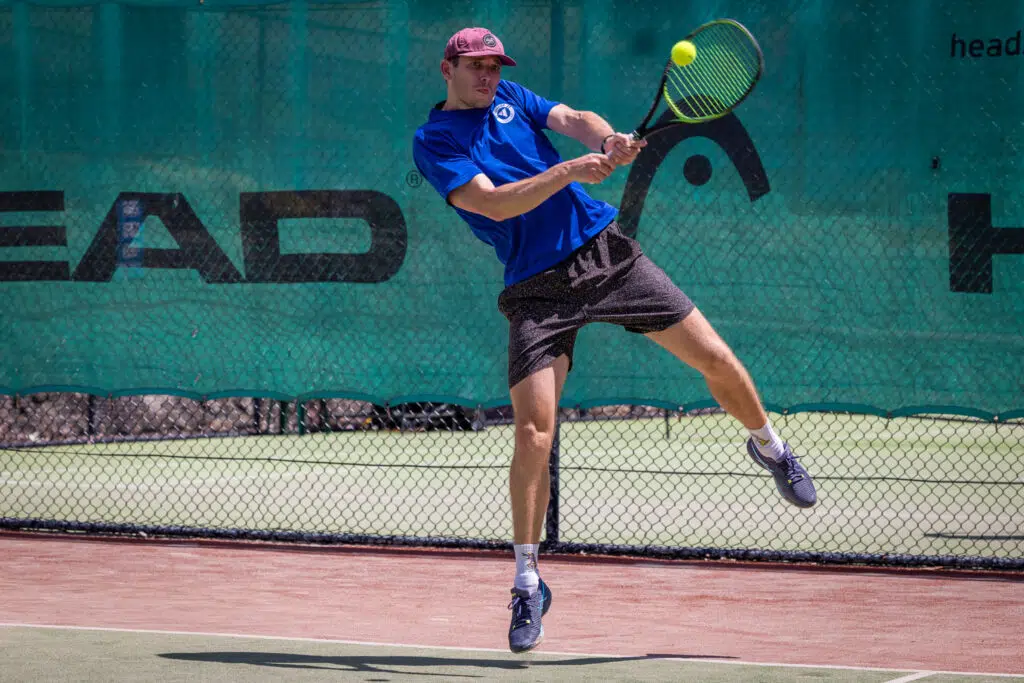
Key Strategies to Beat The Aggressive Baseliner
- Hit deep into the court: You need to keep your shots deep into the back third or quarter of the court. If you give these players balls near the service line, they will hit winners almost every time.
- Vary the height and spin of your balls. Every aggressive baseliner has a “wheelhouse” a height of ball bounce that is their power zone. You need to vary the height at which they receive your balls–mix in high-bouncing shots with low, slicing shots. Also varying the spin: topspin, flat, and slice.
- Bring them to the Net. Force them to come up to the net and beat you with their volleys by mixing in drop shots. Make sure you have a good drop, though. They will punish you for a high sitter or a drop shot that lands too close to the service line.
2. The Serve-and-Volleyer
The serve-and-volley player will attack the net, coming in behind their serve. They come to the net after nearly every first serve, and often times after a second serve. They may or may not come aggressively to the net after their return of serve. When they do not come to the net right away, they are looking to come to the net as soon as possible, usually within the first several balls in a rally. Their typical point construction is to serve, hit a well-placed first volley to open the court, and finish with a volley to end the point. The technology behind modern racquets and, to a much greater extent, modern strings has made the serve-and-volleyer a rarity compared to the days of old, when the game was played on grass with wooden racquets.
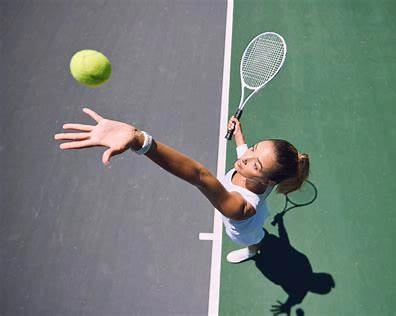
Key Strategies to beat the Serve-and-Volleyer
- Focus on your return of serve: Yes, their serve is a weapon. However, you need to be proactive with where you try to return their serve. You need to change your return location and use down-the-line returns more often than you should against other playing styles. It’s the hardest return from which to hit a first volley because they have to cover the entire width of the court.
- Use sharply angled topspin shots: Both as a return of serve and as a rally ball, using a heavy topspin will give you the margin of error to hit angled, cross-court shots. It’s also effective at making balls drop quickly at their feet, forcing them to have to hit up on their volleys.
- Take their time away by hitting your return on the rise: If you return their serve by getting the ball on the rise, you take precious time away from them. This means they can’t be as close to the net as they would like for their first volley.
- Keep them pinned to the baseline: Serve-and-volley players do not want to stay back and rally from the baseline. They often do not have consistent enough groundstrokes to sustain long rallies or be aggressive from the baseline. If they do not follow their second serve or return of serve to the net, keep your shots deep in order to keep them at the baseline and rally.
Read More: List of Tennis Tournaments Around the World
3. The Counterpuncher
The Counterpuncher, also known as the Pusher, is all about consistent defence. These types of players know their percentages and always hit them. They know that 2/3 of the points won in tennis are from errors, so they will never make one. They will never go for too much on shot, they almost never hit winners, and will win most of their points because you will eventually make an error. To top it off, they are usually fast and have good court coverage. The best counterpunchers keep their shots deep, have good lobs, and place balls effectively.
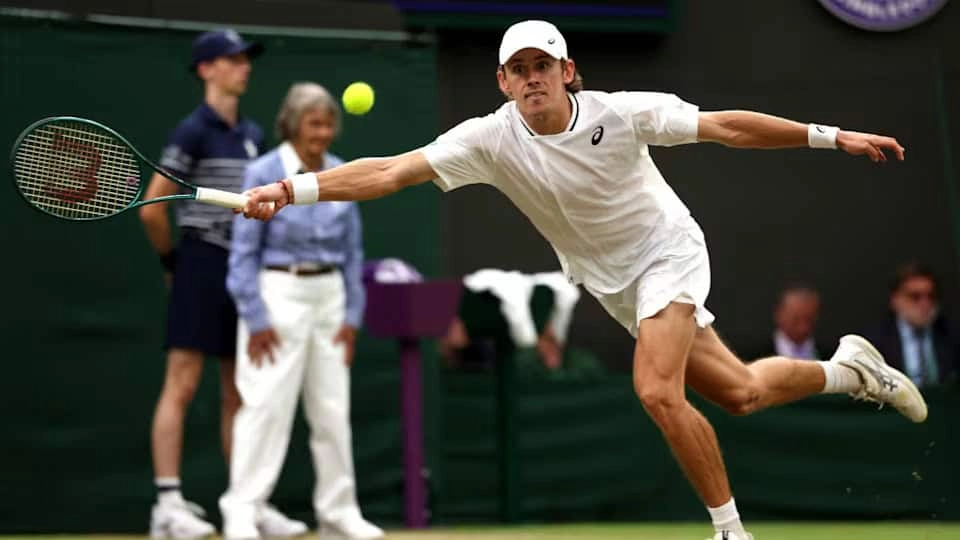
Key Strategies to Beat the Counterpuncher
- Attack the net: Counterpunchers do not like to be rushed or pressured into trying for too much. Be aggressive in coming into the net to finish off points.
- Be patient: You are going to have points where you will need to hit more balls than you want. You must patiently construct points to get your opening to the net. However, don’t stay in long protracted rallies for too long.
- Hit behind them: A lot of counterpunchers cover the court well by running to the open court. Hitting balls behind them can effectively wrong-foot them and either draw a ball that you can attack and come into the net behind or, if you’re really lucky, an error.
- Embrace your overhead: The lob is a high percentage shot. Do not get into a long lob-counter lob fest with them. Hit an overhead, drive the lob, or better yet, hit an overhead from the baseline off of those deep lobs.
- Move them forward and backwards: Counterpunchers are excellent movers from side to side, but often times they are not good movers from forward to back. Hit drop shots and short cross-court angles to move them forward, then follow it up with a deep lob or deep, penetrating groundstroke to move them back again.
4. The All-Court Player
The All-Court Player, as the name implies, is comfortable using a lot of different shots. The All-Courter adapts and uses shots that are best matched to exploit their opponent’s weaknesses. Against the counterpuncher, they are aggressive net attackers. Against the serve and volleyer, they are consistent baseliners. They are often a jack-of-all-trades that can hit every shot in the book- sound volleys, beautiful drop shots, dependable lobs, anything.
Key Strategies to Beat the All-Court Player
- Stick to your weapon: Know what your weapon is (forehand or consistency) and focus on using it as much as possible. An all-courter will likely have a difficult time breaking down your much better weapon. This is why Nadal plays his forehand weapon against Federer’s slice backhand.
- Hit high looping topspin balls deep into the court: Keeping high topspin balls deep will keep the all-court player pinned deep behind the baseline. It’s very difficult to hit variety from 3+ feet behind the baseline, as drop shots are impossible to hit while moving backwards this far from the net.
- Be aggressive and dictate the points: You are going to have to take control of the points as much as possible and dictate play. All-courters are very aggressive players – even when they employ a counterpunch strategy, it is because that’s what opponents don’t like and they are controlling this rhythm.
Conclusion
Understanding tennis playing styles is essential for effective match strategy. Each tennis playing style, whether aggressive baseliner, counterpuncher, or all-court player, follows predictable patterns in shot selection and court positioning. Identifying these tennis player styles early allows you to construct points with purpose, exploit weaknesses, and avoid low-percentage decisions. As demonstrated by top tennis players’ playing styles, success at higher levels comes from tactical awareness and the ability to adjust one’s approach to counter different tennis playing styles consistently.
Download Playo on Android or iOS, or visit playo.co to start playing!
Frequently Asked Questions
The four main tennis playing styles in singles are aggressive baseliner, serve-and-volleyer, counterpuncher, and all-court player, each defined by court positioning and shot selection.
The four commonly used tennis serves are the flat serve, slice serve, kick serve, and underhand serve, each offering different levels of speed, spin, and bounce.
The 5 R’s in tennis are Ready, React, Rotate, Recover, and Repeat, which describe the core movement and preparation principles during rallies.
The four basic tennis strokes are the forehand, backhand, serve, and volley, forming the foundation of all shot-making in the game.
The serve is widely considered the hardest stroke in tennis because it requires precise timing, technique, power, and coordination, all executed without a rally rhythm.
Sumit Nagal is currently regarded as India’s top singles tennis player, holding the highest ATP singles ranking among Indian men and regularly competing in Grand Slam tournaments.