


The badminton racket grip is one of the most important yet overlooked factors in improving performance. As the only point of contact between your hand and the racket, it directly influences control, power transfer, wrist movement, comfort, and injury prevention. An unsuitable grip can reduce shot precision, cause slippage during rallies, and lead to unnecessary strain on the wrist and forearm.
Choosing the right badminton racket grip is not just about comfort; it determines how efficiently energy transfers into the shuttlecock and how confidently you can switch between grips during play. Whether you are a beginner developing your fundamentals or an advanced player competing regularly, selecting the right grip type and size for your badminton racket can significantly enhance consistency and overall performance.
Types of Badminton Racket Grips
There are three primary types of badminton racket grips available in the market: replacement grips, overgrips, and towel grips. Each type serves a different purpose depending on your comfort preference, sweat level, and playing style.
Replacement Grips
Replacement grips are thicker grips applied directly onto the bare handle after removing the factory-installed grip. They provide cushioning, shock absorption, and durability. Because they add noticeable thickness, they are ideal for players who prefer a bulkier handle feel or want to increase their badminton racket grip size.
These grips are particularly suitable for beginners who need extra comfort and stability. They also work well for players who experience vibration discomfort during smashes and defensive shots.
Overgrips
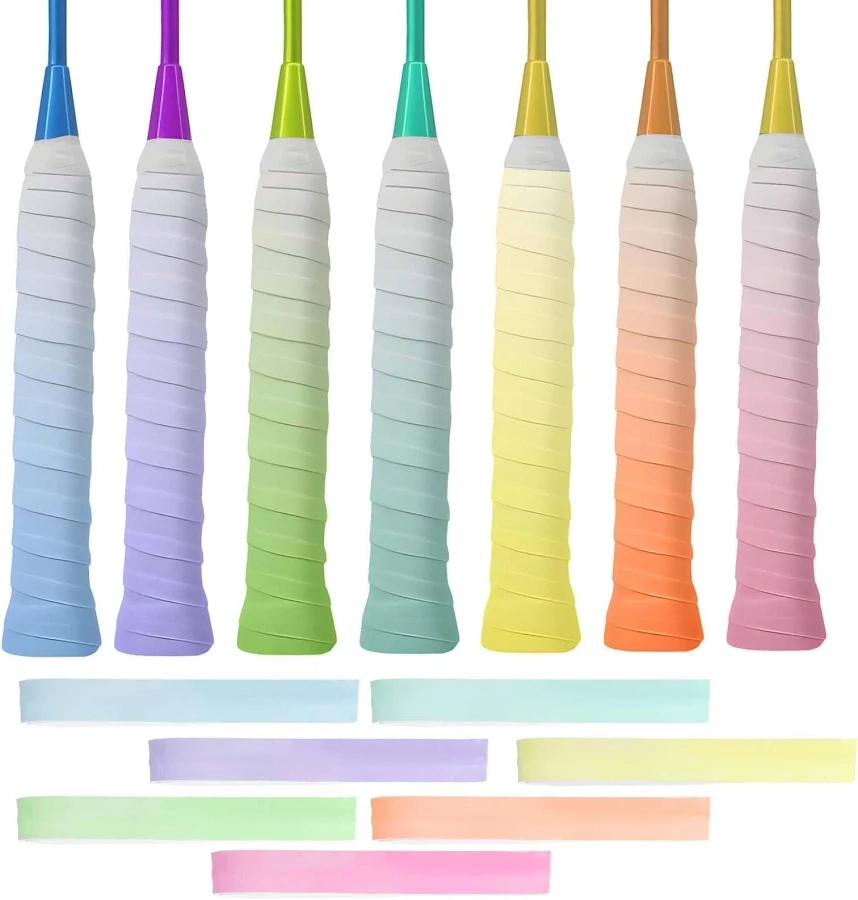
Overgrips are thinner grips that wrap around the existing or replacement grip. Their main purpose is to enhance tackiness and improve sweat absorption without significantly increasing handle thickness.
Advanced players often prefer overgrips because they allow better finger control and quicker grip adjustments during rallies. Overgrips are also easy to replace and affordable, making them practical for frequent players who change grips regularly.
Towel Grips
Towel grips are made from absorbent fabric material designed to manage heavy perspiration. They are ideal for players who sweat excessively or compete in humid environments.
Although towel grips offer excellent moisture absorption and prevent slippage, they require more maintenance compared to polyurethane grips. They also add slight thickness, which may influence grip size preference.
Understanding these grip types helps narrow down the best badminton racket grip based on comfort, climate, and playing intensity.
Read More: Badminton Terminologies You Must Know
How to Select the Best Grip Based on Your Playing Level
Choosing the best badminton racket grip depends largely on your experience level and playing intensity.
Beginners
New players should prioritise comfort and stability over performance tweaks. A thicker replacement badminton racket grip provides better cushioning and reduces vibration impact. This helps maintain a relaxed hold, prevents over-squeezing the handle, and supports proper grip fundamentals during the learning stage.
Intermediate Players
Players with developing skills benefit from balancing comfort and control. Using a replacement grip with a tacky overgrip enhances sweat absorption while maintaining cushioning. This setup improves shot precision, grip stability during rallies, and allows smoother transitions between forehand and backhand positions.
Advanced and Competitive Players
Experienced players typically prefer thinner grips for enhanced finger control and faster grip adjustments. A thinner badminton racket grip increases wrist mobility, which is essential for deception, quick drives, and defensive reactions. High-tack overgrips further ensure stability during high-intensity, fast-paced exchanges.
Climate Consideration
Environmental conditions should influence grip choice. In humid or hot settings, moisture-absorbing towel grips or sweat-control overgrips improve handling consistency. Players who perspire heavily benefit from grips designed to reduce slippage and maintain secure control throughout extended matches.
Choosing the Correct Badminton Racket Grip Size
The grip size of a badminton racket significantly affects control and wrist flexibility. If the grip is too small, players tend to grip too tightly, which can lead to muscle fatigue. If it is too large, wrist mobility becomes restricted, reducing shot precision.
Most rackets are labeled G1 to G5, where:
- G1 = Thickest
- G5 = Thinnest
Advanced players often prefer thinner grips for greater control, while beginners may prefer thicker grips for comfort. A simple grip test involves holding the racket in a forehand position and checking whether the index finger of your opposite hand fits comfortably between your fingers and the palm. If there is excessive space, the grip may be too small. If there is no space at all, it may be too large. Grip size can be adjusted by adding or removing overgrips.
Best Badminton Racket Grip Brands to Consider
Several brands consistently produce high-quality grips suited to different budgets and playing levels.
Yonex Grips
Yonex is widely regarded as a benchmark in badminton equipment. A Yonex badminton racket grip is often preferred by competitive players for its durability and consistent tackiness. Yonex grips are considered premium due to their material quality and consistency.
- Yonex Super Grap AC 102EX (Overgrip): Known for strong tack and effective sweat absorption. Suitable for intermediate and advanced players who require secure handling during intense rallies. This product is available on Amazon.
- Yonex AC 102 Replacement Grip: Provides added cushioning and durability. Ideal for players who prefer thicker handles or need to replace worn factory grips. This product is available on Racquets 4U.
- Yonex AC 7405 E2T Grip: Balances comfort and grip stability. Suitable for club players seeking reliable performance. This product is available on Sports Galaxy.
Li-Ning Grips
Li-Ning grips combine affordability with dependable performance. Li-Ning grips are practical choices for recreational and intermediate players seeking value. They are typically made of polyurethane, which offers balanced cushioning and moderate tackiness for improved handling. These grips also absorb sweat reliably, helping maintain consistent control during extended training sessions and club matches.
- Li-Ning GP-20 Overgrip: Lightweight polyurethane overgrip offering decent tack and moisture control. Suitable for beginners and club players. This product is available on Khelmart.
- Li-Ning GP18 Grip (3PC Set): Provides moderate tackiness and reliable sweat absorption at a budget-friendly price. This product is available on Amazon.
Victor Grips
Victor grips emphasise anti-slip properties and moisture absorption. Victor grips emphasise anti-slip properties and moisture absorption. They are designed with textured surfaces and high-absorbency materials to maintain a secure hold during long rallies. This makes them particularly suitable for players who compete in humid conditions or experience heavy perspiration during intense matches.
- Victor Anti-Slip Overgrip: Designed for secure handling and improved traction. Suitable for players seeking a stable grip. This product is available on Victor Sport.
- Victor GR338 Towel Grip: A premium towel grip that offers excellent moisture absorption. Ideal for humid climates and high-intensity sessions. This product is available on Victor Sport.
Brand Comparison and When to Choose What
Choosing among Yonex, Li-Ning, and Victor depends on your playing intensity, budget, and sweat-management needs.
| Brand | Key Strengths | Ideal For | Why Choose |
| Yonex | Premium material quality, strong tackiness, consistent performance | Competitive and frequent players | Trusted benchmark brand for control and durability |
| Li-Ning | Affordable, balanced comfort and sweat control | Beginners and intermediate players | Value for money with reliable grip performance |
| Victor | Superior moisture absorption and anti-slip surface | Players in humid conditions or heavy sweaters | Excellent for sweat management and stable handling |
How to Grip a Badminton Racket Properly
Choosing the right grip is only part of the equation. Learning how to grip a badminton racket correctly is equally important.
The forehand grip, often called the shake-hand grip, involves holding the racket as if shaking hands. The thumb rests naturally along the side while fingers wrap comfortably around the handle.
The backhand grip requires slightly rotating the handle so the thumb rests along the wider surface. This allows better control during backhand drives and defensive shots.
Players should avoid gripping too tightly. A relaxed hold allows better wrist action and improved responsiveness. Grip pressure should increase only at the moment of shuttle contact.
Common Grip Mistakes to Avoid
Holding the racket too tightly throughout rallies restricts wrist mobility and leads to fatigue. Another common mistake is ignoring grip replacement. Worn grips lose tackiness and reduce performance consistency. Using an incorrect badminton racket grip size without testing can also impact control. Additionally, failing to consider sweat levels may lead to slippage during play.
Another overlooked mistake is layering too many overgrips without checking the handle thickness. Excessive layering increases grip size beyond optimal levels, reducing finger control and slowing grip transitions. Players should periodically reassess grip comfort, thickness, and surface condition to ensure their equipment supports, rather than hinders, performance development.
When Should You Replace Your Badminton Racket Grip?
You should replace your grip when it shows visible wear, loses tackiness, or feels slippery during rallies. Competitive players may change overgrips every few weeks, while recreational players can replace them less frequently. Regular grip replacement ensures consistent control, hygiene, and comfort.
In general, if you notice reduced shock absorption, visible peeling, sweat saturation, or an unpleasant odour, it is time to replace the grip. Regular maintenance not only improves handling consistency but also prevents bacterial buildup, ensuring better performance and hygiene during play.
Conclusion
The right badminton racket grip plays a crucial role in control, comfort, and overall performance. By understanding grip types, selecting the correct badminton racket grip size, and choosing trusted brands such as Yonex, Li-Ning, or Victor, players can significantly improve their game.
Equally important is learning proper gripping technique and replacing worn grips when necessary. A well-chosen grip enhances shot precision, reduces fatigue, and allows better wrist mobility. While it may seem like a small detail, optimising your grip can deliver noticeable improvements on the court.
Download Playo on Android or iOS, or visit playo.co to start playing!
Frequently Asked Questions
The correct grip for a badminton racket depends on both technique and equipment. From a technique perspective, the basic and most commonly used grip is the forehand (shake-hand) grip, where the racket is held as if shaking hands. From an equipment perspective, the correct badminton racket grip should feel comfortable, allow relaxed wrist movement, and prevent slipping during rallies. The grip should not force you to squeeze the handle tightly.
There is no single “best” badminton racket grip for everyone. The best option depends on your playing level, sweat level, and comfort preference. Replacement grips are ideal for added cushioning and thicker handles, overgrips are best for tackiness and control, and towel grips are suitable for players who sweat heavily. Brands like Yonex, Li-Ning, and Victor offer reliable options for different needs.
G4 and G5 refer to grip size, not quality. G5 is thinner than G4. Advanced players often prefer G5 because it allows better wrist mobility and control. Beginners may prefer G4 since it offers slightly more thickness and comfort. The better option depends on your hand size and playing style, rather than one being universally superior.
The four main badminton grip techniques are the forehand grip, backhand grip, bevel grip, and panhandle grip. The forehand grip is the basic holding position, the backhand grip supports defensive and backhand shots, the bevel grip helps with angled shots and quick transitions, and the panhandle grip is commonly used for overhead net shots and smashes.
To choose the right badminton racket grip, consider your playing level, comfort preference, and sweat level. Check your grip size using the finger test to ensure proper spacing between your fingers and palm. Beginners should prioritise cushioning, intermediate players can combine replacement grips with overgrips, and advanced players often prefer thinner grips for better control and faster wrist action.