


A pickleball court may look simple, but its dimensions and layout directly influence how the game is played, from shot selection to positioning and strategy. A standard court measures 20 feet wide by 44 feet long for both singles and doubles, but the real impact comes from how this space is divided. The non-volley zone, service areas, baselines, and sidelines all shape movement, serving patterns, and net play, making court awareness a clear advantage for any player.
In this guide, we break down everything you need to know about pickleball court size, layout, surface types, and net height. Whether you are planning to build a court, book one near you, or simply want to play smarter, understanding these details will help you step onto the court with more confidence and control.
What’s the Standard Pickleball Court Size?
The standard pickleball court measures 20 feet wide by 44 feet long, and this includes all boundary lines. This size is fixed and does not change for singles or doubles, which is different from sports like tennis, where court dimensions vary by format.
To give you a clearer comparison, a pickleball court is about one-third the size of a tennis court and slightly larger than a badminton court. This smaller playing area is not just about space; it directly affects gameplay. Rallies are quicker, movement is more controlled, and positioning becomes more important than covering large distances. That is also why pickleball feels less physically demanding while still being fast-paced and competitive.
Read More: What is Pickleball?
Understanding Pickleball Court Dimensions
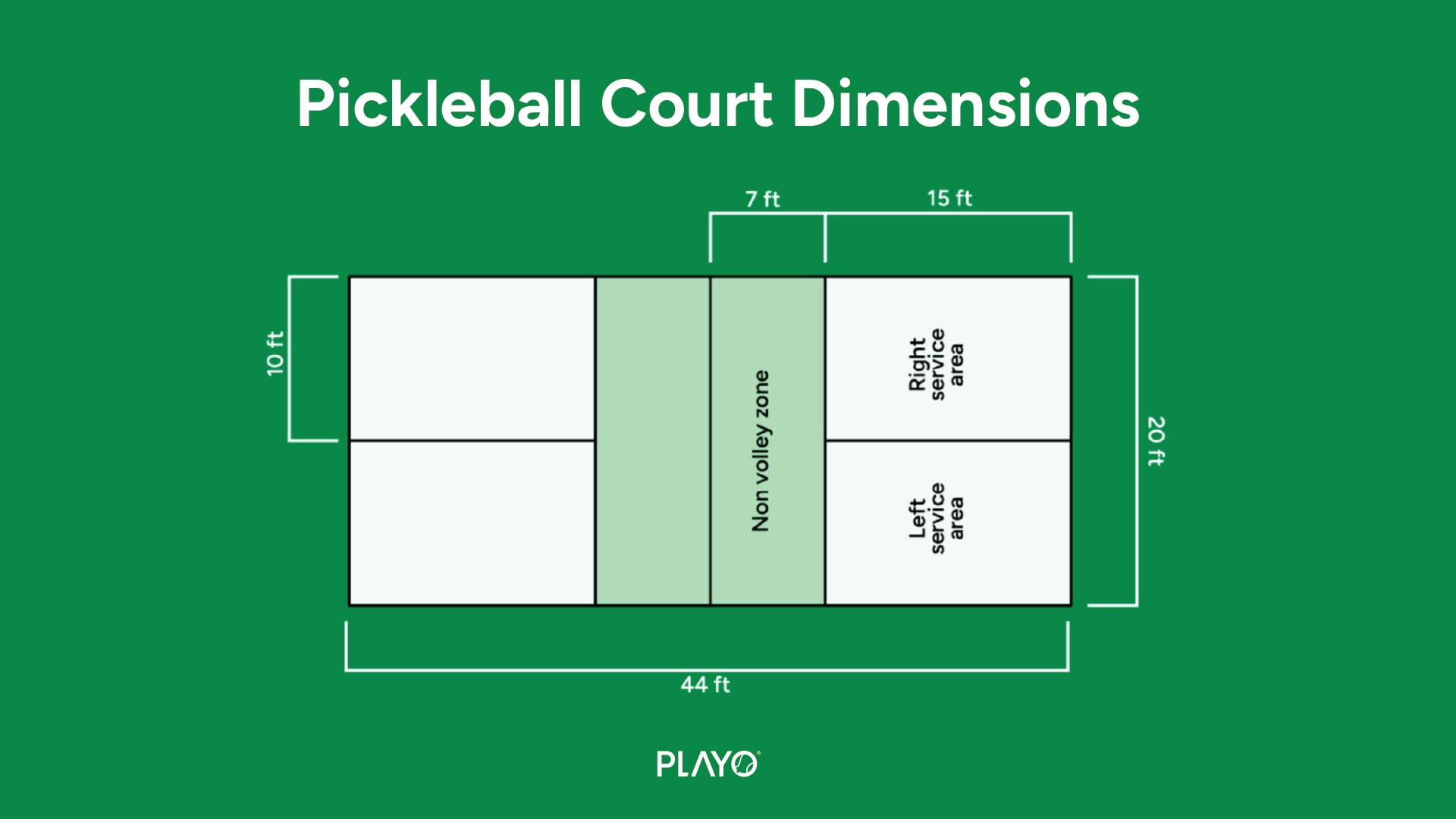
Let’s zoom in on the official pickleball court dimensions:
- Total Playing Area: 20 ft x 44 ft (measured to the outside edges of the lines)
- Non-Volley Zone (“The Kitchen”): Extends 7 feet from the net on both sides
- Service Areas: Each side is divided into two service zones (left and right), each measuring 10 feet wide by 15 feet deep
- Centerline: Runs from the kitchen line to the baseline, dividing the service boxes
- Line Width: All lines are 2 inches wide and included in the court’s dimensions
For a comfortable playing experience, especially in competitive matches, the recommended overall playing area is 30 feet wide by 60 feet long, allowing room for movement around the court.
Pickleball Court Measurements for Indoors vs. Outdoors
Whether you’re building a court in your backyard or setting up an indoor facility, the pickleball court measurements remain the same. But there are some differences in setup and surface:
Indoor Courts
- No wind interference
- Lighting and ventilation are important
- Often use cushioned, modular flooring
- Recommended ceiling clearance is 18 to 20 feet to accommodate lob and overhead shots
Outdoor Courts
- Must account for drainage, heat, and weather
- Typically made from concrete or asphalt
- Permanent net posts are more common and are placed 12 inches outside the sidelines, making the total distance between post centres 22 feet
Pickleball Court Flooring
When it comes to pickleball court flooring, comfort and durability are key. The surface you play on affects everything from ball bounce to joint impact, which is why choosing the right material matters more than most players think.
1. Asphalt or concrete is the most common choice for outdoor courts. It is budget-friendly, widely available, and highly durable. However, the hard surface can be tough on the knees and joints, especially during long games, unless additional cushioning is added.
2. Modular tiles are a popular option for indoor and multi-use facilities. They provide better shock absorption compared to hard surfaces and are relatively easy to install and maintain. This makes them a practical choice for spaces that host multiple sports.
3. Cushioned acrylic surfaces are often preferred in professional or high-quality courts. They are installed over concrete or asphalt and offer a good balance of comfort, grip, and consistent ball bounce, making gameplay smoother and less stressful on the body.
4. Wood flooring is typically found in indoor gymnasiums. It offers a smooth playing surface, but it can become slippery if not properly maintained, which may affect movement and safety.
Ultimately, the right pickleball court material depends on your location, budget, and how seriously you play. Even simpler surfaces can work well for casual games, as long as they are safe and well-maintained.
What Material is Best for a Pickleball Court?
Your court surface directly impacts ball bounce, grip, and how much strain your body takes during play. Here’s how to choose based on your setup:
- Backyard or DIY courts: Asphalt or concrete with an acrylic coating works best for durability and consistent bounce
- Indoor facilities: Modular tiles or cushioned vinyl flooring offer better shock absorption and are easier on the joints
- Professional or high-end courts: Cushioned acrylic layered over concrete provides the best balance of comfort, grip, and performance
If you’re not setting up a permanent court, portable surfaces and nets are a practical option for flexible, temporary play.
Pickleball Net Height
Pickleball net height is standardised to ensure consistent gameplay across all levels, from casual matches to tournaments. Even small variations in height or setup can directly impact shot accuracy and rally dynamics.
- Net height is 36 inches at the sidelines
- Net height is 34 inches at the centre
- The slight dip in the middle encourages more controlled, low shots
- The net must span 22 feet from post to post
- Net posts should be placed 12 inches outside the sidelines
- The top edge must have a 2-inch white tape binding
- The mesh should be tight enough to prevent the ball from passing through
If you’re using a portable net, make sure these measurements are followed for a regulation setup.
Can You Use a Tennis Court for Pickleball?
Yes. A standard tennis court (60 feet by 120 feet) is large enough to fit up to four pickleball courts, which is why many parks and clubs use it as a shared space. By adding pickleball lines and using portable nets, the same court can support both sports without major changes.
This approach is practical and cost-effective, especially in areas where building new courts is not feasible. The only adjustment for players is the extra space around the pickleball court, but it does not affect actual gameplay as long as markings are clear and correctly placed.
If you’re just starting out, don’t miss this: Top 5 Best Pickleball Paddles for Beginners
A Quick Recap on Pickleball Dimensions and Specs
Here’s a quick snapshot of standard pickleball court dimensions and specifications, covering all key measurements from court size to net height for easy reference.
| Feature | Measurement |
| Court Size (incl. lines) | 20 ft × 44 ft |
| Recommended Playing Area | 30 ft × 60 ft |
| Non-Volley Zone (Kitchen) | 7 ft from the net on each side |
| Service Box Dimensions | 10 ft wide × 15 ft deep |
| Net Height (Centre) | 34 inches |
| Net Height (Sidelines) | 36 inches |
| Net Post Distance | 22 ft (inside to inside) |
| Ceiling Clearance (Indoors) | 18–20 ft recommended |
| Net Tape Width | 2 inches |
| Mesh Requirement | Must block the ball from passing through |
Conclusion
Pickleball may be easy to pick up, but playing it well starts with understanding the basics, especially court dimensions, layout, and surface. Knowing these standard dimensions helps you position better, make smarter shots, and feel more confident every time you step onto the court. Whether you’re planning to build a court or just want to improve your game, these details truly make a difference.
So next time you step on the court, you’ll know exactly where to stand and why it matters. Let the games begin.
Ready to play? Find and book courts near you, connect with players, and get started instantly with Playo.
Download Playo on Android or iOS, or visit playo.co to start playing!
Frequently Asked Questions
A pickleball court is 20 feet wide by 44 feet long, including lines. Both singles and doubles play on courts of this size.
Cushioned acrylic over concrete is perfect for performance and comfort. Asphalt and modular tiles are also excellent choices based on whether the court is outdoor or indoor.
No. A pickleball court is smaller, approximately one-third the dimensions of a tennis court and somewhat bigger than a doubles badminton court.
Pickleball was introduced to India in 2006 by Sunil Valavalkar, a sports enthusiast from Mumbai. He later founded the All India Pickleball Association (AIPA) in 2008 to promote and develop the sport across the country.
The 10-second rule means that once the score is called, the server must hit the serve within 10 seconds. If they take longer, it results in a fault. This rule helps keep the game moving and prevents unnecessary delays between points.