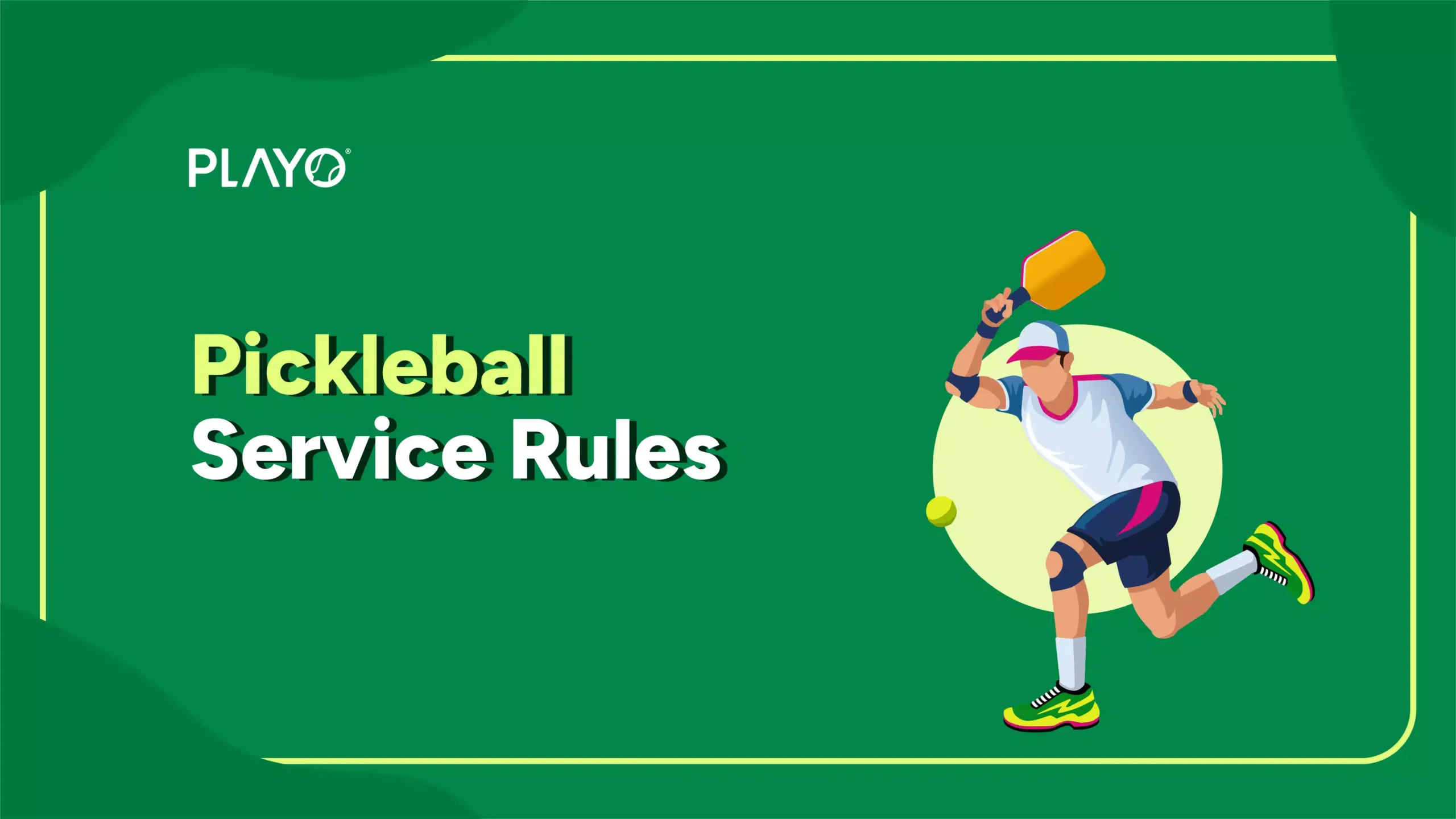


Serving in pickleball looks simple at first glance, but it is one of the most rule-driven and important parts of the game. Every rally begins with a serve, and how you execute it can influence positioning, control, and the flow of play. Unlike sports that reward aggressive opening shots, pickleball is built around consistency and fairness, which is why serving rules focus on factors like paddle movement, contact point, foot placement, and ball release. Even a technically good serve can become a fault if it does not meet these requirements.
Understanding pickleball service rules is essential for players at every level because many lost points happen before the rally even starts. A legal and reliable serve not only reduces unforced errors but also helps you build confidence and develop better match habits. Whether you are new to the sport or refining your technique for competitive play, learning the serving rules can immediately improve your consistency and overall performance. In this guide, we’ll break down everything you need to know about pickleball service rules, legal serving methods, common faults, and practical tips to serve more effectively.
The Two Legal Types of Pickleball Serves
USA Pickleball officially recognises two legal serving methods: the volley serve and the drop serve. Both are valid in recreational and tournament play, and knowing when to use each can elevate your game.
The Volley Serve
The volley serve, also called the “out-of-the-air” serve, is the traditional pickleball serve most players learn first. To execute a legal volley serve:
- Drop the ball from one hand or release it from the paddle face without imparting spin or manipulation
- Strike the ball before it bounces on the playing surface
- Move your paddle in a clear upward arc at the moment of contact
- Ensure the highest point of the paddle head is not above the highest part of your wrist joint when contact is made
- Make contact with the ball at or below waist level, specifically below the navel
The volley serve allows advanced players to generate power, create sharp angles, and apply strategic spin after contact. It remains the preferred choice for competitive players seeking aggressive placement.
The Drop Serve
Introduced to increase accessibility, the drop serve offers a more forgiving alternative. Here’s how it works:
- Release the ball from a natural, unaided height using one hand or the paddle face
- Allow the ball to bounce at least once on the playing surface before striking it
- There are no restrictions on how many times the ball may bounce or where it bounces on the court
- Once the ball bounces, you may strike it with any motion: forehand, backhand, or otherwise
Because the drop serve removes the strict upward-arc and paddle-position requirements of the volley serve, it’s ideal for beginners, players with mobility limitations, or anyone prioritising consistency over power. Many recreational leagues see widespread use of the drop serve for this reason.
Read More: Pickleball Court Size
The 6 Essential Rules for a Legal Pickleball Serve
Regardless of which serve type you choose, these six foundational rules apply to every legal pickleball serve:
1. Upward Arc Motion (Volley Serve Only)
For volley serves, your paddle must travel in a clearly upward arc when contacting the ball. No downward, sideways, or “slapping” motions are permitted. This rule ensures serves remain underhand and prevents aggressive overhead-style serves.
2. Paddle Head Below Wrist
At the moment of contact, the highest point of your paddle head must be clearly below the highest part of your wrist joint. This prevents “high-contact” serves that mimic tennis-style overheads.
3. Contact Point Below Waist
The ball must be struck at or below your waistline, specifically below the level of your navel. Taller players have a slightly higher legal contact zone, but the rule applies universally.
4. Proper Foot Positioning
When serving, at least one foot must be grounded behind the baseline, within the imaginary extension of the sideline and centerline. Neither foot may touch the court surface or step outside the correct serving area at the moment of contact. Stepping on or over the baseline equals a foot fault.
5. Diagonal Serve Placement
Every serve must travel diagonally across the net, landing in the opponent’s opposite service court. The ball may touch the net, known as a “let”, and still be valid, but it must clear the non-volley zone (kitchen) and land within the proper service box boundaries.
6. One Serve Attempt Only
Unlike tennis, pickleball does not allow a second serve. If your serve is a fault, whether due to foot position, illegal motion, or landing out of bounds, you lose the serve immediately. In doubles, this means service passes to your partner or the opposing team.
Common Pickleball Serving Faults to Avoid
Even experienced players can slip up. Here are the most frequent serving faults and how to prevent them:
- Foot Faults: Stepping on or over the baseline while serving can result in a fault, so practice keeping your back foot firmly planted behind the baseline during contact.
- High Contact: Striking the ball above waist level or with the paddle head positioned above the wrist makes the serve illegal, so record your serve or ask a partner to observe your contact point.
- Illegal Release: Manipulating the ball to generate spin before contact, such as with the banned “chainsaw serve,” is not allowed, so release the ball cleanly using only one bare hand or the paddle face.
- Serve Lands Out: Missing the diagonal service box or landing in the non-volley zone leads to a fault, so aim for the deep corner of the service box to maximise your margin for error.
- Hidden Release: Releasing the ball in a way that is not clearly visible to the receiver can make the serve invalid, so keep your release motion open and within the receiver’s line of sight.
Conclusion
Pickleball service rules are designed to create balance, encourage longer rallies, and make the game enjoyable across all skill levels. While the details may seem technical at first, understanding them gives players a clear advantage by reducing avoidable mistakes and creating a stronger foundation for the rest of their game. A controlled, legal serve often contributes more to consistent performance than attempting risky or overly aggressive shots.
As you continue improving, treat your serve as a skill that combines technique, accuracy, and decision-making rather than just a way to put the ball in play. Focus on building a repeatable motion, understanding court positioning, and staying aware of common service faults. Over time, a dependable serve becomes more than a rule requirement; it becomes a tool that helps you start rallies confidently and play smarter pickleball.
Download Playo on Android or iOS, or visit playo.co to start playing!
Frequently Asked Questions
The basic pickleball service rules require players to serve underhand, make contact below waist level, keep the paddle head below the wrist, and serve diagonally into the opponent’s service court.
No, overhand serves are not allowed in pickleball. Standard serves must follow an underhand motion and meet all legal contact requirements.
A volley serve is struck before the ball bounces, while a drop serve allows the ball to bounce naturally before contact. Both are legal when performed according to official rules.
If a serve lands in the non-volley zone (kitchen) or touches the kitchen line, it is considered a fault, and the serve is lost.
In doubles, each team usually gets two serving opportunities before a side-out occurs, except at the beginning of the game when the starting team serves only once.
Players cannot manipulate the ball to create artificial spin before serving. The ball release must follow legal serving guidelines.
The two-bounce rule means the receiving team must let the serve bounce once, and the serving team must also let the return bounce before volleying begins.