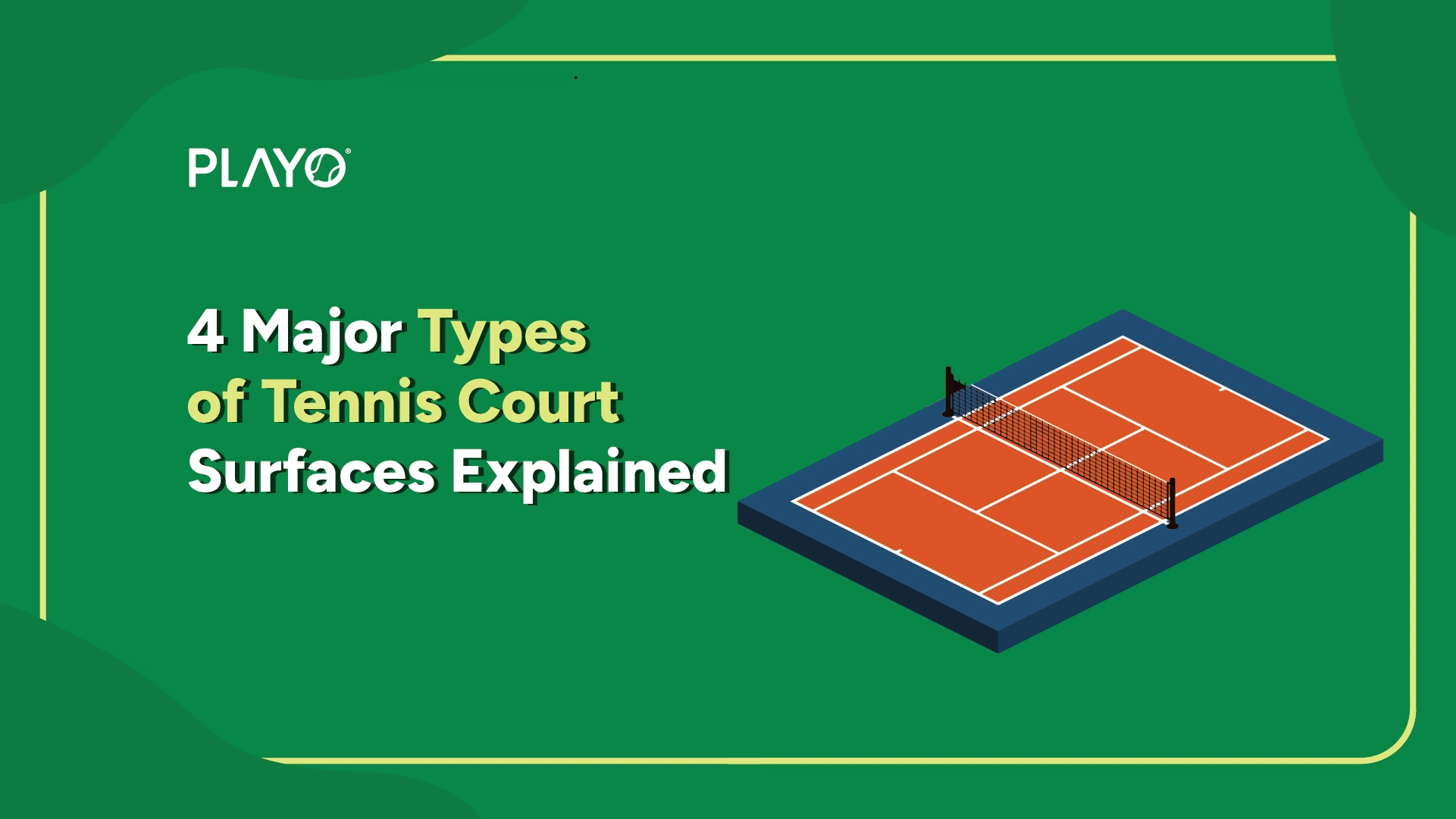


Tennis is played on different court surfaces, and each one directly affects ball speed, bounce, player movement, and overall match strategy. The type of tennis court can influence how long rallies last, how effective serves are, and how much physical effort is required. Understanding these differences is important for players who want to improve performance and adapt their game to various conditions.
There are four major types of tennis courts: grass, clay, hard, and carpet. Each surface has unique characteristics that impact playing style and injury risk. This guide explains the characteristics of each tennis court surface, including material composition, playing speed, bounce behaviour, maintenance requirements, and their impact on player movement and performance.
The Four Main Types of Tennis Courts
Tennis can be played on various surfaces, but four primary types dominate the sport at both recreational and professional levels:
- Hard Courts
- Clay Courts
- Grass Courts
- Synthetic Courts
Each surface offers distinct playing characteristics that influence ball speed, bounce height, player movement, and overall strategy. Let’s dive deeper into what makes each court type unique.
Hard Courts
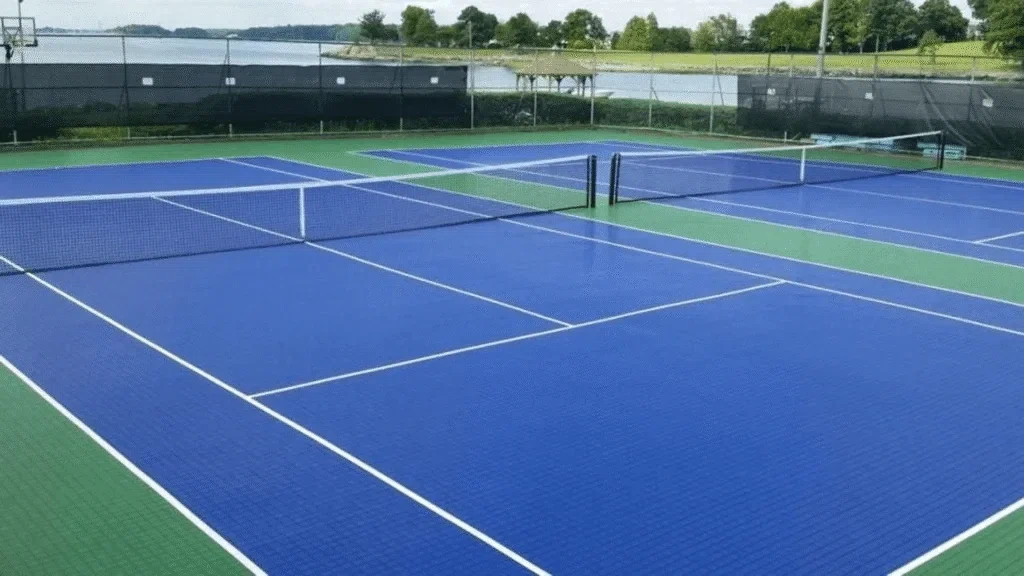
Hard courts are the most common tennis court surface worldwide, and for good reason. Made from concrete or asphalt substrates coated with layers of acrylic material, these courts provide the perfect balance between speed and playability. The bounce on hard courts is generally consistent and predictable, making them suitable for a wide range of playing styles. They require less maintenance than grass or clay courts, which makes them a practical choice for clubs, academies, and professional tournaments.
Key Characteristics of Hard Courts:
- Speed: Medium-paced (faster than clay, slower than grass)
- Bounce: High and consistent
- Best for: All-around players, baseline rallies, beginners
Hard courts are the surface of choice for two Grand Slam tournaments: the Australian Open and the US Open. They provide a relatively predictable bounce and a medium pace, creating a balanced playing environment that suits a wide range of playing styles.
Advantages of Hard Courts:
- Low maintenance: Requires only regular sweeping and occasional resurfacing every 5-7 years
- Durability: Withstands heavy use and various weather conditions
- Consistency: Provides uniform ball bounce and predictable gameplay
- Cost-effective: Lower long-term maintenance costs compared to grass or clay
Disadvantages of Hard Courts:
- Joint stress: The hard surface can be tough on knees and joints
- Less forgiving: Offers minimal shock absorption compared to softer surfaces
Read More: Tennis Playing Styles
Clay Courts
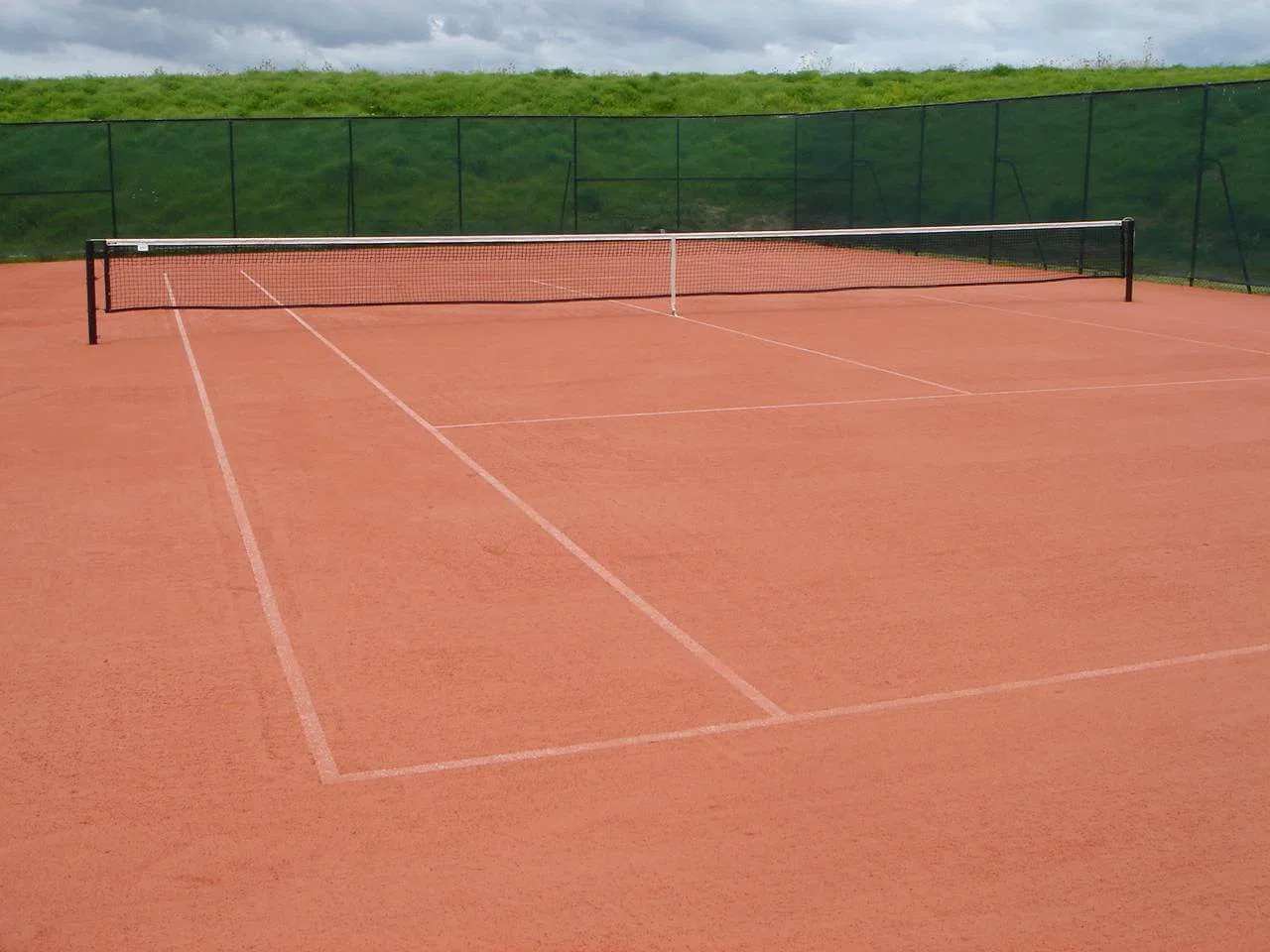
Clay courts are instantly recognisable by their distinctive red or green colour, made from crushed brick, shale, or natural clay. These courts are the slowest surface in tennis, creating a unique playing environment that rewards patience, strategy, and endurance. The surface slows the ball after impact and produces a higher bounce compared to grass or hard courts. As a result, rallies tend to be longer, placing greater emphasis on consistency, footwork, and physical fitness.
Key Characteristics of Clay Courts:
- Speed: Slowest of all surfaces
- Bounce: High and slower
- Best for: Baseline players, defensive strategies, topspin specialists
The French Open is the only Grand Slam played on clay. The surface slows the ball after impact and produces a higher bounce, increasing rally duration and emphasising endurance and topspin-heavy play.
Why Clay Courts Are Harder to Play On:
- Slower ball speed: The ball loses approximately 8 km/h upon impact, giving opponents more time to react
- Sliding movement: Players must master the art of sliding into shots, which requires different footwork techniques
- Longer rallies: Points tend to last longer, demanding superior fitness and mental toughness
- Maintenance intensive: Requires daily watering, raking, and levelling
Advantages of Clay Courts:
- Joint-friendly: Softer surface reduces stress on knees and joints
- Strategic depth: Rewards tactical play over brute power
- Sliding ability: Allows players to reach wide balls more easily
Disadvantages of Clay Courts:
- High maintenance: Needs constant care, including watering, rolling, and resurfacing
- Weather sensitive: Heavy rain can damage the surface
- Slower gameplay: May not suit aggressive, serve-and-volley players
Grass Courts
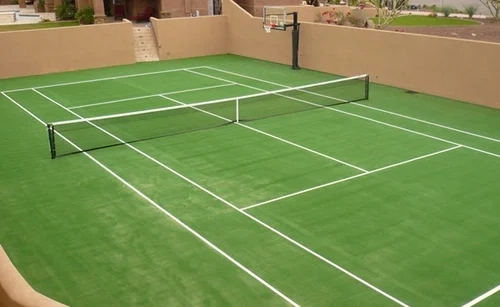
Grass courts are the fastest tennis court surface used in professional play. The natural grass creates low friction, allowing the ball to skid and stay low after bouncing. This reduces reaction time and results in shorter rallies compared to clay or hard courts. The quick pace favours strong serves and aggressive shot-making. However, bounce consistency can vary depending on surface wear, which makes timing and footwork especially important on grass courts.
Key Characteristics of Grass Courts:
- Speed: Fastest surface in tennis
- Bounce: Low and sometimes unpredictable
- Best for: Serve-and-volley players, big servers, aggressive baseliners
Wimbledon, tennis’s most prestigious tournament, remains the premier grass court event, maintaining traditions that date back to 1877.
Advantages of Grass Courts:
- Fast-paced action: Creates exciting, quick points
- Gentle on joints: Soft, natural surface provides cushioning
- Traditional appeal: Offers the classic tennis experience
Disadvantages of Grass Courts:
- Extremely high maintenance: Requires frequent mowing, watering, rolling, and expert groundskeeping
- Weather dependent: Rain makes the surface slippery and unplayable
- Unpredictable bounce: Natural variations can create inconsistent ball behaviour
- Expensive: Prohibitive costs limit availability to elite clubs and tournaments
Synthetic Courts
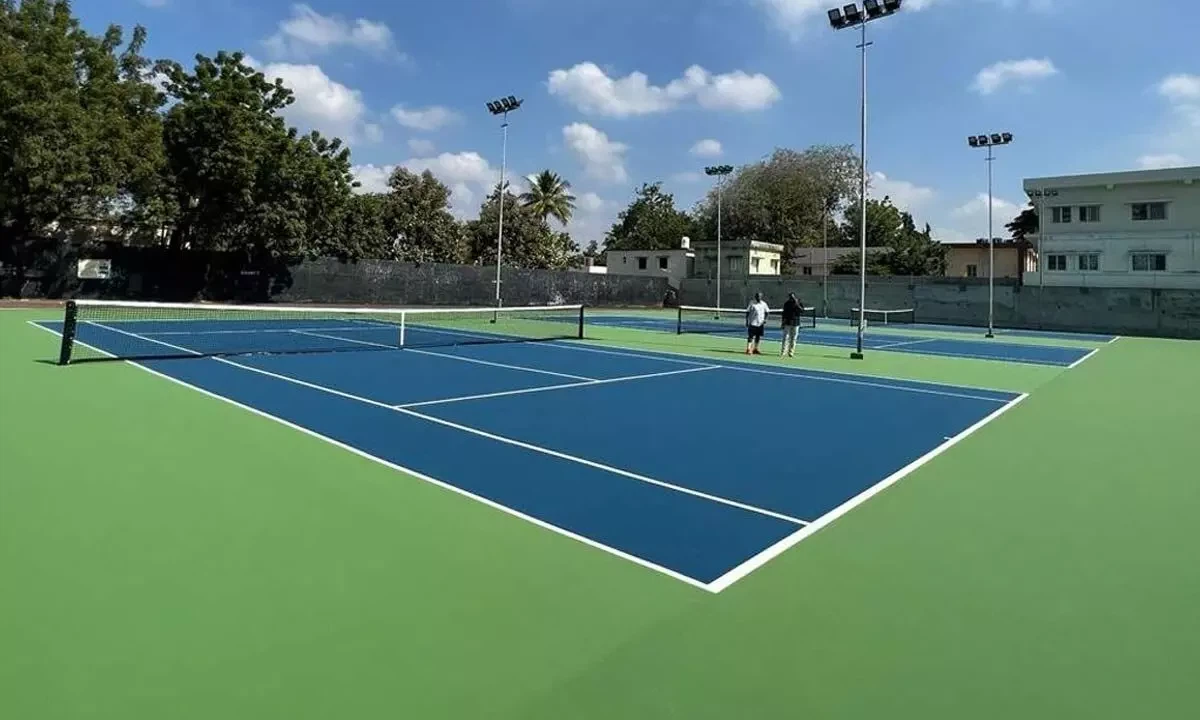
Synthetic courts represent the future of tennis infrastructure, combining advanced materials with cutting-edge engineering to create versatile, low-maintenance playing surfaces. These courts typically use synthetic acrylic flooring systems that can mimic the characteristics of traditional surfaces while offering superior durability. They are designed to provide consistent bounce and controlled speed across different weather conditions. In addition, synthetic courts require less upkeep than natural grass or clay, making them a cost-effective option for clubs, schools, and indoor facilities.
Key Characteristics of Synthetic Courts:
- Speed: Customizable (can be adjusted to replicate clay, grass, or hard courts)
- Bounce: Consistent and predictable
- Best for: All skill levels, multi-purpose facilities, year-round play
What Sets Synthetic Courts Apart?
- All-weather usability: Playable in rain, sun, or extreme temperatures
- Minimal maintenance: Simple sweeping and occasional washing suffice
- Customisation: Ball speed, bounce, and colours can be tailored to specific needs
- Enhanced durability: Withstands heavy use without deterioration
- Eco-friendly: Made from sustainable materials with a lower environmental impact
Advantages of Synthetic Courts:
- Cost-effective: Lower installation and maintenance costs over time
- Versatility: Can be used for multiple sports (tennis, basketball, pickleball)
- Shock absorption: Reduces impact on players’ joints
- Year-round play: Weather-resistant for consistent availability
- Vibrant appearance: UV-stable coatings maintain colour for years
Major Tournaments and Their Surfaces
Each Grand Slam tournament is played on a specific court surface, and that surface directly influences match pace, bounce behaviour, and playing style. The variation in surfaces ensures that players must adapt their strategies and skills throughout the season.
| Tournament | Surface Type | Key Traits |
| Australian Open | Hard | Medium-fast, high bounce |
| French Open | Clay | Slowest, high spin bounce |
| Wimbledon | Grass | Fastest, low-skid bounce |
| US Open | Hard | Medium, consistent bounce |
How to Choose the Right Court Surface
Choosing the right tennis court surface depends on skill level, usage needs, budget, and local conditions. Each surface offers different playing characteristics, maintenance demands, and long-term costs.
- For Beginners: For beginners, hard courts or synthetic courts are generally recommended because they provide a consistent bounce and predictable ball movement. This helps new players focus on developing proper technique, timing, and footwork without constantly adjusting to irregular bounce patterns.
- For Competitive Players: Competitive players should train on the surface used in their target tournaments. Practising on the same surface improves movement patterns, shot selection, and match strategy specific to that environment.
- For Facility Owners: For facility owners, surface selection should consider climate conditions, installation and maintenance costs, usage frequency, and the skill level of expected players. Durable synthetic or hard courts are often preferred in high-traffic or extreme weather areas due to their lower upkeep and long-term reliability.
Conclusion
The world of tennis courts offers diverse playing experiences, each with unique challenges and rewards. Whether you prefer the lightning-fast action of grass, the strategic depth of clay, the balanced versatility of hard courts, or the modern innovation of synthetic surfaces, understanding these differences will enhance your appreciation and performance on the court.
While mastering all surfaces is the hallmark of tennis greatness, the key is finding the surface that matches your playing style, physical needs, and goals. For those seeking the perfect balance of performance, durability, and low maintenance, synthetic acrylic courts represent the ideal solution for modern tennis facilities.
Download Playo on Android or iOS, or visit playo.co to start playing!
Frequently Asked Questions
The four main types of tennis courts are grass courts, clay courts, hard courts, and carpet (synthetic) courts. Each surface differs in speed, bounce height, maintenance needs, and impact on playing style.
Grass courts are the fastest tennis court surface. The ball skids and stays low after bouncing, reducing reaction time and leading to shorter rallies.
Clay courts are the slowest surface in tennis. The loose top layer absorbs ball speed and produces a higher bounce, resulting in longer rallies.
Clay courts demand greater physical endurance and consistency. The slower speed and higher bounce extend rallies, requiring strong footwork, patience, and effective sliding technique.
Clay courts are generally considered the most knee-friendly surface because they offer better shock absorption and allow players to slide, reducing sudden joint impact.
The Australian Open is played on a hard court surface, which provides a consistent bounce and medium-paced playing conditions.