

Whether you’re watching a professional volleyball match, playing in a local tournament, or learning the game for the first time, you’ve probably noticed referees using a series of hand gestures after almost every rally. These volleyball hand signals may seem confusing at first, but they play a crucial role in ensuring every match is officiated fairly and consistently.
Instead of verbally explaining every decision, referees rely on standardised hand signals to communicate with players, coaches, scorers, line judges, and spectators. From awarding a point and authorising a serve to signalling faults like double contact, net touch, or four hits, each gesture has a specific meaning defined by the official rules of volleyball.
In this guide, we’ll explain every major volleyball referee hand signal, when it is used, what it means, and why it is important. Whether you’re a beginner or an experienced player, this complete guide will help you interpret every decision with confidence.
Official Volleyball Hand Signals Explained
Below are the most commonly used official volleyball hand signals you’ll see during a match.
1. Authorisation to Serve
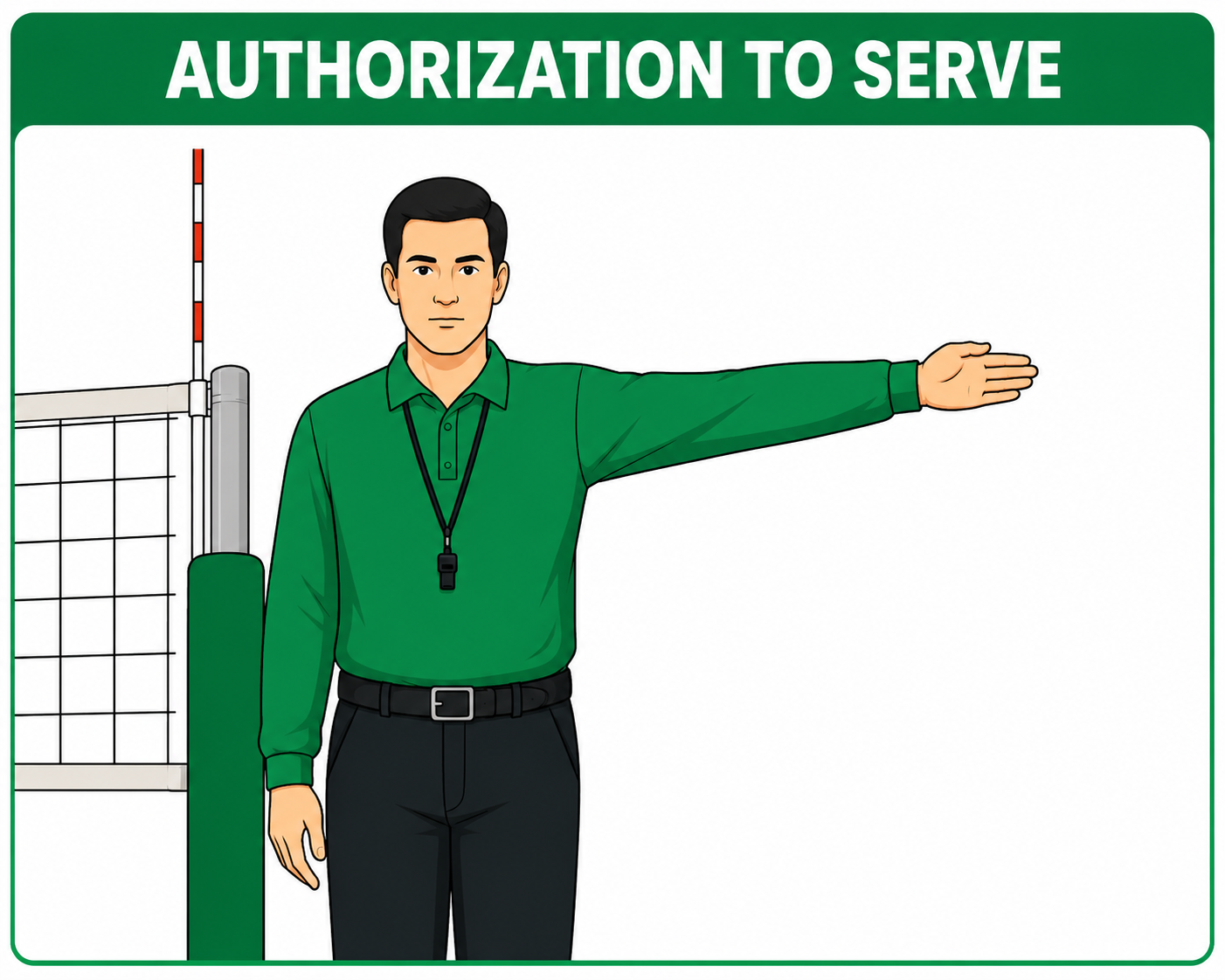
The authorisation to serve signal officially starts every rally. Before the server can put the ball into play, the first referee extends one arm toward the serving team to indicate that play may begin. This ensures both teams are ready, the scorer has confirmed the correct server, and any substitutions or time-outs have been completed.
This signal is used before the opening serve of each set and after every interruption in play, including substitutions, technical time-outs, medical delays, or official reviews. Once the referee gives this signal, the server must deliver the ball within the permitted time according to the rules. Serving before the authorisation or delaying the serve after permission has been granted may result in a service fault.
2. Team to Serve
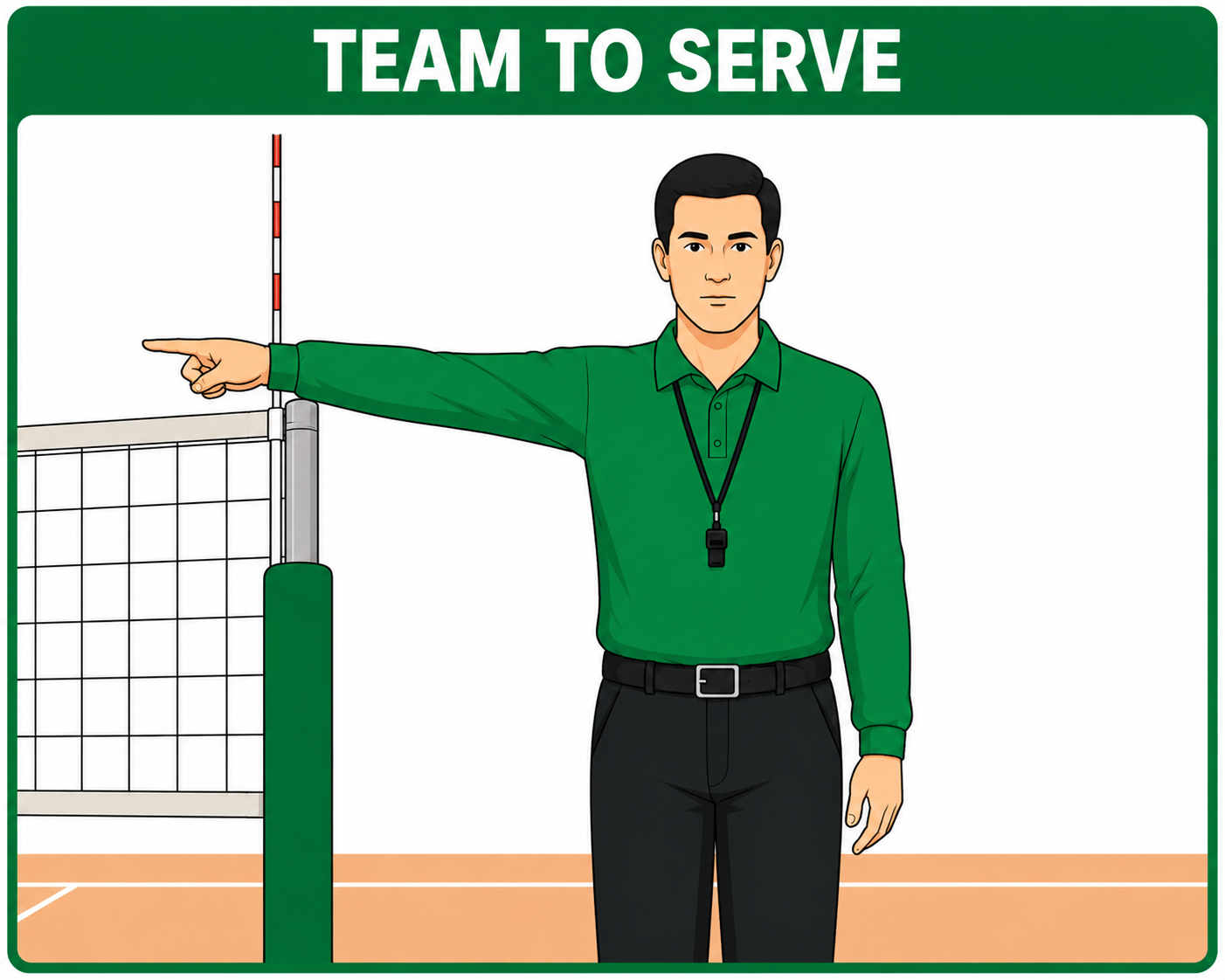
After every completed rally, the referee indicates which team has earned the next serve by extending an arm toward that side of the court. This is one of the most frequently used volleyball referee signals, as it appears after every point throughout the match.
The serving team is determined by the outcome of the previous rally. If the receiving team wins the rally, they gain both the point and the right to serve, forcing their players to rotate clockwise before the next serve. If the serving team wins the rally, they continue serving without rotating. This simple signal immediately informs players, scorers, and spectators which team will begin the next rally.
3. Point Awarded
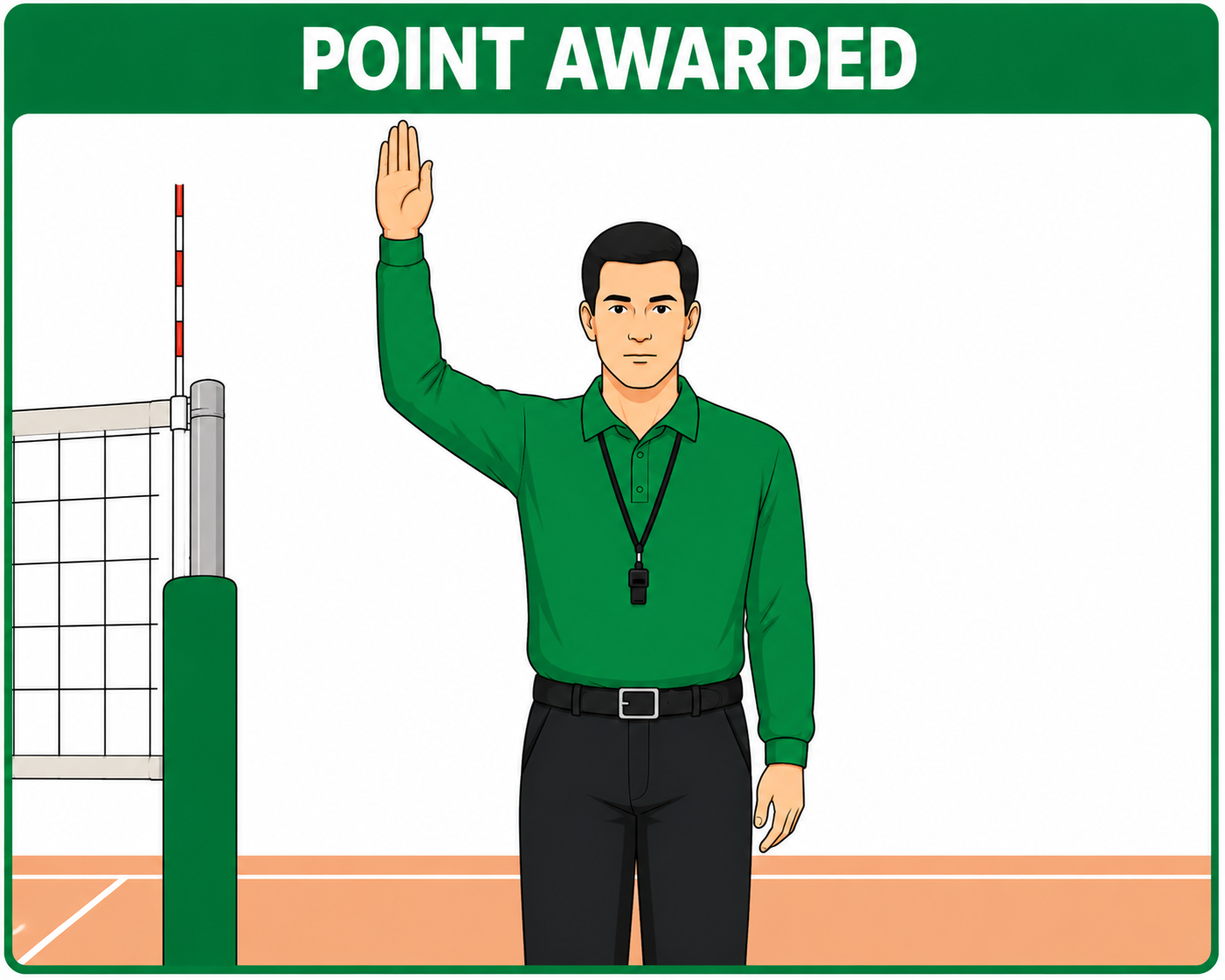
The point awarded signal confirms the winner of each rally. The referee raises the appropriate arm vertically to indicate which team has earned the point, making it clear to everyone on the court before the scoreboard is updated.
This signal may follow a successful attack, an opponent’s error, a service ace, or any fault committed during the rally. Regardless of how the point is scored, the referee always uses the same gesture to announce the winning team. Because modern volleyball follows the rally point scoring system, every rally results in a point, making this one of the most commonly used referee signals in every match.
4. Change of Courts
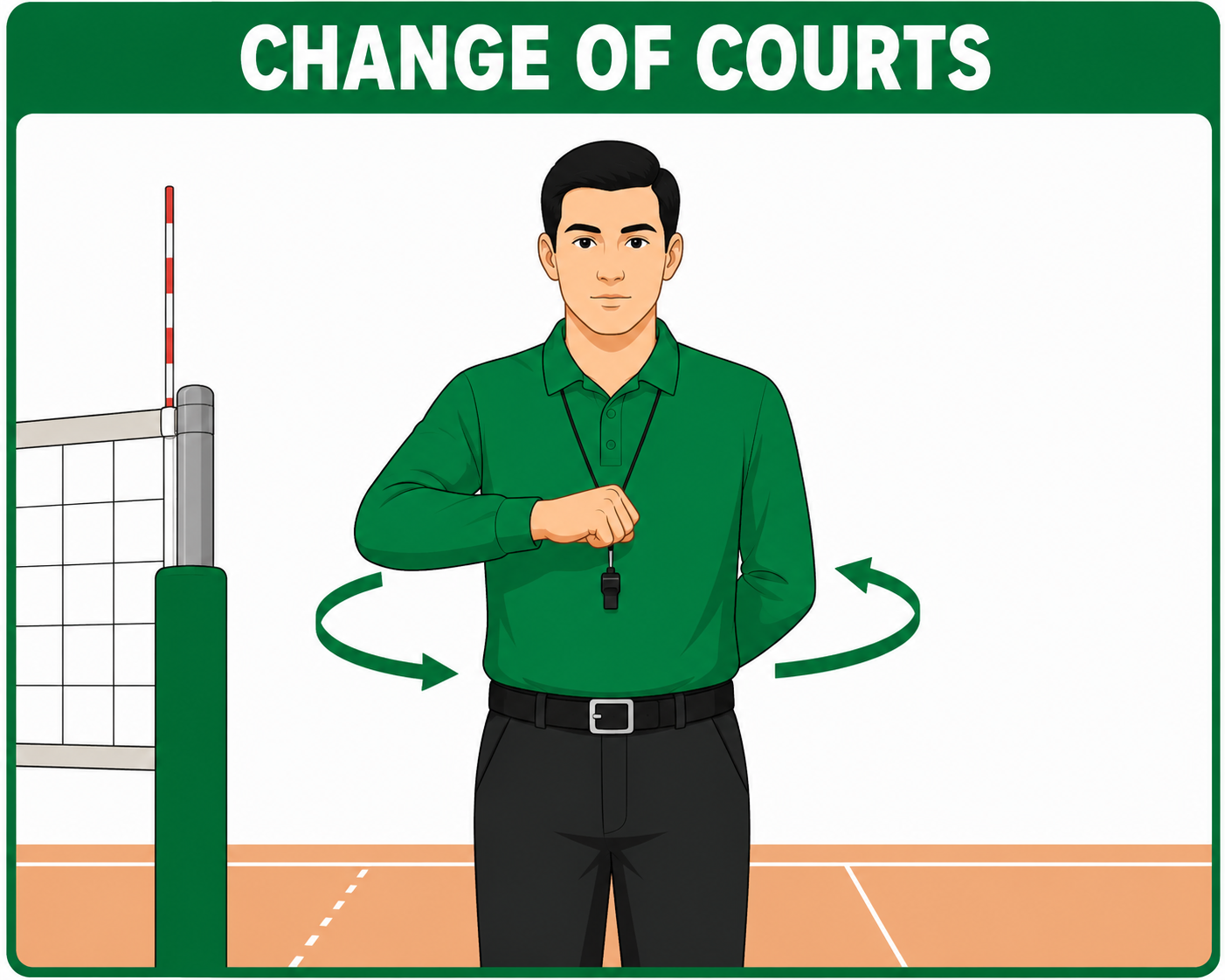
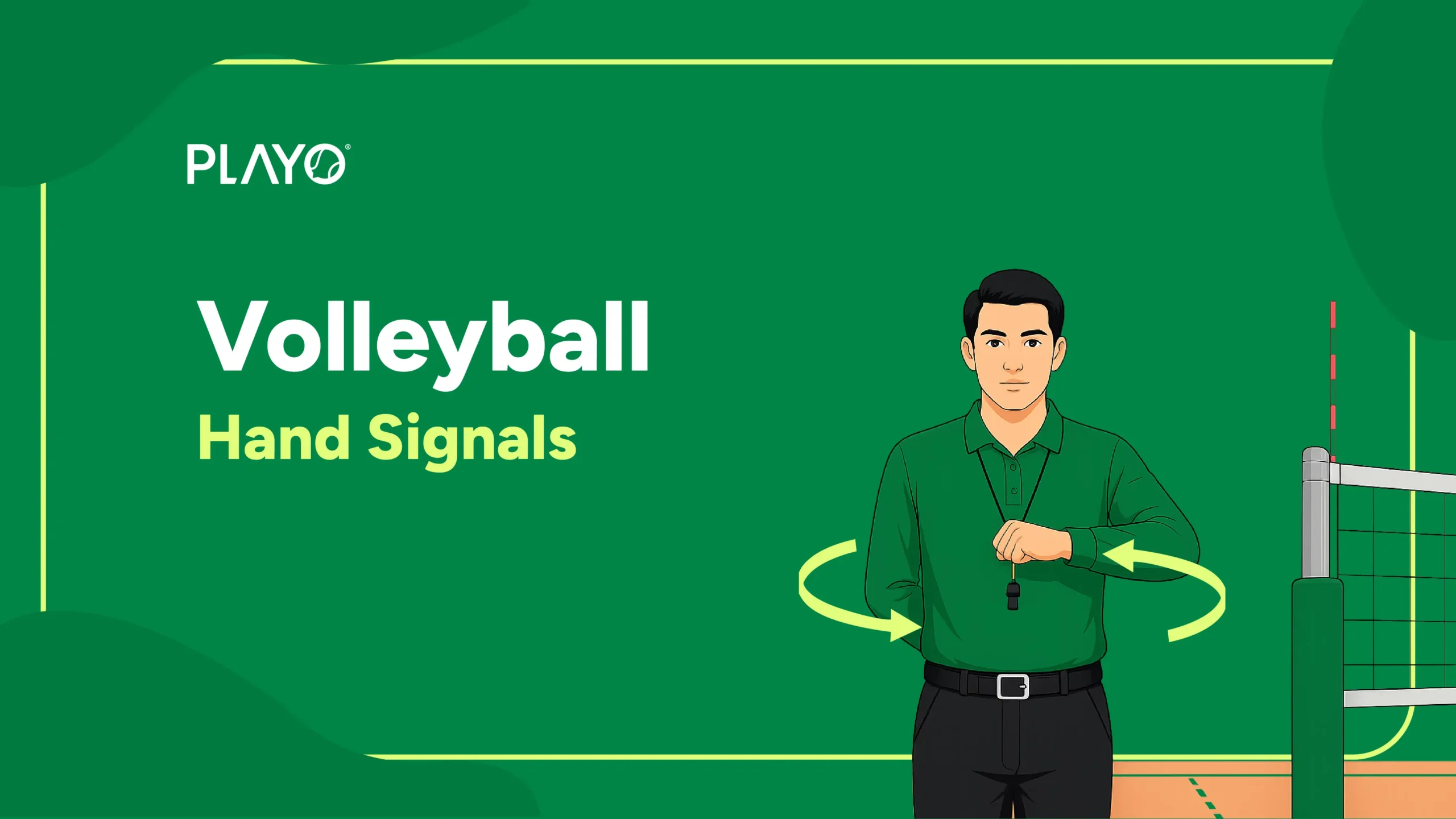
The change of courts signal is used when teams are required to switch sides of the court. To communicate this, the referee rotates both forearms around each other in a circular motion, indicating that the teams should exchange playing areas.
This signal is typically seen between sets. In deciding sets, such as the fifth set in indoor volleyball, teams also change sides once the leading team reaches eight points. Changing courts helps maintain fairness by ensuring both teams experience the same playing conditions, including lighting, airflow, and court surroundings throughout the match.
5. Time-Out
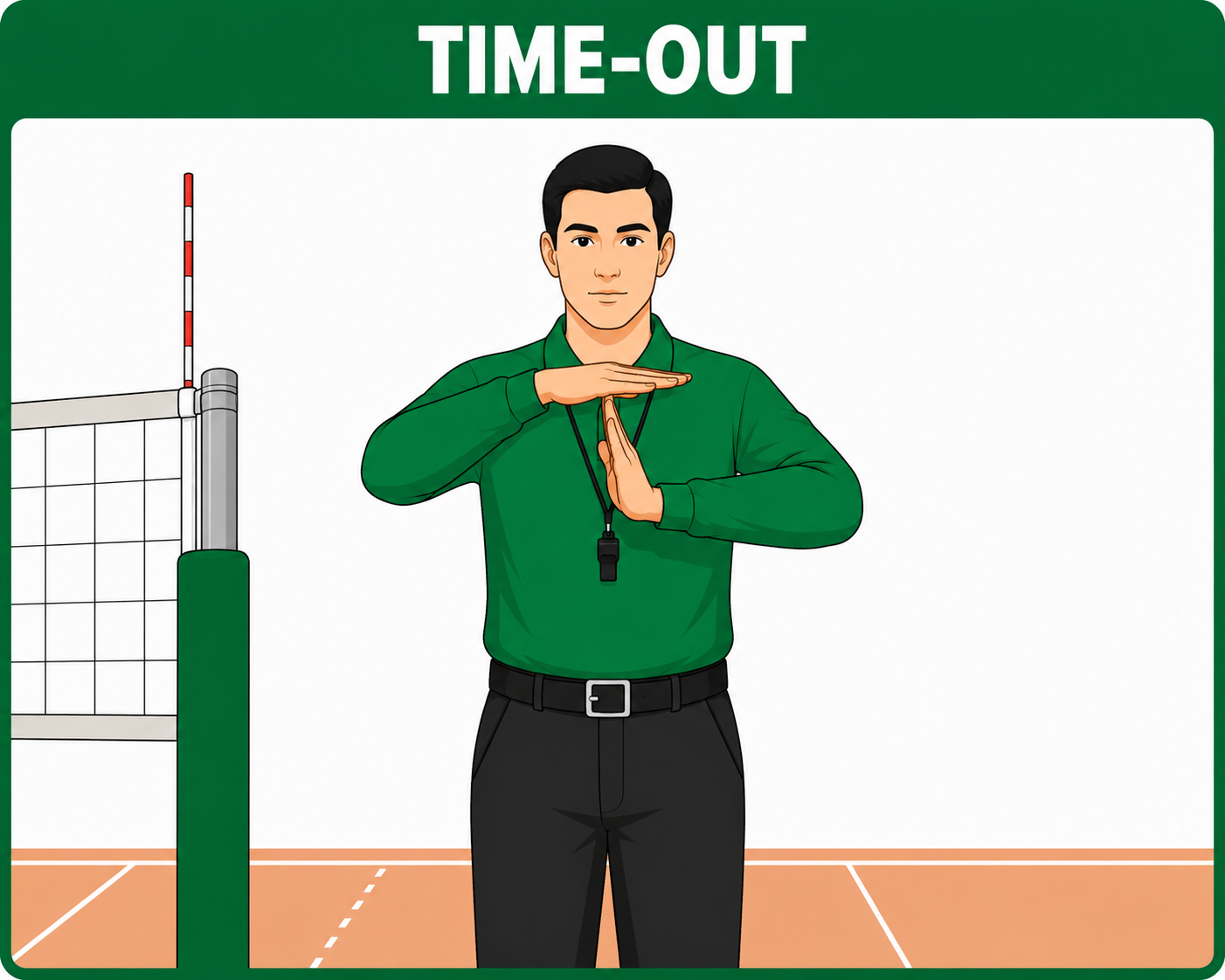
When a team requests a timeout, the referee forms the letter “T” using both hands. One hand is held vertically while the other is placed horizontally across it, creating one of the most recognisable volleyball hand signals.
A timeout allows coaches to discuss tactics, make adjustments, and give players a brief opportunity to recover physically and mentally. Although it temporarily pauses the action, it plays a crucial strategic role in volleyball. Once the allotted timeout period ends, the referee authorises play to resume with another serve authorisation signal.
6. Substitution
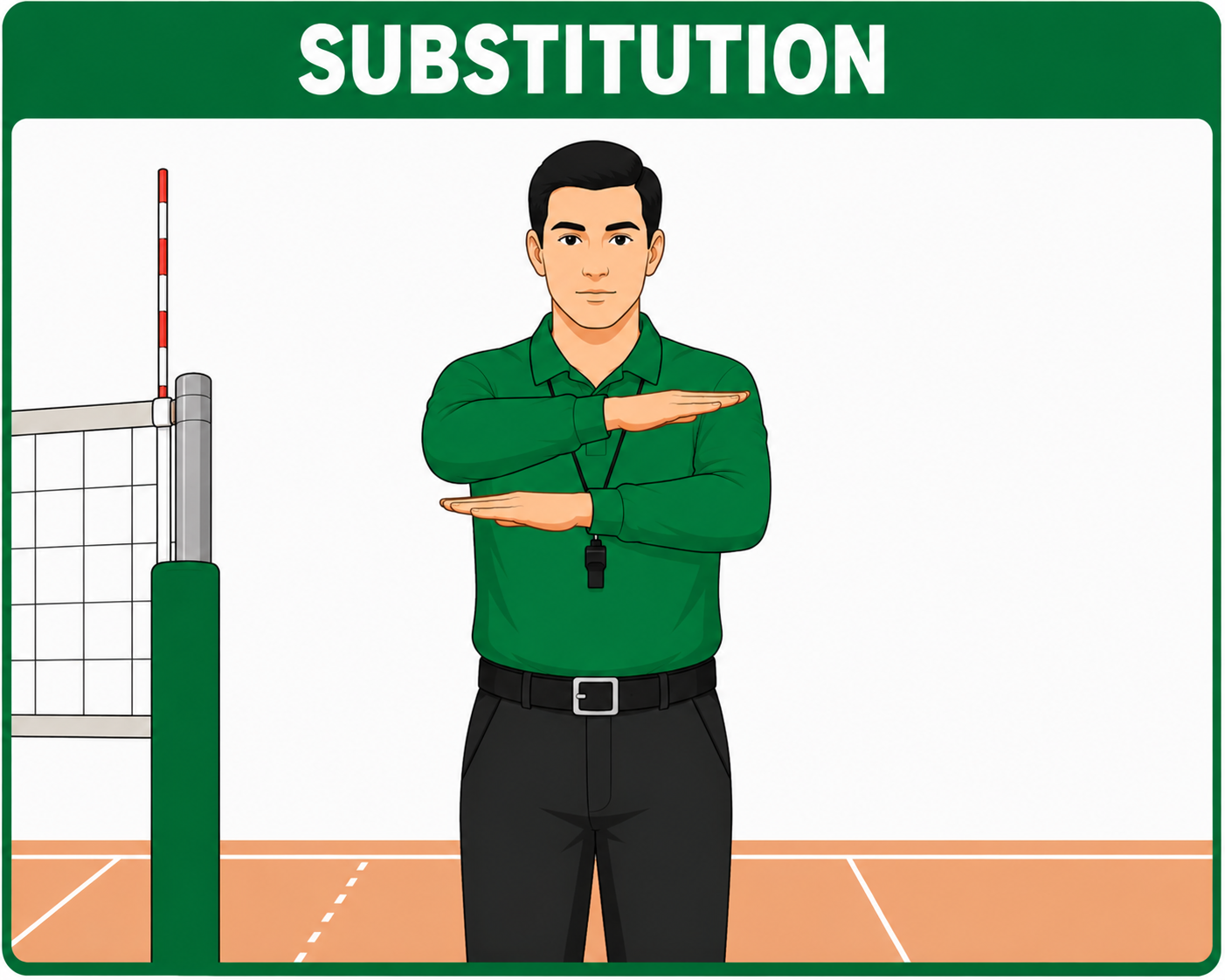
Player substitutions are indicated by rotating both forearms around one another in a circular motion. This signal informs both teams and the scorer that a substitution has been requested and approved.
Substitutions allow coaches to introduce fresh players, adjust tactics, strengthen defensive formations, or replace injured athletes. Before play resumes, the referee ensures that the substitution complies with the competition rules and that the scorer has correctly recorded the player entering and leaving the court. Only after this process is completed can the next rally begin.
7. End of Set or Match
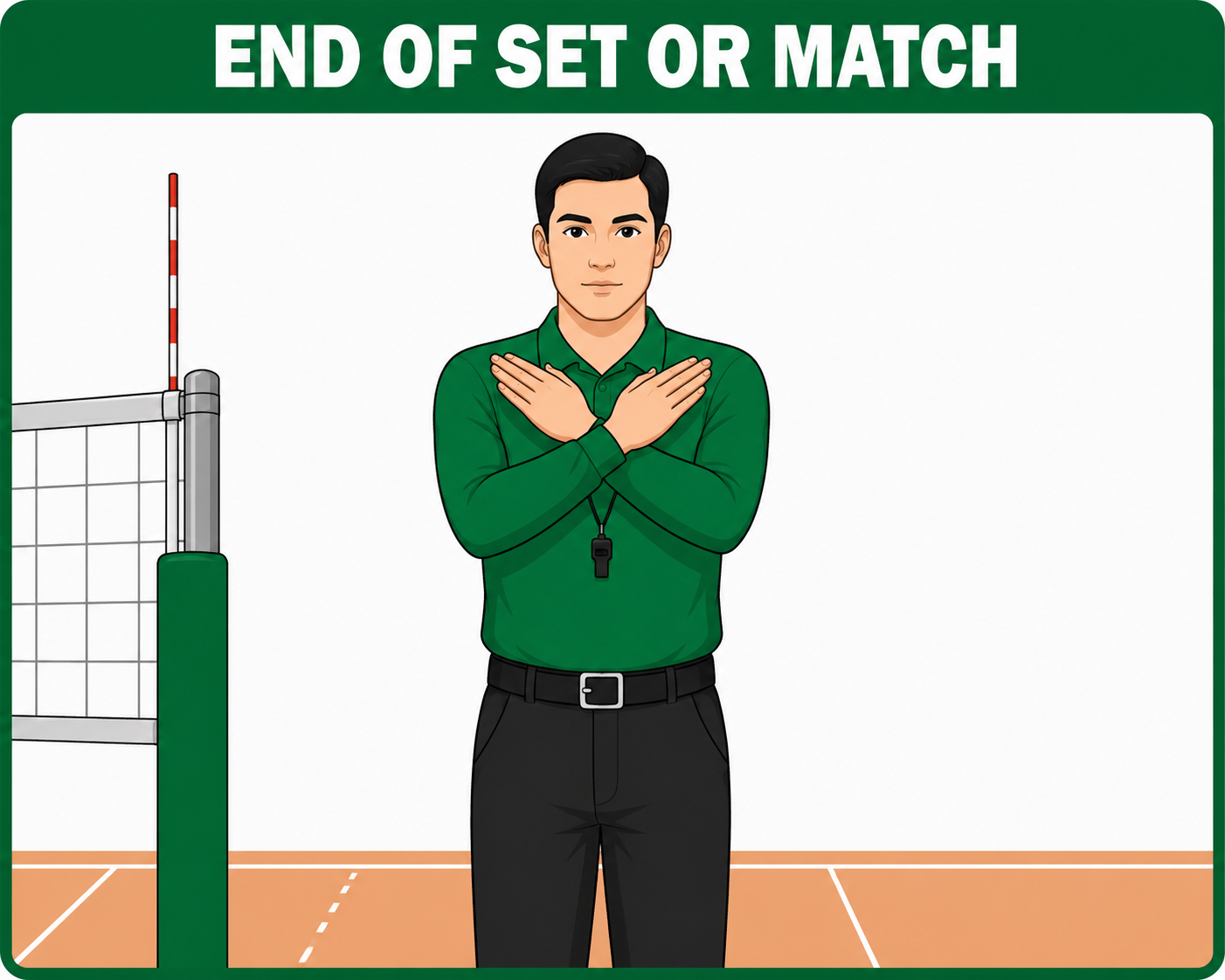
When a set or the entire match has concluded, the referee crosses both forearms across the chest. This official signal confirms that play has ended and no further rallies will be played until the next set begins or the match is declared complete.
A set ends when one team reaches the required number of points while maintaining the necessary two-point advantage. If the winning team secures the final set needed for victory, this same gesture also signals the end of the match. Players then proceed with the customary handshake and post-match formalities.
8. Ball In
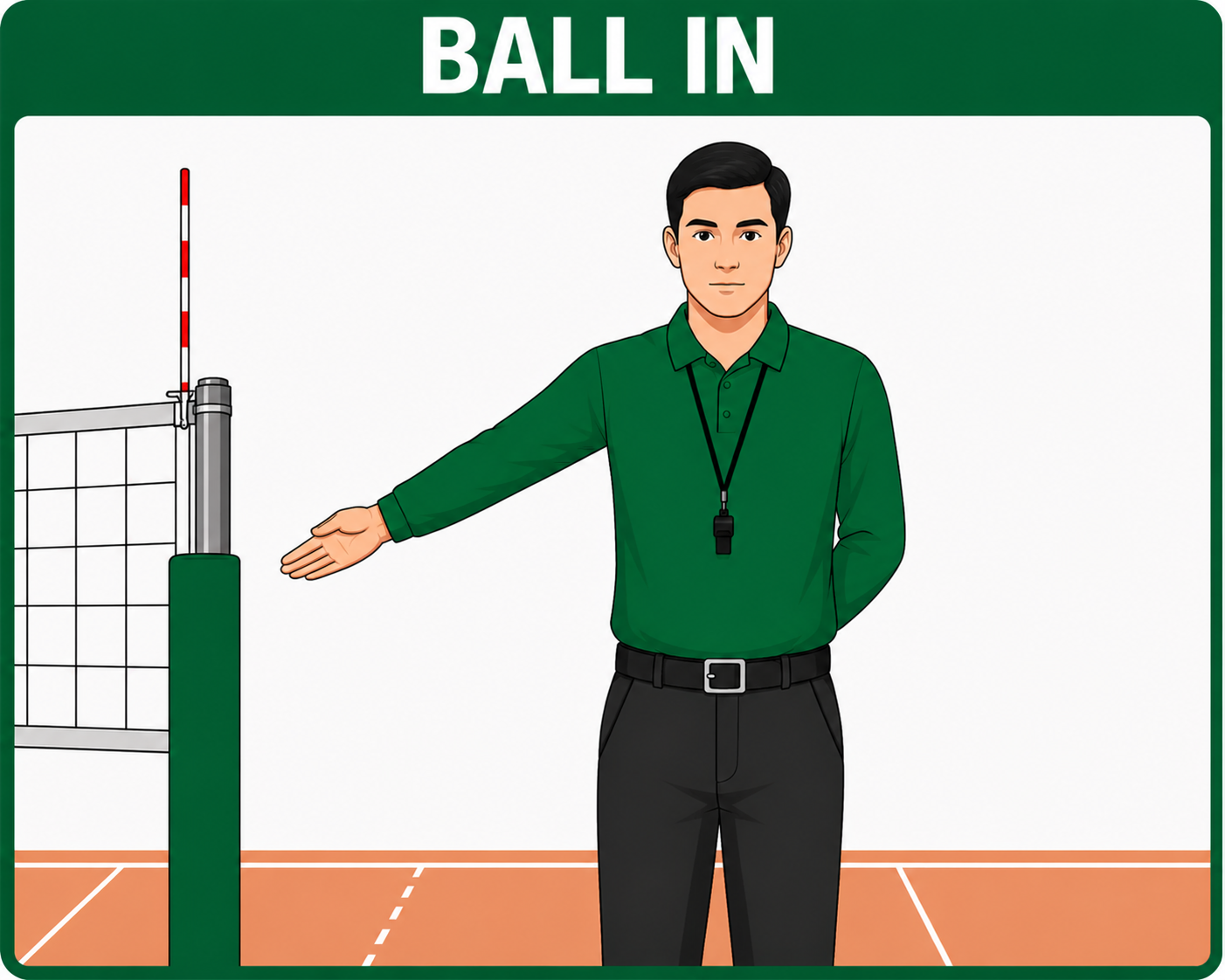
The ball-in signal confirms that the ball has landed legally inside the court boundaries. The referee points the arm downward toward the playing surface, indicating that the ball touched the court before landing outside the lines.
This decision may seem straightforward, but it is often one of the closest calls in volleyball. Referees rely on assistance from line judges, whose flag signals help determine whether the ball landed completely inside the boundary lines. If the ball touches any part of the sideline or end line, it is considered “in,” and the rally ends in favour of the attacking team.
9. Ball Out
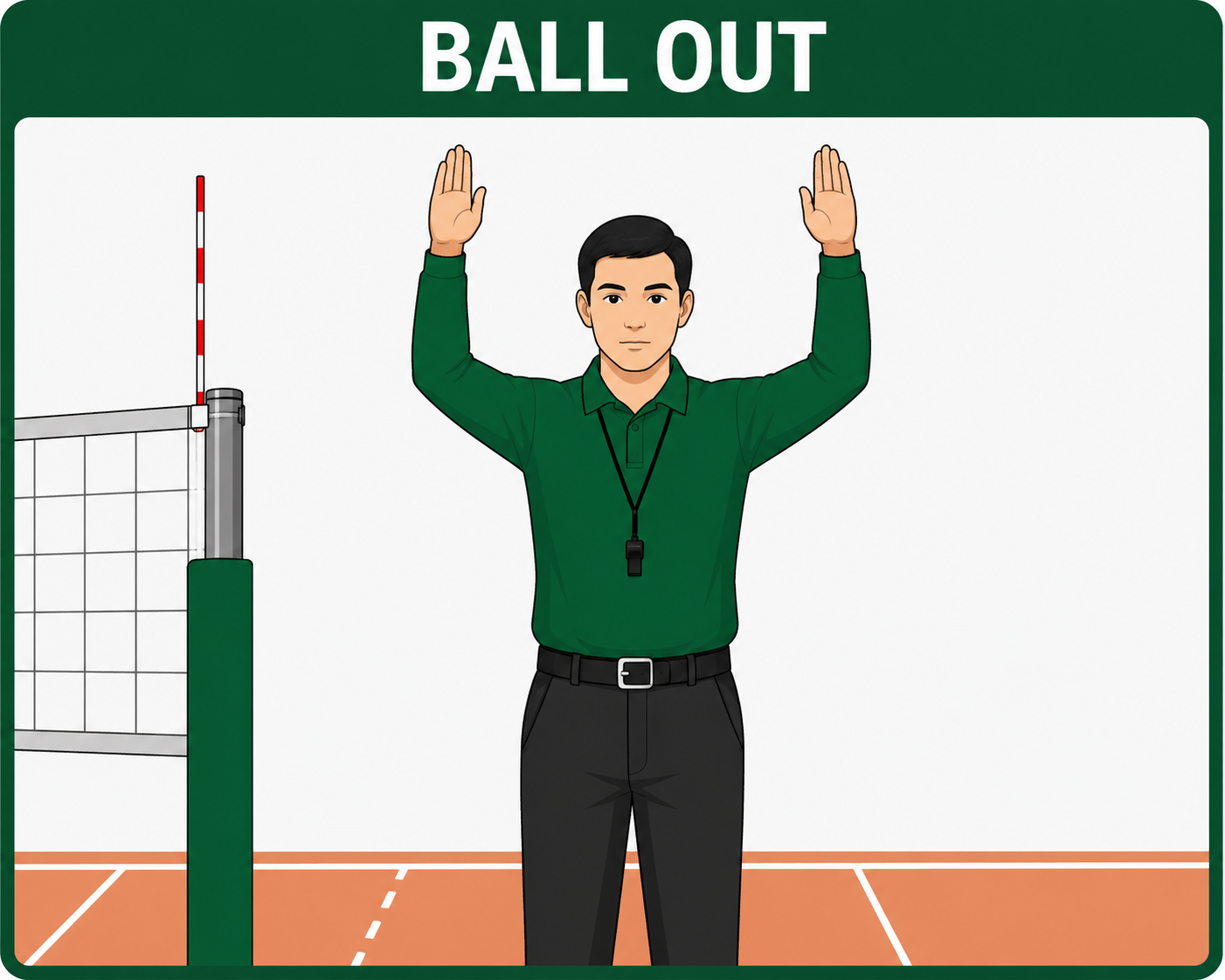
The ball out signal is used when the ball lands completely outside the court without touching the boundary lines. The referee raises both forearms vertically with open palms to indicate that the attacking team has hit the ball out of bounds.
This signal is commonly seen after powerful spikes, serves, or defensive returns that travel beyond the court. If the ball touches the boundary line, however, it is still considered in. Understanding this distinction helps players avoid unnecessary disputes during close rallies.
10. Double Contact
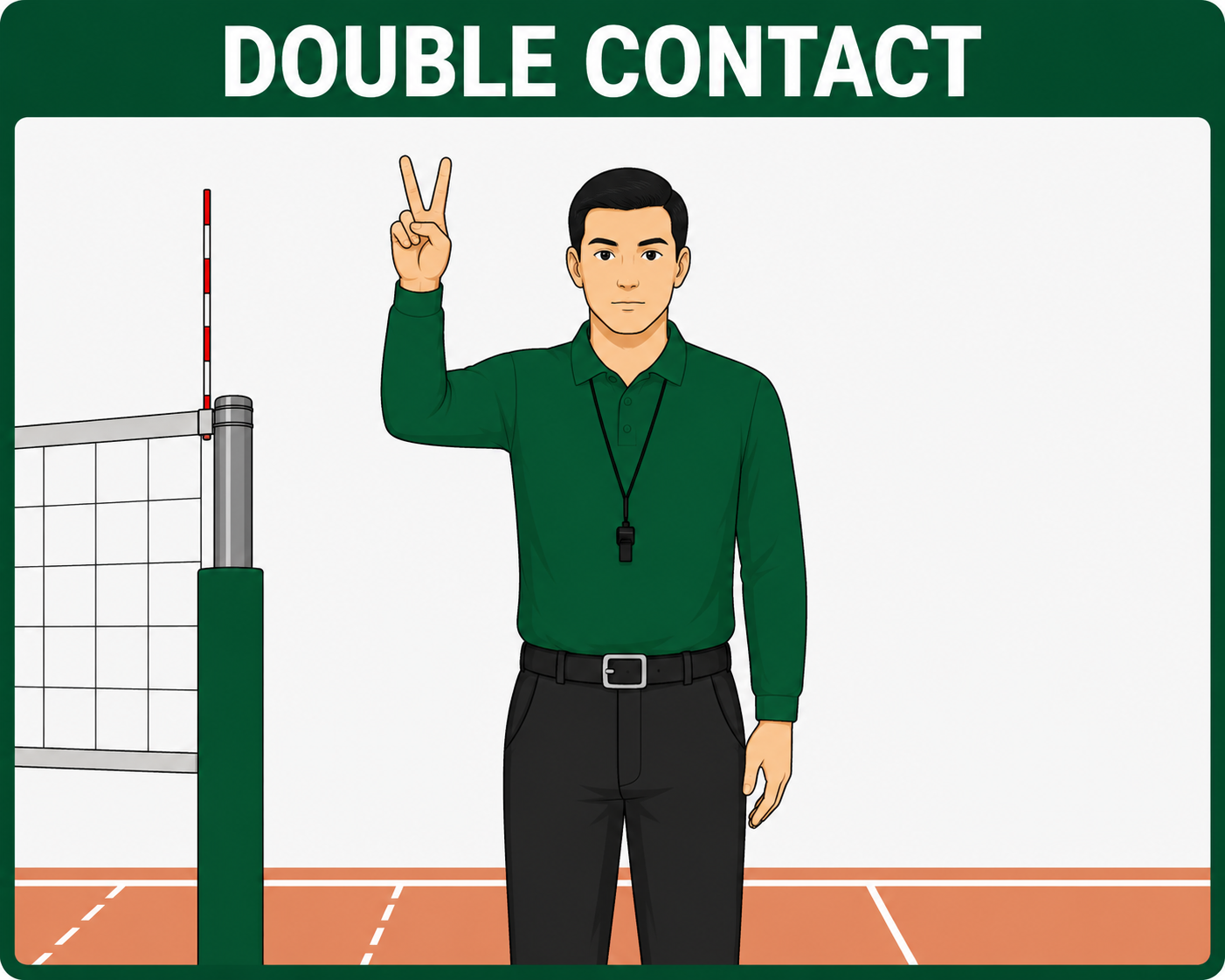
The double contact signal is one of the most commonly recognised volleyball referee hand signals, especially during setting situations. To indicate this fault, the referee raises two fingers, signalling that the same player has contacted the ball twice in succession or made an illegal multiple contact during a single playing action.
Double contact violations usually occur when a setter makes uneven contact with the ball, causing it to leave the hands inconsistently or spin excessively. However, there are exceptions. During the first team contact after an opponent’s attack, multiple contacts made in one continuous action are generally allowed, provided the ball is not caught or thrown. Once the referee signals a double contact, the rally immediately ends, and the opposing team is awarded the point.
11. Four Hits
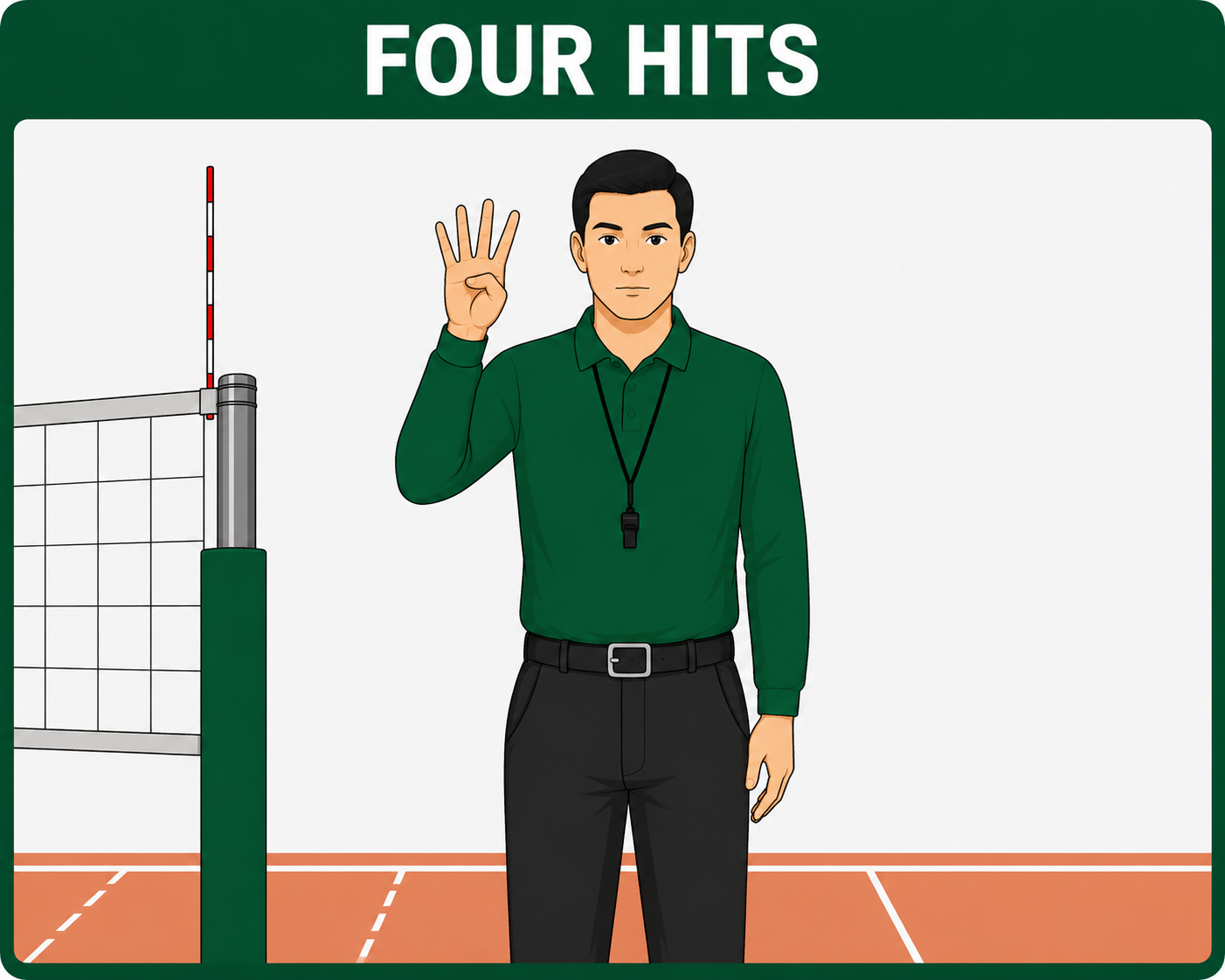
The four hits signal is used when a team exceeds the maximum number of allowed contacts before returning the ball over the net. The referee raises four fingers to indicate the violation, immediately ending the rally.
Under official volleyball rules, each team is allowed a maximum of three touches to return the ball, not including a legal block. These touches are typically used for receiving, setting, and attacking. If a fourth contact occurs before the ball crosses the net, the referee calls a fault and awards the point to the opposing team. This signal is commonly seen when players lose track of the touch count during long defensive rallies.
12. Net Touch
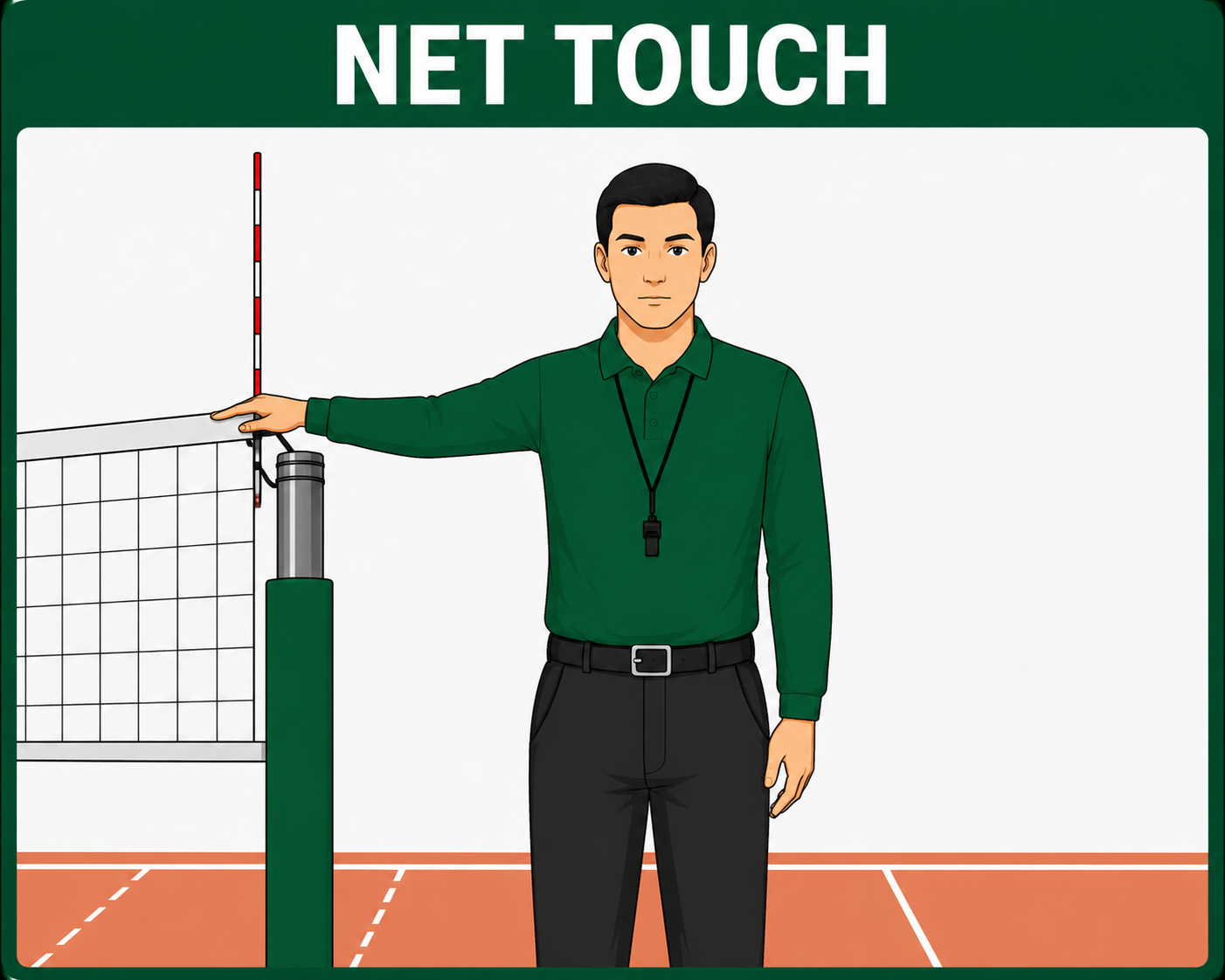
The net touch signal is used when a player illegally makes contact with the net while participating in the action of playing the ball. To indicate this fault, the referee touches the top of the net with one hand. Although it may seem like a minor infringement, touching the net during play can interfere with the opponent’s movement and create an unfair advantage.
Net touch violations most commonly occur when players are blocking or spiking close to the net. However, not every contact with the net is considered a fault. Under modern FIVB rules, incidental contact with the net that does not interfere with play is generally permitted. The violation is only called when the player touches the net while actively playing the ball or when the contact affects the rally.
13. Rotation Fault
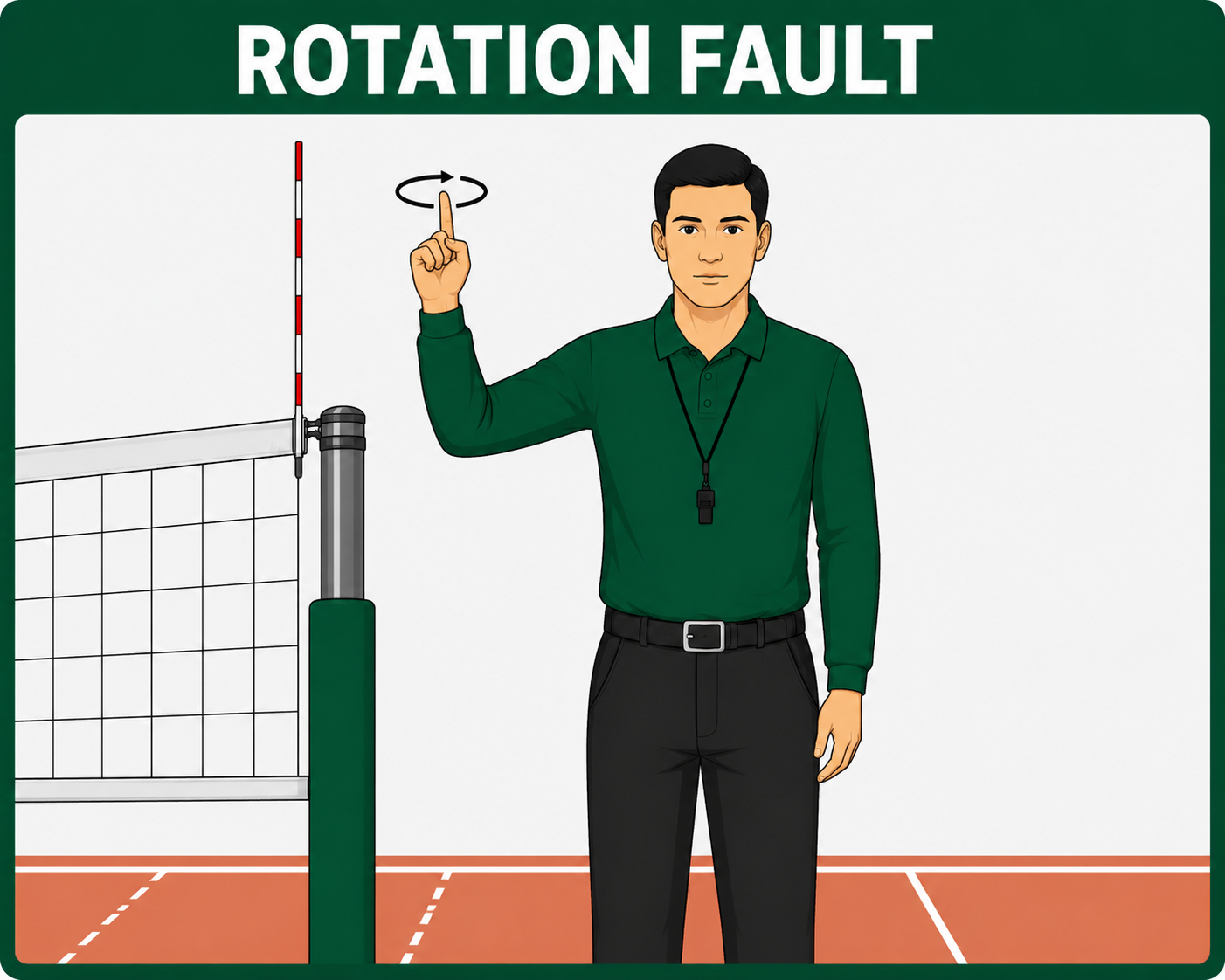
The rotation fault signal is indicated by rotating the index finger in a circular motion. It means that one or more players were not in the correct rotational order at the moment the serve was made.
Unlike many other sports, volleyball requires teams to maintain a specific rotational order throughout the match. Whenever a team wins the right to serve from the opposition, all six players rotate one position clockwise. If players serve out of order or are standing in incorrect positions when the serve is contacted, the referee calls a rotation fault. The opposing team is awarded a point, and the incorrect rotation must be corrected before play continues.
14. Screening
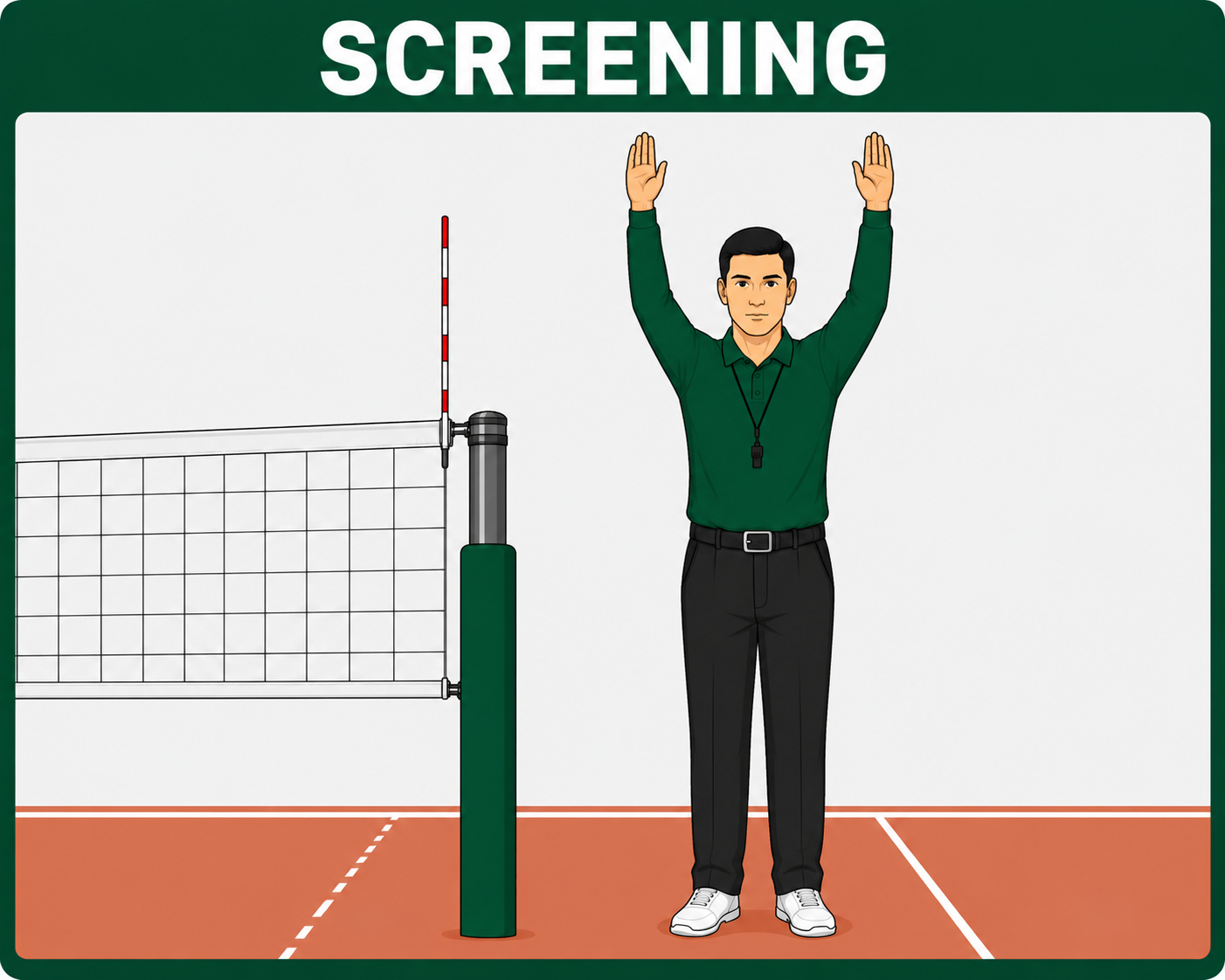
The screening signal is used when members of the serving team illegally obstruct the receiving team’s view of the server or the flight of the ball. The referee raises both arms vertically to indicate this violation.
Screening usually occurs when players stand too close together or intentionally position themselves to block the opponents’ line of sight. Volleyball rules require the receiving team to have a clear opportunity to see both the server and the ball during the service action. Although screening is less common than other faults, referees remain alert for deliberate attempts to hide the serve.
15. Penetration Under the Net
The penetration under the net signal indicates that a player has crossed completely into the opponent’s playing area beneath the net and interfered with the opponent’s play. The referee points toward the centre line to communicate this fault.
While players are allowed to step partially across the centre line as long as part of the foot remains in contact with or directly above it, completely crossing into the opponent’s court in a way that obstructs movement or creates a safety risk is illegal. This rule helps prevent collisions and ensures both teams can move freely during fast-paced rallies.
16. Foot Fault on Service
A foot fault occurs when the server steps on or crosses the end line before making contact with the ball. The referee signals this by pointing toward the service line.
Every serve must be executed from behind the end line within the designated service zone. Players may jump while serving, but they cannot touch or cross the end line before striking the ball. Once contact has been made, the server is free to land inside the court. Foot faults are common among players attempting jump serves, where timing and positioning are especially important.
17. Warning
A referee issues an official warning by displaying a yellow card. This serves as a formal reminder for players, coaches, or team officials to maintain appropriate conduct. Although a warning does not result in an immediate point for the opposing team, repeated misconduct may lead to more severe penalties.
18. Penalty
A red card indicates a misconduct penalty. Unlike a warning, this sanction immediately awards a point and, if applicable, the next serve to the opposing team. Penalties are typically issued for repeated unsporting behaviour, offensive conduct, or actions that disrupt the match.
19. Disqualification
The most severe disciplinary action is indicated by showing the yellow and red cards together. This signals a disqualification, requiring the player or team official to leave the competition area for the remainder of the match. Disqualification is typically imposed for aggressive behaviour, repeated serious misconduct, or actions that threaten the safety or integrity of the game.
Conclusion
Volleyball hand signals are a universal language that helps referees communicate decisions clearly and maintain fair play throughout a match. Every official signal, whether for a point, serve, substitution, or fault, has a specific meaning that players, coaches, and spectators can quickly understand.
By learning these standard referee signals, you’ll gain a better understanding of the rules, follow matches more confidently, and improve your overall knowledge of the sport. Whether you’re playing, coaching, officiating, or simply watching, recognising volleyball hand signals makes the game easier to interpret and more enjoyable to follow.
Download Playo on Android or iOS, or visit playo.co to start playing!
Frequently Asked Questions
Volleyball hand signals are official gestures used by referees to communicate decisions such as points, faults, substitutions, time-outs, sanctions, and the start or end of play during a volleyball match.
The most frequently used signals are point awarded, team to serve, ball in, ball out, double contact, and net touch, as they occur regularly during almost every match.
Referees use hand signals to indicate points, faults, substitutions, and disciplinary actions, whereas line judges use flag signals to indicate whether the ball is in, out, touched, or if they could not clearly judge the play.