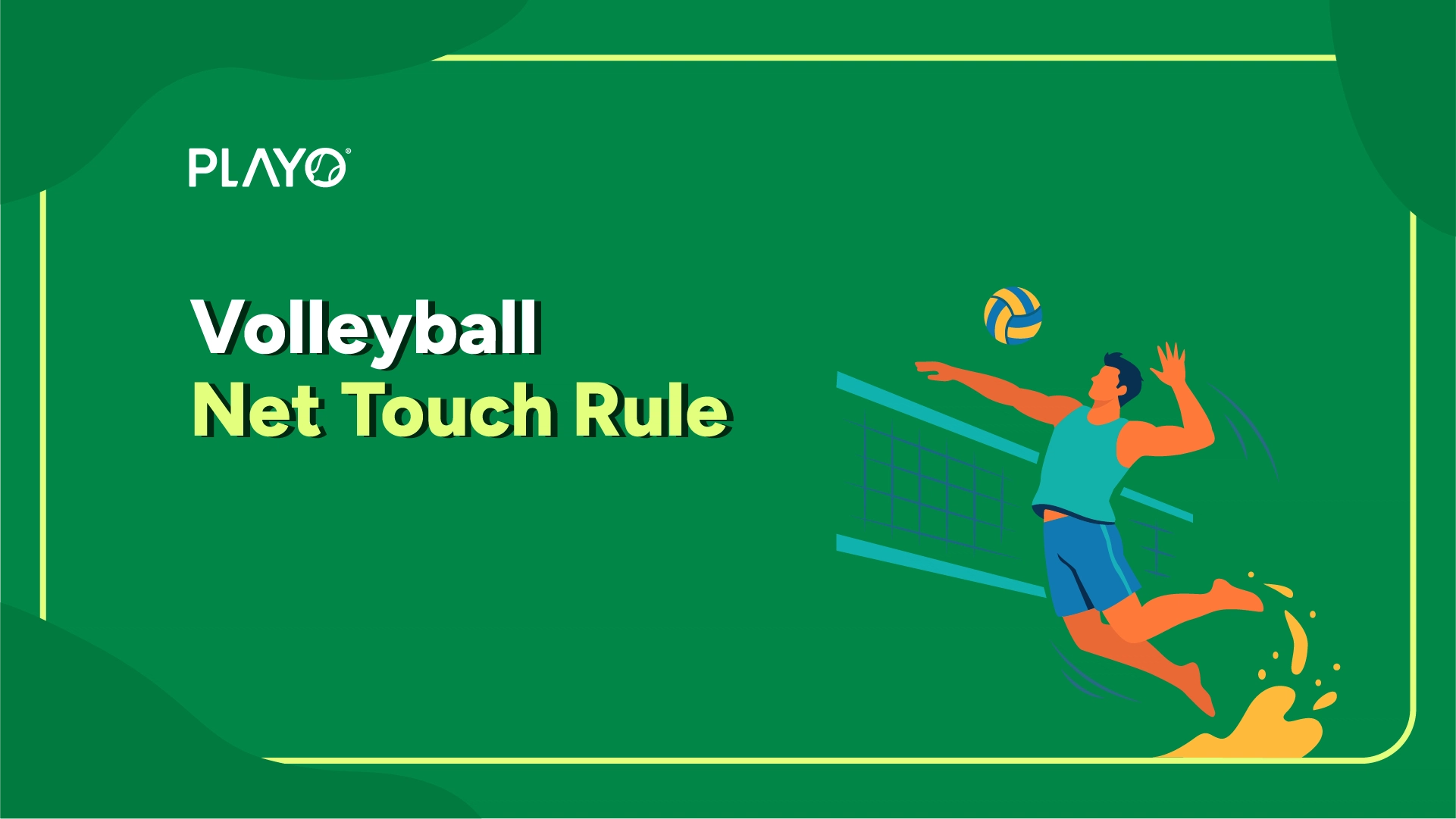


In volleyball, touching the net is not automatically a fault. The volleyball net touch rule depends on where the contact occurs and whether the player is involved in the action of playing the ball. Under the FIVB Official Volleyball Rules 2025–2028, touching the net between the antennae or the antenna itself while playing the ball is a fault. However, certain types of net contact are permitted, including contact outside the antennae when it does not interfere with play.
Understanding these rules is important for identifying legal and illegal net contact during attacks, blocks and other actions near the net. This guide explains when touching the net results in a fault, when it is allowed, and the specific exceptions players and referees need to know.
What is the Volleyball Net Touch Rule?
According to Rule 11.3.1 of the FIVB Official Volleyball Rules, contact with the net by a player between the antennae, during the action of playing the ball, is a fault.
The important part of the rule is that both conditions matter:
- The player contacts the net between the antennae or the antenna itself.
- The contact occurs during the player’s action of playing the ball.
The action of playing the ball is broader than simply touching the ball. It includes movements such as taking off, attempting or hitting the ball, and landing safely and becoming ready for another action. A player close to the ball who is attempting to play it can also be considered to be in the action of playing the ball even if they do not actually make contact with the ball.
When is Touching the Net a Fault?
A net touch is a fault when a player contacts the net between the antennae or the antenna itself while taking part in the action of playing the ball. For example, a front-row player jumps to block an opponent’s attack and touches the net while attempting to make the block. This is a net fault.
Similarly, an attacker who touches the net while jumping, hitting or completing the landing phase of an attack can be penalised if the contact occurs during the action of playing the ball. The rule therefore does not apply only to the moment when the player actually hits the ball.
A player can also commit a fault by using the net between the antennae as a support or stabilising aid, catching or holding the net, creating an unfair advantage through net contact, or otherwise interfering with an opponent’s legitimate attempt to play the ball.
When is Touching the Net Not a Fault?
Not every contact with the net results in a fault.
Under Rule 11.3.2, players may touch the post, ropes or another object outside the antennae, including the net itself, provided the contact does not interfere with play.
This means the location of the contact is important. The net section between the two antennae is part of the playing area where the net-touch rule applies. Contact with the external parts of the net or equipment outside the antennae is treated differently, provided it does not interfere with the rally.
For example, touching a portion of the net outside the antennae while moving around the court is not automatically a net fault.
What Happens If the Ball Causes the Player to Touch the Net?
A player is not at fault when the ball is driven into the net and causes the net to touch that player.
This situation is specifically covered by Rule 11.3.3. If an opponent attacks the ball into the net and the resulting movement of the net causes it to contact a player, that player has not committed a net-touch fault.
The distinction is important because the player did not deliberately cause the net contact while attempting to play the ball. Referees therefore consider how the contact occurred rather than simply penalising every instance in which the net touches a player.
Is Touching the Net With Hair a Fault?
Hair contact with the net is not automatically a fault.
The FIVB’s refereeing guidance states that incidental contact between a player’s hair and the net should not be considered a fault unless it is clear that the contact affected the opponent’s ability to play the ball or interrupted the rally.
For example, if a player’s ponytail briefly touches the net without affecting play, the rally can continue. If the hair becomes tangled in the net and affects the rally, however, the contact can become relevant to the referee’s decision.
Can Players Touch the Net Outside the Antennae?
Yes. Players are permitted to touch the net outside the antennae as long as the contact does not interfere with play. The FIVB rules specifically allow contact with the post, ropes and other objects outside the antennae under these conditions.
The FIVB’s refereeing guidance also distinguishes external parts such as the top band outside the antennae, cables and poles from the part of the net between the antennae. Such contact is generally not a fault unless it interferes with play or involves circumstances covered by the rules.
Can the Net Be Touched During a Block?
A player can be called for a net fault while blocking.
If a blocker jumps to stop an opponent’s attack and touches the net between the antennae or the antenna itself during the action of playing the ball, the contact is a fault. The same applies if the blocker uses the net as support or otherwise interferes with play.
However, if the ball is driven into the net and the resulting movement of the net causes contact with the blocker, no fault is committed by that player under Rule 11.3.3.
Does Touching the Net During an Attack Count as a Fault?
Yes, if the player touches the net between the antennae during the action of playing the ball.
The action includes the take-off, hit or attempted hit, and landing safely, ready for a new action. Therefore, a player cannot assume that the net is safe to touch immediately after hitting the ball. If the player is still completing the action of playing the ball, a net contact can result in a fault.
For example, an outside hitter who makes a legal attack but brushes the net while landing can still be called for a net fault if the contact occurs before the action of playing the ball has ended.
Common Examples of Volleyball Net Touch Fouls
Here are some common situations under the current foul rules. These decisions are based on the FIVB’s current rules and refereeing guidance.
| Situation | Net Fault? |
| Player touches net between antennae while attacking | Yes |
| Player touches antenna while playing the ball | Yes |
| Blocker touches net while attempting to block | Yes |
| Player uses net as support | Yes |
| Player catches or holds the net | Yes |
| Ball drives net into player | No |
| Player’s hair briefly touches net without affecting play | No |
| Player touches net outside antennae without interference | No |
Volleyball Net Touch Rule: Key Points to Remember
The volleyball net touch rule is not simply a rule that says players can never touch the net. Under the FIVB Official Volleyball Rules 2025–2028, the circumstances of the contact determine whether a fault has occurred.
The main points are:
- Touching the net between the antennae while playing the ball is a fault.
- The action of playing the ball includes take-off, hitting or attempting to hit, and landing safely ready for a new action.
- Touching the antennae during the action of playing the ball is a fault.
- Using the net as support or a stabilising aid is a fault.
- Catching or holding the net can be penalised.
- Touching the net outside the antennae is not automatically a fault if it does not interfere with play.
- A player is not at fault when the ball drives the net into them.
- Incidental hair contact is not a fault unless it affects the opponent’s ability to play the ball or interrupts the rally.
Understanding these distinctions helps players, coaches and spectators correctly identify volleyball net touch faults instead of treating every contact with the net as an automatic violation.
Download Playo on Android or iOS, or visit playo.co to start playing!
Frequently Asked Questions
A player commits a net fault when they touch the net between the antennae or the antenna itself while playing the ball. The rule applies to actions such as attacking and blocking.
No. Touching the net is not always a fault. Contact with the net outside the antennae is permitted when it does not interfere with play. A player is also not at fault when the ball drives the net into them.
A player commits a net fault if they touch the net between the antennae or the antenna while blocking. Contact caused when the ball drives the net into the player is not a fault.
Incidental hair contact with the net is not considered a fault when it does not affect an opponent’s ability to play the ball or interrupt the rally. If hair gets caught in the net and affects play, it may be treated differently.
Yes. Players may touch the net outside the antennae, as well as the posts or ropes, as long as the contact does not interfere with play.