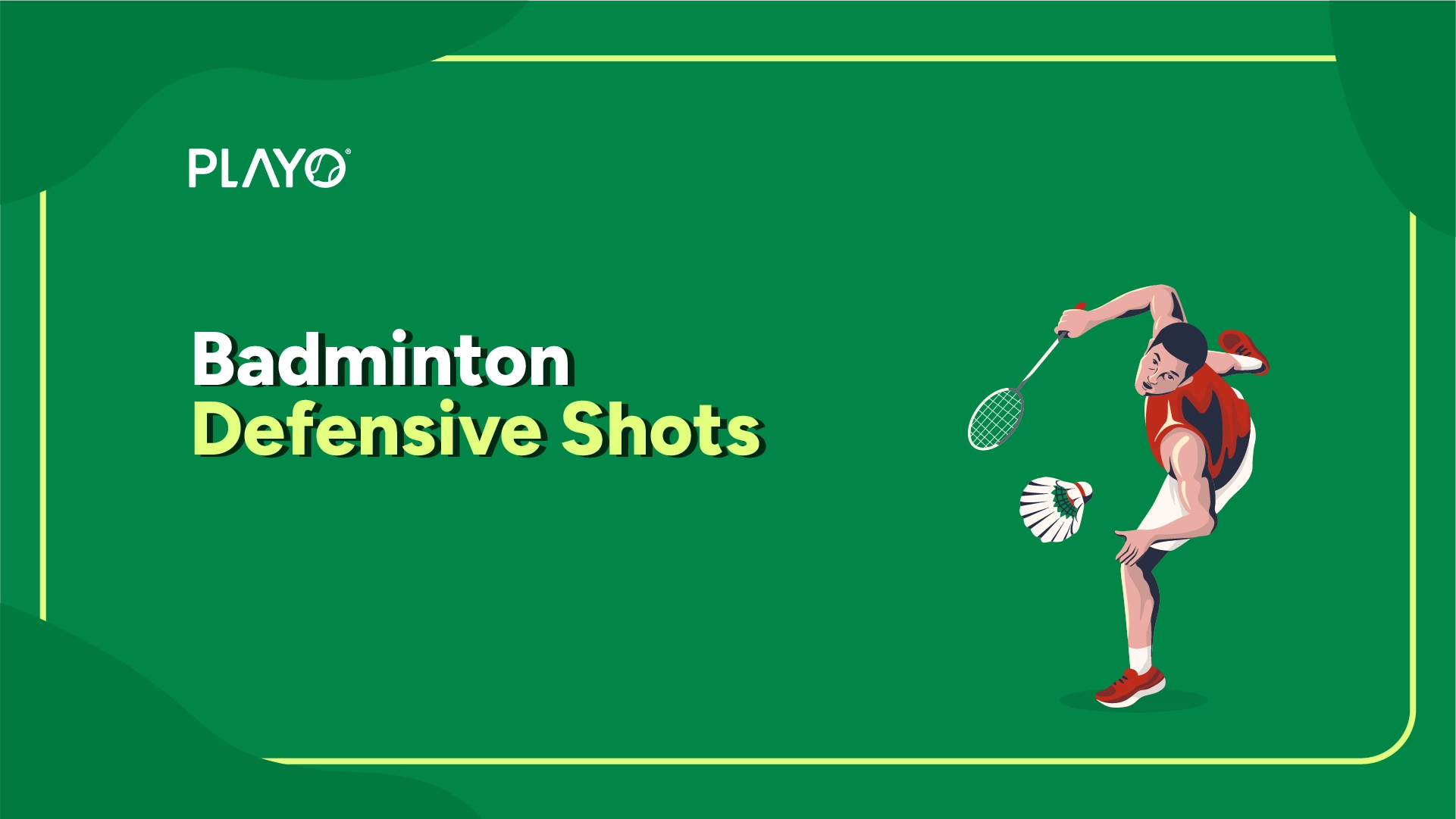


A powerful attack can put a badminton player under immediate pressure, but a well-executed defence can turn the rally around. Badminton defensive shots are used to counter smashes, fast drives and attacking net shots while giving the player time to recover and prepare for the next stroke.
From a high defensive lift that pushes the opponent to the rear court to a controlled block that drops the shuttle near the net, each defensive shot serves a different purpose. Understanding these shots, their techniques and when to use them can help players handle attacking rallies more effectively and transition from defence to attack.
What are Defensive Shots in Badminton?
Defensive shots in badminton are strokes played to counter an opponent’s attacking shot and keep the rally going. They are generally used when a player is under pressure and does not have enough time or space to play an attacking shot.
For example, when an opponent plays a powerful smash towards the body, the player may use a defensive block to make the shuttle fall close to the net. Alternatively, a high defensive lift can send the shuttle deep into the opponent’s court and give the player more time to recover.
The main objective of a defensive shot is not always to win the rally immediately. Instead, it is to neutralise the attack, create time and regain a favourable position.
Types of Defensive Shots in Badminton
Different defensive shots are suited to different situations. The most commonly used badminton defensive shots include the following.
1. Defensive Lift
A defensive lift sends the shuttle high and deep towards the opponent’s rear court. It is commonly used when a player is under pressure and needs additional time to recover.
The shuttle is usually played upwards from below net height and directed towards the back of the opponent’s court. A well-executed lift forces the opponent to move backwards before playing the next shot.
When to use it:
- When defending against a smash
- When the shuttle is below net height
- When you need time to recover your position
- When a short defensive shot could give the opponent an easy attack
The key is to generate enough height and length without making the lift too short, as a weak lift can give the opponent another attacking opportunity.
2. Defensive Block
A defensive block is played by using the pace of the opponent’s attacking shot rather than generating significant power yourself. It is particularly effective against smashes.
The racket is placed in front of the body, and the player uses a controlled movement to redirect the shuttle over the net. A good block can make the shuttle land close to the opponent’s net, forcing them to move forward. A defensive block is most effective when the racket is prepared early, and the player maintains a relaxed grip.
3. Defensive Drive
A defensive drive is a fast, relatively flat shot played to counter an opponent’s attacking stroke. It is particularly useful in doubles, where rallies can become extremely fast. Instead of lifting the shuttle high, the player drives it across the court at a flatter trajectory. This can prevent the opponent from maintaining an aggressive front-and-back attacking formation.
Defensive drives require quick reactions, a compact swing and good racket preparation. Large backswing movements can make it difficult to respond to fast shots.
4. Net Block
A net block is played when the shuttle is close to the net. The objective is to return the shuttle softly so that it travels just over the net and drops into the opponent’s front court.
This shot can be particularly useful after defending a smash or when the opponent has moved forward. A tight net block may force the opponent to lift the shuttle, allowing the defending player to regain the attack. Good control is more important than power when playing a net block.
5. Defensive Net Shot
A defensive net shot can also be used when the shuttle reaches the front court under pressure. The player aims to keep the shuttle low and close to the net.
Unlike an attacking net shot, the primary purpose here is to prevent the opponent from gaining an easy attacking opportunity. The shuttle should cross the net with minimal height. Players need good racket control and precise contact to execute this shot effectively.
How to Play Defensive Shots in Badminton
Effective defence depends on more than simply choosing the correct shot. Players need proper preparation, positioning and racket control.
1. Maintain the Correct Defensive Stance
When expecting an attack, keep the knees slightly bent and maintain a balanced stance. Your weight should be distributed so you can move quickly in either direction. Keep the racket in front of your body rather than allowing it to drop towards your side. This reduces the time required to respond to a fast shot.
2. Keep the Racket Ready
Racket preparation is particularly important when defending smashes and drives. Hold the racket in front of your body with a relaxed grip. Avoid taking a large backswing. Defensive shots often require short movements because there may be very little time between the opponent’s shot and your response.
3. Use the Opponent’s Pace
You do not always need to hit a defensive shot with maximum power. Against a fast smash, a controlled racket movement can redirect the shuttle effectively. For blocks and drives, focus on timing and racket angle rather than trying to generate excessive power.
4. Watch the Opponent
Good defenders do not focus only on the shuttle. Watching the opponent can provide clues about where the next shot is likely to go. Pay attention to the opponent’s racket position, body orientation and movement. This can help you prepare earlier and reduce reaction time.
5. Recover After Every Shot
Defence is not complete when you return the shuttle. You must immediately recover towards an appropriate court position. After playing a defensive lift, for example, move back into a position from which you can cover the opponent’s next attacking shot.
Defensive Shots in Singles vs Doubles
The use of defensive shots differs between singles and doubles because court positioning and attacking patterns are different.
In singles badminton, a defensive lift is often used to push the opponent towards the rear court and create time for recovery. Players also use blocks and net shots to change the pace of the rally.
In doubles badminton, defensive drives and blocks are particularly important because attacking shots can arrive at much higher speeds. Players often defend side-by-side to cover the width of the court against attacks.
| Shot | Singles | Doubles | Main Purpose |
| Defensive Lift | Common | Common | Create time and move opponent back |
| Defensive Block | Common | Very common | Neutralise an attack |
| Defensive Drive | Useful | Very common | Counter fast attacks |
| Net Block | Useful | Useful | Force opponent forward |
| Defensive Net Shot | Useful | Useful | Keep shuttle low |
Common Mistakes When Playing Defensive Shots
Several mistakes can make defensive play less effective.
- Holding the racket too low: This increases the time needed to respond to fast shots.
- Using a large swing: A large backswing can be difficult to control during a fast rally.
- Lifting too short: A short defensive lift can sit up for the opponent and invite another smash.
- Standing too upright: A high, stiff stance makes it harder to change direction quickly.
- Watching only the shuttle: Reading the opponent can help you anticipate the direction of an attack.
- Failing to recover: Returning the shuttle without preparing for the next shot can leave you out of position.
Tips to Improve Badminton Defence
Improving defensive skills requires regular practice, quick reactions and good court awareness.
- Practise defensive blocks: Work on blocking controlled smashes while keeping the racket in front and using short, controlled movements.
- Practise defensive lifts: Play lifts from different areas of the court and focus on sending the shuttle deep rather than simply hitting it high.
- Work on defensive drives: Doubles players can practise flat exchanges to improve reaction speed and learn to use compact racket movements.
- Improve your footwork: Practise reaching the shuttle early and maintaining balance, as late movement makes accurate defensive shots more difficult.
- Practise defence-to-attack transitions: After defending a smash, look for opportunities to play a controlled net shot, drive or other placement to regain control of the rally.
Conclusion
Badminton defensive shots help players withstand attacking pressure, maintain rallies and create opportunities to regain control. Defensive lifts, blocks, drives and net shots each have a different purpose and should be selected according to the position of the shuttle and the opponent.
Good defence depends on quick racket preparation, balanced footwork, controlled racket movement and accurate placement. With regular practice, players can become more comfortable against powerful attacks and turn defensive situations into attacking opportunities.
Download Playo on Android or iOS, or visit playo.co to start playing!
Frequently Asked Questions
Defensive shots are strokes used to counter an opponent’s attack, maintain the rally and create time to recover. Common examples include defensive lifts, blocks, drives and net shots.
A defensive block or lift can be used against a smash. A block redirects the shuttle towards the net, while a lift sends it high and deep to give the player more time to recover.
A defensive lift sends the shuttle high and deep into the opponent’s rear court. It is mainly used to create time and move the opponent away from the net.
A defensive block is a controlled shot that uses the pace of an attacking shot to return the shuttle softly, often towards the opponent’s front court.
The placement depends on the situation. A defensive lift should generally be sent deep towards the rear court, while a block or net shot can be played close to the opponent’s net to make the next attack more difficult.
A defensive lift sends the shuttle high and deep to create time and move the opponent backwards. A defensive block uses a controlled racket movement to return the shuttle softly, usually towards the front court.