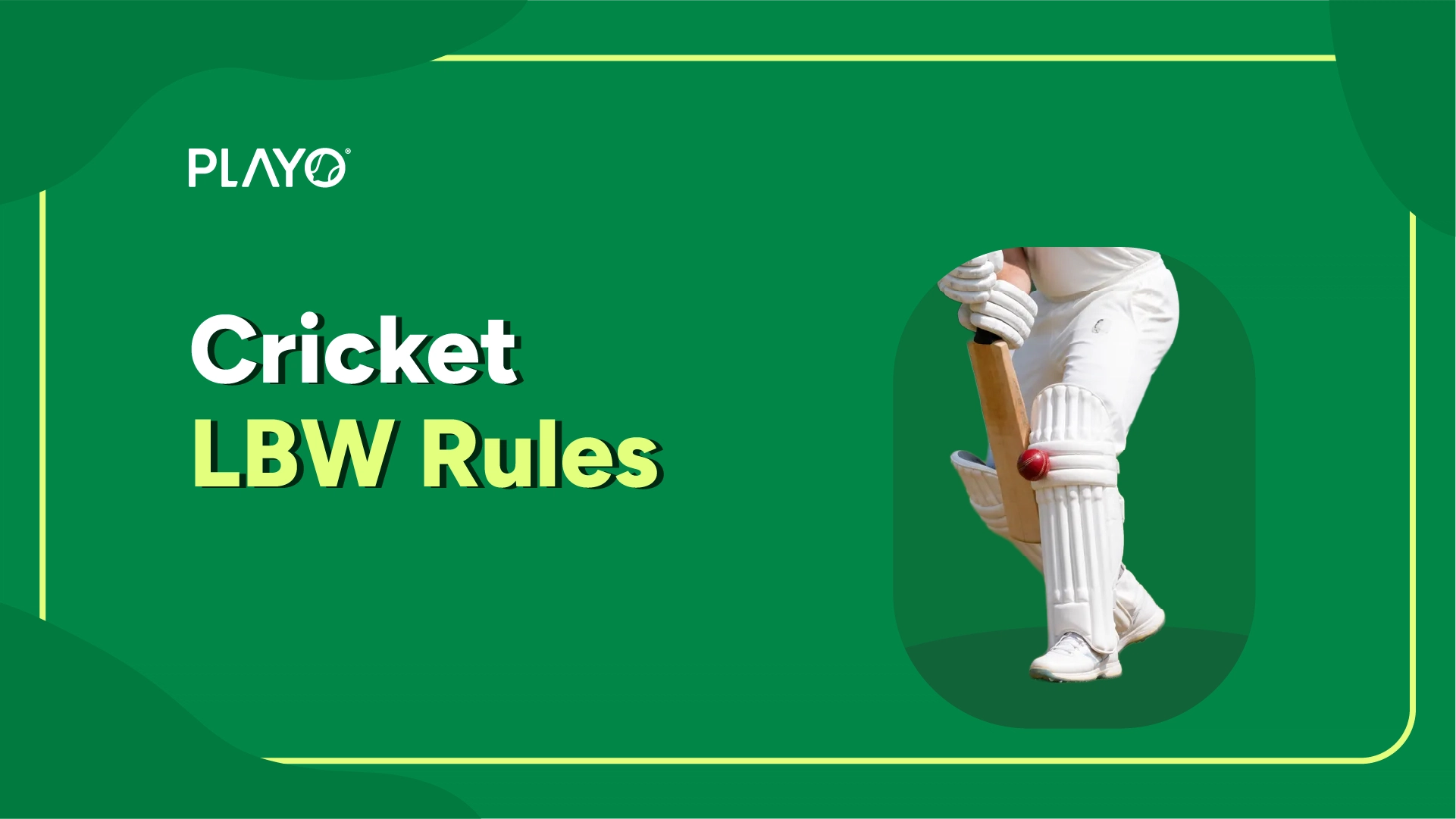


Leg Before Wicket (LBW) is one of the most common ways a batter can be dismissed in cricket. The rule prevents a batter from using their body to stop a delivery that would otherwise have hit the stumps. However, an LBW decision is not based simply on the ball hitting the batter’s leg. Several conditions must be satisfied before the umpire can give the batter out.
Under Law 36 of the Laws of Cricket, a batter can be dismissed LBW only when all the prescribed conditions are met. The current MCC Laws of Cricket 2017 Code, 4th Edition (2026), provides the governing law, while ICC playing conditions apply additional procedures and DRS protocols in international cricket.
What is LBW in Cricket?
LBW stands for Leg Before Wicket and is one of the methods of dismissal in cricket. A batter can be given out LBW when a legal delivery strikes their person before touching the bat and the ball would have gone on to hit the wicket, provided the other conditions under Law 36 are satisfied.
The ball does not have to hit the batter’s leg specifically. It can strike any part of the batter’s person. The decision also depends on where the ball pitched, where it first struck the batter, whether the batter made a genuine attempt to play the ball and whether the ball would have hit the wicket.
Cricket LBW Rules Explained
For a batter to be given out LBW, all of the following conditions must be satisfied.
1. The Delivery Must Not Be a No-Ball
The first requirement is that the bowler must deliver a legal ball. If the delivery is called a no-ball, the batter cannot be dismissed LBW from that delivery.
This is why the umpire first establishes whether the delivery is legal before considering the other elements of an LBW appeal.
2. Where the Ball Pitches Matters
If the ball pitches before hitting the batter, it must pitch in line between the wickets or on the off side of the striker’s wicket. In simple terms, a ball that pitches completely outside the line of the leg stump cannot result in an LBW dismissal.
The exception concerns a delivery that is intercepted full-pitch, meaning it strikes the batter without pitching first. In that situation, the pitching condition does not apply.
3. The Ball Must Hit the Batter Before the Bat
For LBW to apply, the ball must not have previously touched the batter’s bat. The batter must intercept the delivery with some part of their person, either before or after the ball pitches.
There is an important simultaneous-contact rule: if the ball makes contact with the batter’s bat and person at the same time, the law treats the ball as having first touched the bat. Therefore, the batter cannot be given out LBW in that situation.
Only the first interception is considered when determining whether the LBW conditions have been met.
4. The Point of Impact Must Meet the LBW Conditions
The location where the ball first hits the batter is another crucial part of the rule. If the batter has made a genuine attempt to play the ball with the bat, the first point of impact must be between wicket and wicket. If the batter has not made a genuine attempt to play the ball with the bat, the point of impact can be between wicket and wicket or outside the line of the off stump.
The point of impact can be above the level of the bails. This distinction is particularly important because a ball striking the batter outside the off-stump line is not automatically out LBW. Whether the batter genuinely attempted to play the delivery affects whether an impact outside off can still satisfy the law.
5. The Ball Must Have Gone on to Hit the Wicket
Finally, the umpire must be satisfied that the ball would have hit the wicket if the batter had not intercepted it. This is why an LBW decision involves more than checking where the ball struck the batter. The projected path of the ball must also indicate that it would have hit the wicket.
For DRS, ball-tracking technology provides information about the ball’s pitching location, point of impact and projected path towards the wicket.
Read More: Cricket No Ball Rules
How Do Umpires Decide an LBW?
An LBW decision depends on several factors. The umpire considers where the ball pitched, where it first struck the batter, and whether it would have hit the wicket. The delivery must also not be a no-ball, and the ball must not have touched the bat before hitting the batter. Whether the batter made a genuine attempt to play the ball is also relevant.
In international cricket, DRS (Decision Review System) can be used to review LBW decisions. Ball-tracking technology assesses the ball’s pitching location, point of impact and projected path towards the wicket.
For marginal decisions, the DRS protocol uses Umpire’s Call. For wicket impact, the ball-tracking result can be classified as Hitting, Umpire’s Call or Missing. When the result is Umpire’s Call, the original on-field decision remains unchanged. This means DRS assists the umpire but does not automatically overturn every marginal LBW decision.
Can You Be Out LBW If the Ball Hits the Pad Outside Off Stump?
Yes, but only under specific circumstances. If the batter has not made a genuine attempt to play the ball with the bat, the point of impact may be outside the off-stump line, and an LBW dismissal can still be possible, provided all the other conditions are satisfied.
If the batter has made a genuine attempt to play the ball, the point of impact must be between wicket and wicket. Therefore, the common explanation that “LBW is never out if the ball hits outside off stump” is incomplete.
Can a Batter Be Out LBW If the Ball Hits Them on the Full?
Yes. A batter can be given out LBW even if the ball does not pitch before hitting them. This is called a full-pitch delivery, and in this situation, the usual requirement about where the ball pitched does not apply.
However, the remaining LBW conditions must still be satisfied. The delivery must not be a no-ball, the ball must strike the batter’s person before the bat, and the point of impact must meet the relevant requirement under Law 36. The umpire must also be satisfied that the ball would have gone on to hit the wicket if it had not struck the batter.
What Happens During an LBW Review?
In international cricket, DRS can be used to review an LBW decision where the relevant playing conditions permit it.
For an LBW review, the third umpire assesses whether the delivery was fair and whether the ball touched the bat before striking the batter. If the batter remains eligible to be dismissed, ball-tracking technology provides information on:
- Pitching: where the ball pitched
- Impact: where the ball first struck the batter
- Wicket: whether the ball would have hit the stumps
The DRS protocol also includes Umpire’s Call for marginal decisions involving the point of impact or whether the ball would have hit the wicket.
Conclusion
The cricket LBW rules require several conditions to be satisfied before a batter can be dismissed. The delivery must not be a no-ball, the ball must meet the required pitching condition where applicable, it must strike the batter before the bat, the point of impact must satisfy the relevant requirement, and the ball must have gone on to hit the wicket.
In international cricket, DRS and ball-tracking technology can assist umpires by assessing pitching, impact and the projected path of the ball. However, the underlying dismissal remains governed by Law 36: Leg Before Wicket.
Download Playo on Android or iOS, or visit playo.co to start playing!
Frequently Asked Questions
A batter can be out LBW if the delivery is not a no-ball, the ball satisfies the pitching requirement where applicable, it strikes the batter before the bat, the point of impact satisfies the relevant condition, and the ball would have hit the wicket.
No. Under Law 36, a ball that pitches completely outside the leg side cannot result in an LBW dismissal.
It depends on whether the batter made a genuine attempt to play the ball. If there was no genuine attempt, impact outside the off-stump line can still satisfy the LBW law, subject to the other conditions.
If the ball makes contact with the bat and the batter’s person simultaneously, the law treats it as having first touched the bat. Therefore, the batter cannot be dismissed LBW on that basis.
No. The ball can strike any part of the batter’s person. The law is called “Leg Before Wicket,” but it does not restrict the interception to the leg.