

Swing bowling is one of the most effective techniques used by fast and medium-fast bowlers to deceive batters in cricket. Unlike straight deliveries, a swing ball moves sideways through the air before reaching the batter, making it difficult to judge the line and play the correct shot.
Cricket swing bowling relies on factors such as seam position, wrist alignment, ball condition and airflow. Bowlers use different types of swing to challenge batters, create wicket-taking opportunities and control the game. Understanding how swing bowling works can help players improve their technique and become more effective with the ball.
What is Swing Bowling in Cricket?
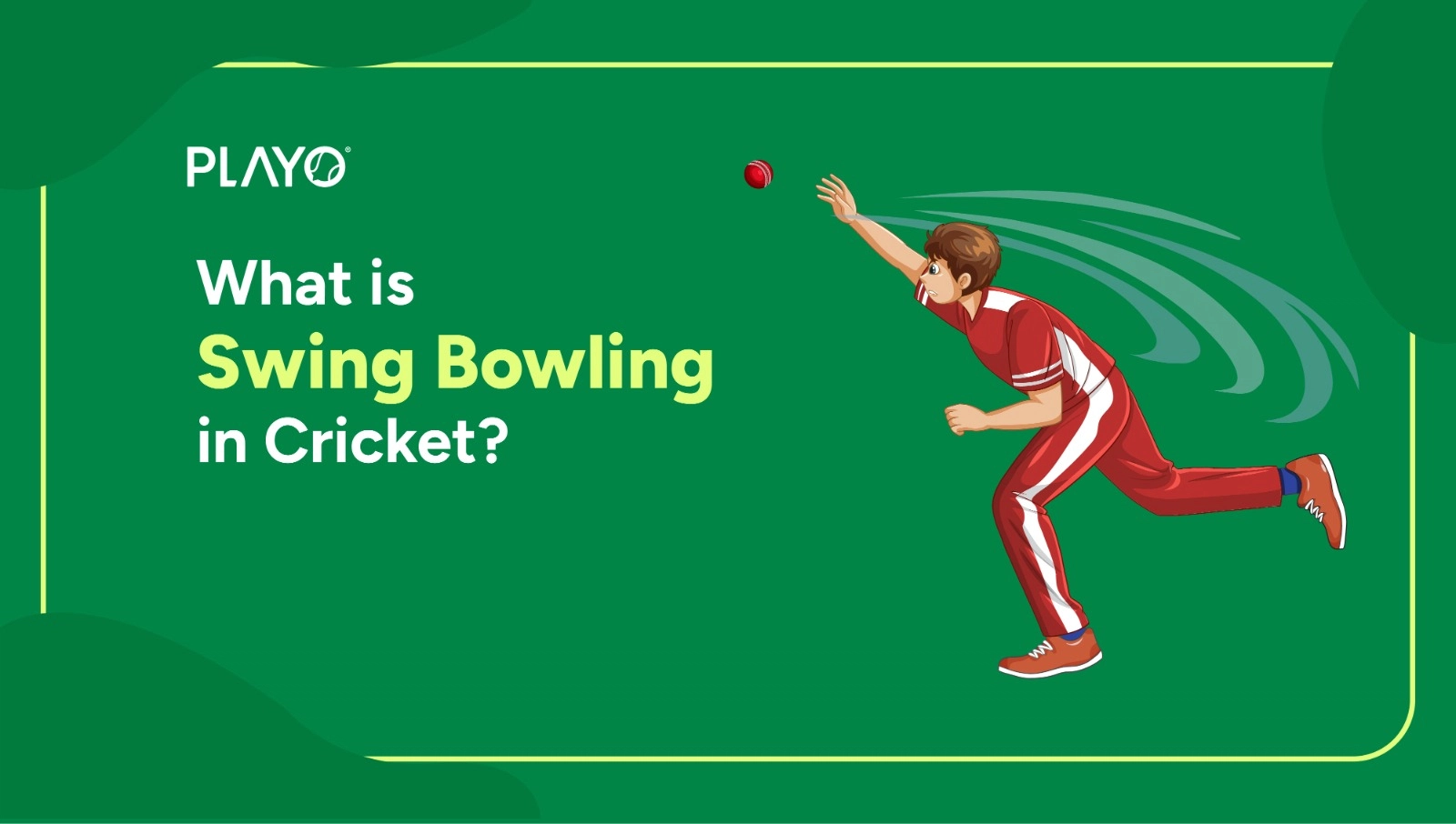
Swing bowling in cricket is a technique in which a bowler makes the ball deviate sideways while travelling through the air towards the batter. This movement occurs before the ball pitches and is primarily influenced by the airflow around the ball, its surface condition and the position of its seam.
Swing bowling is commonly associated with fast and medium-fast bowlers. Unlike seam bowling, where the ball changes direction after contacting the pitch, swing bowling involves movement through the air. A well-executed swinging delivery can force batters into playing away from their bodies, misjudging the ball’s movement or edging it towards the wicketkeeper or slip fielders.
How Does Swing Bowling Work?
Swing bowling works because of differences in airflow around the cricket ball. The raised seam and contrasting surface conditions on either side of the ball influence how air moves around it, creating an aerodynamic force that can cause sideways movement.
Several factors affect how much a cricket ball swings:
- Seam position: The angle and stability of the seam influence airflow around the ball.
- Ball condition: Differences in surface roughness can affect the direction and amount of swing.
- Bowling speed: Different types of swing occur more effectively within particular speed ranges.
- Wrist position: A stable wrist helps maintain the intended seam alignment during delivery.
- Atmospheric conditions: Weather conditions may influence swing, although their effects are not always predictable.
Bowlers combine these factors to generate movement and make their deliveries more difficult to predict.
Read More: Cricket Googly Bowling
Types of Swing Bowling in Cricket
The three main types of swing bowling in cricket are inswing, outswing and reverse swing. Each involves different movement patterns and requires specific bowling techniques.
1. Inswing Bowling
Inswing bowling involves delivering a ball that curves towards the batter while travelling through the air. For a right-handed batter, an inswing delivery moves from the off side towards the leg side.
Bowlers commonly use inswing to target the stumps, challenge the batter’s front-foot defence and create opportunities for bowled or leg-before-wicket (LBW) dismissals. How to bowl an inswinger:
- Hold the ball with the index and middle fingers on either side of the seam.
- Angle the seam slightly towards the leg-side direction for a right-handed batter.
- Keep the wrist firm and aligned with the intended seam position.
- Release the ball smoothly while maintaining the seam angle.
- Aim for a full or good length that encourages the batter to play.
Inswing is particularly effective when batters expect the ball to continue straight or move away.
2. Outswing Bowling
Outswing bowling occurs when the ball curves away from the batter during its flight. Against a right-handed batter, an outswinger generally moves from the leg-side direction towards the off side.
Outswing is commonly used to force batters into playing deliveries outside the off stump, increasing the chances of edges to the wicketkeeper or slip fielders. How to bowl an outswinger:
- Position the index and middle fingers on either side of the seam.
- Angle the seam slightly towards the slips for a right-handed batter.
- Maintain a stable wrist behind the ball.
- Release the ball with a consistent bowling action and upright seam.
- Target the off-stump channel with a suitable length.
Outswing becomes especially dangerous when bowlers consistently deliver balls that tempt batters into playing forward.
3. Reverse Swing Bowling
Reverse swing is a form of swing bowling in which the ball moves in the opposite direction to what would normally be expected from its seam orientation under conventional swing conditions.
It is commonly associated with older cricket balls that have developed significant differences in surface roughness. Reverse swing generally requires relatively high bowling speeds, although the exact conditions vary.
How to bowl reverse swing:
- Use a legally maintained ball with a suitable difference in surface condition.
- Hold the ball with a firm grip and stable seam position.
- Maintain a consistent wrist position throughout the delivery.
- Generate sufficient pace to encourage reverse swing.
- Practise controlling the movement towards or away from the batter.
Reverse swing can be particularly effective with older balls because batters may struggle to anticipate the direction of movement.
Difference Between Conventional Swing and Reverse Swing
Although both techniques involve sideways movement through the air, conventional swing and reverse swing differ in their aerodynamic behaviour. Both techniques are important components of fast bowling and can be used strategically depending on match conditions.
| Feature | Conventional Swing | Reverse Swing |
| Ball condition | Commonly effective with newer balls | Commonly associated with older, worn balls |
| Movement | Usually towards the seam’s angled direction | Usually opposite the seam’s angled direction |
| Bowling speed | Can occur at moderate or high pace | Generally favoured by higher speeds |
| Surface condition | Seam and surface differences influence movement | Significant surface roughness differences are often important |
| Difficulty | Requires seam and wrist control | Requires pace, control and suitable ball conditions |
How to Improve Your Swing
Developing effective swing bowling requires consistent practice and control over several technical aspects.
Maintain the Correct Grip
A conventional swing bowling grip places the index and middle fingers on either side of the seam, with the thumb supporting the ball underneath. Avoid gripping the ball too tightly, as excessive pressure may affect the release.
Focus on Seam Position
An upright, stable seam is essential for generating a consistent conventional swing. Bowlers should practise releasing the ball without excessive seam wobble while maintaining the desired seam angle.
Keep Your Wrist Stable
Wrist position plays an important role in controlling swing. A firm wrist behind the ball helps maintain seam alignment and improves the consistency of deliveries.
Control Your Bowling Speed
Swing bowling does not always require maximum pace. Bowlers should identify a comfortable speed that allows them to maintain their action, control the seam and generate movement.
Practise Line and Length
Swing becomes more effective when combined with accurate line and length. Outswingers targeting the off-stump channel and inswingers attacking the stumps can create opportunities for dismissals.
Practising with a consistent run-up and release point helps bowlers improve accuracy without compromising swing.
Swing Bowling vs Seam Bowling
Swing bowling and seam bowling are frequently confused because both can make the ball change direction. However, the main difference is when the movement occurs. A fast bowler can combine swing and seam movement in the same delivery, making the ball particularly difficult to play.
| Swing Bowling | Seam Bowling |
| Ball moves sideways through the air | Ball deviates after pitching |
| Primarily influenced by aerodynamic forces | Primarily influenced by seam contact and pitch conditions |
| Depends on seam orientation, ball condition and airflow | Depends on seam presentation and interaction with the surface |
| Can be effective before the ball reaches the pitch | Movement occurs when the ball contacts the pitch |
Famous Swing Bowlers in Cricket
Several international cricketers have demonstrated exceptional swing bowling skills throughout their careers.
- Wasim Akram: Renowned for his ability to generate conventional and reverse swing.
- Waqar Younis: Famous for reverse-swinging yorkers and attacking the stumps.
- James Anderson: Known for his exceptional control of conventional swing, particularly outswing.
- Bhuvneshwar Kumar: Recognised for his ability to swing the new ball in both directions.
- Mohammed Shami: Known for his upright seam presentation and ability to generate movement.
These bowlers demonstrate how swing, accuracy and tactical awareness can make pace bowling effective across different formats.
Conclusion
Cricket swing bowling is an important skill for fast and medium-fast bowlers who want to create movement through the air and challenge batters. The three main types, inswing, outswing and reverse swing, offer different ways to deceive batters and create wicket-taking opportunities.
Mastering swing bowling requires a combination of proper grip, seam position, wrist control, bowling speed and consistent practice. By understanding these techniques and adapting to different ball and pitch conditions, bowlers can improve their accuracy and effectiveness.
Download Playo on Android or iOS, or visit playo.co to start playing!
Frequently Asked Questions
Swing bowling is a technique in which the cricket ball moves sideways through the air before pitching. Bowlers generate swing through seam positioning, ball condition, wrist control and aerodynamic forces.
The three main types of swing bowling are inswing, outswing and reverse swing. Inswing moves towards the batter, outswing moves away from the batter, and reverse swing moves opposite to the conventional direction expected from the seam angle.
Swing bowling involves sideways movement through the air caused by aerodynamic forces. Spin bowling primarily relies on rotation imparted to the ball, which can cause it to change direction after bouncing.
A newer cricket ball with a prominent seam can be effective for conventional swing. Reverse swing is commonly associated with older balls that have developed suitable differences in surface roughness.
Yes. Swing depends on several factors, including seam orientation, surface roughness, bowling speed and airflow. A pronounced difference between shiny and rough sides is not always necessary.
Wasim Akram is widely regarded as one of cricket’s greatest swing bowlers because of his exceptional ability to generate conventional and reverse swing. James Anderson is also recognised among the finest swing bowlers in international cricket.