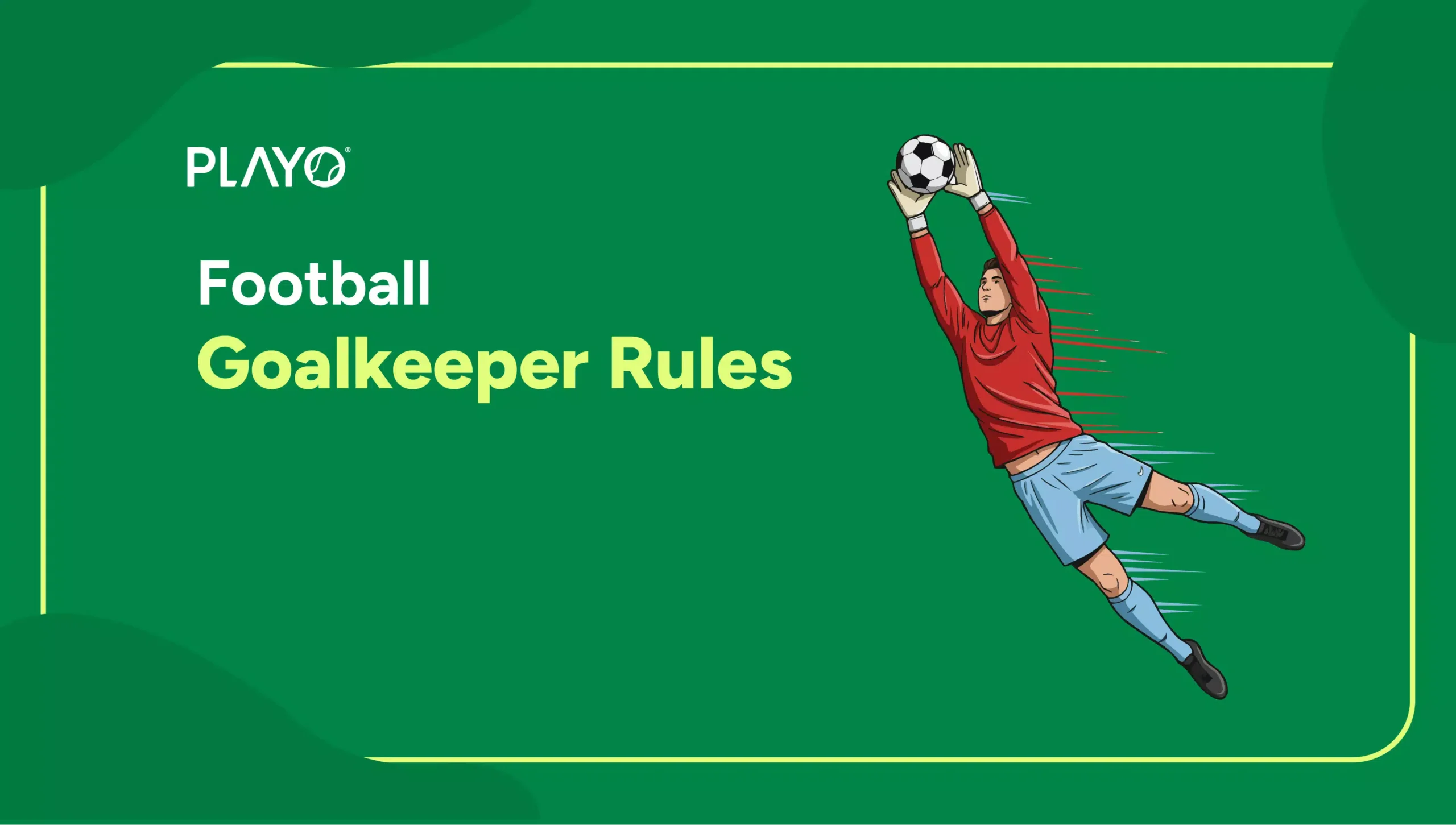


A goalkeeper plays a crucial role in football by preventing the opposing team from scoring goals. Unlike outfield players, the goalkeeper has special permission to handle the ball with their hands and arms, but only under specific conditions. Understanding the football goalkeeper rules is essential for players, coaches, referees, and fans who want to know what goalkeepers can and cannot do during a match.
The International Football Association Board (IFAB) establishes the official Laws of the Game, which govern goalkeeper behaviour, handling restrictions, time limits, back-pass offences, penalty kicks, and disciplinary actions. These laws define the goalkeeper’s responsibilities and explain the consequences of breaking the rules.
1. When Can a Goalkeeper Use Their Hands in Football?
Under the official football rules, a goalkeeper can handle the ball with their hands and arms inside their own penalty area, subject to specific restrictions. The penalty area is the designated rectangular area in front of the goal.
A goalkeeper can catch, hold, parry, or throw the ball using their hands while inside this area. However, the goalkeeper does not have unrestricted permission to handle the ball simply because they are inside the penalty area.
The goalkeeper cannot use their hands or arms to handle a ball deliberately kicked to them by a teammate or received directly from a teammate’s throw-in. If the goalkeeper commits either offence inside their own penalty area, the opposing team is awarded an indirect free kick.
Outside their own penalty area, goalkeepers have the same restrictions as other players regarding handball. They can play the ball with their feet, head, or other permitted body parts, but cannot deliberately handle it.
2. Football Goalkeeper Ball-Holding Rules
One of the most important goalkeeper rules in football concerns how long a goalkeeper can control the ball with their hands.
Under the current official rules, a goalkeeper can control the ball with their hands or arms for a maximum of eight seconds. The referee visually counts down the final five seconds using a raised hand to indicate the remaining time.
If the goalkeeper continues holding the ball beyond eight seconds, the opposing team is awarded a corner kick. This rule is intended to prevent goalkeepers from unnecessarily delaying the game.
The goalkeeper is considered to have control of the ball when they hold it between their hands, between a hand and another surface, or on an outstretched open hand. Simply touching or parrying a shot does not necessarily mean the goalkeeper has gained control.
The eight-second rule applies when the goalkeeper has control of the ball with their hands or arms. It does not mean they can hold the ball with their feet for eight seconds and then pick it up without considering the other handling restrictions.
3. Back-Pass Rule in Football
The back-pass rule prevents a goalkeeper from gaining an unfair advantage by handling the ball when a teammate deliberately plays it back to them in certain ways.
A goalkeeper cannot handle the ball inside their penalty area if a teammate deliberately kicks it to them. The restriction also applies when the goalkeeper receives the ball directly from a teammate’s throw-in.
For example, if a defender deliberately kicks the ball towards their goalkeeper to avoid pressure, the goalkeeper must use their feet or another permitted body part to play it rather than picking it up.
However, not every pass from a teammate is prohibited. A goalkeeper may handle a ball that a teammate plays using their head, chest, knee, or another permitted method, provided the teammate has not deliberately used a trick to circumvent the rule.
If a player deliberately uses a trick to pass the ball to the goalkeeper in an attempt to evade the back-pass restriction, the player can be cautioned for unsporting behaviour. The goalkeeper’s handling of the ball is also penalised according to the applicable law.
4. Goalkeeper Rules During Penalty Kicks
The goalkeeper must follow specific rules when defending a penalty kick. These requirements apply when a penalty kick is taken during normal play or a penalty shoot-out, subject to the applicable competition rules.
Under the official Laws of the Game:
- The goalkeeper must remain on the goal line, facing the kicker, between the goalposts until the ball is kicked.
- At the moment the ball is kicked, the goalkeeper must have at least part of one foot touching, in line with, or behind the goal line.
- The goalkeeper must not unfairly distract the kicker, such as by delaying the kick or behaving in a way that shows a lack of respect for the game.
- The goalkeeper must not move forward off the goal line in a manner that infringes the penalty-kick law before the ball is kicked.
If the goalkeeper commits an offence and the penalty is missed or saved, the referee may order the kick to be retaken, depending on the circumstances. If the goalkeeper infringes the law but the ball enters the goal, the goal is awarded.
These requirements help ensure that the penalty taker and goalkeeper compete under the same official conditions.
5. Goalkeeper Rules During Goal Kicks
A goal kick is awarded when the whole ball crosses the goal line, either on the ground or in the air, after last touching an attacking-team player, provided a goal has not been scored.
The goalkeeper frequently takes goal kicks, although any player from the defending team can take them. The following rules apply:
- The ball must be stationary and placed at any point within the goal area.
- The ball is in play when it is kicked and clearly moves.
- Opponents must remain outside the penalty area until the ball is in play.
- The player taking the goal kick can touch the ball again only after another player has touched it, unless an applicable exception to the double-touch rule applies.
A goal can be scored directly from a goal kick against the opposing team. However, if the ball goes directly into the kicker’s own goal, a corner kick is awarded to the opposing team.
Under the 2026/27 IFAB Laws of the Game, the goal-kick countdown protocol also provides for a five-second countdown when a goal kick is unfairly delayed. If the kick is not taken by the end of the countdown, a corner kick is awarded to the opposing team under the applicable protocol.
6. Goalkeeper Rules for Handling Shots and Rebounds
Goalkeepers are allowed to catch, parry, or punch shots while inside their penalty area, provided they follow the handling rules. Once the goalkeeper has released the ball from their hands and it is back in play, they cannot handle it again inside their penalty area until another player has touched it, unless an applicable exception applies.
For example, if a goalkeeper throws the ball to a teammate and then picks it up again before another player touches it, an indirect free kick is awarded to the opposing team.
However, a goalkeeper may make a save and continue playing the ball with their feet. The restrictions concern handling with the hands or arms, not ordinary play with the feet.
Goalkeepers must also avoid dangerous or careless challenges. Like other players, they can be penalised for fouls, including tripping, pushing, holding, or challenging an opponent in a careless, reckless, or excessively forceful manner. Being the goalkeeper does not exempt a player from the normal laws governing physical challenges.
7. Goalkeeper Equipment Rules
Goalkeepers must follow the official player-equipment requirements under Law 4 of the Laws of the Game. The goalkeeper’s basic equipment includes a shirt, shorts, socks, shinguards, and footwear. The goalkeeper may wear gloves and other permitted protective equipment, provided it is safe and complies with the rules.
The goalkeeper must wear colours that distinguish them from the other players and match officials. The goalkeepers on each team must also wear colours that distinguish them from each other. If the goalkeepers’ shirts are the same colour and neither has another shirt available, the referee may allow the match to proceed.
Goalkeepers are permitted to wear tracksuit bottoms and certain additional protective items, subject to the equipment rules. Jewellery and other prohibited items must not be worn during play. The referee is responsible for checking that players’ equipment complies with the Laws of the Game before and during the match.
8. Can a Goalkeeper Receive a Yellow or Red Card?
Yes. Goalkeepers are subject to the same disciplinary rules as other players and can receive yellow or red cards for offences committed during a match.
A goalkeeper may receive a yellow card for offences such as unsporting behaviour, dissent, delaying the restart of play, or committing a reckless challenge. A goalkeeper may receive a red card for serious foul play, violent conduct, using offensive or abusive language or gestures, or denying an opponent an obvious goal-scoring opportunity through an offence punishable by a free kick or penalty kick, subject to the applicable rules.
A goalkeeper can also be sent off for receiving a second yellow card in the same match. If the goalkeeper is sent off, the team must continue with one fewer player unless a permitted substitution arrangement applies. If the team has no available substitution and the goalkeeper is sent off, an outfield player must take over in goal. The replacement goalkeeper must comply with the applicable equipment and identification requirements.
9. Can a Goalkeeper Leave the Penalty Area?
Yes. A goalkeeper can leave their penalty area and participate in normal play, just like any other player. Outside their own penalty area, the goalkeeper cannot use their hands or arms to play the ball. They can tackle opponents, pass the ball, intercept passes, and support their teammates using the same rules that apply to outfield players.
For example, a goalkeeper may run outside the penalty area to clear a through ball before an opposing striker reaches it. However, deliberately handling the ball outside the penalty area results in a direct free kick for the opposing team, and disciplinary action may follow depending on the circumstances.
There is no official rule requiring a goalkeeper to remain inside their penalty area throughout the match. Their position on the pitch is a tactical decision, provided they follow the Laws of the Game.
Read More: Football Corner Kick Rules
Conclusion
Understanding the official football goalkeeper rules helps players, coaches, and fans follow the game accurately. From the eight-second ball-holding limit and back-pass restrictions to penalty-kick positioning, goal-kick procedures, and disciplinary offences, goalkeepers must follow specific requirements while protecting their goal. These rules are established by IFAB’s Laws of the Game and apply alongside the general rules governing all football players.
Download Playo on Android or iOS, or visit playo.co to start playing!
Frequently Asked Questions
A goalkeeper can control the ball with their hands or arms for a maximum of eight seconds. Holding it longer results in a corner kick for the opposing team.
No. A goalkeeper cannot handle a ball deliberately kicked to them by a teammate or received directly from a teammate’s throw-in inside their penalty area.
No. Outside their own penalty area, goalkeepers are subject to the same handball restrictions as other players.
Yes. A goalkeeper can score during open play, and a goal can be scored directly against the opposition from a goal kick. A goal cannot be scored directly against the opposition from a goalkeeper’s throw.
Yes. A goalkeeper can receive a red card for a sending-off offence, including serious foul play, violent conduct, or denying an obvious goal-scoring opportunity in circumstances covered by the Laws of the Game.
Yes. A goalkeeper can take a penalty kick when permitted by the applicable match rules. During a penalty shoot-out, the goalkeeper may also take a kick as part of the eligible players.