

What is a Corner Kick in Football?
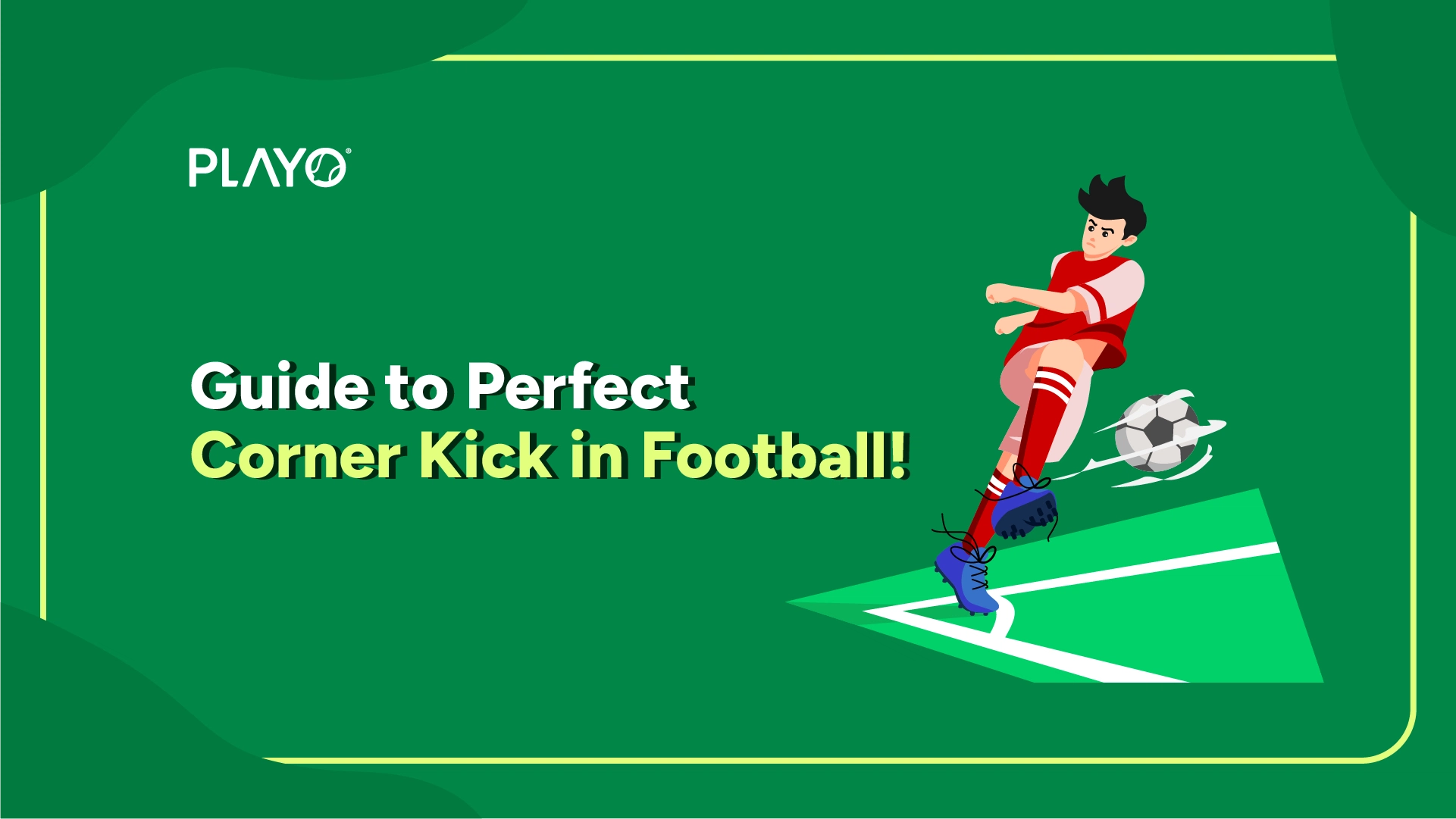
A corner kick in football is one of the game’s most important attacking set pieces. It is awarded to the attacking team when the ball completely crosses the goal line and was last touched by a player from the defending side, provided a goal has not been scored.
The kick is taken from the corner arc nearest to where the ball went out of play. While it may seem like a simple restart, a well-executed corner can create confusion inside the penalty area and often leads to goal-scoring opportunities.
Unlike open play, where teams must work their way through a defence, corner kicks give attackers a chance to organise themselves and deliver the ball into dangerous areas. This is why teams spend hours practising different corner routines during training sessions.
Over the years, corners have become an essential part of modern football tactics, with many clubs employing dedicated set-piece coaches to maximise their effectiveness.
When is a Corner Kick Awarded?
A corner kick is awarded when the entire ball crosses the goal line after being touched last by a defending player and no goal has been scored.
Some common situations that result in a corner kick include:
- A defender blocking a shot and sending the ball over the goal line.
- A goalkeeper making a save that pushes the ball out of play.
- A mistimed clearance by a defender.
- An attempted tackle that unintentionally sends the ball behind the goal.
The referee signals for a corner by pointing toward the nearest corner flag. The attacking team then gets an opportunity to restart play from that corner arc.
Because corners occur frequently during matches, teams often view them as valuable opportunities to put pressure on the opposition and potentially score.
Basic Rules of a Corner Kick
Understanding the laws governing corner kicks is important for players and beginners alike.
Here are the key rules:
- The ball must be placed inside the corner arc.
- The corner flag must remain in position.
- Opposing players must stand at least 10 yards (9.15 metres) away until the ball is in play.
- The ball is considered in play once it has been kicked and clearly moves.
- The player taking the corner cannot touch the ball again until another player has made contact with it.
- A goal can be scored directly from a corner kick, although such goals are relatively rare.
Referees may order the kick to be retaken if the ball is improperly placed or if players violate the required distance before the kick is taken.
Read More: 5 Different types of kicks in Football
Why are Corner Kicks Important?
Corner kicks are among the most dangerous attacking situations in football. Even teams that struggle to create chances during open play can score goals through well-rehearsed set pieces.
A good corner kick puts defenders under immense pressure. With multiple attackers making runs and the goalkeeper forced to deal with crosses, even a slight mistake can lead to a goal.
Teams with tall and physically strong players often rely heavily on corners to create chances. However, height isn’t the only advantage. Clever movement, blocking runs, and precise deliveries can help any team become effective from corners.
Modern football has seen a growing emphasis on set pieces. Several top clubs employ specialists who design routines to exploit weaknesses in the opposition’s marking system. Because matches are often decided by narrow margins, mastering corner kicks can provide a significant competitive edge.
How to Take the Perfect Corner Kick in Football
Delivering the perfect corner kick involves much more than simply crossing the ball into the penalty area. Technique, communication, and awareness all play a major role.
1. Study Your Teammates and Opponents
Before taking the kick, quickly assess the situation inside the box.
Identify:
- Your most serious aerial threats.
- Defenders who struggle in one-on-one battles.
- Players waiting outside the area for rebounds.
- Teammates available for a short-corner routine.
Many professional teams assign specific roles to players during corners. Understanding where everyone is positioned allows the taker to make better decisions.
2. Aim for the Right Area
Most dangerous corners are delivered between the six-yard box and the penalty spot. This area gives attackers enough room to attack the ball while making it difficult for goalkeepers to claim.
Depending on the situation, you may choose to target:
- The near post for a flick-on.
- The far post for a header back across the goal.
- The edge of the penalty area for a volley.
- A teammate positioned nearby for a short corner.
Changing the target area regularly also makes it harder for defenders to predict the delivery.
3. Use Proper Technique
Most players strike a corner using the inside of the foot to generate curl and accuracy.
To deliver an effective cross:
- Approach the ball at an angle.
- Keep your eyes focused on the point of contact.
- Strike the lower half of the ball to create lift.
- Add enough pace to beat the first defender.
- Avoid excessive height, which gives the goalkeeper more time to react.
A quality delivery should combine pace, accuracy, and spin.
4. Communicate With Your Teammates
Communication is vital during set pieces. Players often use hand signals or verbal cues to indicate where the ball will be delivered.
This helps attackers time their runs and coordinate movements inside the penalty area. Well-organised teams can create confusion among defenders through rehearsed routines and intelligent positioning.
Types of Corner Kicks
Not every corner kick is the same. Players can vary the delivery depending on their strengths and the tactical requirements of the match. The following are the major types of corner kicks:
1. Inswinging Corner
An inswinging corner curves toward the goal. This type of delivery creates uncertainty for defenders and goalkeepers because the ball naturally moves into dangerous areas.
Right-footed players generally take inswingers from the left side, while left-footed players take them from the right. Inswingers occasionally result in spectacular goals scored directly from the corner.
2. Outswinging Corner
An outswinging corner bends away from the goal and toward the attackers. Many teams prefer this type of delivery because it allows players to attack the ball with greater momentum. Outswingers are particularly effective for headers and flick-ons inside the box.
3. Short Corner
Instead of immediately crossing the ball, the taker passes to a nearby teammate. Short corners can:
- Create better crossing angles.
- Pull defenders out of position.
- Maintain possession.
- Open space for shots from outside the box.
Several teams use short corners to disrupt tightly packed defences.
4. Floated Corner
A floated delivery travels high into the air and drops toward the far post. Because the ball stays airborne for longer, defenders and goalkeepers may misjudge its trajectory. Floaters are especially useful when targeting tall players inside the penalty area.
5. Driven Corner
A driven corner is struck with power and pace. These deliveries are difficult to defend because they reach attackers quickly, leaving goalkeepers with little time to react. Driven corners are commonly aimed at the near post, where attackers can attempt flick-ons or direct finishes.
Tips for Delivering the Perfect Corner Kick
Vary Your Delivery
Predictability makes life easier for defenders, which is why varying your corner deliveries is so important. Repeatedly aiming for the same area or using the same type of cross allows the opposition to anticipate your moves and defend more effectively.
To keep defenders guessing, mix up your deliveries by targeting the near post for flick-ons, sending crosses to the far post, using inswingers and outswingers, or opting for short corners and low-driven balls. Introducing variety into your set-piece routine makes your attack less predictable and significantly increases your chances of creating dangerous scoring opportunities.
Practice Regularly
Great corner takers are not made overnight. Players like David Beckham and Kevin De Bruyne have developed their exceptional delivery through years of dedicated practice and repetition. Regular training helps improve several aspects of corner-taking, including accuracy, ball control, timing, spin generation, and decision-making.
The more you practice different types of deliveries and set-piece routines, the more confident and consistent you become. Over time, this consistency can turn corner kicks into one of your team’s most reliable attacking weapons.
Focus on Accuracy Rather Than Power
Many players believe they need maximum power to take effective corners. In reality, placement matters far more. A well-placed delivery into the right area can be far more dangerous than a powerful but inaccurate cross. Consistency is what separates elite corner takers from average ones.
Conclusion
A corner kick in football is much more than just a way to restart play. It is one of the most effective attacking weapons a team can have and has the potential to change the outcome of a match in an instant. From inswingers and outswingers to short corners and driven deliveries, there are numerous ways to create goal-scoring opportunities from set pieces.
Mastering corner kicks requires more than simply putting the ball into the box. Players need good technique, communication, awareness, and plenty of practice to consistently deliver dangerous crosses. Whether you’re a beginner learning the basics or an experienced player looking to improve your set-piece game, understanding the different types of corners and when to use them can make a huge difference on the pitch.
With the right approach and regular training, a simple corner kick can become one of your team’s greatest strengths.
Download Playo on Android or iOS, or visit playo.co to start playing!
Frequently Asked Questions
A corner kick in football is a set piece awarded to the attacking team when the ball crosses the goal line after being last touched by a defending player and no goal is scored. The kick is taken from the nearest corner arc and provides a chance to create a scoring opportunity.
A corner kick is awarded when the entire ball goes over the goal line after being touched last by a player from the defending team. Common examples include blocked shots, goalkeeper saves, and defensive clearances that go out of play.
Yes, a player can score directly from a corner kick without another player touching the ball. Such a goal is known as an “Olympic goal” and is considered a rare and impressive achievement.
The main types of corner kicks are inswinging, outswinging, short, floated, and driven. Teams often vary their deliveries depending on tactics and their players’ strengths.
Most players use the inside of their foot to generate accuracy and curl. Right-footed players typically take corners from the left side for inswingers and from the right side for outswingers, while left-footed players do the opposite.
According to the Laws of the Game, opposing players must remain at least 10 yards (9.15 metres) away from the corner arc until the ball has been kicked and is in play.