

A badminton backhand serve is a serving technique in which a player holds the racket with a backhand grip and uses a short, controlled action to send the shuttlecock over the net into the opponent’s service court. It is commonly used in doubles badminton because it allows players to keep the shuttle low and reduce the opponent’s opportunities to attack. However, singles players can also use a backhand serve when it suits their playing style and match strategy.
Learning how to perform a backhand serve in badminton can help players improve their serving accuracy, maintain control during rallies, and put pressure on their opponents from the beginning of a point. The technique requires proper grip, racket positioning, shuttle placement, and timing. This guide explains the backhand serve technique, its types, the rules to follow, and practical tips to improve consistency.
What is a Backhand Serve in Badminton?
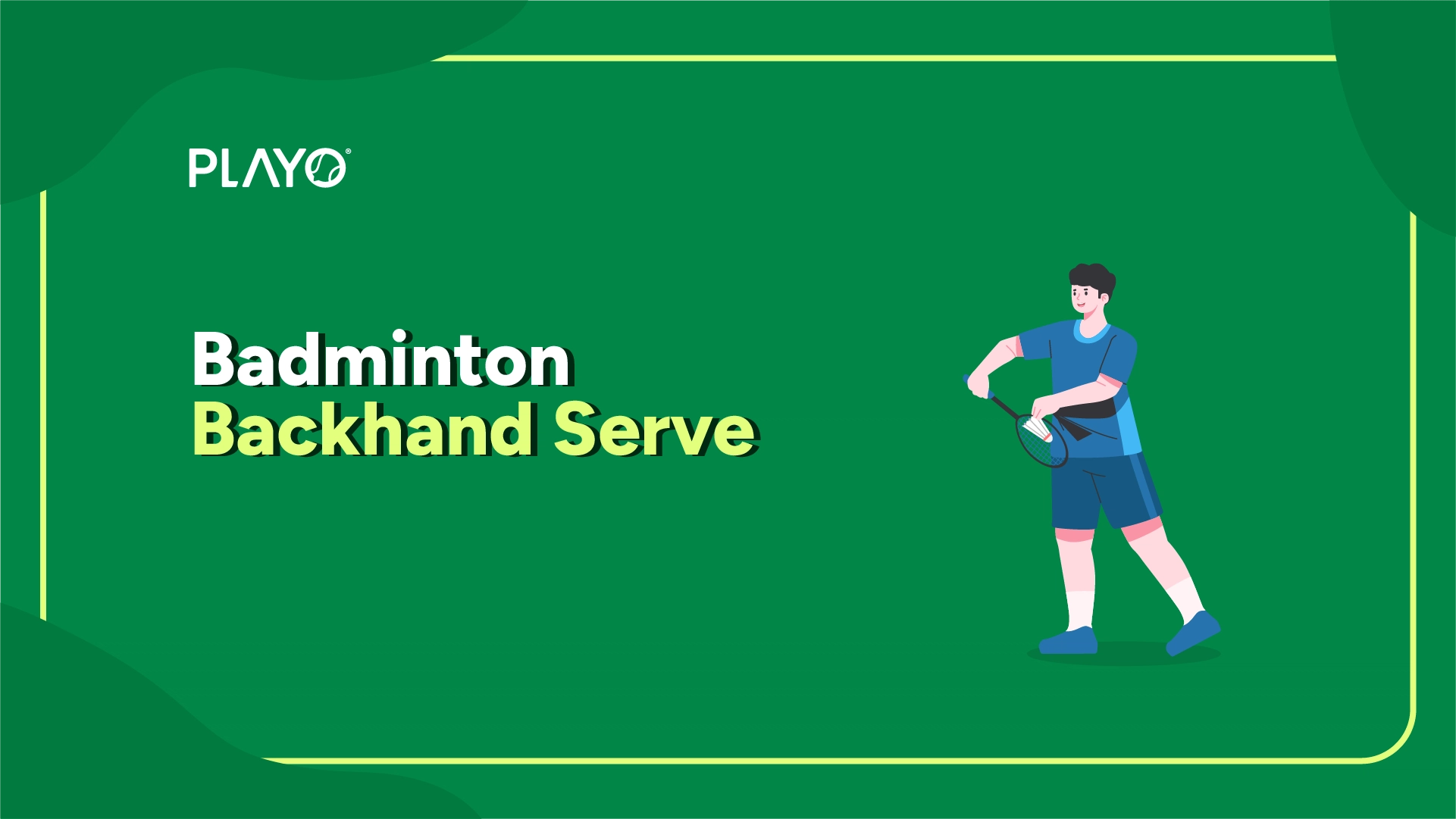
A backhand serve is a badminton serve performed using a backhand grip, with the racket action primarily controlled by the fingers, thumb, and wrist. Unlike a forehand serve, which involves a more open racket movement, the backhand serve generally uses a compact swing with minimal backswing.
The backhand serve is particularly popular in doubles because it helps players deliver the shuttle close to the net while maintaining a ready position for the next shot. A well-executed serve can force the receiver to lift the shuttle, creating an opportunity for the serving team to attack.
Although the backhand serve is often associated with doubles, it is also useful in singles. Players can use different variations to change the shuttle’s trajectory and prevent opponents from anticipating the serve.
Read More: Badminton Defensive Shots
How to Perform a Backhand Serve in Badminton
Executing a backhand serve correctly requires coordination between the racket hand, non-racket hand, and body position. Follow these steps to develop a consistent serving technique.
1. Use the Correct Backhand Grip
Hold the racket using a backhand grip that allows you to control the racket face with your thumb and fingers. Keep your grip relaxed rather than squeezing the handle tightly. Excessive tension can restrict finger movement and make it difficult to control the shuttle.
Your thumb should provide support on the wider bevel of the racket handle, while your other fingers maintain a comfortable hold.
2. Position Your Feet Correctly
Stand inside the appropriate service court with one foot slightly forward and your body balanced. Many players place the racket-side foot forward, although the exact stance can vary depending on comfort and playing style.
Keep your knees slightly bent and your upper body relaxed. A balanced stance helps you maintain control during the serve and move quickly after striking the shuttle.
3. Hold the Shuttle Correctly
Hold the shuttlecock lightly by its feathers or cork, depending on your preferred preparation and the shuttle’s orientation. Position it in front of the racket face, allowing enough space for a controlled contact.
Avoid gripping the shuttle too tightly, as this can interfere with a smooth release. Keep your preparation compact so that your opponent cannot easily predict the direction of your serve.
4. Position the Racket
Bring the racket forward and keep the racket head below the hand holding the shuttle during preparation. Position the racket close to the shuttle to minimise unnecessary movement.
A short backswing is generally preferred because it improves control and helps disguise the intended serve. Keep your shoulders relaxed and focus on the direction of the racket face.
5. Strike the Shuttle with a Controlled Movement
Release the shuttle and use a small forward movement to make contact with it. Generate most of the movement through finger control and a compact wrist and forearm action rather than a large swing.
Aim to send the shuttle just above the net when playing a low backhand serve. The objective is to make the shuttle travel close to the tape without touching it, leaving the receiver with limited attacking options.
6. Recover for the Next Shot
After making contact, bring the racket back into a ready position and prepare for the opponent’s return. Do not remain in the serving position after the shuttle crosses the net. Quick recovery is especially important in doubles, where the receiver may attempt a fast return towards the net or the serving team’s body.
Types of Backhand Serve in Badminton
Players can use different backhand serves depending on the match situation, the opponent’s position, and the desired shuttle trajectory.
1. Low Backhand Serve
The low backhand serve is one of the most common serving techniques in doubles badminton. The player uses a short, controlled movement to send the shuttle just over the net, aiming to make it land near the front of the opponent’s service court.
This serve reduces the receiver’s opportunity to attack aggressively. However, it requires good accuracy because a serve that sits too high above the net can be intercepted with a quick push or net shot.
2. Flick Backhand Serve
A flick backhand serve looks similar to a low serve during preparation but uses a quicker acceleration at contact to send the shuttle deeper into the opponent’s service court.
It is particularly useful when the receiver moves forward in anticipation of a low serve. By changing the shuttle’s trajectory, the server can force the receiver to move backwards and respond under pressure.
The flick serve should be used selectively. Repeatedly serving deep without disguising the movement can make the technique easier to anticipate.
3. Drive Backhand Serve
A drive serve sends the shuttle flatter and faster towards the receiver. It aims to reduce the receiver’s reaction time, although it can be risky if the shuttle travels at a comfortable height for an attacking return.
Players should practise this variation carefully and use it only when the trajectory and placement are likely to create an advantage. Its effectiveness depends on the opponent’s positioning and ability to intercept a fast serve.
Backhand Serve Rules in Badminton
A backhand serve must follow the official badminton service rules. The backhand grip itself does not determine whether a serve is legal. The server must comply with the applicable service requirements.
Key rules include:
- Serve diagonally: The shuttle must travel into the diagonally opposite service court and land within its boundaries.
- Stand within the service court: The server and receiver must stand in their respective service courts without touching the boundary lines during the serve.
- Keep both feet stationary: Some part of both feet must remain in contact with the court in a stationary position from the start of the serve until it is delivered.
- Strike the base first: The server must initially hit the base of the shuttle.
- Keep the racket and shuttle correctly positioned: At the instant of being hit, the whole shuttle must be below 1.15 metres from the court surface under the standard fixed-height service rule.
- Use a forward serving movement: The server must not unduly delay the serve once both players are ready, and the racket movement must comply with the service rules.
Players should also remember that the receiver cannot attempt to return the serve before it has been delivered. A serve that lands outside the correct service court, fails to cross the net, or violates the applicable service rules results in a fault.
Tips to Improve Your Backhand Serve
Improving a backhand serve requires regular practice, accurate shuttle placement, and the ability to vary the delivery without making the movement obvious.
- Practise the low serve first: Develop a consistent trajectory before attempting flick or drive variations. Focus on clearing the net by a small margin while landing the shuttle within the service court.
- Avoid excessive racket movement: A large swing can reduce control and make the serve easier to anticipate. Keep the preparation compact and practise using your fingers to control the racket.
- Work on placement: Aim for different areas within the service court while maintaining a legal serve. Accurate placement makes it harder for the receiver to predict your next move.
- Practise flick serves selectively: Alternate low serves with occasional flick serves to prevent the receiver from moving forward too early. Make sure the flick serve travels deep enough to challenge the receiver.
- Maintain a ready position: Your serve is only the beginning of the rally. Recover quickly after delivery and prepare to respond to a net return, push, lift, or attacking shot.
- Practise with a partner: Ask your partner to receive your serves from different positions. This helps you understand which trajectories are effective against opponents who stand close to the service line or farther back.
Backhand Serve vs Forehand Serve in Badminton
The backhand and forehand serves differ mainly in grip, racket movement, and common tactical applications. Both serving techniques have their advantages. The choice depends on the player’s skill level, match format, and tactical situation. Learning both helps players develop a more versatile serving game.
| Feature | Backhand Serve | Forehand Serve |
| Grip | Backhand grip | Forehand grip |
| Racket movement | Compact movement with minimal backswing | Generally uses a longer swing path |
| Common use | Frequently preferred in doubles | Commonly used in singles |
| Shuttle trajectory | Often used for low, controlled serves | Can produce varied trajectories, including high serves |
| Main advantage | Helps keep the shuttle low and allows quick recovery | Offers flexibility in serve height and distance |
| Best suited for | Players looking to limit attacking opportunities in doubles | Players seeking varied serving options, particularly in singles |
Conclusion
The badminton backhand serve is an important skill for players who want to improve their control, accuracy, and tactical options. It is particularly useful in doubles, where a low serve can restrict the receiver’s attacking opportunities, while a well-disguised flick serve can create uncertainty and force movement towards the rear court.
To master the technique, focus on the correct backhand grip, balanced stance, controlled racket movement, and accurate shuttle placement. Practise the low serve consistently before adding flick and drive variations. By following the official service rules and recovering quickly after each delivery, players can make their backhand serve a more reliable part of their badminton game.
Download Playo on Android or iOS, or visit playo.co to start playing!
Frequently Asked Questions
A backhand serve uses a backhand grip and a compact racket movement to send the shuttle into the opponent’s service court. It is commonly used in doubles to keep the shuttle low.
Hold the racket with a backhand grip, position the shuttle in front of it, and use a short, controlled movement to send the shuttle diagonally over the net.
The three common variations are the low backhand serve, flick backhand serve, and drive backhand serve. Each uses a different shuttle trajectory to challenge the receiver.
Neither is universally better. The backhand serve is popular in doubles, while the forehand serve offers different trajectory options, particularly in singles.
Under the standard fixed-height service rule, the entire shuttle must be below 1.15 metres when struck. Other official service rules must also be followed.