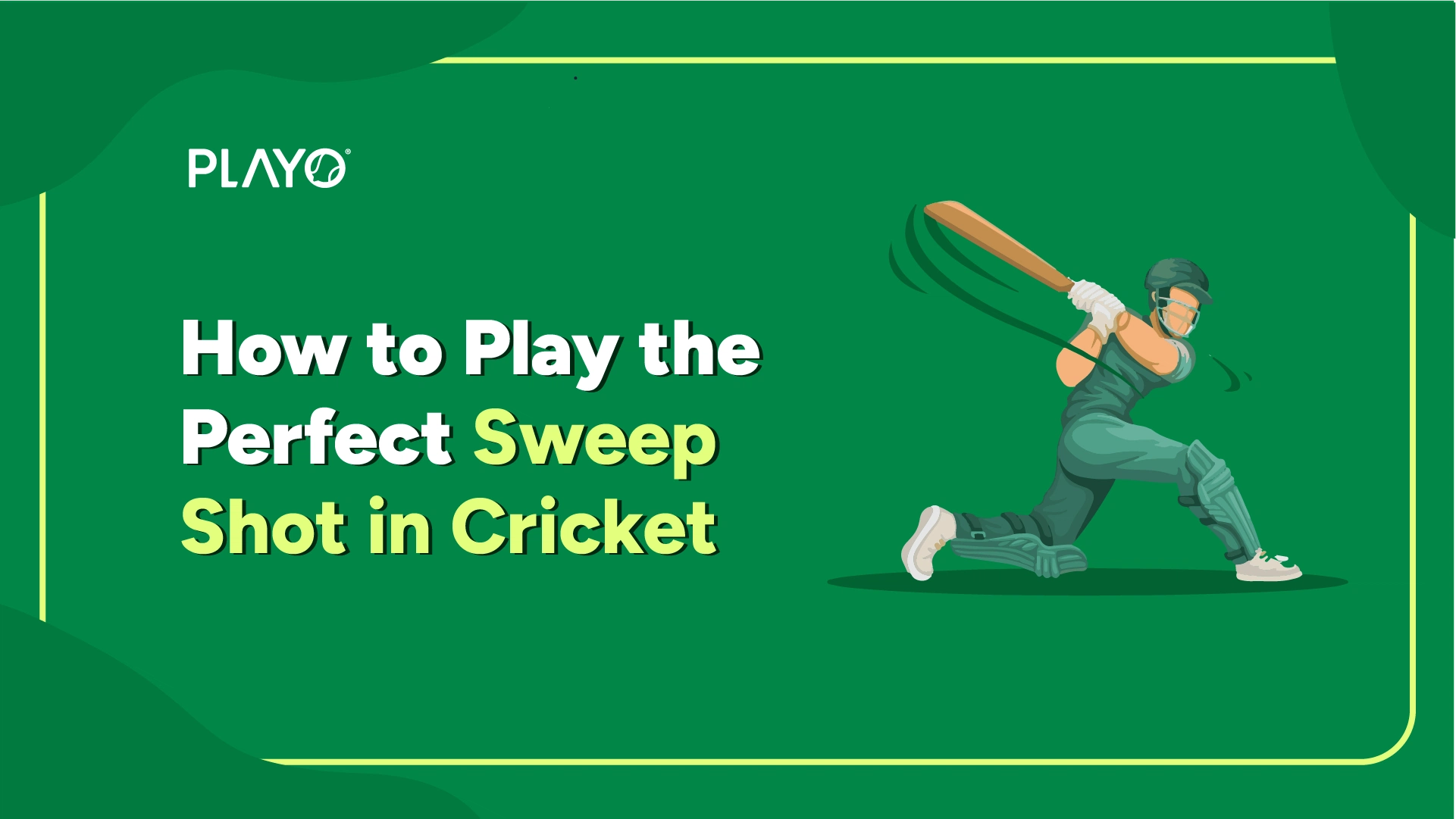


If you’ve watched cricket long enough, chances are you’ve seen a batter go down on one knee and send a spinner’s delivery racing behind square leg. That’s the sweep shot, one of cricket’s most effective ways to counter spin and turn defensive deliveries into scoring opportunities.
But the sweep shot isn’t just about improvisation. It relies heavily on timing, balance, and the choice of the right ball. Get it wrong, and you risk getting trapped LBW or losing your stumps. Get it right, and you can disrupt the bowler’s rhythm, manipulate field placements, and keep the scoreboard moving.
In this guide, we’ll break down how to play the perfect sweep shot in cricket, including the orthodox sweep and reverse sweep, step-by-step technique, when to use the shot, common mistakes to avoid, and tips to improve your execution. Whether you’re a beginner learning batting fundamentals or an experienced player looking to expand your range, this guide will help you play the sweep with more confidence and control.
Why Master the Sweep Shot?
The sweep shot is more than just a flashy batting option. When played correctly, it becomes one of the most effective ways to score against spin and take control of the game. Spin bowlers usually aim to keep batters pinned down with disciplined lengths and controlled field placements. The sweep changes that equation by turning otherwise defensive deliveries into scoring opportunities and forcing the bowler to adjust.
Here’s why adding the sweep shot to your batting toolkit can make a difference:
- Disrupts the spinner’s rhythm: Spinners rely on batsmen playing defensively to good-length deliveries. The sweep turns that defensive length into a scoring opportunity, forcing the bowler to rethink their plan.
- Scores without stumping risk: On turning pitches, advancing down the wicket risks being stumped. The sweep lets you score off the back foot while staying grounded.
- Exploits leg-side gaps: Many spin fields are set with gaps behind square leg. A well-executed sweep finds these spaces consistently.
- Psychological pressure: Consistently sweeping puts mental pressure on the bowler, often leading to loose deliveries or defensive field changes.
The sweep shot is most effective against slow, good-length deliveries on or outside the leg stump. Never premeditate – wait for the ball to be released before committing.
Read More: Types of Shots in Cricket
Step-by-Step: How to Play the Orthodox Sweep Shot
Step 1: Read the Delivery and Position Your Body
- Wait for release: Never decide to sweep before the ball leaves the bowler’s hand. Watch the release point, assess length, and judge bounce.
- Side-on stance: Start balanced, with your head and front shoulder leaning towards the line of the ball.
- Front foot movement: Move your front foot decisively towards the pitch of the ball. Get as close to the ball’s landing spot as possible without overcommitting.
Step 2: Get Low and Create a Stable Base
- Bend both knees: As you stride forward, simultaneously bend your front knee deeply (like a lunge) and let your back knee drop towards the ground.
- Head over front knee: Keep your head steady and positioned just outside your front knee. This ensures balance and helps you track the ball through contact.
- Pad in line: Place your front pad firmly in the line of the ball to protect your stumps and create a pivot point for the shot.
Step 3: Execute the Swing with Precision
- High backlift, controlled downswing: Bring the bat down from a high backlift, swinging across the ball from off-side to leg-side.
- Arms fully extended: At the point of contact, your arms should be nearly straight, maximising power and control.
- Roll your wrists: Gently roll your wrists over the ball on impact to keep the shot grounded and prevent aerial mistimes.
- Aim for gaps: Target the areas in front of or behind the square leg. Fine leg and deep square leg are classic sweep shot boundaries.
Step 4: Follow Through with Balance
- High finish: Let the bat follow through high, finishing near your front shoulder.
- Stay balanced: Avoid falling over post-contact. A controlled finish helps you react if the ball is mis-hit or if you need to run.
The Reverse Sweep
Once you’ve mastered the orthodox sweep, the reverse sweep can add another scoring option to your batting. Popular in modern limited-overs cricket, this shot is used to manipulate field placements and create scoring opportunities on the off side against spin.
Unlike the traditional sweep, where the bat swings towards the leg side, the reverse sweep redirects the ball into areas like backward point, point, and gully. Since many field settings against spinners are built to defend conventional scoring zones, the reverse sweep can catch bowlers and captains off guard.
That said, this is not a shot to attempt too early in your innings. The reverse sweep demands excellent timing, strong wrist control, and complete awareness of line and length. Master the orthodox sweep first, practice the movement in the nets, and then introduce the reverse sweep as a calculated variation rather than a default scoring shot.
Orthodox Sweep vs Reverse Sweep
Although both shots begin with similar body positioning and footwork, the way they are executed and the scoring areas they target differ completely. The orthodox sweep is the safer, more traditional option, while the reverse sweep offers more attacking options but requires greater control and timing.
| Element | Orthodox Sweep | Reverse Sweep |
| Bat swing direction | Off-side to leg-side | Leg-side to off-side |
| Target area | Behind square leg | Through the gully/point region |
| Bat face orientation | Faces the leg side at contact | Faces off side at contact |
| Risk level | Moderate | High (requires exceptional timing) |
How to Play the Reverse Sweep
- Start in orthodox sweep position: Same footwork, same low base, same head position.
- Adjust bat path: Instead of swinging across to the leg side, bring the bat down and across from the leg side towards the off side.
- Rotate bat face: Without changing your grip, twist the bat so the face points towards the off side at contact.
- Aim for gaps: Target the area between the point and the gully. This is often poorly defended when spinners expect a conventional sweep.
- Practice wrist control: The reverse sweep demands superior hand-eye coordination. Start slowly in nets before attempting it in matches.
The reverse sweep carries a higher risk. Only attempt it once you’re well-set at the crease and have read the bowler’s tendencies.
When Should You Play the Sweep Shot?
Ideal Situations:
- Against slow spinners (off-spin, leg-spin, left-arm orthodox)
- On turning or low-bounce pitches where the ball stays knee-high
- When field placements leave gaps behind the square leg
- After you’ve “got your eye in” and are comfortable with pace and bounce
- In T20 or ODI cricket, where scoring rate matters
Avoid the Sweep Shot When:
- Early in your innings, before judging pitch conditions
- Against fast or medium-pace bowlers (too risky)
- If the ball is too full (risk of being bowled) or too short (risk of top-edge)
- On pitches with uneven bounce, where misjudgment leads to LBW
- If the bowler has set a leg-side trap with multiple fielders behind square
Mistakes to Avoid While Playing the Sweep Shot
- Deciding to Sweep Too Early: One of the biggest mistakes batters make is deciding to play the sweep before the ball is even released. This often leads to poor shot selection and mistimed contact. Instead, wait until you’ve judged the line, length, and bounce before committing to the shot.
- Not Getting Close Enough to the Ball: Good sweep shots start with good footwork. If your front foot doesn’t get close to the pitch of the ball, you’ll struggle to control the shot and may end up top-edging or missing completely. Focus on moving forward decisively and getting your body behind the ball.
- Trying to Hit Too Hard: The sweep is more about timing than power. Many players swing too aggressively in search of boundaries, only to lose shape and control. A relaxed bat swing and clean contact usually produce better results than brute force.
- Losing Balance During the Shot: If your head falls away or your body remains too upright, maintaining control becomes difficult. Stay low, keep your head over the front knee, and finish the shot in a balanced position to improve consistency.
- Sweeping the Wrong Delivery: Not every ball should be swept. Deliveries that are too full, too short, or too straight can increase the risk of getting out. The sweep works best against good-length spin deliveries where you can get into position and control the shot.
Practice Drills to Perfect Your Sweep Shot
- Net Drill- Target Zones
- Place cones or markers behind the square leg and the fine leg.
- Have a coach or bowling machine deliver good-length spin.
- Focus on placing shots into the marked zones, not just hitting hard.
- Footwork Ladder Drill
- Use an agility ladder to practice quick, balanced front-foot strides.
- Combine with shadow sweeps to build muscle memory.
- Video Analysis
- Record your sweep attempts in practice.
- Compare your technique with pros like Kevin Pietersen, Yuvraj Singh, or Jos Buttler.
- Note head position, knee bend, and bat path.
- Scenario Practice
- Simulate match situations such as: “You need 12 runs in the last over against a leg-spinner.”
- Practice reading the bowler and choosing the right moment to play the sweep.
Conclusion
The sweep shot is one of cricket’s most effective scoring options against spin, but only when played with the right technique and judgment. It’s not a shot that relies on power or improvisation. Instead, success comes from reading the delivery early, getting into position, and trusting your timing.
Start by building confidence with the orthodox sweep in practice sessions, focusing on balance, control, and placement before experimenting with variations such as the reverse sweep. Over time, you’ll learn which deliveries to attack and which ones to leave.
Because at the end of the day, the best sweep players aren’t the ones who play the shot the most. They’re the ones who know exactly when to play it.
Download Playo on Android or iOS, or visit playo.co to start playing!
Frequently Asked Questions
The sweep shot in cricket is a batting stroke mainly used against spin bowling, where the batter gets low (often dropping onto one knee) and swings the bat horizontally across the line of the ball to direct it towards the leg side, usually around square leg or fine leg. It is commonly played to counter spin, manipulate field placements, and score without advancing down the pitch.
The sweep shot is best played against slow-spin deliveries pitched on a good length, especially when there are scoring gaps behind square leg.
A traditional sweep directs the ball towards the leg side, while a reverse sweep changes the bat angle to send the ball towards the off side, often targeting point and gully regions.
The most common scoring areas for the sweep shot are fine leg, backward square leg, and deep square leg, depending on the line and length of the delivery.