

Learning to swim is a life-saving skill. It can help you stay active, enjoy time in the water, and become more comfortable around pools and other aquatic environments. But for a beginner, getting into the water can feel intimidating. Learning how to breathe, float, kick and coordinate your movements may seem difficult at first.
The good news is that you don’t need to master complicated strokes immediately. The right swim technique for beginners starts with simple skills that build water confidence and control. Once you become comfortable with these basics, you can gradually put them together and learn different swimming strokes.
Whether you’re an adult learning to swim for the first time or simply looking to improve your basics, these easy swimming tips can help you get started.
What Should Beginners Learn First in Swimming?
Before trying to swim across a pool, focus on these fundamental skills:
- Getting comfortable in the water
- Learning to breathe underwater
- Floating on your front and back
- Maintaining a balanced body position
- Practising the flutter kick
- Learning basic arm movements
- Coordinating your arms, legs and breathing
- Building confidence through regular practice
Trying to learn everything at once can make swimming feel overwhelming. Instead, work on one skill at a time and gradually combine them.
1. Get Comfortable in the Water
Water confidence is one of the first things beginners need to develop. If you’re nervous in the water, trying to learn a swimming stroke can make the process much harder. Start in the shallow end where you can comfortably stand. Walk through the water, splash water on your face and gradually practise submerging your face.
Try Blowing Bubbles
Hold onto the pool wall, take a breath above the water and place your face underwater. Slowly breathe out through your nose and mouth to create bubbles. Lift your face, breathe in and repeat. This simple exercise helps you become comfortable with having your face underwater and teaches you an important part of swimming: exhaling while your face is submerged.
Practise a Tuck or Mushroom Float
Once you’re comfortable putting your face underwater, try a simple tuck float with supervision. Take a breath, bring your knees towards your chest and allow your body to float. This helps beginners understand that the water can support their body. You can later progress to front and back floating.
2. Master Rhythmic Breathing
Breathing is one of the most important swimming techniques for beginners. Unlike exercising on land, you can’t breathe whenever you want while your face is underwater. You need to coordinate your breathing with your movements.
Start by practising in shallow water. Take a breath above the water, submerge your face and slowly exhale. When you bring your face back up, inhale through your mouth. Repeat this several times until the pattern feels comfortable.
The basic principle is simple: inhale when your mouth is above the water and exhale while your face is underwater. Avoid holding your breath for long periods. Comfortable, controlled breathing will make swimming feel much easier.
3. Improve Your Body Position
Good body position helps you move through the water efficiently. Beginners often lift their head to look forward, which can cause their hips and legs to sink. Try looking towards the bottom of the pool when swimming on your front. Keep your head in a neutral position and allow your body to remain relatively horizontal.
You can also practise streamlining by pushing gently away from the wall with your arms extended above your head. Keep your body long and straight and glide through the water before beginning your strokes.
The goal is to reduce unnecessary resistance while keeping your body relaxed.
4. Learn the Flutter Kick
The flutter kick is a fundamental kicking technique used in freestyle and backstroke. To practise it, hold onto the pool wall or use a kickboard. Extend your legs behind you and make alternating up-and-down movements.
Keep these points in mind:
- Start the movement from your hips.
- Keep your legs relatively straight without locking your knees.
- Keep your ankles relaxed.
- Point your toes naturally.
- Keep the kicks small and controlled.
One common mistake is bending the knees too much and making large bicycling movements. This can create additional resistance and make you tired more quickly. Focus on a steady, compact kick rather than trying to kick as hard as possible.
5. Learn the Basics of Freestyle
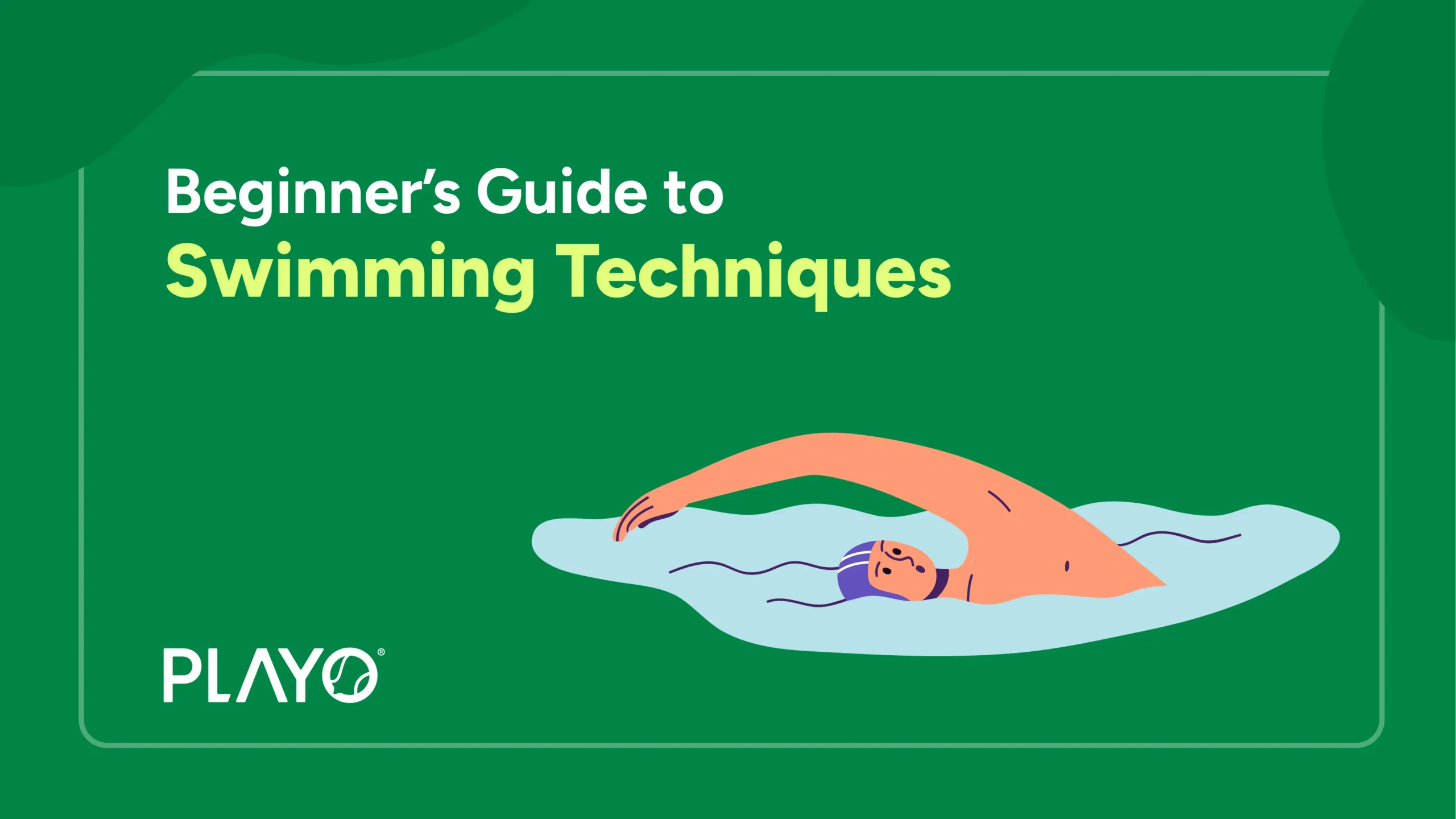
Once you’re comfortable with floating, breathing and kicking, you can start putting these skills together with freestyle, also known as front crawl. Freestyle uses alternating arm movements, a flutter kick and coordinated breathing.
Arm Movement
Reach one arm forward into the water while the other arm pulls backwards. As the pulling arm moves towards your hip, the opposite arm begins its reach. Don’t worry about creating a perfect stroke immediately. Focus on smooth, controlled movements.
Body Rotation
Your body naturally rotates slightly from side to side during freestyle. This rotation can help you reach forward and make breathing easier. Avoid trying to keep your entire body completely flat. Instead, allow your shoulders and hips to rotate naturally with the stroke.
Breathing
When you become comfortable with the arm movement, practise turning your head to the side to breathe. Try not to lift your entire head forward, as this can cause your hips to drop. Start with whatever breathing rhythm feels comfortable and gradually work towards a consistent pattern.
6. Try Simple Swimming Drills
Swimming drills allow you to practise individual parts of your technique instead of trying to coordinate everything at once.
Kickboard Drill
Hold a kickboard in front of you and focus on your flutter kick. Keep your body as horizontal as possible and practise maintaining a steady rhythm.
Catch-Up Drill
Keep one arm extended in front while the other completes a stroke. Bring the moving hand forward to meet the other hand before beginning the next stroke. This drill slows down the stroke and helps beginners focus on their reach and arm coordination.
Wall Glide
Push gently away from the pool wall with both arms extended overhead. Keep your body streamlined and glide through the water before stopping. This is a simple way to practise body position and learn how to reduce resistance.
7. Use the Right Swimming Gear
You don’t need a lot of equipment to learn swimming, but a few basic items can make practice more comfortable.
- Swim goggles: Help you see underwater and protect your eyes from pool water.
- Swim cap: Keeps hair away from your face and can reduce resistance in the water.
- Kickboard: Useful for isolating and practising your kicking technique.
A nose clip can also be useful for some beginners who are uncomfortable with water entering their nose, although it is optional. Learning controlled exhalation underwater is still an important skill.
8. Practise Regularly
Swimming technique improves through repetition. You can’t learn swimming simply by reading about it; you need regular time in the water to develop coordination and confidence.
Short, consistent sessions can be easier to manage than occasional, exhausting workouts. During each session, choose one or two skills to focus on rather than trying to correct everything at once.
For example, one session could focus mainly on breathing and floating, while another could focus on kicking and body position. As your technique improves, gradually increase the distance you swim.
Read More: Types of Strokes in Swimming
Common Swimming Mistakes Beginners Should Avoid
A few common mistakes can make swimming more difficult than it needs to be.
- Holding Your Breath: Holding your breath can make you feel tense and disrupt your swimming rhythm. Practise exhaling underwater instead.
- Lifting Your Head: Looking forward can cause your hips and legs to drop. Keep your head in a neutral position and look towards the bottom of the pool when appropriate.
- Kicking From the Knees: Large knee movements waste energy. Try to initiate the flutter kick from your hips while keeping your ankles relaxed.
- Swimming Too Fast: Speed should not be your priority when learning. Concentrate on breathing, balance and coordination first.
- Tensing Your Body: A stiff body can make floating and movement more difficult. Stay relaxed while maintaining enough core control to keep your body aligned.
Why Do My Legs Sink When I Swim?
Sinking legs are a common problem for beginners. One of the main reasons is lifting the head too far forward, which can cause the hips and legs to drop. To improve your body position, try looking down towards the bottom of the pool, keep your body long and practise a controlled flutter kick.
Remember that body position can also vary between individuals because buoyancy is affected by factors such as body composition and technique. Focus on finding a balanced position that allows you to move comfortably through the water.
Basic Swimming Strokes for Beginners
Once you’ve developed basic water confidence and coordination, you can begin learning different strokes. You don’t need to learn every stroke at once. Build a strong foundation first and progress gradually.
| Swimming Stroke | Main Features |
| Freestyle | Alternating arm movements and flutter kick |
| Backstroke | Alternating arm movements while swimming on your back |
| Breaststroke | Simultaneous arm movement with a frog-style kick |
| Sidestroke | Side-facing body position with a scissor kick |
Swimming Safety Tips for Beginners
Beginners should always practise in a safe, supervised swimming environment. Choose water that matches your ability and avoid entering areas where you cannot swim confidently.
If you’re learning for the first time, consider taking lessons from a qualified swimming instructor. An instructor can help correct your technique and teach you how to progress safely.
Most importantly, never rely on flotation equipment as a replacement for swimming skills or proper supervision.
Conclusion
Learning to swim becomes much easier when you break the process into manageable steps. Start by becoming comfortable in the water, then work on breathing, floating, body position and kicking. Once these skills become more familiar, gradually introduce arm movements and combine everything into a swimming stroke.
The best swim technique for beginners is not about swimming fast. It is about staying relaxed, controlling your breathing, maintaining a balanced body position and developing coordination through regular practice.
Be patient with your progress, practise consistently and don’t be afraid to learn with professional guidance. With time, the skills that initially feel difficult can become much more natural.
Download Playo on Android or iOS, or visit playo.co to start playing!
Frequently Asked Questions
Freestyle is a good starting point for many beginners. Start by learning breathing, floating, body position and the flutter kick before combining them into the stroke.
Start in shallow water and practise water confidence, breathing, floating and kicking. Gradually combine these skills and learn basic swimming strokes with regular practice.
Practise exhaling underwater and inhaling when your mouth is above the water. Bubble-blowing and rhythmic breathing drills can help you develop a comfortable breathing pattern.
Lifting your head too far forward can cause your hips and legs to drop. Keep your head neutral, look towards the bottom of the pool and practise a controlled flutter kick.
Freestyle is commonly introduced early because it combines basic skills such as kicking, arm movements, body position and breathing. Backstroke can also be a useful option for beginners.
Basic equipment includes swim goggles and comfortable swimwear. A swim cap and kickboard can also be useful, particularly when practising technique and kicking.