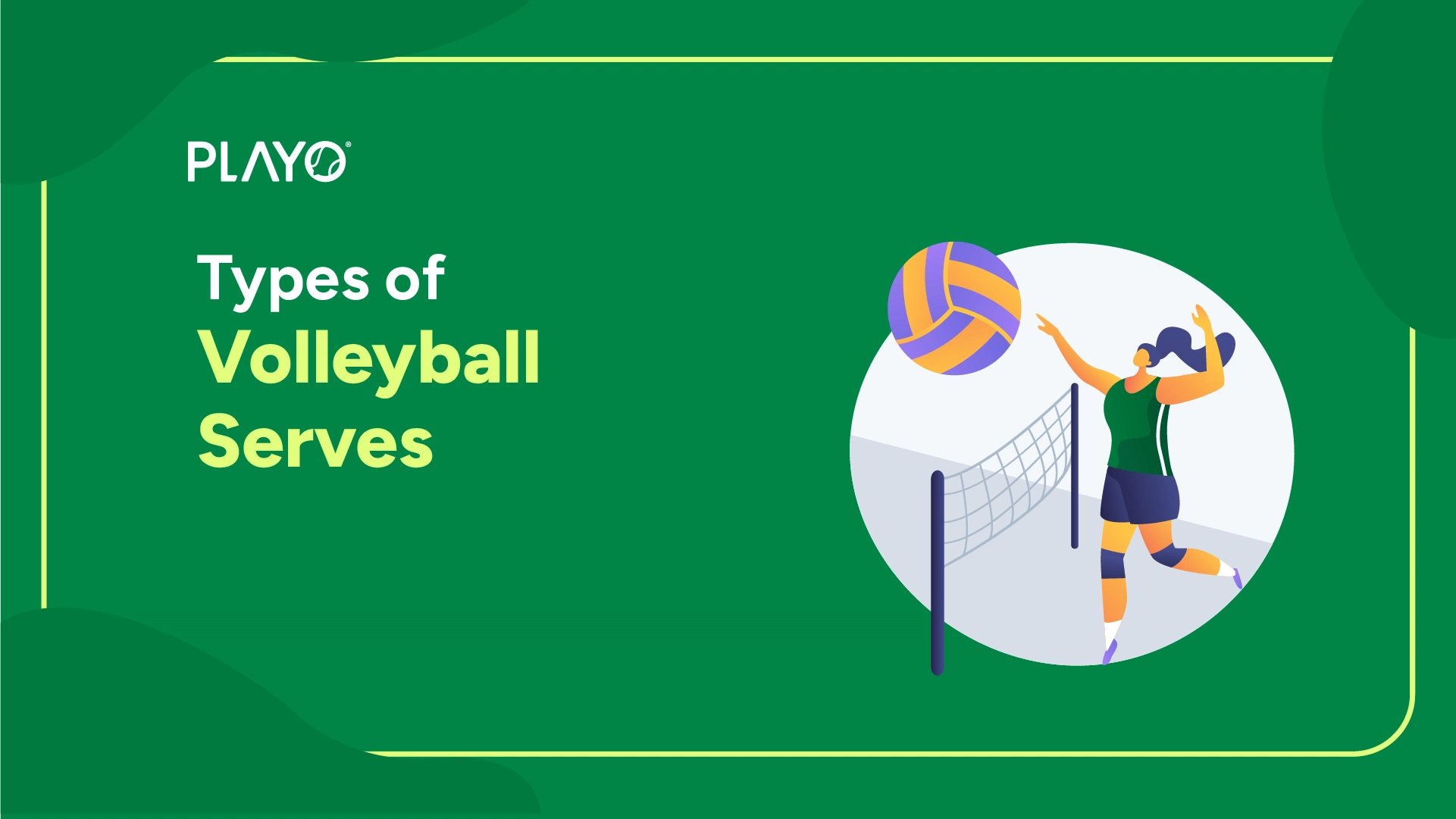


A volleyball serve is the first contact that starts a rally, but not every serve is performed in the same way. Players can use different serving techniques to control the ball, generate power, change its trajectory, or make it difficult for opponents to receive.
The main types of volleyball serves include the underhand serve, overhand serve, float serve, jump float serve, and topspin jump serve. Each technique has different mechanics, difficulty levels, and tactical advantages.
Whether you are a beginner learning your first serve or an experienced player looking to add variety to your game, understanding the different types of serves can help you choose the right technique for your skill level and playing situation.
What Are the Different Types of Volleyball Serves?
The most common types of volleyball serves are:
- Underhand serve
- Overhand serve
- Float serve
- Jump float serve
- Topspin jump serve
These serves can broadly be distinguished by how the ball is contacted, whether the player remains on the ground or jumps, and how much spin is placed on the ball.
1. Underhand Serve
The underhand serve is one of the easiest volleyball serves to learn and is commonly taught to beginners. The player holds the ball in one hand and swings the other arm from below to strike it.
The serve generally requires less strength and coordination than an overhand or jump serve. It also gives beginners greater control over the direction and height of the ball. Because it is relatively simple to execute, the underhand serve is often used by beginners, young players, and recreational players who are still developing their serving technique.
Key characteristics:
- Easy to learn and control
- Requires less upper-body power
- Produces a relatively slower serve
- Suitable for beginners
- Useful for developing basic serving consistency
The main limitation is that an underhand serve generally gives the receiving team more time to prepare for the ball compared with faster overhand and jump serves.
2. Overhand Serve
The overhand serve is performed by tossing the ball and striking it above the shoulder with an overhead arm motion. It requires more coordination and timing than an underhand serve but gives the player greater potential for speed, placement, and variation.
Players can use different forms of overhand serving, including serves with little spin, sidespin, or topspin. Developing a consistent toss and clean contact is particularly important because an inconsistent toss can make it difficult to control the serve.
The overhand serve is widely used as players progress beyond the beginner level and forms the foundation for several more advanced serving techniques.
Key characteristics:
- Greater potential for speed and power
- Better control over placement
- Requires a consistent ball toss
- More difficult to learn than an underhand serve
- Can be developed into more advanced serving techniques
3. Float Serve
A float serve is an overhand serve hit with little or no spin. Instead of rotating steadily through the air, the ball can move unpredictably because of changes in its flight path. This unpredictable movement is what makes the float serve effective. A receiver may have difficulty judging exactly where the ball will drop, even when the serve is not exceptionally powerful.
The key to a good float serve is clean contact. Players generally aim to strike the ball firmly with a relatively flat hand and minimise spin.
Key characteristics:
- Little or no spin
- Unpredictable movement
- Relies more on placement and movement than pure power
- Can make serve reception difficult
- Requires consistent contact
A float serve can be performed while standing or as a jump float serve.
4. Jump Float Serve
The jump float serve combines the jumping motion of a jump serve with the minimal-spin contact of a float serve. Instead of serving from the ground, the player takes an approach, jumps, and contacts the ball while airborne.
The higher contact point allows the player to create a more aggressive trajectory and greater speed while retaining the unpredictable movement associated with a float serve. Because it combines movement, jumping, timing, and precise ball contact, the jump float is more difficult to master than a standing float serve.
Key characteristics:
- Performed while jumping
- Uses little or no spin
- Higher contact point
- Faster and more aggressive than a standing float
- Requires good timing and coordination
The jump float is particularly useful for players who want to put more pressure on receivers without relying entirely on a high-risk topspin serve.
5. Topspin Jump Serve
The topspin jump serve is one of the most advanced and powerful types of volleyball serves. The player takes an approach, jumps, and strikes the ball with forward topspin. The spin causes the ball to dip more sharply as it travels towards the opponent’s court. This allows the player to hit the ball with considerable speed while still bringing it down into the court.
However, the topspin jump serve requires excellent timing, a consistent toss, strong coordination, and precise contact. Because of its difficulty, it is generally better suited to experienced players.
Key characteristics:
- Performed with a jumping approach
- Uses significant topspin
- Produces high speed and power
- Ball dips sharply during flight
- Requires advanced timing and technique
A well-executed topspin jump serve can put considerable pressure on the receiving team, but attempting it without sufficient control can also lead to more service errors.
Read More: Volleyball Serving Rules
What is the Difference Between a Float Serve and a Topspin Serve?
The main difference is spin and ball movement. A float serve is hit with little or no spin, which allows the ball to move unpredictably through the air. A topspin serve, on the other hand, deliberately creates forward spin, causing the ball to dip more quickly. Both can be effective, but they challenge the receiving team in different ways.
| Feature | Float Serve | Topspin Serve |
| Spin | Little or no spin | Significant forward spin |
| Ball movement | Unpredictable | Dips sharply |
| Main advantage | Difficult to predict | Speed and power |
| Difficulty | Moderate | Advanced |
| Common variation | Jump float | Topspin jump serve |
What is a Jump Serve in Volleyball?
A jump serve is a serve in which the player jumps and contacts the ball while airborne. It is not one single serving technique; rather, jump serves can use different types of ball contact.
The two common examples are the jump float serve and topspin jump serve.
A jump float focuses on creating a fast serve with little or no spin, while a topspin jump serve combines the jump with powerful topspin. The FIVB also describes the jump or spike serve as a popular serve in which the player jumps and serves while airborne.
Which Volleyball Serve is Best for Beginners?
The underhand serve is generally the easiest starting point for beginners because its basic movement is simpler and it requires less strength and timing. Once a player becomes comfortable serving consistently, they can progress to an overhand serve. From there, players can develop more advanced techniques such as the float serve, jump float, and topspin jump serve.
A useful progression is:
Underhand → Overhand → Float → Jump Float → Topspin Jump
However, players do not need to master every serve before competing. The best serve is one that a player can execute consistently and place effectively.
How to Choose the Right Volleyball Serve
Choosing a serve depends on your skill level, consistency, and tactical objective.
- For beginners: Start with the underhand serve to develop basic control, accuracy, and confidence. Once you can consistently get the ball over the net and into the opponent’s court, move to an overhand serve.
- For developing players: An overhand or float serve can provide more control and make reception more challenging. Focus on placement and consistency before trying to add excessive power.
- For advanced players: A jump float or topspin jump serve can put greater pressure on the receiving team. These techniques require more practice but can provide greater speed, movement, and tactical variation.
Regardless of the technique, consistency is important. A powerful serve that repeatedly goes into the net or out of bounds is less useful than a controlled serve that consistently reaches the intended area.
Tips to Improve Your Volleyball Serve
Whatever type of serve you use, the following fundamentals can help improve consistency:
- Practise your ball toss: A consistent toss makes it easier to make clean contact.
- Focus on contact: The point where your hand meets the ball significantly affects its speed, spin, and trajectory.
- Aim for specific areas: Rather than simply trying to hit the ball hard, practise serving to different areas of the opponent’s court.
- Develop consistency first: Master the basic movement before adding more power or complexity.
- Use different serves strategically: Changing between float and topspin serves can give receivers different types of balls to handle.
- Practise regularly: Repetition helps develop timing, accuracy, and confidence.
Under the current FIVB rules, the serve begins each rally and must be hit by the server over the net into the opponent’s court. The rules allow different serving techniques as long as the service action is legal.
Conclusion
Understanding the different types of volleyball serves can help players choose a technique that matches their skill level and playing style. From the simple underhand serve to the more advanced topspin jump serve, each technique offers a different combination of control, speed, spin, and difficulty.
Beginners can start with the underhand or overhand serve and gradually progress to float, jump float, and topspin jump serves as their technique and consistency improve. Regardless of the type of serve, regular practice, accurate ball contact, and good placement are key to becoming a more effective server.
Download Playo on Android or iOS, or visit playo.co to start playing!
Frequently Asked Questions
The main types are the underhand serve, overhand serve, float serve, jump float serve, and topspin jump serve. They differ in their technique, spin, speed, difficulty, and ball trajectory.
The underhand serve is generally the easiest volleyball serve for beginners. It requires less coordination and strength than overhand serves and jump serves and provides good control.
The topspin jump serve is generally considered one of the most difficult serves because it requires a consistent toss, jumping approach, precise contact, timing, and topspin.
A float serve is performed with little or no spin, while a jump float serve uses the same basic float contact but is performed while the player is airborne. The jump allows for a higher contact point and a more aggressive serve.
A topspin serve is hit with forward spin, causing the ball to dip as it travels towards the opponent’s court. A topspin jump serve combines this contact with a jumping approach.