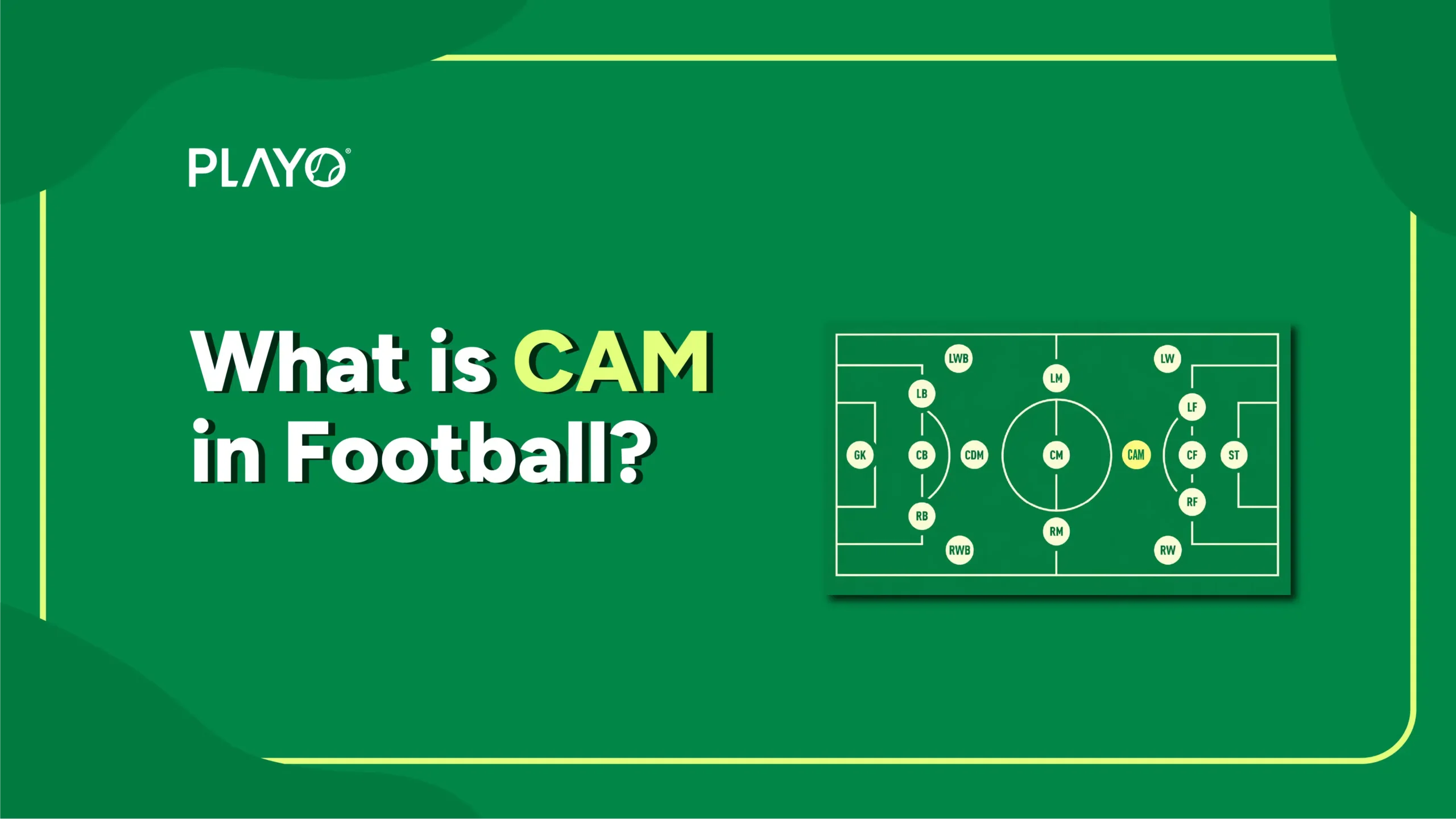


In football, some players score goals, and some prevent them, but the CAM in football is often the player responsible for creating the moments that change a game. Short for Central Attacking Midfielder, the CAM operates in the space between midfield and attack, linking play, creating chances, controlling tempo, and unlocking defences. Traditionally associated with the iconic number 10 role, this position combines creativity with tactical intelligence and remains one of the most influential roles on the pitch.
But what exactly does a CAM do, and why is this position so important in modern football? In this guide, we’ll break down everything you need to know about the CAM position in football, including its meaning, positioning, tactical role, responsibilities, playing style, key skills, and how attacking midfielders continue to shape the game today.
What Does CAM Mean in Football?
CAM stands for Central Attacking Midfielder. This player operates in the advanced central area of the pitch, usually positioned between the central midfielders and the forwards. Often known as the “number 10,” “playmaker,” or “attacking midfielder,” the CAM acts as the creative link that connects possession with goal-scoring opportunities. Their role is not just to stay high up the field but to constantly find pockets of space, receive the ball under pressure, and turn build-up play into dangerous attacks.
Unlike defensive midfielders who protect the backline or box-to-box midfielders who contribute across both ends of the pitch, the CAM’s responsibilities are primarily attack-oriented. They are expected to create chances, dictate tempo in the final third, combine with forwards, and break organised defensive structures through intelligent passing, movement, and quick decision-making. In modern football, CAMs are also increasingly involved in pressing, making off-ball runs, and contributing goals themselves, making the position far more complete than the traditional playmaker role of the past.
Where Does a CAM Play on the Pitch?
The CAM typically operates in what football analysts often call the “space between the lines” or the “hole” – the advanced central area positioned between the opposition’s midfield and defensive units. Rather than staying fixed in one spot, a CAM constantly moves across this zone to receive possession where defenders are least comfortable stepping out. This area is one of the most influential spaces on the pitch because it allows the player to quickly turn defence into attack.
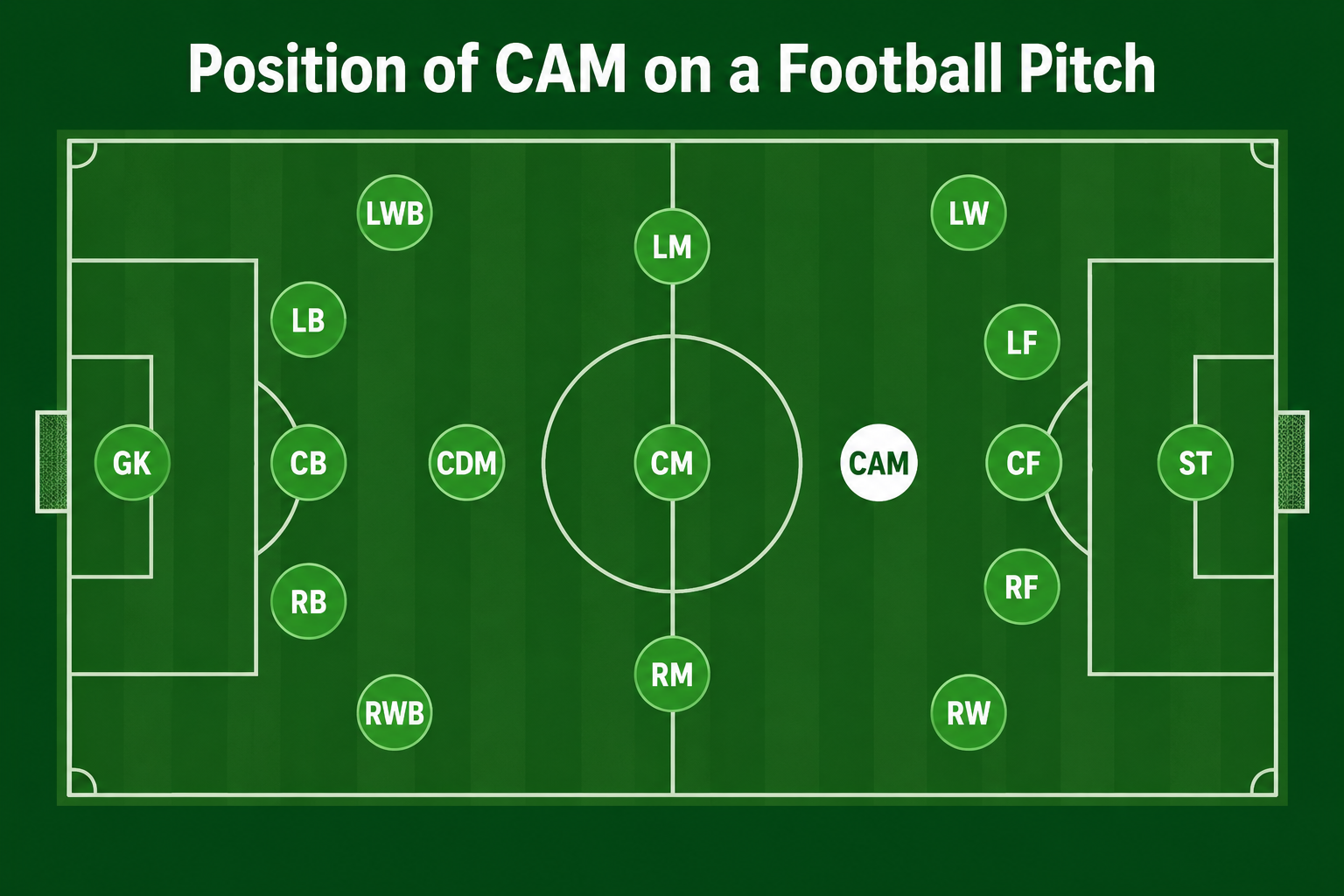
In formations such as 4-2-3-1, 4-4-2 diamond, and 4-3-1-2, the CAM plays centrally behind the striker and ahead of the deeper midfielders. From this position, they become the team’s main attacking connector and decision-maker.
This positioning allows the CAM to:
- Receive the ball between defensive lines and exploit the spaces opponents leave open
- Turn quickly and face the goal to initiate fast attacking sequences
- Distribute passes to strikers, wingers, overlapping full-backs, or advancing midfielders
- Control attacking tempo by deciding when to speed up or slow down play
- Make late runs into the penalty area to create additional goal-scoring threats
- Pull defenders out of shape and create space for teammates to attack
Because of this unique positioning, a successful CAM often influences the game not by covering the most distance, but by consistently appearing in the right spaces at the right moments.
Read More: 7-a-Side Football Ground Dimensions
Types of CAMs in Football
Although the CAM is generally known as the team’s primary creator, not all Central Attacking Midfielders play the role in the same way. Depending on the formation, tactical setup, and player profile, a CAM can influence matches through passing, movement, pressing, goal-scoring, or even deeper playmaking. Modern football has expanded the role far beyond the traditional number 10, creating multiple variations of the position.
1. Creative Playmaker
This is the classic CAM profile and the role most people associate with the traditional number 10. A creative playmaker focuses on controlling attacking rhythm, creating chances, and unlocking compact defensive structures through intelligent passing and vision. These players often operate between defensive lines and are responsible for producing key passes and high-quality opportunities.
2. Goal-Scoring Attacking Midfielder
Some CAMs take a more direct approach and become an additional goal threat rather than staying purely creative. This type of attacking midfielder regularly makes late runs into the penalty area, supports the striker, and contributes goals alongside assists. Their movement and timing make them difficult for defenders to track.
3. False Ten
Unlike a traditional CAM who stays higher up the pitch, a False Ten frequently drops deeper into midfield to receive possession and influence build-up play. This movement can pull defenders out of position, create central overloads, and open space for teammates to attack. The role demands exceptional vision, positioning, and tactical intelligence.
4. Wide Playmaker
A wide playmaker operates from slightly wider channels while still acting as a creative force. Rather than hugging the touchline like a winger, this player drifts inward to create chances, combine with overlapping players, and support attacks from the half-spaces.
5. Pressing Attacking Midfielder
Modern football increasingly values CAMs who contribute without the ball as well. A pressing attacking midfielder applies pressure high up the pitch, disrupts opposition build-up, forces turnovers, and helps launch quick attacking transitions. This role combines creativity with intensity and defensive work rate.
6. Free Role Playmaker
Some teams allow their CAM complete positional freedom. Instead of remaining central, this player roams across the pitch to find space, create overloads, and become the focal point of attacks. Their unpredictable movement often makes them difficult to mark.
7. Versatile Playmaker
The complete modern CAM is expected to adapt to different tactical demands throughout a match. A versatile playmaker combines passing, dribbling, pressing, movement, and finishing ability to influence the game in multiple ways. As football continues to evolve, this has become one of the most valuable CAM profiles in elite football.
CAM vs. CDM
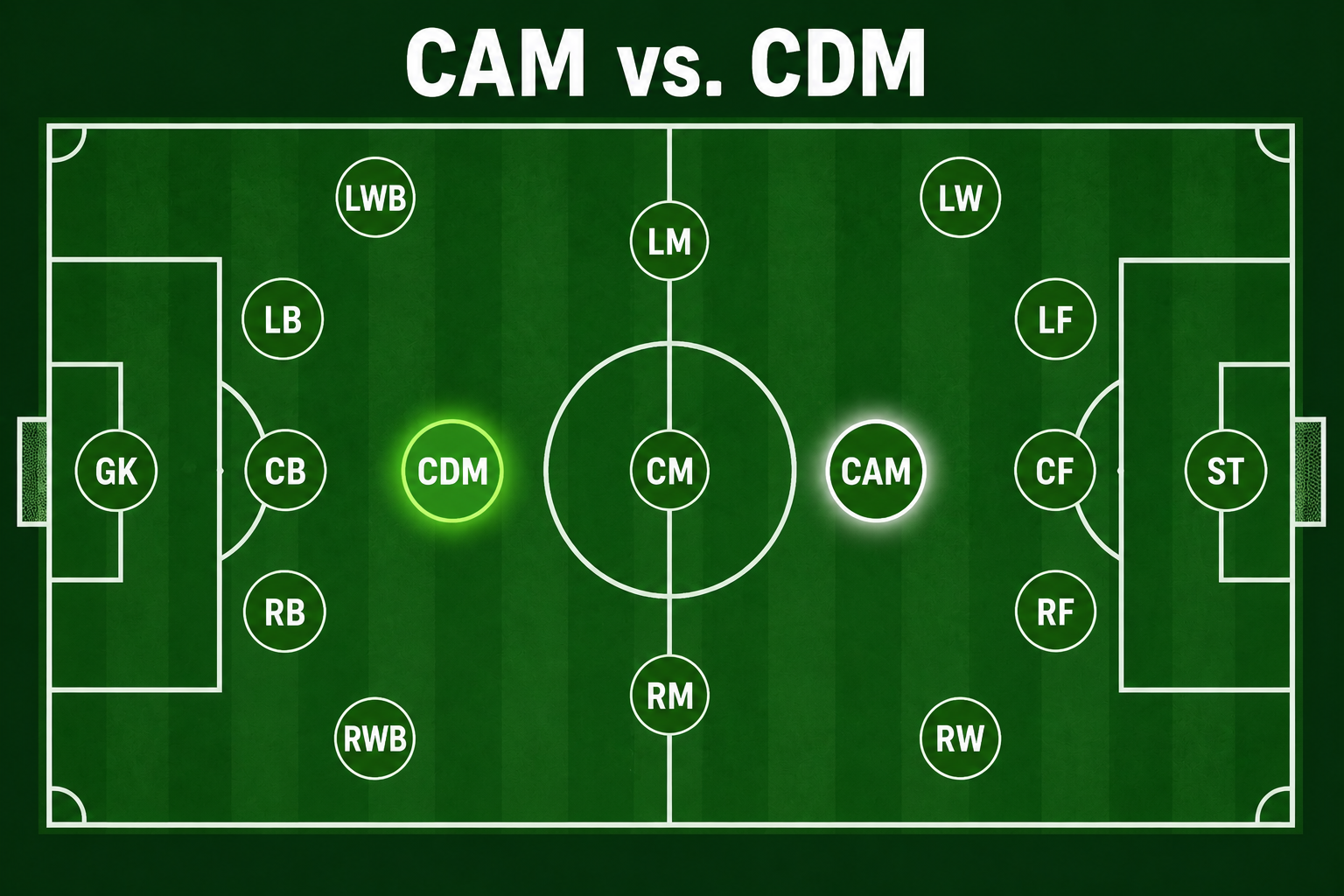
One of the most common questions from football fans and aspiring players is: What’s the difference between a CAM and a CDM? While both operate in central midfield, their roles, responsibilities, and impact on the game are almost opposites. Let’s break it down clearly.
| Aspect | CAM (Central Attacking Midfielder) | CDM (Central Defensive Midfielder) |
| Primary Focus | Create scoring opportunities | Protect the defence, break up attacks |
| Typical Position | Advanced central area, “the hole” | Deep central area, in front of the backline |
| Key Skills | Vision, passing, dribbling, finishing | Tackling, positioning, interception, distribution |
| Defensive Duties | Light pressing, occasional tracking | Heavy pressing, shielding, and ball recovery |
| Attacking Duties | Through balls, assists, late runs into the box | Recycling possession, initiating attacks from deep |
| Physical Profile | Agility, balance, acceleration | Stamina, strength, endurance |
| Iconic Examples | Kevin De Bruyne, Bruno Fernandes, Zidane | N’Golo Kanté, Rodri, Sergio Busquets, Casemiro |
| Common Jersey Number | 10, 8, 23 | 6, 4, 5 |
Core Responsibilities of a Central Attacking Midfielder
- Chance Creation & Assists: The CAM’s main responsibility is creating goal-scoring opportunities. Positioned close to the attacking line, they look to unlock defences through through balls, quick combinations, final passes, and intelligent movement to create chances for teammates.
- Ball Progression & Link-Up Play: A CAM acts as the link between midfield and attack. They receive possession in advanced areas, progress the ball forward, combine with wingers and strikers, and help maintain attacking flow in the final third.
- Goal Threat: Modern CAMs are expected to contribute goals as well as assists. They make late runs into the box, attack open spaces, take long-range shots, and provide an additional scoring option during attacking phases.
- Tactical Intelligence & Movement: A successful CAM relies heavily on positioning and game awareness. They find spaces between defensive lines, create room for teammates through movement, adjust their positioning based on the opposition, and contribute to pressing when possession is lost.
Playing Style of a CAM
A successful CAM combines technical quality with tactical awareness and the ability to influence the game in advanced areas. While different types of CAMs play differently, most elite attacking midfielders share a common set of attributes.
Technical Attributes
- First Touch and Ball Control to receive and move the ball quickly under pressure
- Passing Range to execute short combinations, through balls, and longer progressive passes
- Vision and Awareness to identify movement and passing opportunities early
- Dribbling in Tight Spaces to beat markers and retain possession centrally
- Shooting Technique to contribute goals from inside and outside the box
Mental & Tactical Attributes
- Game Intelligence to understand space, positioning, and attacking patterns
- Composure to make effective decisions under pressure
- Creativity to create chances and unlock defensive structures
- Work Rate to contribute to pressing and defensive transitions
Physical Attributes
- Agility and Balance to move efficiently in crowded areas
- Stamina to maintain involvement throughout the game
- Strength to protect possession and hold off challenges
Conclusion
The CAM in football remains one of the most influential positions on the pitch because it sits at the centre of attacking play. Positioned between midfield and attack, the Central Attacking Midfielder is responsible for creating chances, progressing possession, controlling tempo, and contributing goals when needed. While the traditional number 10 role has evolved with modern tactics, the importance of creativity, movement, and decision-making has remained unchanged.
Whether operating as a classic playmaker, a pressing attacking midfielder, or a goal-scoring creator, a great CAM can completely change the rhythm and outcome of a match. Understanding this position gives players and fans a deeper appreciation of how teams build attacks and turn possession into results.
Ready to put your football knowledge into action? Gather your squad, step into the playmaker role, and experience the game yourself. Book football turfs on Playo, find nearby venues, and get match-ready with just a few taps.
Download Playo on Android or iOS, or visit playo.co to start playing!
Frequently Asked Questions
CM, CAM, and CDM are midfield positions with different responsibilities. CM (Central Midfielder) controls possession and supports both attack and defence. CAM (Central Attacking Midfielder) focuses on creating chances and supporting attackers. CDM (Central Defensive Midfielder) protects the defence and helps recover possession.
No, a CAM is not the same as a striker. A striker’s main objective is to score goals and stay closest to the opposition’s goal. A CAM usually plays behind the striker and focuses more on creating opportunities, progressing attacks, and supplying passes into dangerous areas. However, some modern CAMs also contribute heavily to goal-scoring.
Yes, the CAM position is traditionally associated with the number 10 role in football. The number 10 is often considered the team’s creative player who operates between midfield and attack. While shirt numbers are flexible today, the term “number 10” is still commonly used to describe a Central Attacking Midfielder.
The four main types of defenders in football are Centre Back (CB), Full Back (LB/RB), Wing Back (LWB/RWB), and Sweeper (Libero).
The CAM role commonly appears in formations such as 4-2-3-1, 4-4-2 diamond, and 4-3-1-2, where the player operates behind the striker.