

Football is often called the beautiful game because of its attacking play, creative passing, dribbling and goals. But not every team wants to dominate possession or play an open, attacking style. Some teams are perfectly happy to defend deep, frustrate their opponents and wait for one opportunity to score.
This is where the term Haramball comes in.
If you have seen the term on football social media, you may have wondered, what is Haramball? In simple terms, Haramball is an informal football slang term used to describe an extremely defensive and low-risk style of play. It is closely associated with anti-football and parking the bus, particularly when a team prioritises preventing goals over creating attacking opportunities.
But Haramball is not an official football tactic or formation. It is a humorous and often critical label used by football fans to describe a team’s approach.
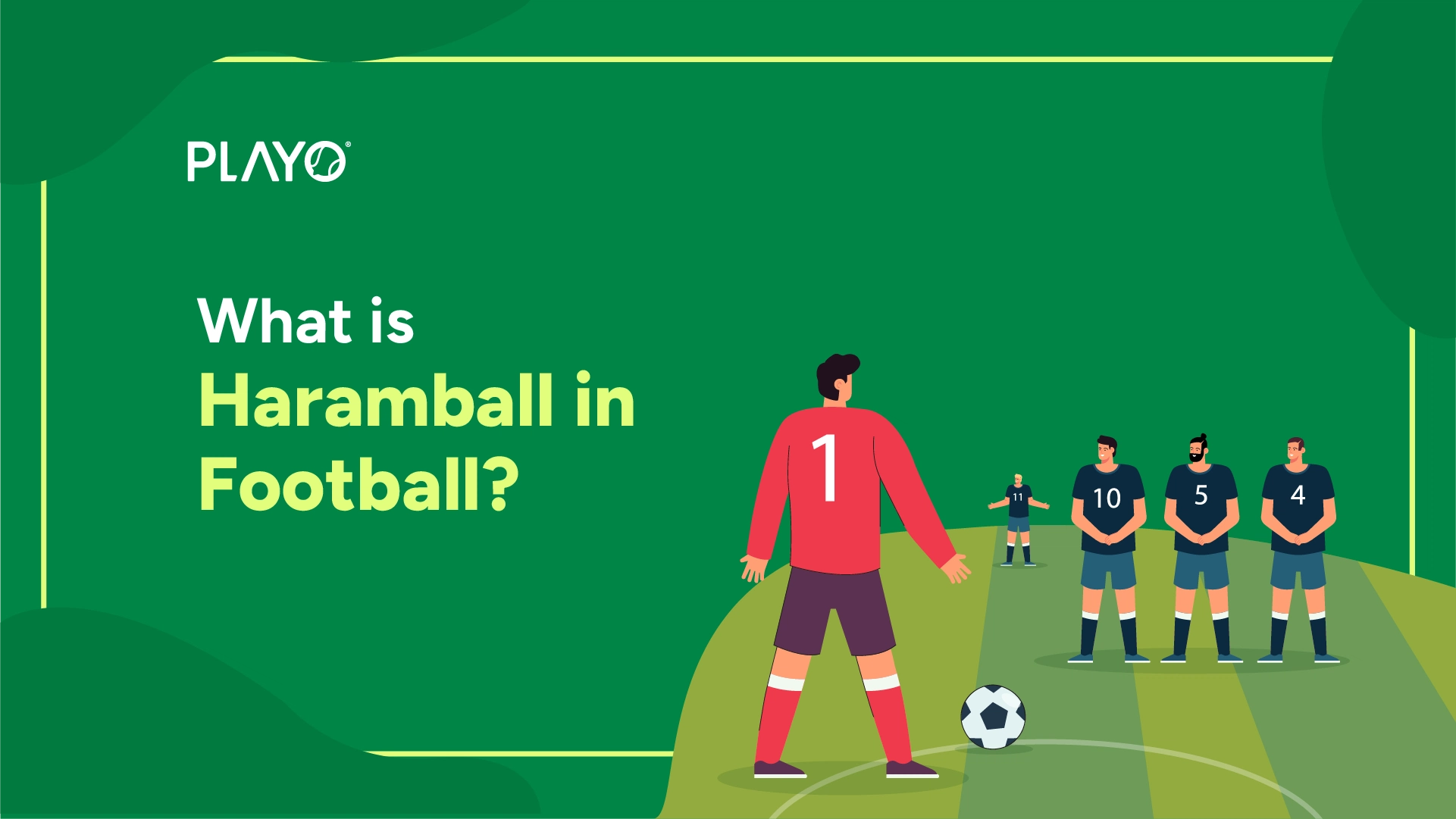
What is Haramball in Football?
Haramball is a slang term for a highly defensive style of football that prioritises stopping the opposition from scoring over attacking or dominating possession. A team accused of playing Haramball may defend with most of its players behind the ball, sit in a deep defensive block, close down spaces and rely on counterattacks or set pieces for scoring opportunities.
The term is usually used negatively or humorously, especially when fans feel a team is deliberately making a match difficult to watch. Haramball is therefore not a recognised tactical system in the Laws of the Game. Instead, it is an internet-era football expression used to describe a particular approach to playing the sport.
The idea is closely related to anti-football, which Cambridge Dictionary defines as a style in which preventing the opposition from scoring is considered more important than scoring yourself.
What Does Haramball Mean?
The word Haramball combines “haram” with “ball”. Haram is an Arabic term commonly used to describe something prohibited or forbidden. In football internet culture, combining it with “ball” creates a humorous expression suggesting that this style of football is almost “forbidden” because of how defensive or unattractive fans consider it.
There is no clearly documented single person who invented the term. It has developed as part of football’s online meme culture and is now commonly used in discussions about defensive football.
The meaning can also vary depending on the fan using it. Some use Haramball simply to mean parking the bus, while others use it more broadly for defensive, disruptive or low-risk football. Recent football discussions show fans commonly associate the term with low blocks, defending with large numbers, counterattacks, set pieces and attempts to frustrate the opposition.
Read More: What is a False 9 in Football?
How Does Haramball Work?
There is no official Haramball formation. The term describes how a team plays rather than the formation it uses. Several tactical characteristics are commonly associated with Haramball.
1. Low defensive block
A team playing Haramball will often defend deep in its own half. The defensive and midfield lines stay close together, reducing the space available for the opposition to play through. The aim is to make it difficult for attackers to receive the ball in dangerous areas.
2. Players behind the ball
One of the clearest signs of Haramball is having a large number of players behind the ball when defending. Rather than leaving several players high up the pitch, the team prioritises defensive numbers and structure. This can make the opposition dominate possession while struggling to find a clear route into the penalty area.
3. Parking the bus
Parking the bus is one of the tactics most closely associated with Haramball. A team that parks the bus sits extremely deep and uses several players to protect its own goal. This is particularly common when a team is protecting a narrow lead late in a match.
However, Haramball and parking the bus are not exactly the same. Parking the bus specifically describes an extremely deep defensive setup, while Haramball is a broader slang term that can include other forms of defensive and disruptive play.
4. Counterattacking
A defensive team does not necessarily stop attacking altogether. Instead, it may wait for the opposition to commit players forward before launching a quick counterattack. A fast transition can allow forwards to exploit the space left behind the opposing defence. This makes counterattacking an important part of many defensive systems.
5. Set pieces
Corners and free kicks can become particularly important for teams that do not create many chances from open play. A team may spend long periods defending and then attempt to score from a corner, free kick or another set-piece situation.
6. Game management
Haramball is also often associated with game management, especially after a team takes the lead. This may involve slowing down the tempo, making substitutions, taking longer over restarts and protecting possession in safe areas.
However, there is an important distinction between tactical game management and breaking the rules. Excessively delaying restarts can result in disciplinary action under the Laws of the Game.
Haramball vs Anti-Football vs Parking the Bus
These three terms are often used interchangeably, but they have slightly different meanings. Anti-football is the broadest of these concepts. Haramball is a humorous football slang term often used for similar behaviour, while parking the bus describes a specific defensive approach. Not every defensive team is therefore playing Haramball, and not every team using a low block is necessarily playing anti-football.
| Term | Meaning |
| Haramball | Informal slang for extremely defensive, low-risk or unattractive football |
| Anti-football | A broader term for a style focused on stopping the opposition rather than creating attacking football |
| Parking the bus | An extremely deep defensive setup, usually involving many players defending close to their own goal |
Why Do Teams Play Haramball?
There are several tactical reasons why a team may adopt a highly defensive approach:
- To deal with stronger opponents: An underdog can defend deep to reduce the space available to technically stronger attackers and limit their chances.
- To protect a lead: A team that is ahead may reduce attacking risks and focus on maintaining its advantage, especially late in the match.
- To succeed in knockout football: In high-stakes knockout matches, a cautious approach can help minimise mistakes, particularly when protecting an aggregate lead.
- To exploit counterattacking opportunities: A team can allow the opponent to have possession, defend compactly and then attack the space left behind when the opposition commits players forward.
Is Haramball a Real Football Tactic?
No, Haramball is not an official football tactic or formation. It is an informal term used by football fans to describe an extremely defensive approach to the game. The Laws of the Game do not recognise Haramball as a tactical system, and there is no specific formation associated with it.
Instead, Haramball describes how a team plays rather than the formation it uses. A team using a 5-4-1, 4-4-2, 4-5-1 or another formation could be labelled as playing Haramball if it sits deep, defends with numbers, limits attacking risks and relies on counterattacks or set pieces.
It is therefore more accurate to call Haramball football slang or a style of play, rather than a formal tactical system. The term is usually used humorously or critically by fans, and what qualifies as Haramball can vary depending on how defensive a team appears to be.
Is Haramball Legal in Football?
Yes, Haramball itself is completely legal in football because it is simply an informal term for a defensive style of play. Teams are free to defend deep, give up possession, play long balls, rely on counterattacks and use set pieces. There is no rule requiring a team to maintain possession or play an attacking style.
However, some actions that fans associate with Haramball can result in disciplinary action. Players may be cautioned for delaying restarts, such as holding onto the ball, kicking it away or deliberately preventing an opponent from taking a free kick or throw-in.
So, defensive football is legal, but specific actions such as excessive time-wasting, simulation and cynical fouls can be punished under the Laws of the Game.
Haramball vs Tiki-Taka
Haramball and tiki-taka are often presented as opposite football philosophies. However, the two are not necessarily absolute opposites. Modern football teams frequently combine different tactical ideas depending on the match situation.
A possession-based team may defend deeply at times, while a defensive team can still use sophisticated passing and positional play when it has the ball.
| Haramball | Tiki-taka |
| Prioritises defensive security | Prioritises possession |
| Often uses a compact defensive shape | Uses short passing and positional movement |
| Can concede possession willingly | Attempts to control possession |
| Relies heavily on transitions | Often builds attacks through sustained possession |
| Minimises attacking risk | Uses possession to create attacking opportunities |
Conclusions
So, what is Haramball? Haramball is informal football slang for an extremely defensive, low-risk style of play. It is commonly associated with low defensive blocks, parking the bus, compact defending, counterattacks, set pieces and game management.
It is not an official formation or tactical system, and there is no single way to play Haramball.
The term is usually used humorously or critically by fans who believe a team is prioritising defensive security and results over attacking football. But defensive football can also be a deliberate and effective strategy, especially for underdogs, teams protecting leads and sides playing high-stakes knockout matches.
Whether you call it Haramball, anti-football or simply smart defensive football, the debate ultimately comes down to one of football’s oldest questions: is winning more important than how you win?
Download Playo on Android or iOS, or visit playo.co to start playing!
Frequently Asked Questions
Haramball is football slang for an extremely defensive style of play that prioritises preventing goals over attacking and dominating possession.
Not exactly. Parking the bus specifically refers to defending very deep with many players behind the ball. Haramball is a broader slang term that can include parking the bus, counterattacking, set pieces and other low-risk tactics.
They are closely related but not identical. Anti-football is a broader term for football focused more on stopping the opposition than creating attacking opportunities. Haramball is an informal slang term often used to describe this type of play.
Haramball combines “haram”, an Arabic term commonly associated with something forbidden or prohibited, with “ball”. Football fans use the expression humorously to describe football they consider excessively defensive or unattractive.
Yes. Playing defensively, defending deep, counterattacking and giving up possession are all legal. However, actions such as excessively delaying restarts or committing certain cynical fouls can be punished under the Laws of the Game.
There is no specific Haramball formation. Systems such as 5-4-1, 4-4-2 and 4-5-1 can all be used for a defensive approach, depending on the team’s tactics and players.