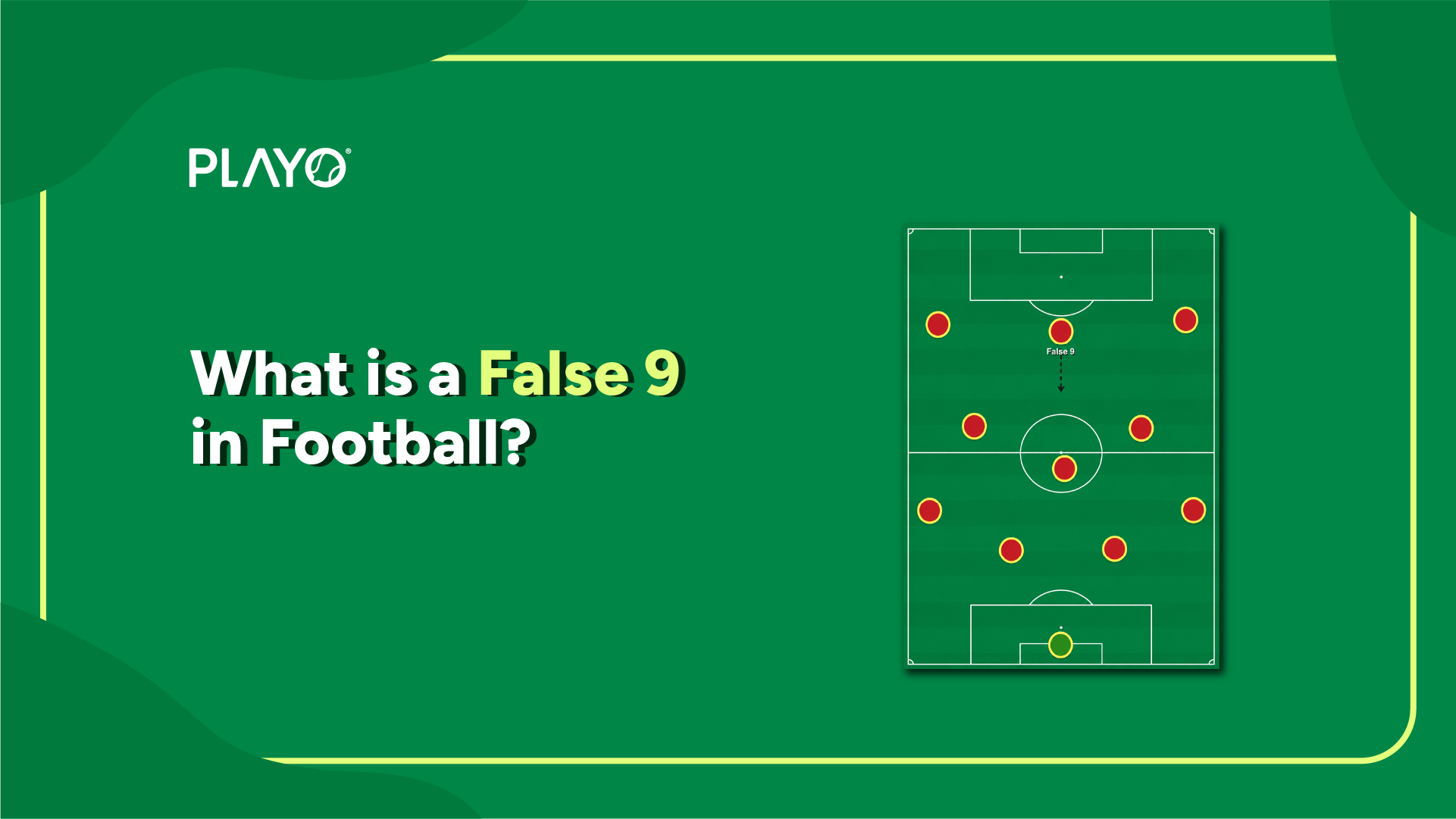


The false 9 is one of football’s most fascinating tactical innovations, redefining what it means to play as a striker. Traditionally, the number 9 has been the team’s main goalscorer, operating close to the opposition penalty area and leading the attacking line. A false 9, however, breaks that convention by dropping into deeper positions, linking play in midfield, and creating space for teammates to exploit.
The term “false” reflects this element of deception. Instead of remaining high up the pitch like a traditional centre-forward, the player operates between midfield and attack, pulling defenders out of shape and disrupting defensive structures. The role combines the vision of a playmaker with the instincts of a striker, making it one of the most tactically sophisticated positions in modern football.
From its early origins to its popularisation by innovative managers and legendary players, the false 9 has transformed attacking football. In this guide, we’ll explore what a false 9 is, how the role works, its history, famous players who mastered it, the formations that suit it best, and why it remains an important tactical weapon in today’s game.
The Origins and History of the False 9
While Pep Guardiola and Lionel Messi popularised the term in the late 2000s, the concept is much older.
The Godfather: Nándor Hidegkuti (1950s)
The first true iteration of the False 9 was deployed by the magical Hungarian national team in the early 1950s. Manager Gusztáv Sebes utilised Nándor Hidegkuti as a deep-lying centre-forward. In the famous 1953 “Match of the Century” against England, Hidegkuti dropped deep, completely confusing the English centre-backs. He scored a hat-trick in a 6-3 victory, proving that a striker who didn’t play like a traditional striker could dismantle the best defences in the world.
The “Totti Role” (2000s)
In the 2005-2006 season, Roma manager Luciano Spalletti was forced to play without a traditional striker. He pushed legendary playmaker Francesco Totti into the central forward position. Totti’s brilliance in this deep-lying role was so influential that in Italy, the False 9 is still frequently referred to as the “Il Falso 9” or the “Ruolo di Totti” (The Totti Role).
The Modern Pioneer: Pep Guardiola (2009)
The False 9 became a global tactical obsession during the 2008-2009 season when Pep Guardiola moved Lionel Messi from the right wing to the central striker position at Barcelona. Messi’s unparalleled dribbling, vision, and low centre of gravity made him the ultimate False 9, leading Barcelona to a historic sextuple.
Why the False 9 Works
To understand the genius of the False 9, you have to understand the psychological and tactical dilemma it creates for the opposing centre-backs.
When a traditional striker stays on the shoulder of the last defender, the centre-backs have a simple job: step up to play the offside trap, or stay goal-side to block the shot.
When a False 9 drops deep into midfield, the centre-backs face a lose-lose scenario:
- If the centre-back follows the False 9: They are dragged out of the defensive line, leaving a massive gap behind them. The opposing team’s wingers or attacking midfielders will immediately make diagonal runs into this vacated space.
- If the centre-back stays in position: They allow the False 9 to receive the ball with their back to the goal, completely unmarked, with time and space to turn, dictate the tempo, and play a killer through-ball.
This dilemma is the foundation of False 9 tactics. It paralyses the opposition’s defensive structure and forces them to make fatal errors.
Read More: All Football Positions and Their Roles
How Does a False 9 Work?
Dropping Deep Into Midfield
The hallmark movement of a False 9 is dropping from the forward line into midfield areas. This seemingly simple action creates massive problems for defenders:
- Pulling centre-backs out of position: When the False 9 drops deep, opposing centre-backs face a dilemma: should they follow the player and leave space behind, or hold their position and allow them time on the ball?
- Receiving passes between the lines: The False 9 operates in the half-spaces between the opposition’s midfield and defensive lines, receiving the ball in dangerous areas where they can turn and attack.
Creating Space for Teammates
When the False 9 vacates the central attacking position, it creates opportunities for teammates to exploit.
- Wingers attacking central spaces: Inverted wingers make diagonal runs into the space left by the dropping False 9, becoming major goalscoring threats.
- Overloading midfield areas: By dropping deep, the False 9 creates numerical superiority in midfield, allowing the team to dominate possession and control the tempo.
Acting as Both Playmaker and Striker
The False 9 is a hybrid role that demands both creativity and finishing ability.
- Linking build-up play: They connect midfield to attack and often serve as the team’s primary playmaker despite starting as the striker.
- Creating and scoring opportunities: Although their main responsibility is creating chances, a complete False 9 must also finish opportunities, frequently arriving late in the box as an unmarked goalscoring threat.
Best Formations for a False 9
4-3-3 Formation
The 4-3-3 is the classic False 9 formation, famously used by Pep Guardiola’s Barcelona. With two inverted wingers cutting inside and attacking full-backs providing width, this formation maximises the False 9’s ability to create space. The three-man midfield provides support when the False 9 drops deep, creating overwhelming numerical advantages.
4-2-3-1 Formation
The 4-2-3-1 offers more defensive stability while allowing the False 9 to link with the attacking midfielder behind them. This formation provides dual creative hubs and allows for flexible rotations in the final third. The double pivot shields the defence while the False 9 and Number 10 combine to break down opposition defences.
3-4-3 Formation
With three centre-backs, the 3-4-3 allows wing-backs to provide width while the False 9 drops deep. This creates a 2-3-5 shape in attack, overloading central areas while maintaining width through the wing-backs. The system is particularly effective for teams that want to dominate possession while maintaining defensive solidity.
How is a False 9 Different From a Number 10?
Both roles are creative, but they differ in their positioning and responsibilities on the pitch. The table below highlights the key differences between a false 9 and a number 10.
| Aspect | False 9 | Number 10 |
| Starting Position | Starts as the main striker. | Plays behind the striker. |
| Movement | Drops into midfield areas. | Moves forward from midfield. |
| Primary Role | Creates space and scores goals. | Creates chances for teammates. |
| Defensive Work | Leads the press from the front. | Has fewer defensive duties. |
| Area of Influence | Operates between midfield and attack. | Controls play behind the striker. |
| Playing Style | Combines playmaking with finishing. | Focuses mainly on creativity. |
The Best False 9 Players in Football History
Lionel Messi (Barcelona, 2009-2012)
Messi is the undisputed king of the False 9. Under Guardiola, Messi’s ability to drop deep, receive the ball, and glide past defenders changed football forever. He didn’t just create space for others; his sheer individual brilliance from deep positions made him unguardable. His 2011-12 season, where he scored 73 goals in all competitions, remains the gold standard for False 9 excellence.
Francesco Totti (AS Roma, 2005-2017)
Totti brought a poetic, almost leisurely elegance to the role. Under Luciano Spalletti, Roma’s legendary playmaker operated as a “deep-lying forward,” using his exceptional vision and no-look passes to orchestrate attacks from deep positions. The role became so associated with him that Italians still refer to the False 9 as “Il Ruolo di Totti.”
Roberto Firmino (Liverpool, 2015-2022)
Under Jürgen Klopp, Firmino perfected a modern, high-intensity variation of the False 9. Often referred to as the “Firmino Role,” his primary job was less about pure playmaking and more about aggressive pressing, disrupting the opposition’s build-up play, and providing rapid, one-touch link-up play for the lightning-fast wingers, Salah and Mane.
Cesc Fàbregas (Spain, Euro 2012)
During Spain’s Euro 2012 victory, manager Vicente del Bosque used Cesc Fàbregas as a false 9 in a bold tactical experiment. Without a traditional striker, Fàbregas dropped deep to create overloads, helping Spain dominate possession throughout the tournament. The system culminated in a historic 4-0 victory over Italy in the final, proving the False 9 could succeed on the biggest stage.
Karim Benzema (Real Madrid, 2010-2023)
While not a pure false 9, Benzema mastered the hybrid role at Real Madrid. His ability to drop deep, link play, and create space for Cristiano Ronaldo made him the perfect modern false 9. As Ronaldo’s goalscoring partner, Benzema sacrificed personal statistics to facilitate the team, eventually stepping into the spotlight himself and winning the 2022 Ballon d’Or.
How to Play as a False 9 in Football
Improve Your First Touch: You’ll often receive the ball with your back to goal, surrounded by defenders. A heavy touch will result in a turnover. Practice receiving passes under pressure and turning quickly.
- Learn to Scan the Field: Before receiving the ball, constantly check your shoulders to know where defenders, teammates, and space are located. Great false 9s like Messi scan the field 3-4 times before receiving possession. This awareness allows you to make the right decision instantly.
- Master Off-the-Ball Movement: Your movement without the ball is as important as your actions with it. Know when to drop deep, when to hold position, and when to make late runs into the box. Timing is everything.
- Develop Playmaking Skills: Work on your passing range, vision, and ability to play defence-splitting through-balls. You’re not just a finisher, but you’re a creator.
- Communicate With Wingers and Midfielders: Your movement only works if teammates understand it. Signal when you’re dropping deep so wingers know to attack the space you’ve vacated. Constant communication ensures coordinated attacking movements.
A great false 9 thinks like both a striker and an attacking midfielder.
Conclusion
In modern football, the false 9 is much more than a tactical trend. It is a role that blends creativity, movement, intelligence, and goalscoring into one position. By dropping deep and creating space for teammates, a false 9 can completely reshape an opponent’s defensive structure and unlock new attacking possibilities.
From Nándor Hidegkuti and Francesco Totti to Lionel Messi and Roberto Firmino, some of football’s greatest minds have mastered the role. While it demands exceptional technical ability and tactical awareness, the false 9 remains one of the game’s most innovative positions, proving that sometimes the most dangerous striker is the one who doesn’t play like a striker at all.
Download Playo on Android or iOS, or visit playo.co to start playing!
Frequently Asked Questions
A false 9 is a centre-forward who drops deep into midfield instead of staying near the opposition goal. This creates space for teammates while combining the roles of striker and playmaker.
It’s called “false” because the player deceives opponents by appearing to be a traditional striker (number 9) but actually operates as a midfielder. The “false” label refers to this deceptive positioning that breaks traditional tactical expectations.
The concept was first used by Hungarian manager Gusztáv Sebes in the early 1950s, utilising Nándor Hidegkuti to devastating effect against England in 1953. However, Pep Guardiola and Lionel Messi popularised it in modern football.
Lionel Messi is widely considered the greatest false 9, particularly during Barcelona’s 2009-2012 era under Pep Guardiola. His combination of goalscoring, creativity, and dribbling from the role revolutionised modern football.
A traditional striker stays high and focuses on scoring goals, while a false 9 drops deep into midfield to create space and chances for teammates, acting as both a striker and playmaker.
Yes! While their primary role is creating space, elite false 9s like Messi and Firmino score plenty of goals through late runs into the box and by arriving unmarked in dangerous positions.