


A shuttlecock is one of the most important pieces of equipment in badminton. Its material, construction, weight and flight characteristics can affect everything from how quickly it travels to how it responds to a smash.
There are two broad types of shuttlecock used in badminton: feather shuttlecocks and non-feathered, or synthetic, shuttlecocks. Feather shuttlecocks are the traditional choice for competitive badminton, while synthetic shuttles are widely used for recreational play and training.
But the differences go beyond just feathers versus plastic. The type of material, feather quality, speed and construction can all influence how a shuttle performs.
Types of Shuttlecock
The two main types of shuttlecock are:
- Feather shuttlecocks
- Synthetic shuttlecocks
Both are designed to produce a similar basic flight. In fact, the official Laws of Badminton state that a shuttle can be made from natural and/or synthetic materials, provided its flight characteristics are generally similar to those of a natural feather shuttle with a cork base.
| Feature | Feather Shuttlecock | Synthetic Shuttlecock |
| Material | Natural feathers | Nylon or other synthetic materials |
| Base | Cork | Cork or synthetic material, depending on the model |
| Flight | More natural and precise | More consistent and durable |
| Durability | Lower | Higher |
| Price | Generally more expensive | Generally more affordable |
| Best for | Competitive and serious players | Beginners, recreational players and training |
| Maintenance | Requires careful storage | Easier to maintain |
| Feel | More responsive and natural | Different from a feather shuttle |
| Replacement frequency | More frequent | Less frequent |
1. Feather Shuttlecocks
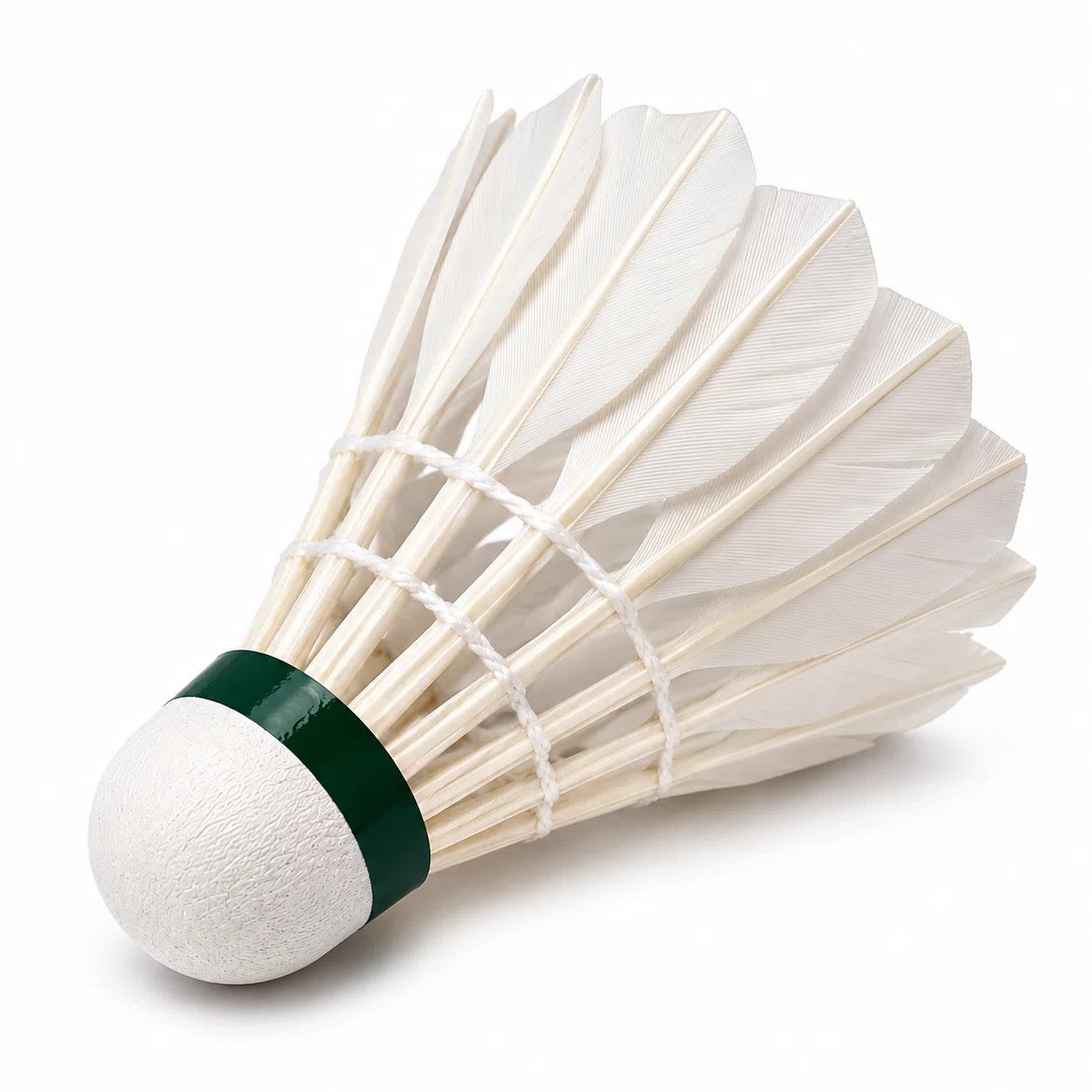
Feather shuttlecocks are made using natural feathers fixed into a rounded base. They are the traditional choice for competitive badminton because of their flight characteristics and responsiveness.
Under the official Laws of Badminton, a feather shuttlecock must have 16 feathers fixed in the base. The feathers must be between 62 and 70 mm long, while the shuttle must weigh between 4.74 and 5.50 grams.
Why do players use feather shuttlecocks?
Feather shuttles offer a distinct flight pattern that experienced players generally prefer. They slow down more naturally after travelling through the air and respond well to changes in racket angle and power.
This makes them particularly suitable for:
- Competitive badminton
- Tournament matches
- Advanced players
- Players who want to replicate match conditions during training
The biggest drawback is durability. Feathers can bend, split or break during rallies, especially when the shuttle is hit repeatedly at high speed.
Goose vs duck feather shuttlecocks
Natural feather shuttles are commonly made using goose or duck feathers. However, the bird species alone does not determine whether a shuttle is good or bad. Feather selection, processing, alignment, construction and overall manufacturing quality also affect performance and durability.
In general, premium shuttlecocks tend to use carefully selected feathers and undergo more stringent manufacturing and quality-control processes.
So, instead of choosing a shuttlecock based only on whether it is made from goose or duck feathers, look at the product’s overall quality, intended use and performance.
How to make feather shuttlecocks last longer
Feather shuttlecocks are sensitive to storage conditions. If the feathers become too dry, they can become brittle and break more easily.
To improve their lifespan:
- Store the tube in a cool, suitable environment.
- Keep the shuttlecocks protected inside their tube when not in use.
- Avoid exposing them to excessive heat or direct sunlight.
- Follow the manufacturer’s storage recommendations.
- If the manufacturer recommends humidification, use the recommended method rather than adding water directly to the shuttle.
Proper storage can help preserve the feathers and maintain the shuttle’s flight characteristics.
2. Synthetic Shuttlecocks
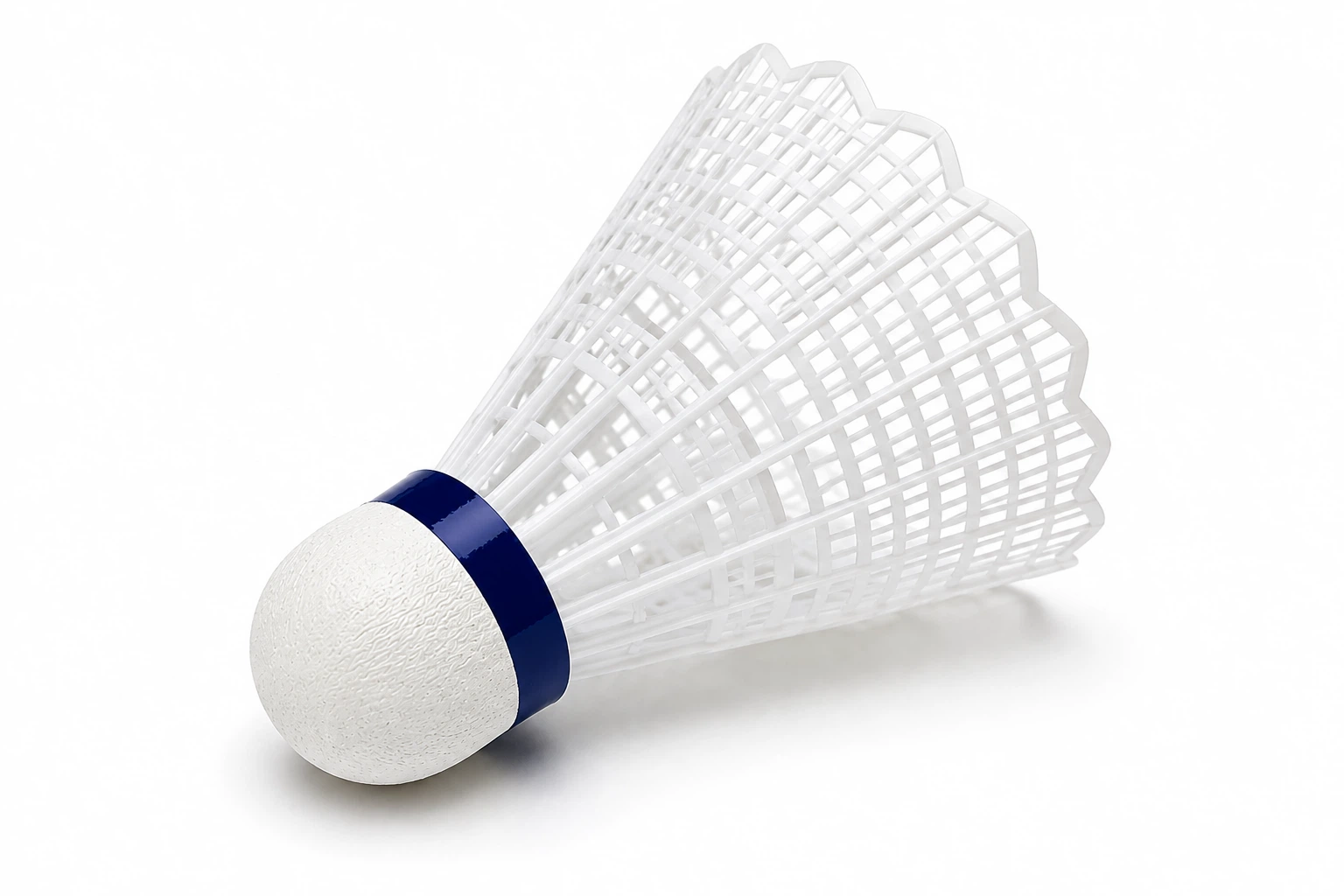
Synthetic shuttlecocks replace natural feathers with a synthetic skirt designed to replicate the shape and function of feathers. They are generally more durable than feather shuttles, making them popular among beginners and recreational players.
The BWF Laws of Badminton officially recognise non-feathered shuttles. Their synthetic skirt replaces natural feathers, with permitted variations in measurements and weight to account for differences between synthetic materials and natural feathers.
Why choose a synthetic shuttlecock?
The biggest advantage is durability. A synthetic shuttle can withstand considerably more recreational use than a natural feather shuttle before needing replacement.
Synthetic shuttlecocks are a good choice for:
- Beginners learning badminton
- Casual games
- School and community programmes
- Recreational clubs
- Training sessions where durability matters
- Players who do not want to replace shuttles frequently
They are also generally more economical for players who go through several shuttles during practice.
Nylon vs plastic shuttlecocks
You may see synthetic shuttlecocks described as nylon or plastic shuttlecocks. These terms can overlap in everyday product descriptions, so it is better to check the material and construction specified by the manufacturer rather than assuming that all synthetic shuttles are identical.
The important thing is how the shuttle performs. Different synthetic designs can have noticeably different flight, speed, feel and durability.
Feather vs Synthetic Shuttlecock: Which Is Better?
Neither type is automatically better for every player. The right choice depends on how and where you play.
Choose a feather shuttlecock if:
- You play competitive badminton.
- You want a more natural flight.
- You are an intermediate or advanced player.
- You regularly train for tournaments.
- You want your practice sessions to closely replicate match conditions.
Choose a synthetic shuttlecock if:
- You are a beginner.
- You mostly play recreationally.
- You want a more durable shuttle.
- You play frequently and want to reduce replacement costs.
- You are practising basic strokes and rallies.
If you are preparing for competitive badminton, practising with the same type of shuttle used in your matches can also make your transition to competition easier.
What is the Difference Between Shuttlecock Speeds?
Shuttlecocks are also sold in different speed ratings. Speed is separate from whether the shuttle is made of feathers or synthetic material.
The correct speed depends on factors such as playing conditions, temperature and altitude. A shuttle that feels right in one location may behave differently in another.
This is why simply choosing the fastest or slowest shuttle is not always the best approach. When buying a shuttlecock, check the manufacturer’s recommended speed and choose one appropriate for your playing conditions.
How to Choose the Right Shuttlecock
When buying a shuttlecock, consider these factors:
- Your level of play: Beginners and casual players can generally start with synthetic shuttles, while experienced players may prefer feather shuttles for their flight and responsiveness.
- Where you play: Indoor and outdoor conditions can affect shuttle performance, so choose a shuttle suited to your playing environment.
- Your budget: Synthetic shuttles are usually more durable, while feather shuttles generally need to be replaced more often.
- Your purpose: For casual games, durability may matter more. For tournament preparation, choose a shuttle with flight characteristics similar to those used in competition.
- Shuttle speed: Choose a speed rating suited to your court conditions rather than simply picking one based on preference.
- Construction and quality: For feather shuttles, check feather consistency and overall construction. For synthetic shuttles, consider the skirt design, durability and flight characteristics.
How Many Feathers Does a Badminton Shuttlecock Have?
A standard feather shuttlecock has 16 feathers fixed into its base. The official Laws of Badminton specify that the feathers should be between 62 and 70 mm long, with their tips forming a circle measuring 58 to 68 mm in diameter.
The shuttle’s base should measure between 25 and 28 mm in diameter, and the complete shuttle should weigh between 4.74 and 5.50 grams.
Can You Use Synthetic Shuttlecocks in Official Badminton?
The official rules allow shuttles made from both natural and synthetic materials, provided they meet the required design and flight characteristics.
However, the shuttle used in a particular competition is determined by the tournament’s regulations and equipment requirements. At the highest levels of competitive badminton, feather shuttlecocks remain the standard choice.
For recreational badminton, either type can be suitable depending on the players and playing conditions.
Conclusion
The two main types of shuttlecock are feather and synthetic. Feather shuttlecocks offer the traditional flight characteristics preferred in competitive badminton, while synthetic shuttlecocks are more durable and practical for beginners and recreational players.
There is no single shuttlecock that is perfect for everyone. Consider your playing level, frequency of play, budget, court conditions and whether you play competitively before making your choice.
If you are serious about improving your badminton game, the best shuttlecock is ultimately the one that gives you consistent flight and suits the conditions in which you play.
Download Playo on Android or iOS, or visit playo.co to start playing!
Frequently Asked Questions
The two main types are feather shuttlecocks and synthetic shuttlecocks.
Synthetic shuttlecocks are generally better for beginners because they are durable, affordable and easier to maintain.
Feather shuttlecocks offer more natural flight and are preferred for competitive play, while synthetic shuttlecocks are more durable and economical.
A standard feather shuttlecock has 16 feathers.
Feather shuttlecocks use natural feathers and a base, usually made from cork. Synthetic shuttlecocks use a synthetic skirt and may have a cork or synthetic base.
A feather shuttlecock generally does not last as long as a synthetic one. Its lifespan depends on the quality of the shuttle, playing conditions and how frequently it is used.