
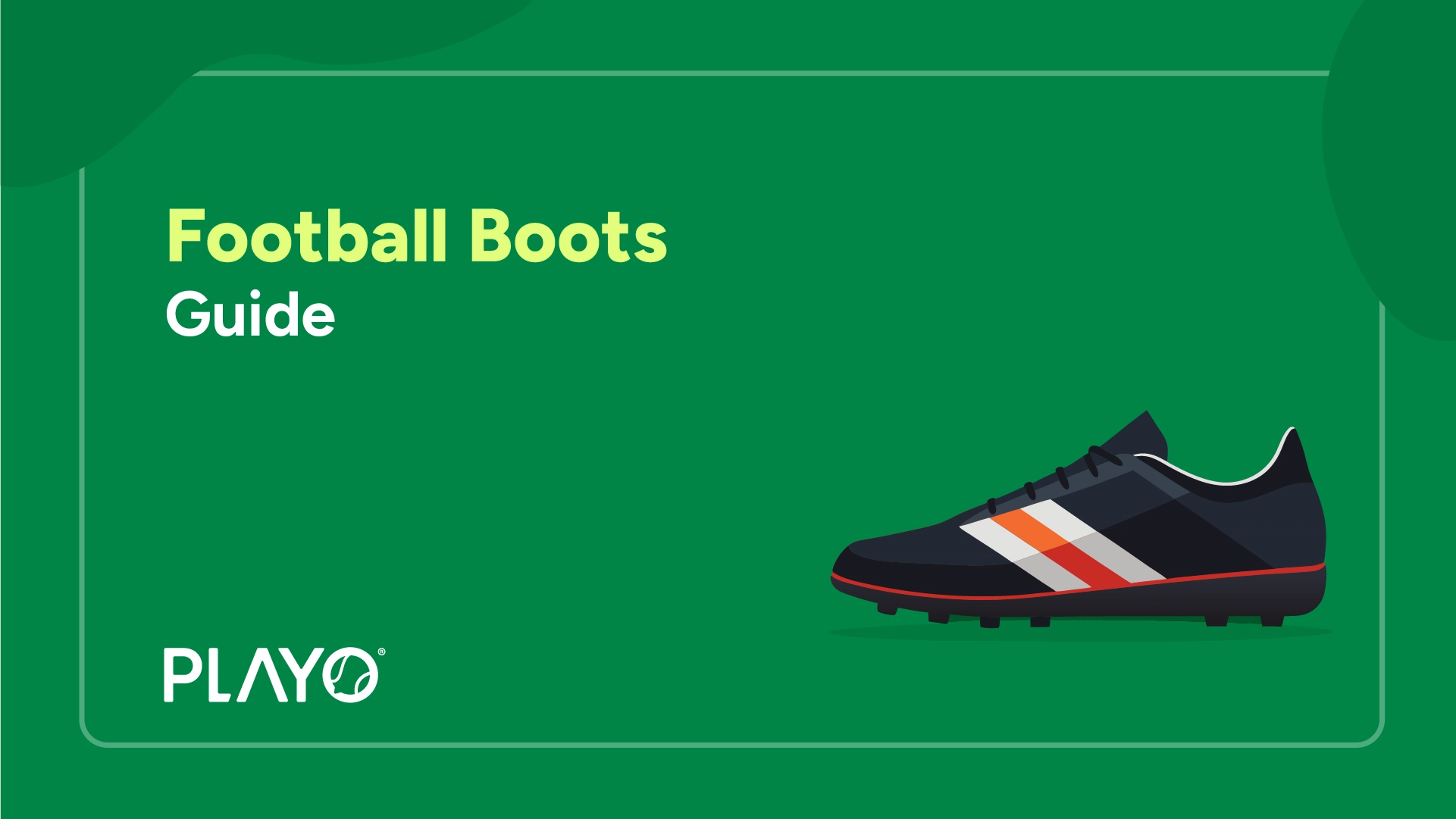


Choosing the right football boots is about more than picking a colour or buying the latest model. Your football boots affect how securely your feet sit inside the shoe, how comfortable you feel during a game, and how naturally you can move, pass, shoot, and change direction.
With so many options available, it can be difficult to know which features actually matter. Should you choose leather or synthetic boots? Do lightweight boots make a difference? How tight should football boots be? Does your playing position affect your choice?
The right answer depends on your playing surface, foot shape, fit, playing style, comfort preferences, and budget. This football boots guide explains the key factors to consider before buying your next pair.
Types of Football Boots
Football boots are available with different outsole and stud configurations for different playing surfaces. Since each type is designed for particular ground conditions, choosing the correct one is an important first step.
| Football Boot Type | Best Suited For | Key Feature |
| Firm Ground (FG) | Natural grass | Moulded studs |
| Soft Ground (SG) | Wet or muddy natural grass | Longer studs |
| Artificial Ground (AG) | Artificial grass | Shorter, distributed studs |
| Turf (TF) | Short artificial turf | Small rubber studs |
| Indoor (IN/IC) | Indoor courts and futsal | Flat rubber outsole |
| Multi-Ground (MG) | Multiple firm surfaces | Versatile stud configuration |
Read More: Football Boots Guide for Different Surfaces
What to Consider When Choosing Football Boots
Once you know which outsole is appropriate for where you play, you can focus on the features that determine how the boots feel on your feet.
1. Get the Right Football Boot Fit
Fit is one of the most important factors when choosing football boots. A good pair should feel snug and secure without painfully squeezing your feet. Your heel should stay in place when you run or change direction, while your toes should have enough room to sit naturally without being crushed against the front.
A boot that is too loose can allow your foot to move inside the shoe, which may affect comfort and control. On the other hand, a boot that is excessively tight can create pressure points, rubbing, and discomfort.
Your foot shape also matters. Some boots have a narrower, more streamlined construction, while others provide more room around the forefoot or instep. The labelled size alone does not tell you how a particular model will fit.
When trying football boots:
- Wear the socks you normally use for football.
- Lace the boots properly before judging the fit.
- Check that your heel does not lift excessively.
- Make sure your toes are not curled or pressed painfully against the front.
- Walk, bend your knees, and make a few movements in the boots.
- Check for pressure around the toes, heel, instep, and sides of your foot.
The goal is a secure fit that feels comfortable when your foot is loaded during movement, not just when you are standing still.
2. Consider the Upper Material
The upper is the part of the football boot that covers your foot and comes into contact with the ball. Different materials provide different combinations of touch, flexibility, weight, fit, and durability.
Leather Football Boots
Leather has traditionally been valued for its soft feel and ability to mould around the foot. Calf leather is commonly used, while thinner premium leathers have also been used in football boots.
Leather can provide a comfortable, natural feel, but it may require more care than synthetic materials and can absorb water. It may also change shape slightly as it is worn.
Synthetic Football Boots
Modern synthetic uppers are widely used because they can be lightweight, maintain their shape, and allow manufacturers to create different textures and constructions.
Synthetic materials can also require less maintenance than leather and generally do not behave in exactly the same way as leather when worn over time.
Knitted and Engineered Uppers
Knitted and engineered materials can provide a close-fitting, flexible feel around the foot. They are often used in lightweight football boots and can be combined with other materials or coatings to provide additional structure.
There is no universally best upper material. Your choice should depend on the fit and feel you prefer, as well as how you use your boots.
3. Choose Football Boots Based on Your Playing Style
Football boot ranges are often designed around different playing characteristics. While these categories shouldn’t be treated as strict rules, they can help you narrow down your options.
Speed-focused players may prefer lightweight boots with a streamlined construction and a close-to-foot feel. These boots can appeal to players who value a minimal sensation while sprinting and changing direction.
Players who prioritise control may prefer boots with a structured upper or textured areas designed to provide a particular feel when contacting the ball.
Players who prioritise comfort may prefer softer materials, a more accommodating fit, or a construction that feels comfortable over long playing sessions.
The important point is that a boot marketed as a “speed” or “control” boot does not automatically make a player faster or improve their technique. These labels primarily describe the design priorities of the footwear.
4. Consider the Weight of the Boots
Football boots can range from very lightweight designs to more substantial models. Lightweight boots can appeal to players who prefer a minimal feel and want less material around their feet.
However, lighter does not automatically mean better.
A more substantial boot may offer a different combination of structure, comfort, protection, or durability. The best choice depends on what you value during a game.
If you prioritise a barely-there sensation, a lightweight model may appeal to you. If comfort and a more structured feel are more important, a slightly heavier boot may be a better match.
Rather than choosing a boot solely because it has the lowest weight, consider whether its overall construction suits your needs.
5. Look at the Soleplate and Stud Configuration
The soleplate is responsible for connecting your foot to the playing surface, so its design has an important role in traction and movement.
Different boots can use different stud shapes, lengths, arrangements, and soleplate constructions. These characteristics influence how the boot interacts with the ground.
When comparing boots, consider:
- Stud shape
- Number of studs
- Stud distribution
- Soleplate flexibility
- Surface compatibility
- Overall stability
You don’t need to choose a particular stud shape simply because it is used in a popular boot. The most important consideration is whether the outsole is appropriate for the surface where you play.
6. Low-Cut vs High-Cut Football Boots
Football boots are available in different collar designs. Traditional low-cut boots leave the ankle relatively unrestricted, while higher-collar designs extend further around the ankle.
Low-cut designs may appeal to players who prefer a conventional boot shape and greater freedom around the ankle. Higher-collar boots can provide a close-fitting sensation around the ankle, which some players prefer.
However, a higher collar should not automatically be considered better or safer. The more important question is whether the boot fits comfortably and allows you to move naturally.
Your ankle should not feel restricted simply because a boot has a higher collar. Choose the design that provides the fit and sensation you prefer.
Football Boots Based on Playing Position
Your position can influence the features you might prefer, but it should not be the only factor when choosing football boots.
- Forwards: Forwards may prefer lightweight and responsive boots that feel comfortable during quick movements, acceleration, and changes of direction.
- Midfielders: Midfielders cover considerable ground and are involved in different phases of play. They may therefore prioritise a combination of comfort, secure fit, ball feel, and traction.
- Defenders: Defenders may value stability, comfort, and a secure fit, particularly during frequent changes of direction and physical challenges.
- Goalkeepers: Goalkeepers may prioritise grip, stability, and a comfortable fit for movements that involve quick reactions and changes of direction.
These are only general preferences. A midfielder can prefer a lightweight boot, while a forward may prefer a more comfortable leather model. Your own foot shape and preferences matter more than your position alone.
How Much Should You Spend on Football Boots?
Football boots are available at different price points, from basic entry-level models to premium versions.
Higher-priced boots may use different materials, lighter constructions, more advanced manufacturing techniques, or additional design features. However, paying more does not guarantee that a particular boot will be the best choice for you.
If you’re a beginner or recreational player, you may not need the most expensive model available. A well-fitting mid-range boot that suits your playing surface and feels comfortable can be a better purchase than a premium boot that doesn’t fit your foot properly.
When setting your budget, prioritise:
- Correct surface compatibility
- Proper fit
- Comfort
- Durability
- Features you will actually use
Price should come after these basic requirements.
Common Mistakes When Buying Football Boots
Avoiding a few common mistakes can make it easier to find the right pair.
- Buying Based Only on Appearance: A particular colourway or design may look impressive, but appearance tells you very little about whether the boot fits your foot or suits your playing conditions.
- Assuming Tighter Means Better: Football boots should feel secure, but painfully tight boots are not a sign of a better fit. Your toes should not be crushed or forced into an unnatural position.
- Choosing Only by Weight: The lightest football boot isn’t automatically the most suitable. Consider comfort, fit, construction, and durability as well.
- Ignoring Foot Shape: Two boots in the same size can feel very different because their shapes and constructions differ. Consider the width and volume of the boot, not just the number printed on the label.
- Assuming Expensive Means Better: Premium boots can have advanced features, but those features may not be necessary for every player. A boot that fits well and suits your needs is usually a more sensible choice than one chosen simply because it costs more.
- Buying Without Considering the Surface: Surface compatibility should always be checked before buying. Even an excellent boot can be the wrong choice if its outsole is unsuitable for where you play.
Conclusion
The best football boots aren’t necessarily the most expensive, lightest, or most popular pair. The right choice is the one that combines proper fit, comfort, appropriate traction, suitable construction, and a feel that matches your game.
Start by choosing an outsole that matches where you play, then focus on how the boot fits your foot. From there, consider the upper material, weight, construction, playing style, position, and budget.
Most importantly, don’t choose football boots based on one feature alone. A lightweight boot won’t compensate for a poor fit, and a premium material won’t make the wrong size comfortable. The right football boots should feel secure, comfortable, and natural enough that you can focus on your game instead of your footwear.
Download Playo on Android or iOS, or visit playo.co to start playing!
Frequently Asked Questions
Football boots should fit snugly and securely without causing pain or excessive pressure. Your heel should stay in place, while your toes should have enough room to sit naturally.
Choose football boots based on your playing surface, foot shape, fit, playing style, preferred material, weight, comfort, and budget. The right pair should feel secure and comfortable throughout the game.
Lightweight football boots can provide a minimal and responsive feel, but lighter does not automatically mean better. Fit, comfort, stability, durability, and surface compatibility are also important.
Leather, synthetic, and engineered materials each offer different combinations of comfort, flexibility, feel, weight, and durability. The best material depends on your personal preferences and requirements.
Football boots should be snug rather than loose or painfully tight. A secure fit helps prevent excessive foot movement inside the boot, while enough toe space allows your feet to sit naturally.