

If you watch modern football, you will often hear commentators talk about a team “pressing” the opposition. But what is pressing in football, and why is it such an important part of the game?
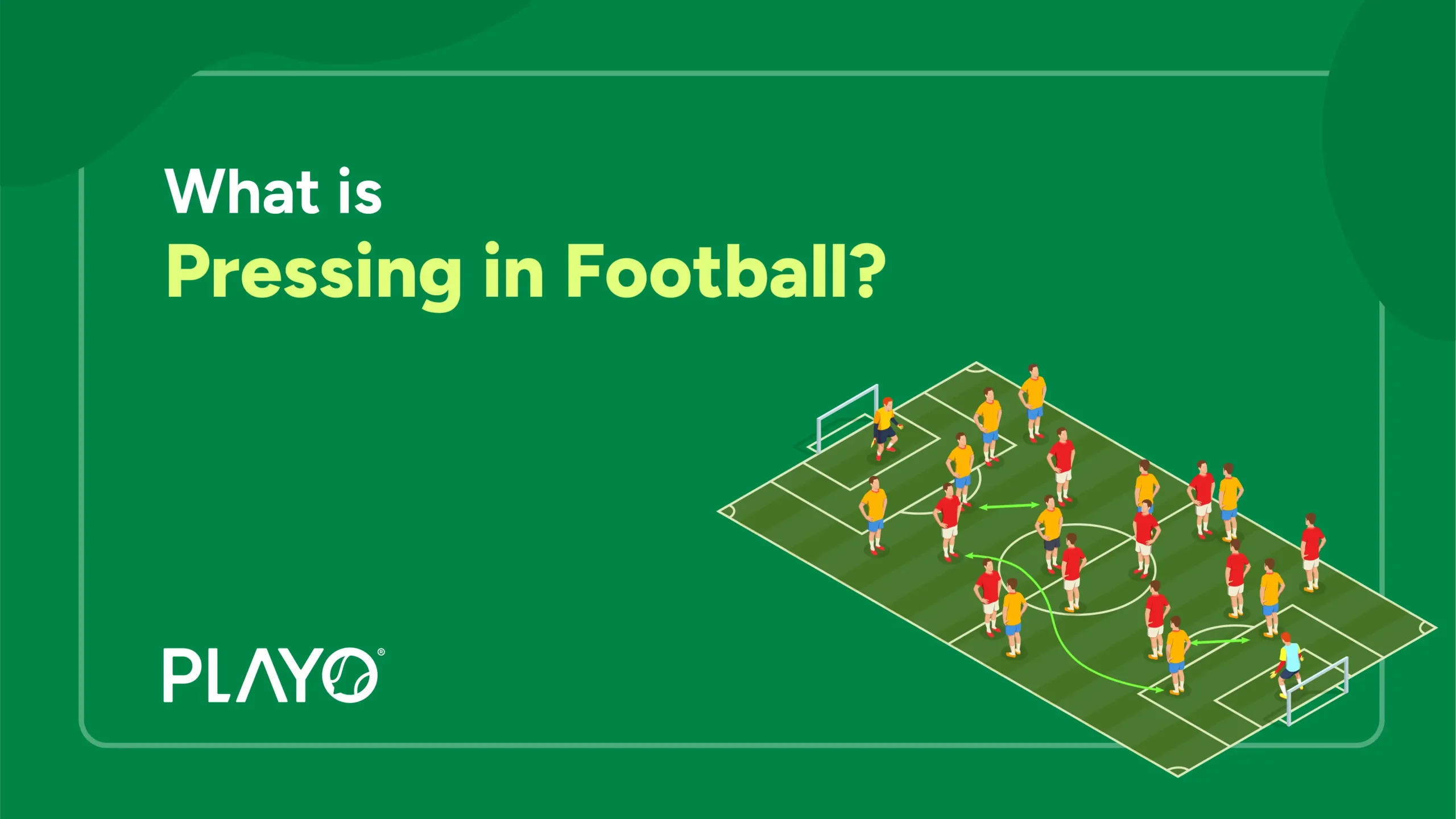
Pressing in football is a defensive tactic where players actively try to put pressure on opponents when they have possession of the ball. The aim is to reduce the opponent’s time and space, force a mistake, win the ball back, or prevent them from progressing up the pitch.
Unlike simply defending behind the ball, pressing involves actively moving towards the opponent and attempting to disrupt their build-up. Teams can press high up the pitch, in midfield, or closer to their own goal depending on their tactics.
What Does Pressing Mean in Football?
Football pressing refers to the coordinated effort of players to pressure an opponent who has the ball or is about to receive it.
The player closest to the ball usually applies immediate pressure, while teammates position themselves to block passing options and restrict the opponent’s movement. This means effective pressing is not simply about running towards the player with the ball. It requires teamwork, positioning, timing and communication.
For example, if a defender passes the ball to a full-back near the sideline, the attacking player may quickly close him down. At the same time, another teammate can block the passing lane into midfield. This can leave the full-back with very few options and potentially force a misplaced pass.
The main objectives of pressing are to:
- Win possession back quickly
- Force opponents into mistakes
- Limit passing options
- Prevent comfortable build-up play
- Push the opposition into less dangerous areas
- Create attacking opportunities closer to goal
Why is Pressing Important in Football?
Pressing has become a major part of modern football because winning the ball back in dangerous areas can immediately create scoring opportunities. When a team loses possession, it does not always have to retreat into its defensive shape. Instead, players can immediately apply pressure and attempt to recover the ball.
A successful press can turn a defensive situation into an attacking opportunity within seconds. For instance, if an attacker wins the ball near the opponent’s penalty area, there may be fewer defenders between the ball and the goal.
However, pressing also carries risks. If players move forward without maintaining their defensive structure, the opposition can play through the pressure and attack the space left behind. This is why pressing is not just about intensity. Good pressing depends on coordination and organisation.
Read More: All Football Positions and Their Roles
Types of Pressing in Football
There are several ways a team can press depending on its formation, tactics and position on the pitch.
| Type of Press | How It Works |
| High Press | Players pressure opponents high up the pitch, often near their defensive third. |
| Mid-Block Press | The team begins pressing around the middle of the pitch. |
| Low Press | Players defend deeper and apply pressure closer to their own penalty area. |
| Counter-Pressing | Players immediately try to win the ball back after losing possession. |
| Man-Oriented Press | Players closely track specific opponents during the press. |
| Zonal Press | Players protect specific areas and pressure opponents who enter those zones. |
1. High Press
A high press involves applying pressure close to the opponent’s goal. Forwards may close down defenders and the goalkeeper, while midfielders move higher to restrict passing options. The objective is often to prevent the opposition from building attacks comfortably from the back.
High pressing can be particularly dangerous when executed successfully because a team may win possession close to the opponent’s goal. The major risk is the space left behind the pressing players. If the opposition manages to bypass the first line of pressure, they may have room to attack.
2. Mid-Block Press
A mid-block involves defending and pressing around the middle third of the pitch. Rather than constantly chasing the opposition high up the field, the team maintains a compact shape and waits for the right opportunity to apply pressure.
This approach can help a team balance defensive organisation with the ability to win possession in midfield.
3. Low Press
A low press takes place closer to a team’s own goal.
The defensive and midfield lines remain deeper, giving the opposition more possession in less dangerous areas. Players then apply pressure when the ball enters specific areas or when an opponent makes a mistake.
Although sometimes associated with a more defensive approach, a low press can still be highly organised and aggressive.
4. Counter-Pressing
Counter-pressing happens immediately after a team loses possession. Instead of dropping back, nearby players quickly pressure the opponent who has just won the ball. The aim is to recover possession before the opposition can organise an attack.
Counter-pressing can also prevent dangerous counter-attacks because the opponent has little time to move the ball forward.
Famous Pressing Philosophies in Football
Gegenpressing: Jürgen Klopp
Gegenpressing, or counter-pressing, is the tactic of trying to win the ball back immediately after losing possession. A commonly discussed coaching principle is to apply intense pressure in the first five seconds after losing the ball, when the opposition may still be unorganised and vulnerable to a turnover.
Jürgen Klopp became one of the most prominent coaches associated with Gegenpressing through his teams at Borussia Dortmund and Liverpool. His sides used quick, coordinated pressure to recover possession and turn defensive moments into attacking opportunities.
Positional Pressing: Pep Guardiola
Pep Guardiola’s pressing philosophy is closely connected to positional play and possession-based football. His teams use structured positioning to keep players available around the ball, allowing them to apply immediate pressure when possession is lost. Guardiola has also been associated with the idea of completing around 15 passes to establish control and manipulate the opposition before progressing an attack.
However, the 15-pass idea is better understood as a principle of possession and positional play, not a fixed rule that guarantees a goal-scoring chance. The key to Guardiola’s pressing approach is the team’s structure, which helps players react quickly and restrict the opponent’s passing options after a turnover.
What are Pressing Triggers?
A pressing trigger is a specific situation that signals players to increase pressure on the opponent. Teams do not necessarily press at maximum intensity throughout an entire match. Instead, they may wait for situations that make winning the ball more likely.
Common pressing triggers include:
- A poor or inaccurate pass
- A backward pass
- A slow pass between defenders
- A player receiving the ball with their back to goal
- A difficult first touch
- The ball being played towards the sideline
- An opponent receiving the ball in a crowded area
- A goalkeeper playing a short pass
For example, when a defender receives a slow pass near the touchline, the nearest attacker may immediately move forward to press. Teammates then close passing lanes to make the situation more difficult.
How Does a Football Press Work?
An effective press usually involves several players rather than just the person closest to the ball.
Step 1: Identify the trigger
Players recognise a situation in which pressing could be effective, such as a poor touch or backward pass.
Step 2: Apply pressure
The nearest player moves towards the opponent with the ball while controlling the angle of approach.
Step 3: Cut passing options
Other players adjust their positions to block easy passes into midfield or towards other attackers.
Step 4: Compress the space
Teammates move closer together so the opponent has less room to escape the pressure.
Step 5: Win the ball or force a mistake
The press succeeds when the team regains possession or forces the opposition into a rushed or inaccurate pass.
What is the Difference Between Pressing and Tackling?
Pressing and tackling are related, but they are not the same thing. Pressing is the act of applying pressure to restrict an opponent’s options, while a tackle is a specific attempt to take the ball away from an opponent.
A player can press without making a tackle. For example, an attacker may run towards a defender and block his passing route, forcing him to pass backwards. The team has successfully pressed even if it does not immediately win the ball.
Therefore, the objective of pressing is not always to make a tackle. It can also be used to force the opponent into a predictable decision.
Advantages and Disadvantages of Pressing
Pressing can offer several tactical advantages:
- Helps teams regain possession
- Creates chances from turnovers
- Disrupts the opponent’s build-up
- Reduces the time available for decision-making
- Can keep the opposition away from dangerous attacking areas
However, pressing also has disadvantages:
- It requires significant physical effort
- Poor coordination can create gaps
- A team can be vulnerable to counter-attacks
- Players may become tired if they press continuously
- Opponents can exploit space behind the defensive line
The effectiveness of pressing therefore depends on when and how it is used.
How Teams Beat a Press
A well-organised pressing team can make it difficult to play out from the back, but pressing can also be exploited. Teams may attempt to beat a press by:
- Playing quick passes
- Switching the ball to the opposite side
- Using long passes over the pressing line
- Creating passing triangles
- Moving players into the spaces behind the press
- Using a goalkeeper or defender to create an extra passing option
Once the first pressing line is bypassed, the team that was pressing may have to retreat quickly to avoid being exposed.
Conclusion
So, what is pressing in football? In simple terms, it is a coordinated defensive tactic used to put pressure on opponents, restrict their options and regain possession.
From high pressing and mid-blocks to low pressing and counter-pressing, teams can use different approaches depending on their tactical style. Successful pressing requires more than speed or physical effort. Players need to understand when to press, where to press and how their teammates should support the pressure.
When executed correctly, pressing can disrupt an opponent’s entire build-up and turn defensive pressure into attacking opportunities. That is why it has become one of the most important tactical concepts in modern football.
Download Playo on Android or iOS, or visit playo.co to start playing!
Frequently Asked Questions
Pressing in football is a defensive tactic where players put pressure on opponents in possession to win the ball back, restrict passing options, or force mistakes.
The main types include high pressing, mid-block pressing, low pressing, counter-pressing, man-oriented pressing, and zonal pressing.
A high press involves putting pressure on the opposition high up the pitch, often near their defensive third, to prevent comfortable build-up play and create chances from turnovers.
Counter-pressing is the attempt to win the ball back immediately after losing possession, before the opposition can organise an attack.
There is no official “best” pressing striker, but Erling Haaland, Robert Lewandowski, and Darwin Núñez are known for their pressing ability and work rate.
Pep Guardiola’s teams use positional play and immediate counter-pressing to win the ball back quickly, restrict passing options, and prevent opponents from building attacks.