

Football is often described as a beautiful game, but beneath the surface of dazzling skills and roaring crowds lies a complex game of physical chess. To the untrained eye, 22 players might seem to be chasing a ball in a chaotic swarm. However, to a tactical enthusiast, every pass, run, and defensive shift is dictated by one crucial element: football formations.
Whether you are an aspiring coach, a fantasy football manager, or a fan looking to deepen your understanding of the beautiful game, understanding soccer tactics is essential. In this complete guide to football formations, we will break down the numbering system, explore the most popular tactical setups used on the pitch today, and explain how modern managers use fluid systems to outsmart the opposition.
What is a Football Formation?
A football formation is a tactical blueprint that dictates how a team is positioned on the pitch. It outlines the distribution of players across the defensive, midfield, and attacking lines.
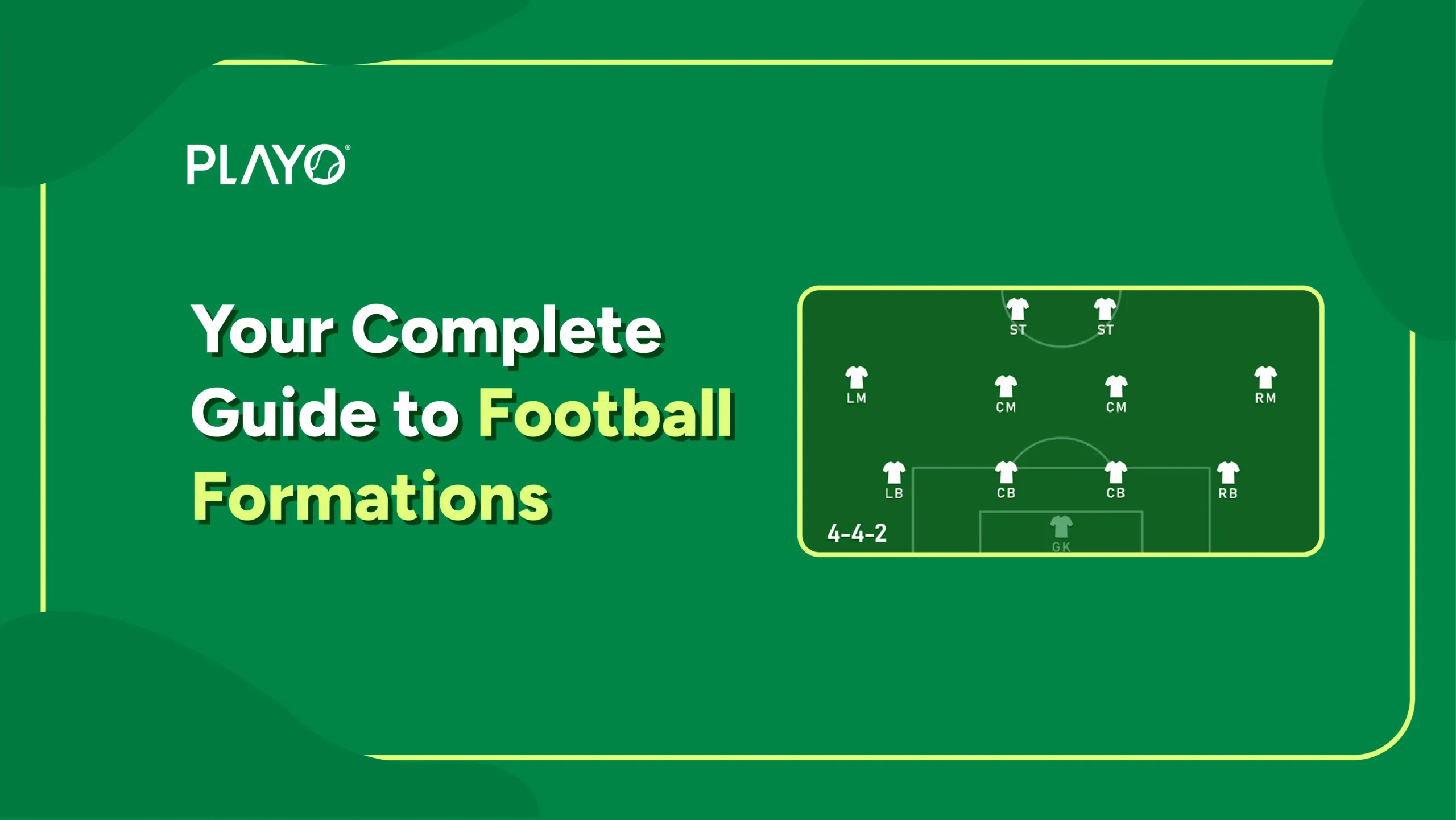
Formations are typically represented by a series of numbers (e.g., 4-3-3 or 4-4-2). Note that the goalkeeper is never included in this numbering system. The numbers are read from back to front, representing the number of defenders, midfielders, and forwards. For example, in a 4-3-3 formation, there are 4 defenders, 3 midfielders, and 3 forwards.
While formations provide a starting shape, modern football is highly dynamic. A team’s defensive shape when out of possession often looks vastly different from their attacking shape when in possession.
The Most Popular Football Formations
Over the decades, football tactics have evolved from the archaic 2-3-5 Pyramid system to the highly structured, positionally fluid setups of the modern era. Here are the most prominent football formations you need to know.
1. The 4-4-2 Formation: The Classic Balanced Setup
For decades, the 4-4-2 was the undisputed king of English and global football. It relies on two flat banks of four players, providing excellent defensive solidity and width across the pitch.
- The Structure: 4 Defenders, 4 Midfielders (usually two central, two wide), 2 Strikers.
- The Pros: It is incredibly balanced and easy to coach. The two banks of four make it difficult for opponents to play through the centre, while the wide midfielders provide natural width. The strike partnership allows for a classic target-man and pacey-poacher dynamic.
- The Cons: The two central midfielders can easily be overrun by modern three-man midfields. It requires immense work rate from the wide midfielders to track back and support the full-backs.
2. The 4-3-3 Formation: The Attacking Powerhouse
If the 4-4-2 is about balance, the 4-3-3 is about dominance, width, and high pressing. Popularised by the Total Football of the 1970s and later perfected by Pep Guardiola and Jurgen Klopp, this is the premier attacking football formation in the modern game.
- The Structure: 4 Defenders, 3 Midfielders (usually a single holding midfielder with two advanced number 8s), 3 Forwards (two wingers and a central striker).
- The Pros: It creates natural triangles all over the pitch, making ball retention and passing sequences highly effective. The wingers stretch the opposition defence, while the high press allows teams to win the ball back quickly in dangerous areas.
- The Cons: It leaves the full-backs exposed to counter-attacks if the wingers do not track back. The single holding midfielder, known as the pivot, must be world-class, as they are responsible for shielding the defence alone.
3. The 4-2-3-1 Formation: The Modern Standard
The 4-2-3-1 is arguably the most versatile and widely used formation in contemporary football, from the Champions League to international tournaments. It offers the attacking threat of a 4-3-3 but with much greater defensive security.
- The Structure: 4 Defenders, 2 Defensive Midfielders (the double pivot), 3 Attacking Midfielders (two wingers and a central number 10), 1 Striker.
- The Pros: The double pivot provides a secure shield in front of the back four, allowing the full-backs to overlap. The number 10 operates in the half-spaces, linking midfield and attack, and creating chances for the lone striker.
- The Cons: The lone striker can become isolated if the team is pinned back. The system relies heavily on the creative output of the number 10 and the wingers.
4. The 3-5-2 Formation: Wing-Backs and Defensive Solidity
Often misunderstood as a purely defensive setup, the 3-5-2 (which easily morphs into a 5-3-2 when defending) is a brilliant system for controlling the midfield and launching lethal counter-attacks.
- The Structure: 3 Centre-Backs, 5 Midfielders (two wide wing-backs, three central midfielders), 2 Strikers.
- The Pros: By utilising three centre-backs, a team can maintain numerical superiority at the back against opposing strike pairs. The wing-backs provide immense width, effectively acting as wingers in attack and full-backs in defence.
- The Cons: It demands incredibly high stamina from the wing-backs, who must cover the entire flank on their own. If the wing-backs are caught out of position, the three centre-backs can be dragged out wide, leaving gaps in the penalty area.
5. The 3-4-3 Formation: All-Out Attack
If a team needs to chase a game, score goals, and completely overwhelm the opposition, the 3-4-3 is the go-to attacking football formation. It sacrifices defensive cover to pack the forward line and dominate the opponent’s half.
- The Structure: 3 Centre-Backs, 4 Midfielders (usually two central midfielders and two attacking wing-backs), 3 Forwards.
- The Pros: It creates a massive attacking threat. With three forwards and two wing-backs pushing high, you have five players attacking the opposition’s back line. It also allows the three centre-backs to spread wide and start attacks from the back.
- The Cons: It is incredibly risky. If the wing-backs get tired and forget to track back, the three defenders are left completely exposed on the counter-attack.
6. The 4-4-2 Diamond (4-1-2-1-2): The Midfield Maestros
Also known as the 4-3-1-2, this formation takes the classic 4-4-2 and narrows it down. Instead of having wide midfielders hugging the touchlines, the midfielders form a diamond shape on the pitch.
- The Structure: 4 Defenders, 1 Defensive Midfielder (at the bottom of the diamond), 2 Central Midfielders (on the sides), 1 Attacking Midfielder (at the tip of the diamond), 2 Strikers.
- The Pros: It is brilliant for teams that love to keep the ball. By packing the centre of the pitch, you easily outnumber the opponent in midfield. The attacking midfielder, playing as the number 10, has the freedom to create chances for the two strikers.
- The Cons: The biggest weakness is a lack of natural width. Because there are no traditional wingers, the full-backs have to do all the running up and down the sides of the pitch, which can be exhausting.
7. The 5-3-2 and 5-4-1: The Defensive Fortresses
When people talk about parking the bus or playing ultra-defensive football, they are usually talking about a back five. These formations are perfect for underdog teams facing a much stronger opponent, or for protecting a narrow lead at the end of a match.
- The Structure: 5 Defenders (3 Centre-Backs and 2 Wing-Backs), 3 or 4 Midfielders, and 1 or 2 Strikers.
- The Pros: It is incredibly difficult for the opponent to score. The three centre-backs cover the middle, while the wing-backs block the wide areas. It creates a massive wall in front of the goalkeeper, leaving almost no gaps for the other team to shoot through.
- The Cons: It invites a lot of pressure. Your team will likely have very little possession of the ball, and the one or two strikers up front can become completely isolated and tired from chasing the ball.
8. The 3-4-2-1: The Modern Tactical Hybrid
This is one of the most trendy and successful formations in modern soccer tactics. It looks like a 3-4-3 on paper, but instead of having a traditional front three, it drops two players slightly deeper to act as double number 10s.
- The Structure: 3 Centre-Backs, 4 Midfielders (2 Wing-Backs, 2 Central Midfielders), 2 Attacking Midfielders (playing just behind the striker), 1 Striker.
- The Pros: It offers the perfect balance of modern football. The three centre-backs and two central midfielders make it very hard to play through the middle. Meanwhile, the two attacking midfielders can rotate, swap positions, and create confusion for the opposing defenders.
- The Cons: It requires very specific types of players. The wing-backs need endless stamina, and the striker must be excellent at holding up the ball and linking play, as they are often the most isolated player on the pitch.
How to Choose the Right Formation for Your Team
If you are a coach or a manager in a video game like EA Sports FC, choosing the right tactical setup is crucial. There is no single best football formation. The right choice depends on three main factors:
- Player Profiles: You must play to the strengths of your squad. If you have two prolific, physical strikers, a 4-4-2 or 3-5-2 is ideal. If you have a creative playmaker but lack a secondary striker, a 4-2-3-1 or 4-3-3 will maximise their impact.
- The Opponent’s Weaknesses: Tactics are about exploitation. If the opposition plays with a high defensive line and slow centre-backs, a formation with pacey wingers (like a 4-3-3) will exploit the space behind them.
- Game State: Formations are fluid. A manager might start with an aggressive 4-3-3 to chase a goal, but shift to a 4-5-1 or 5-4-1 to protect a one-goal lead in the final fifteen minutes.
Conclusion
Understanding football formations transforms how you watch the sport. Instead of just seeing a goal or a tackle, you begin to see the tactical traps, the overloads, and the strategic masterclasses unfolding on the pitch. From the traditional rigidity of the 4-4-2 to the fluid, positionally rotated systems of the modern 4-3-3, formations are the language of football tactics.
Whether you are analysing the weekend’s Premier League fixtures or coaching your local Sunday league team, remembering that formations are merely a starting point, and that player movement and adaptability are the true keys to success, will give you a distinct tactical edge.
Download Playo on Android or iOS, or visit playo.co to start playing!
Frequently Asked Questions
There is no universally best formation. The 4-2-3-1 and 4-3-3 are currently the most popular in elite football due to their balance of attacking width and defensive stability, but the best formation always depends on the specific players available in your squad.
The 5-4-1 or 4-5-1 are considered the most defensive formations. They pack the midfield and defensive third with players, making it incredibly difficult for the opposition to find space, and are typically used by underdog teams to secure a draw or protect a lead.
The double pivot refers to the two central defensive midfielders in formations like the 4-2-3-1 or 4-4-2 diamond. They sit side-by-side in front of the centre-backs, responsible for breaking up opposition attacks and distributing the ball to the creative players.
Football is dynamic. Managers substitute players and alter shapes to adapt to the game state. A team trailing by a goal will push their full-backs higher and commit more players forward, shifting from a 4-4-2 to a 3-4-3 or 4-2-4 to maximise attacking pressure.