

Football is one of the most physically demanding sports in the world. While fans often focus on goals, assists, and tackles, one statistic that highlights a player’s work rate is the distance covered during a match.
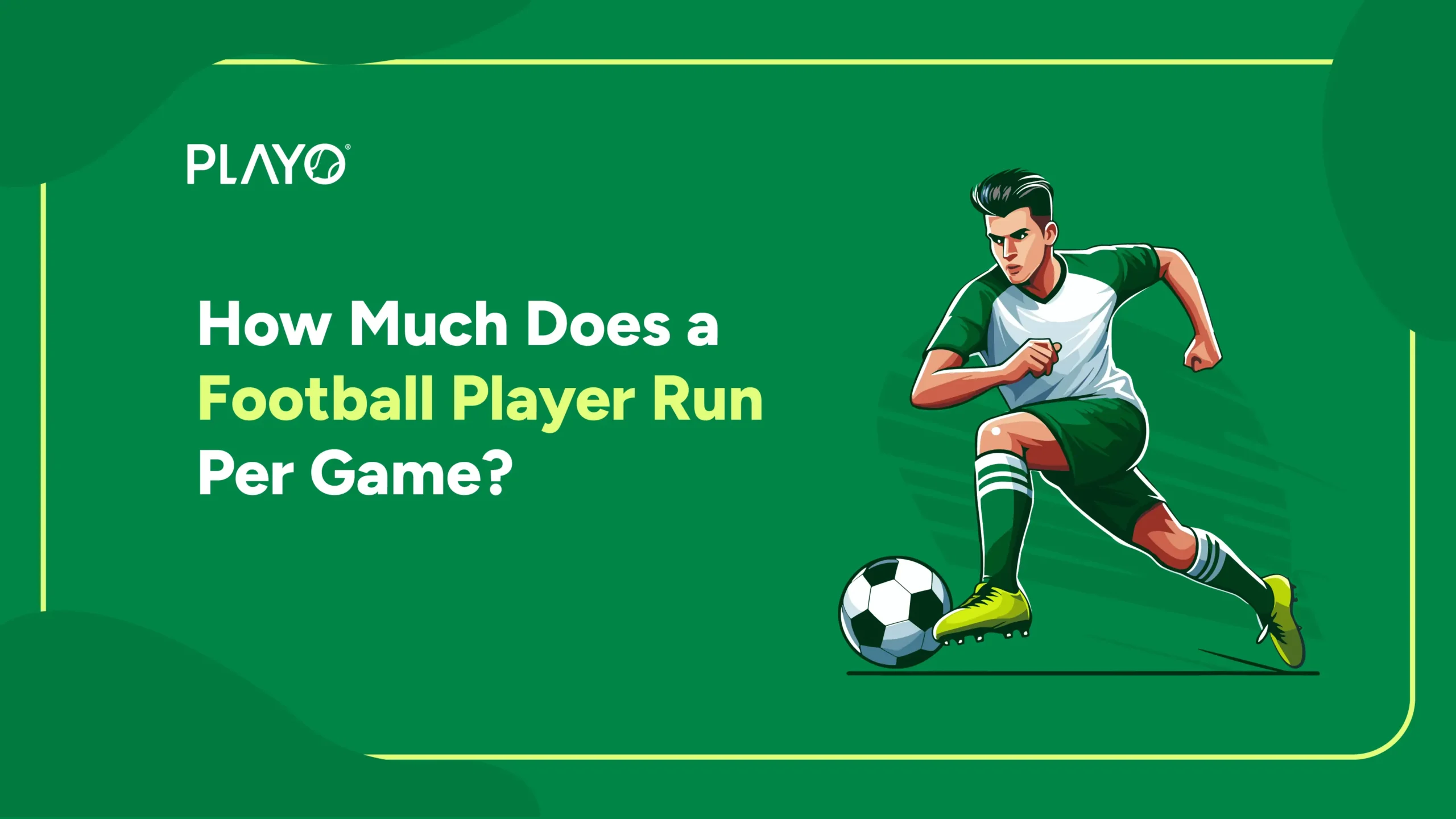
So, how much does a football player run per game? On average, an outfield football player covers between 9 and 13 kilometres (5.6–8 miles) during a standard 90-minute match, although the exact distance depends on their position, playing style, tactics, and match intensity. Goalkeepers cover much less, usually between 4 and 6 kilometres.
In this guide, we’ll break down the average running distance by position, explore why some players run more than others, and explain the physical demands of modern football.
Average Distance a Football Player Runs Per Game
Elite football players constantly move throughout a match, alternating between walking, jogging, running, sprinting, and changing direction. Modern tracking systems such as optical cameras and GPS technology allow clubs and governing bodies to measure every metre covered.
The total distance includes every type of movement, from walking and jogging to high-speed running and sprinting. Even when players appear to be standing still, they are often repositioning themselves to maintain their team’s tactical shape and prepare for the next phase of play.
Here’s a general overview of the average distance covered in a 90-minute professional football match.
| Player Position | Average Distance Per Match |
| Goalkeeper | 4–6 km |
| Centre Back | 9–10 km |
| Full Back | 10–12 km |
| Central Midfielder | 11–13 km |
| Wide Midfielder/Winger | 10–12 km |
| Forward/Striker | 9–11 km |
These values represent averages from elite men’s football and can vary depending on competition level and tactical systems.
Although these figures are widely accepted across professional football, the actual distance covered varies from one match to another. Factors such as a team’s playing style, formation, pressing intensity, opposition quality, weather conditions, and match situation all influence how much ground a player covers during a game.
Read More: Football Formations
Which Football Position Runs the Most?
Central Midfielders
Central midfielders usually cover the greatest distance in a match because they are involved in almost every phase of play. They help build attacks, support the defence, recover possession, press opponents, and distribute the ball across the pitch. Since they operate in both halves throughout the game, they consistently register the highest total distance. Studies analysing FIFA World Cup and UEFA competitions show that defensive and central midfielders cover 8–19% more total distance than many other positions.
Full Backs
Modern full backs have evolved into complete two-way players who contribute significantly in both defence and attack. They frequently make overlapping runs to support wingers, deliver crosses into the box, and then sprint back to defend against counter-attacks. Although they may not always cover the highest overall distance, they perform a large number of high-speed runs and repeated sprints during a match.
Wingers
Wingers may not always lead in total distance covered, but they perform some of the highest-intensity running in football. Their role requires explosive acceleration to beat defenders, stretch the opposition’s defence, track back when possession is lost, and support quick counter-attacks. Match tracking data shows that wide players cover significantly more distance at speeds above 20 km/h than central defenders and many centre forwards.
Centre Backs
Centre backs generally run less than midfielders because they stay within a more restricted defensive area. However, their role still demands quick bursts of speed to intercept passes, recover against fast attackers, challenge for aerial balls, and organise the defensive line. Their workload focuses more on positioning and explosive movements than on covering long distances.
Strikers
Forwards typically cover between 9 and 11 km during a match, but their physical demands are centred on explosive movement rather than total distance. They constantly make runs behind defenders, press opposition centre backs, attack crosses, and create space for teammates. While they may run less overall than midfielders, their repeated high-intensity efforts are often decisive in creating goal-scoring opportunities.
How Much Do Goalkeepers Run?
Goalkeepers cover significantly less ground than outfield players. On average, professional goalkeepers run 4–6 kilometres during a match because they remain within or around the penalty area for most of the game. However, their workload involves quick reactions, diving, jumping, lateral movement, and explosive acceleration rather than continuous running.
Modern “sweeper keepers” may cover slightly more distance due to their involvement in build-up play and their tendency to move outside the penalty area when supporting the defence.
Why Does Running Distance Differ Between Players?
Several factors influence how far a football player runs during a game. While playing position is the biggest factor, tactical systems, match situations, competition level, and environmental conditions also play an important role in determining a player’s workload.
- Playing Position: Midfielders typically cover the greatest distance because they contribute to both attack and defence, while defenders and forwards usually operate within more defined tactical areas.
- Team Tactics: High-pressing teams require players to chase opponents more aggressively, increasing running distance. Possession-based teams may cover slightly less ground as they spend more time controlling the ball.
- Match Situation: The scoreline influences player movement. Teams chasing a goal often press higher and run more, whereas teams protecting a lead may defend deeper and conserve energy.
- Competition Level: Elite competitions such as the FIFA World Cup, UEFA Champions League, and top domestic leagues demand greater physical intensity, resulting in more high-intensity running and repeated sprints.
- Weather Conditions: High temperatures and humidity can reduce running distance and sprint frequency, as players manage fatigue and coaches adjust tactics to suit the conditions.
Is Football Running Different From Normal Running?
Absolutely. Running in football is far more demanding than jogging or long-distance running because players rarely move at a constant pace. Instead, they continually switch between walking, jogging, running, sprinting, accelerating, decelerating, and changing direction based on the flow of the game.
Sports scientists classify football as an intermittent high-intensity sport, meaning players perform repeated bursts of intense activity followed by short recovery periods. These constant changes in speed and direction place significant demands on the cardiovascular system, muscles, and joints, making football one of the most physically challenging team sports.
How Many Sprints Does a Football Player Make?
Distance covered tells only part of the story. Modern football also demands repeated bursts of explosive speed that often decide the outcome of matches. Depending on their position and tactical role, professional players typically perform 15 to 30 all-out sprints during a game, while also completing numerous shorter high-intensity runs that may not meet the technical definition of a sprint.
These explosive efforts usually occur when players press opponents, chase through balls, recover defensively, or make attacking runs into space. Although sprinting accounts for only a small proportion of the total distance covered, it is often the most physically demanding part of a player’s workload.
How Football Compares to Other Sports
Football is one of the world’s most physically demanding team sports. The table below compares its average running distance with other popular sports.
| Sport | Average Distance Per Game |
| Football (Soccer) | 9–13 km |
| Rugby Union | 6–8 km |
| Field Hockey | 8–10 km |
| Basketball | 4–5 km |
| American Football (Skill Positions) | 1.5–2.5 km |
While Australian Rules Football generally records even greater running distances, football remains one of the most physically demanding global team sports due to its combination of endurance, repeated sprinting, and continuous movement over 90 minutes.
How Is Running Distance Measured?
Professional football clubs use advanced tracking technology to accurately record player movement during matches and training sessions. The most common systems include optical camera tracking, GPS devices used during training, wearable performance monitors, and computer vision tracking technology.
In major competitions, leagues and governing bodies also use stadium-based optical tracking systems that monitor player movement through multiple high-speed cameras. These systems provide highly accurate performance data without requiring players to wear tracking devices during official matches.
The collected data measures far more than just total distance covered. Coaches and analysts can monitor sprint distance, high-speed running, maximum speed, the number of accelerations and decelerations, player positioning, and heat maps. This information helps clubs optimise training loads, manage player recovery, analyse tactical performance, and reduce the risk of injuries throughout the season.
Conclusion
So, how much does a football player run per game? Most professional outfield players cover between 9 and 13 kilometres during a 90-minute match, with central midfielders generally recording the highest total distance. Goalkeepers typically cover 4–6 kilometres, while wingers and full backs perform many of the game’s highest-speed runs.
Modern football is no longer just about technical skill. It combines tactical intelligence, endurance, repeated sprint ability, and efficient movement, making distance covered one of the many indicators of a player’s physical performance. While running statistics provide valuable insight into a player’s work rate, they are most meaningful when considered alongside technical ability, tactical awareness, and overall contribution to the team.
Download Playo on Android or iOS, or visit playo.co to start playing!
Frequently Asked Questions
Professional outfield players typically cover 9–13 kilometres, while goalkeepers usually run 4–6 kilometres during a full match.
Central midfielders generally cover the greatest total distance because they contribute in both attack and defence throughout the game.
Yes. Professional footballers typically perform 15 to 30 all-out sprints during a match, along with numerous high-intensity runs depending on their position and tactical role.
Professional clubs use optical tracking systems, GPS devices during training, wearable technology, and advanced performance analysis software to measure player movement, sprint distance, speed, positioning, and overall workload.