

Few football techniques are as spectacular as the Banana Kick. Whether it’s a free kick curling around a defensive wall, a perfectly weighted cross bending into the penalty area, or a long-range shot swerving beyond the goalkeeper’s reach, the Banana Kick combines precision, technique, and physics to produce some of the game’s most unforgettable moments.
Named after the ball’s distinctive banana-shaped trajectory, this technique relies on spin to make the ball curve through the air, allowing players to beat defenders and goalkeepers in ways that straight shots simply cannot. From David Beckham’s iconic free kicks to Lionel Messi’s inch-perfect curlers and Roberto Carlos’ legendary strikes, the Banana Kick has become one of football’s most admired skills.
In this guide, you’ll learn what a Banana Kick in football is, how it works, the science behind its incredible curve, when players use it, how to execute it correctly, and the common mistakes to avoid while mastering this game-changing technique.
What is a Banana Kick and Why is it Called That?
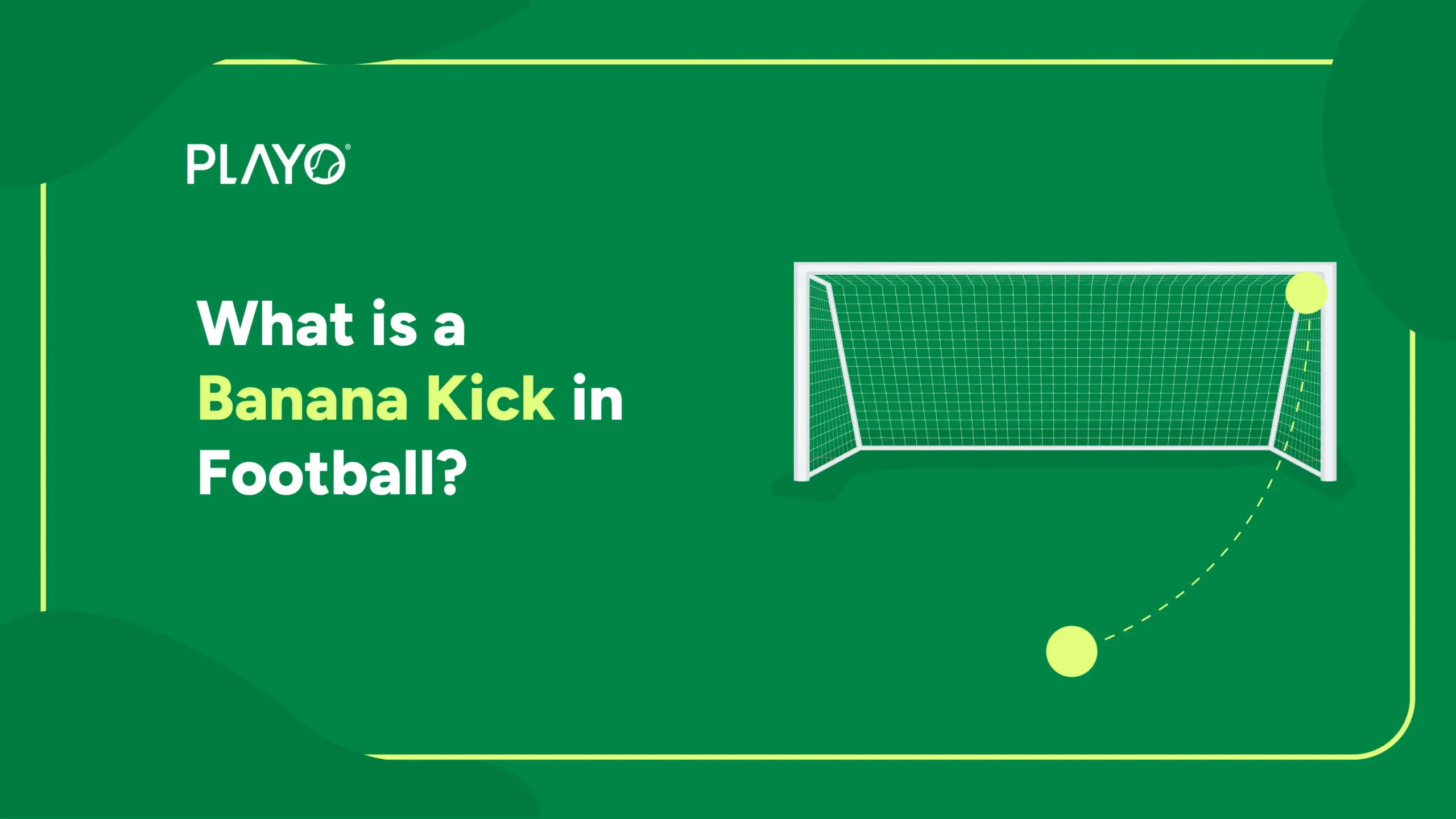
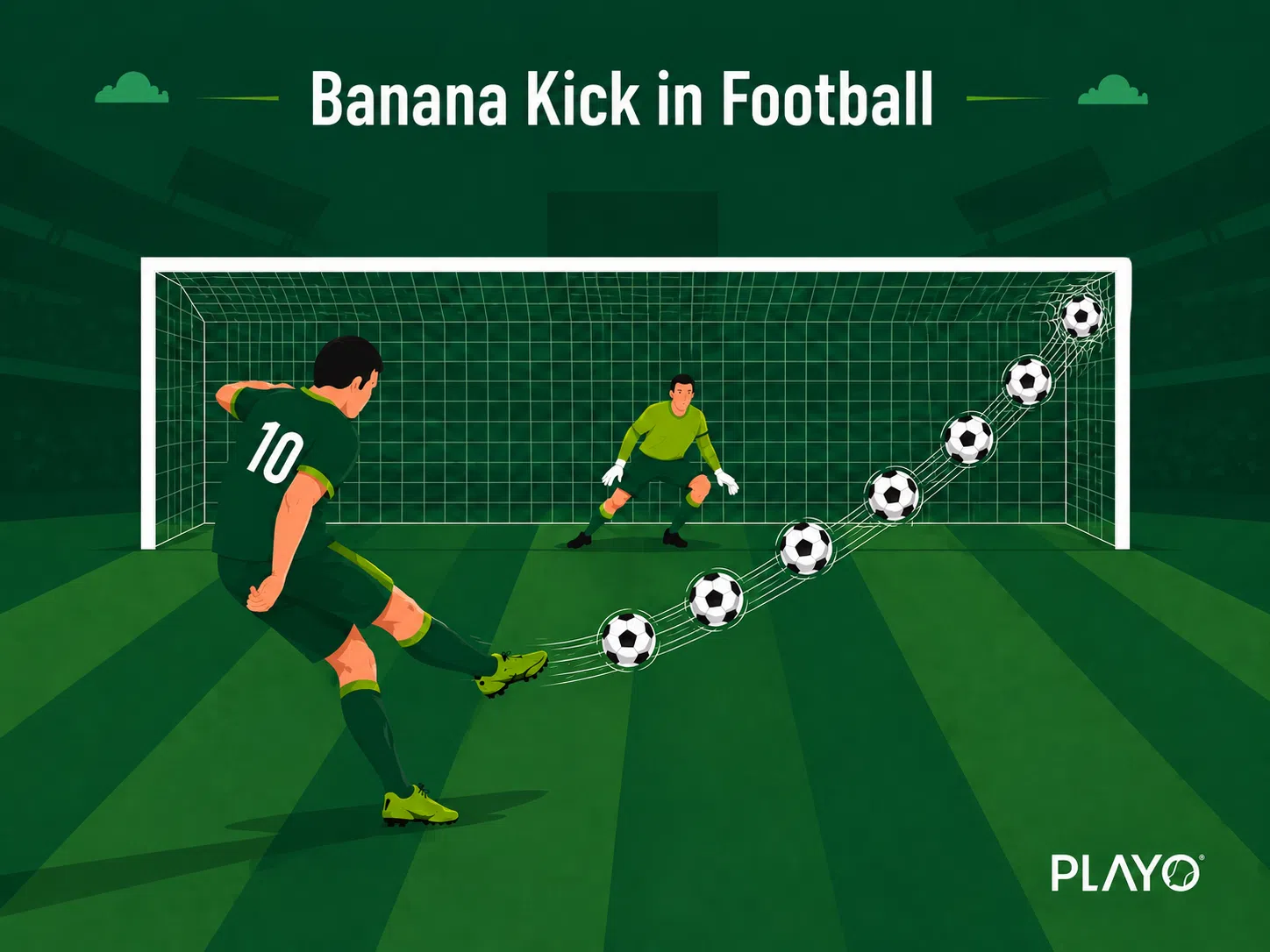
A banana kick is a technique where a player strikes the ball off-centre, imparting heavy side-spin. This spin causes the ball to curve dramatically through the air in a sweeping, banana-shaped trajectory.
Unlike a regular shot that travels in a relatively straight line, a banana kick relies on aerodynamic drag and spin to make the ball drift left or right before reaching its target. The sharper the spin, the more noticeable and aggressive the curve becomes.
The name is purely visual. When viewed from above, the flight path of the ball resembles the distinct, curved shape of a banana. This is why commentators and fans alike refer to beautifully curling goals and passes as “banana shots” or “bending the ball.”
How Does a Banana Kick Curve? The Science Behind the Magnus Effect
To the untrained eye, a perfectly executed banana kick looks like it defies the laws of physics. In reality, it is a flawless demonstration of fluid dynamics, specifically a phenomenon known as the Magnus effect.
When a football is struck off-centre, it doesn’t just move forward; it rotates rapidly along its axis. As the spinning ball travels through the air, it interacts with the air molecules around it:
- Airflow and Friction: The surface of the ball drags the surrounding air along with it due to friction.
- Pressure Differences: On one side of the ball, the spin moves in the same direction as the oncoming airflow, accelerating the air and creating a zone of low pressure. On the opposite side, the surface spins against the airflow, decelerating it and creating a zone of high pressure.
- The Curve: Nature seeks to balance pressure. The high-pressure air pushes the ball toward the low-pressure area, causing it to swerve violently.
Factors that affect the curve include:
- The amount of spin applied
- The initial speed of the ball
- The exact contact point on the ball
- The distance the ball travels
- Weather conditions (wind, humidity, and air density)
Read More: 5 Different types of kicks in Football
When is the Banana Kick Used in a Match?
The banana kick is not just a showboating trick; it is a vital tactical weapon. It is commonly utilised in several key scenarios:
- Direct Free-Kicks: Bending the ball around or over a defensive wall while keeping it inside the goal frame.
- Crosses from Wide Areas: Wingers curling the ball into the penalty area. The spin allows the ball to move away from defenders while dipping toward attacking teammates.
- Corner Kicks: Inswinging corners use the banana kick technique to create dangerous scoring opportunities, making the ball dip toward the goal and away from the goalkeeper.
- Long-Range Shots: Curving the ball away from the goalkeeper’s reach makes saves much more difficult, often targeting the far top corner.
- Through Balls and Passes: Creative midfielders use curved passes to bypass defenders, wrapping the ball around an opponent to create goal-scoring chances.
How to Perform a Banana Kick: Step-by-Step Guide
Learning to bend a football takes practice, but mastering the biomechanics will fast-track your progress. Here is the step-by-step technique for the classic inside-foot curl.
1. The Approach Angle
Instead of running straight at the ball, approach it diagonally at a 30 to 45-degree angle. This opens your hips and gives your kicking leg the room to swing across the body of the ball.
2. Plant Foot Placement
Place your non-kicking (plant) foot about 6 to 12 inches to the side of the ball, pointing toward your initial target. If your plant foot is too far behind the ball, the shot will go over the bar; too far ahead, and you won’t generate lift.
3. Strike the Side of the Ball
This is the most crucial step. To generate the Magnus effect, you must strike the ball off-centre.
- Right-footed players: Strike the lower-right section of the ball to curl it to the left.
- Left-footed players: Strike the lower-left section to curl it to the right.
- Foot Contact: Use the inside of your foot (where the laces meet the instep). This provides a large, flat surface area to maximise friction and spin. Keep your ankle locked and toe pointed slightly upward.
4. Follow Through Naturally
Allow your kicking leg to continue its motion, wrapping across your body. Your hips should rotate, and your kicking foot should eventually land near your plant foot. A smooth follow-through maintains spin and accuracy; stopping your leg immediately after impact will kill the curve.
5. The “Trivela”
While the inside-foot curl is the standard, modern football has seen a rise in the outside-foot banana kick (the Trivela), popularised by Ricardo Quaresma and used by players like Mohamed Salah. By striking the lower-inner part of the ball with the outside of the boot, you can create a vicious, late-dipping curve that is incredibly difficult for goalkeepers to read.
Banana Kick vs. Knuckleball vs. Panenka
Fans often confuse different types of specialised football strikes. Here is how the banana kick compares to other famous techniques:
| Feature | Banana Kick | Knuckleball | Panenka |
| Spin | High side-spin | Very little to zero spin | Backspin / minimal spin |
| Flight Path | Smooth, dramatic curve | Unpredictable, erratic dipping | High, soft lob |
| Primary Use | Free kicks, crosses, shots | Long-range direct free kicks | Penalty kicks only |
| Key Mechanic | Magnus effect (aerodynamics) | Seam position & air resistance | Deception & psychological mind games |
| Difficulty | Moderate to High | Very difficult | High (requires immense nerve) |
Famous Football Players Who Mastered the Banana Kick
No discussion about bending a football is complete without honouring the maestros who turned it into an art form.
- Lionel Messi: Widely regarded as one of the greatest free-kick specialists in modern football. His left-footed banana kicks consistently curl over defensive walls before dipping into the top corner with surgical precision.
- David Beckham: Beckham built an entire career around exceptional crossing and free-kick ability. His technique, consistency, and accuracy made him the global ambassador for “bending it.”
- Roberto Carlos: Famous for his physics-defying 1997 free-kick against France. Striking the ball with the outside of his left boot, Carlos imparted such massive spin that the ball initially looked like it was heading into the corner flag before violently yanking back into the net.
- Juninho Pernambucano: The Brazilian legend scored over 70 career goals from direct free-kicks. He didn’t just have one type of banana kick; he had an entire arsenal of dips, swerves, and curves.
- Cristiano Ronaldo & Neymar Jr.: Ronaldo utilised beautifully curling banana kicks heavily during his early Manchester United years (before transitioning to the knuckleball), while Neymar frequently uses the technique for creative passes, curling finishes, and whipped crosses.
Common Mistakes and Tips for Beginners
Adding the banana kick to your game improves your free-kick accuracy, crossing, and passing creativity. However, beginners often fall into a few common traps:
Common Mistakes:
- Striking the Centre: Hitting the middle of the ball produces power but zero curve.
- Leaning Too Far Back: This alters your centre of gravity and sends the ball high over the crossbar.
- Using Too Much Power: Beginners focus on smashing the ball. Generating clean spin is far more important than sheer power.
- No Follow-Through: Stopping your leg immediately after contact reduces the spin.
Tips to Improve:
- Start Short: Practice from 10-15 yards out. Focus purely on clean contact and spin before adding distance.
- Aim for Targets: Place cones in the top corners of the goal to give your curve a specific destination.
- Practice Both Feet: While you will have a dominant foot, being able to curl the ball with your weaker foot makes you highly unpredictable.
- Watch the Pros: Study slow-motion videos of professional free-kick takers to observe their plant foot placement and follow-through.
Why the Banana Kick is a Tactical Weapon in Modern Football
As we look at the tactical evolution of football in the 2020s, the banana kick remains as crucial as ever. Modern defences are highly organised, often employing compact “low blocks” that leave no gaps in the centre of the pitch.
The banana kick allows attacking teams to bypass these congested areas. By utilising wide players who can deliver whipped, curved crosses, teams can pull defenders out of position. Furthermore, in an era where goalkeepers are highly adept at reacting to straight, power-driven shots, the lateral movement of a banana kick forces the keeper to move laterally across the goal, drastically reducing their reaction time and increasing the probability of a goal.
Conclusion
The banana kick in football is a beautiful intersection of athletic prowess and scientific precision. It requires an intuitive understanding of the Magnus effect, combined with thousands of hours of repetitive practice to perfect the biomechanics of the strike.
From Roberto Carlos’ physics-defying rockets to Lionel Messi’s surgical precision and David Beckham’s cultural impact, the ability to bend a football remains one of the most mesmerising skills in the sport. Whether you’re a beginner learning the basics of the inside-foot curl or an experienced player looking to add the Trivela to your arsenal, mastering the banana kick will undoubtedly make you a more creative, dangerous, and effective footballer on the pitch.
Download Playo on Android or iOS, or visit playo.co to start playing!
Frequently Asked Questions
A Banana Kick is a football technique where a player strikes the ball with side spin, causing it to curve through the air. It’s commonly used for free kicks, crosses, and curling shots.
It is called a Banana Kick because the ball follows a curved, banana-shaped trajectory as it travels through the air due to the spin applied by the player.
The Magnus Effect is the scientific principle that causes a spinning football to curve. Differences in air pressure around the spinning ball make it bend left or right during flight.
Players such as Lionel Messi, David Beckham, Roberto Carlos, Juninho Pernambucano, Cristiano Ronaldo, and Neymar are renowned for their ability to execute spectacular Banana Kicks.
A banana kick relies on heavy side-spin to create a smooth, curved trajectory via the Magnus effect. A knuckleball is struck with almost zero spin. The lack of spin causes the seams of the ball to catch the air unpredictably, resulting in an erratic, dipping flight path rather than a smooth curve.