


Pickleball is one of the fastest-growing sports in the world, known for being easy to learn, engaging to play, and suitable for all age groups. However, before stepping onto the court, having the right gear is essential. Pickleball equipment plays a key role in how you learn, perform, and progress in the game. From paddle weight and grip size to ball type and court shoes, every element directly influences your control, power, comfort, and even injury prevention.
Choosing the right equipment is not about trends, but about what suits your playing style, skill level, and playing surface. The right setup can improve your control, comfort, and overall experience on the court. In this pickleball equipment guide, we cover all the essentials, optional gear, and practical buying tips to help you make smart, budget-friendly decisions.
What Equipment Do You Need to Play Pickleball?
At a basic level, pickleball is simple and accessible. You only need:
- A pickleball paddle
- Pickleball balls
- A net and a court
- Proper court shoes
However, as you start playing more regularly, investing in better gear can significantly enhance your performance, reduce injuries, and make the game more enjoyable.
1. Pickleball Paddle
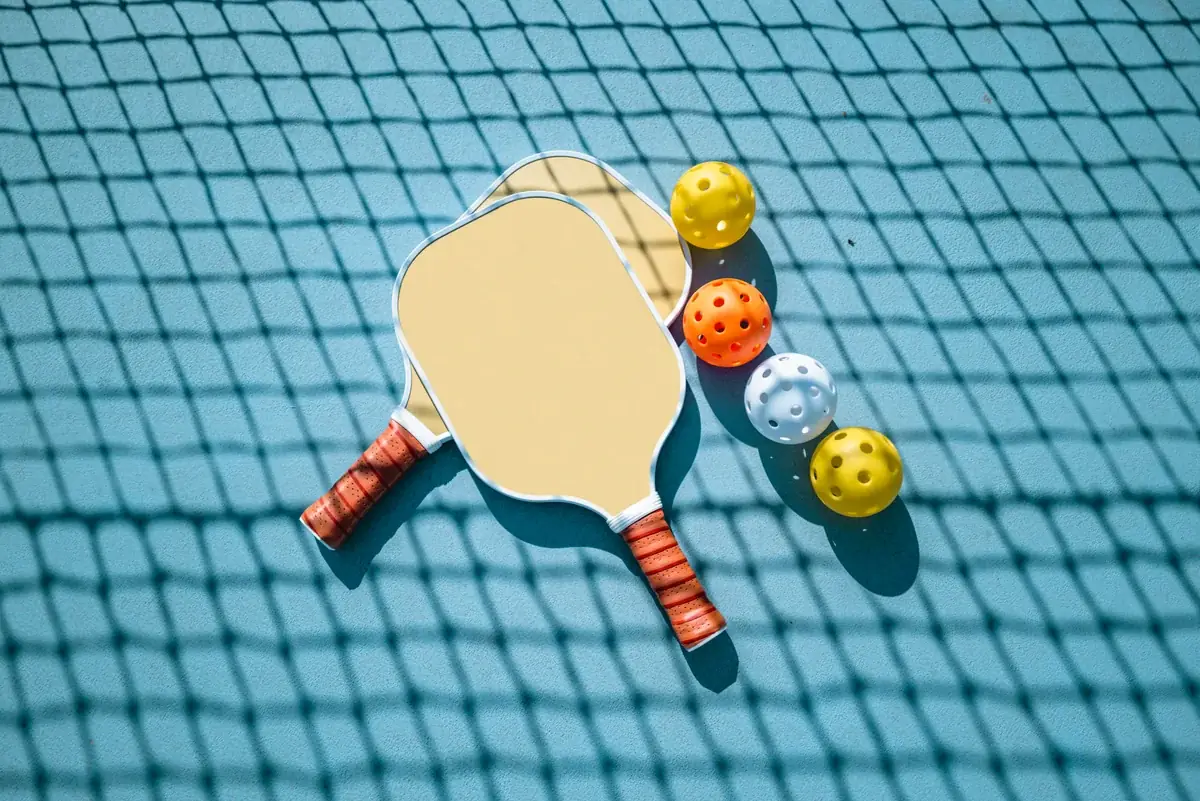
Your paddle is the most critical piece of pickleball equipment you’ll own. It’s an extension of your arm and directly impacts your performance on the court. With countless options available, selecting the right paddle can feel overwhelming, but understanding the key factors will help you find your perfect match.
Weight Matters
Paddles typically weigh between 7-9 ounces /198–255 grams, and the right weight depends on your playing style and physical strength:
- Lightweight paddles (7–7.5 oz | ~198–213 grams): Ideal for beginners and players who prioritise control and quick reactions at the net. These paddles reduce arm fatigue during long playing sessions.
- Midweight paddles (7.5–8.5 oz | ~213–241 grams): Perfect for intermediate players seeking a balance between power and control. This is the sweet spot for most recreational players.
- Heavyweight paddles (8.5+ oz | 241+ grams): Best for advanced players who want maximum power behind their shots. However, they require more strength and can lead to quicker fatigue.
Grip Size and Comfort
A proper grip size prevents injuries and enhances control. Most paddles feature grip circumferences between 4 and 4.5 inches. To find your ideal size, measure from the middle crease of your palm to the tip of your ring finger. A grip that’s too small forces you to squeeze tighter, leading to hand fatigue and potential tennis elbow, while an oversized grip reduces wrist action and manoeuvrability.
Material Considerations
The best pickleball equipment includes paddles made from various materials, each offering distinct advantages:
- Graphite: Lightweight and responsive, graphite paddles provide excellent touch and control, making them popular among advanced players.
- Composite: These paddles combine materials like fibreglass and polymer cores, offering a balanced mix of power and control at various price points.
- Wood: Traditional and budget-friendly, wood paddles are durable and great for beginners or recreational play, though they’re heavier than modern alternatives.
- Carbon Fibre: Premium paddles featuring carbon fibre construction deliver exceptional power, spin potential, and durability for serious competitors.
2. Pickleball Balls
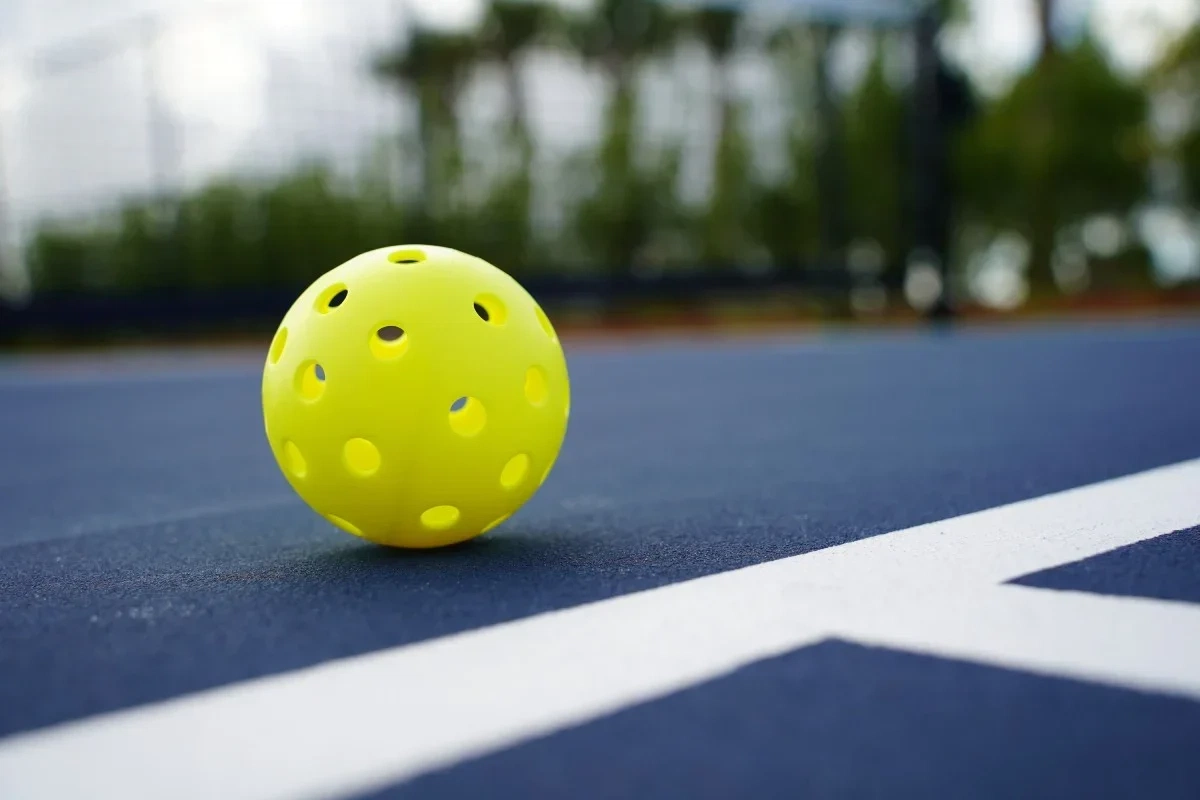
Not all pickleball balls are created equal. The equipment needed for pickleball includes different balls depending on where you play. Pickleballs are designed with precision, and choosing the right type can influence your game significantly.
Indoor Balls
Indoor pickleball balls are designed for gym floors and smooth surfaces. They feature:
- Fewer, larger holes (typically 26 holes)
- Softer plastic construction
- Slower speed and lower bounce
- Quieter play, perfect for indoor facilities
Outdoor Balls
Outdoor balls are built to withstand wind and rougher court surfaces:
- More, smaller holes (usually 40 holes)
- Harder, more durable plastic
- Higher, more aggressive bounce
- Better stability in windy conditions
3. Pickleball Net and Court Setup
No discussion of pickleball equipment would be complete without covering the foundation of the game: the net and court. Whether you’re playing at a public facility or setting up your own practice space, understanding court specifications and net requirements is essential.
Pickleball Court Dimensions
A standard pickleball court measures 20 feet wide by 44 feet long for both singles and doubles play, identical to a badminton doubles court. The court includes:
- Non-Volley Zone (Kitchen): A 7-foot area on both sides of the net where volleys are prohibited
- Service Courts: Two rectangular areas on each side, divided by the centerline
- Baselines and Sidelines: Boundary lines that define the court perimeter
- Net Height: 36 inches at the sidelines and 34 inches at the centre
These dimensions are smaller than a tennis court, making pickleball more accessible and allowing multiple pickleball courts to fit on one tennis court.
Court Surface Considerations
The surface you play on significantly impacts your game and equipment choices:
Outdoor Courts
Outdoor courts are usually made of asphalt or concrete and require durable outdoor balls with smaller holes to handle wind and rough surfaces. Since these courts are exposed to the weather, using UV-resistant nets and weather-proof equipment is important. Wind can also affect ball movement, making gameplay slightly unpredictable.
Indoor Courts
Indoor courts are typically wooden or synthetic surfaces that support slower, more controlled play. They require indoor balls with larger holes and non-marking shoes to protect the surface. Unlike outdoor courts, indoor environments offer consistent playing conditions without any weather interference.
Choosing the Right Net
The net is a critical piece of equipment needed for pickleball, and quality matters for consistent play.
Net Specifications:
- Width: 22 feet (extending 1 foot beyond each sideline)
- Height: 36 inches at the posts, 34 inches at the centre
- Mesh Size: Small enough to prevent the ball from passing through
- Top Band: 2-inch white band along the top edge for visibility
Portable vs. Permanent Nets
Portable Nets
Portable nets are ideal for flexible setups in driveways, parks, or community spaces. They suit beginners, casual players, and those who travel. Look for durable metal frames, quick assembly, and stability features like weighted bases. A carrying case and USAPA approval add extra value.
Permanent Nets
Permanent nets are designed for fixed courts in homes, clubs, or community centres. They offer better stability, durability, and consistent play. However, they require installation and are best suited for long-term use.
4. Pickleball Shoes
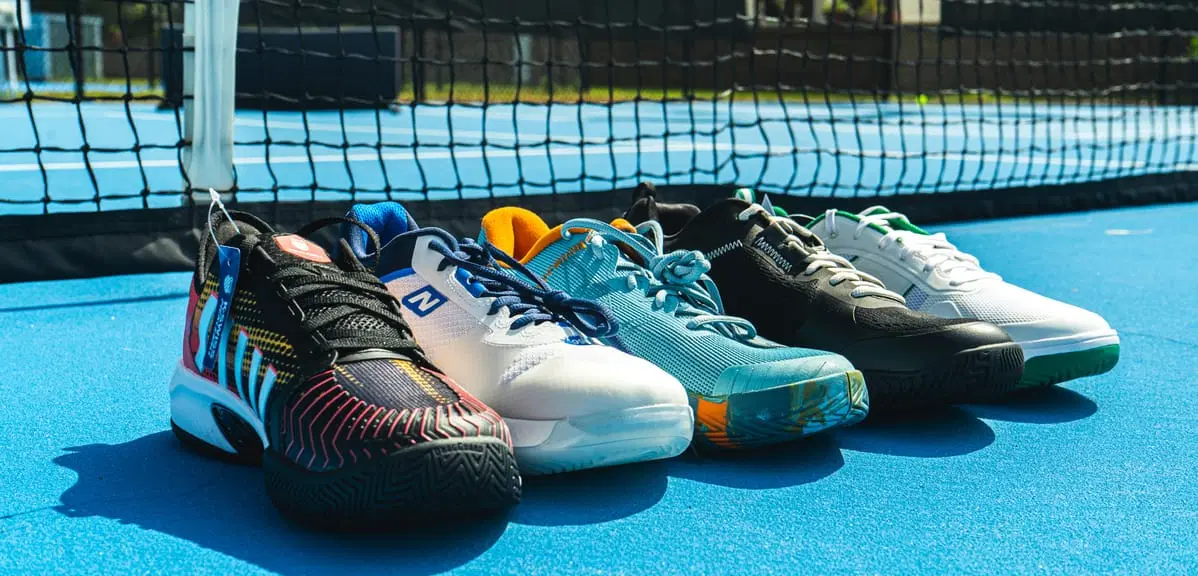
Footwork is a crucial part of pickleball, and wearing the right shoes can significantly improve performance while reducing the risk of injuries. Many players make the mistake of using running shoes, but they are designed for forward motion. Pickleball involves quick lateral movements, pivots, and sudden stops, so using running shoes can increase the chances of ankle strain or slips.
Instead, look for shoes with non-marking rubber soles, strong lateral support, good grip, and proper cushioning for shock absorption. Tennis shoes or other court shoes, such as volleyball or badminton shoes, are the best options, as they provide the stability and durability needed for pickleball courts.
Other Pickleball Apparels
While paddles, balls, and shoes are essential, the right apparel also plays an important role in comfort and performance during a game. Wearing breathable and functional clothing helps improve mobility and keeps you comfortable, especially during long matches.
- Moisture-wicking T-shirts to keep sweat away and improve comfort
- Breathable shorts or skirts for better mobility
- Lightweight sportswear that allows free movement
- Caps or visors for outdoor play to protect from the sunlight
- Sunglasses to improve visibility in bright conditions
- Wristbands and headbands to manage sweat during long games
How to Choose the Right Pickleball Equipment
- Start with a midweight composite paddle for a balance of power and control
- Choose paddle weight based on your playing style. Lighter paddles offer control, heavier paddles provide power
- Always select the correct grip size to improve control and avoid injuries
- Match your ball type to your playing surface. Use outdoor balls for outdoor courts and indoor balls for indoor play
- Invest in proper court shoes with good lateral support instead of running shoes
- Keep your setup simple and budget-friendly as a beginner
- Prioritise durability if you play frequently
- Try the equipment before buying whenever possible
- Upgrade gradually as you understand your playing style
Conclusion
Choosing the right pickleball equipment is essential for improving your performance, comfort, and overall experience on the court. From selecting the right paddle weight and grip size to using the correct ball type and proper court shoes, every decision plays a role in how effectively you play. Beginners should focus on a simple, balanced setup, while experienced players can upgrade based on their playing style and needs.
And once you have your gear sorted, the next step is finding the right place and people to play with. That’s where Playo comes in. Whether you want to book nearby pickleball courts, find playpals, or join a growing sports community, Playo makes it easier to get on the court and stay consistent with your game.
Download Playo on Android or iOS, or visit playo.co to start playing!
Frequently Asked Questions
To play pickleball, you need a paddle, a perforated plastic ball, a net, and a court. In addition, proper court shoes and comfortable sportswear are recommended for better movement and safety.
Choosing pickleball equipment depends on your skill level and playing style. Beginners should start with a midweight paddle that offers a balance of power and control, select the correct grip size for comfort, and use balls suited to their playing surface. Trying different paddles and focusing on comfort and durability also helps in making the right choice.
Regular sneakers or running shoes are not recommended for pickleball. They are designed for forward movement, while pickleball requires quick lateral movements. Court shoes provide better side support, grip, and stability, reducing the risk of injuries.
Neither is universally better, it depends on your playing style. A 14mm paddle is thinner and offers more power and faster response, making it suitable for aggressive players. A 16mm paddle is thicker and provides better control, a softer feel, and a larger sweet spot, which is ideal for beginners or control-focused players.
Pickleball requires court shoes such as tennis, badminton, or volleyball shoes. These shoes offer non-marking soles, strong lateral support, and good traction, which are essential for quick movements and injury prevention on the court.
There are two main types of pickleballs: indoor and outdoor balls. Indoor balls have larger holes and are softer for controlled play, while outdoor balls are harder with smaller holes to handle wind and rough surfaces.