

The offside rule in football stops players from staying too close to the opponent’s goal and waiting for an easy pass. A player is considered offside if they are ahead of the second-last defender at the moment their teammate passes the ball. This keeps the game fair, prevents goal-hanging, and encourages good timing and teamwork.
Even though the idea is simple, the offside rule has existed since the early football laws of 1863 and still confuses many people today. The referee often stops the game because someone has moved into an offside position, which can feel random if you do not fully understand the rule. During fast play, it becomes even harder to judge, which is why referees and sometimes VAR step in to review close calls. In this article, we will break down the rule and its pros and cons in the simplest way possible.
How the Offside Rule Works in Football
The offside football rule (or Law 11 of Football) is a fundamental rule that greatly influences how the game unfolds. It is also one of the most debated rules in football, often tricky even for seasoned fans. Simply put, a player is considered offside if they are too close to the opponent’s goal when the ball is passed to them. There are two conditions applicable here:
- The goal line is closer to the player than the ball
- The player is closer to the goal line than the second-last defender
However, there are exceptions. The offside in football rule will not apply if:
- The player is in their own half of the field
- The player is on the same line as the second-last defender or the two remaining opponents
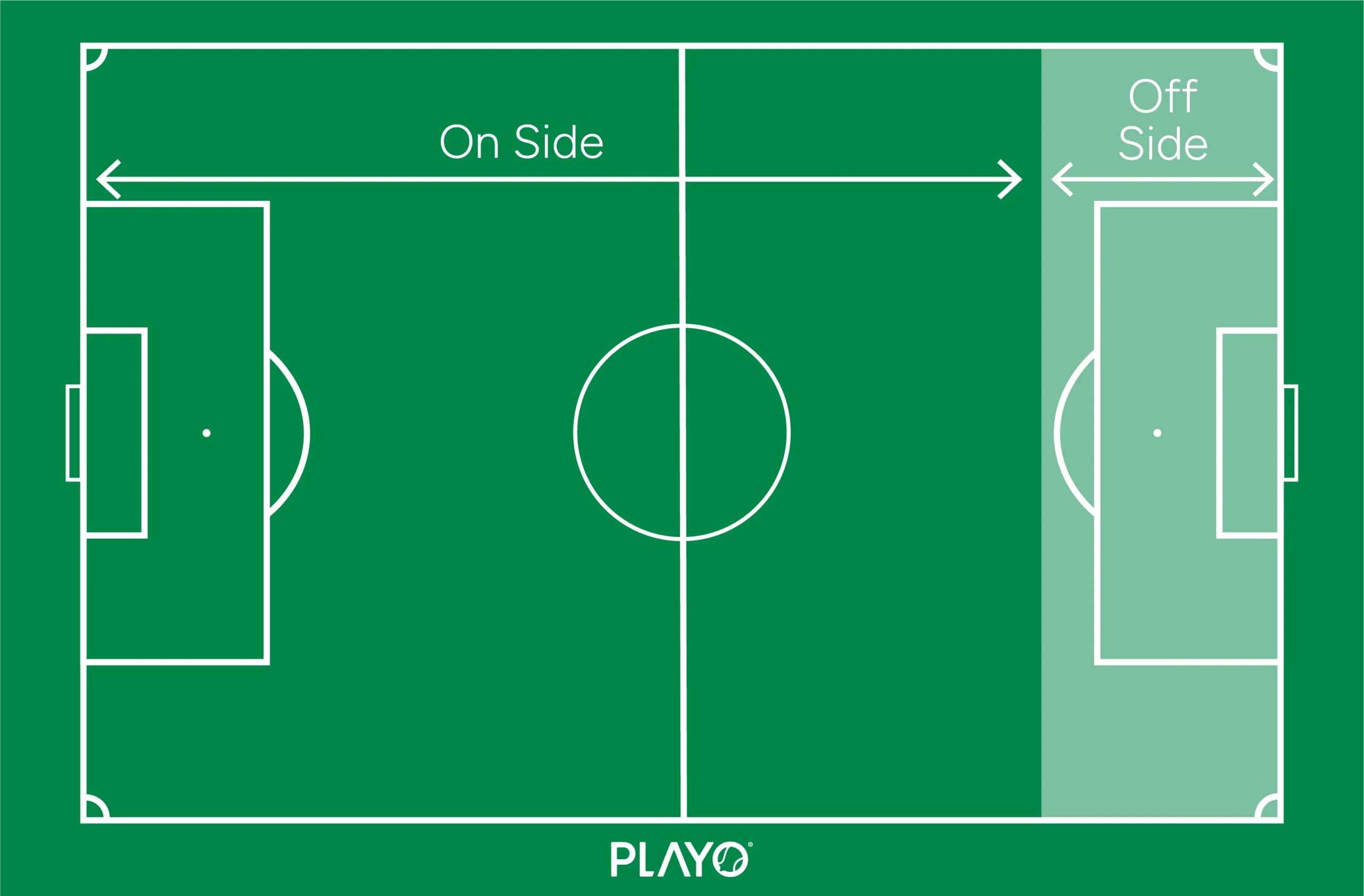
This was a simple explanation of the offside position. It’s important to note that being in an offside position alone is not an offence. According to the FIFA offside rule, a player is penalised only when they are involved in active play. A player is considered actively involved when:
- They are involved in play: touching or playing a ball passed by a teammate
- They interfere with the opponent: obstructing vision, challenging for the ball, or affecting their ability to play
- They gain an advantage: playing a ball that rebounds off goalposts, defenders, referees, etc.
Also, a player cannot commit an offside offence if they directly receive the ball from a goal kick, corner kick, or throw-in.
As you can see, the offside rule football concept is more complex than it appears. Even elite referees sometimes get it wrong. This raises questions: Is the offside rule in football essential? What truly happens after an offside offence? Let’s break it down.
Read More: 17 Rules of Football
What happens when someone breaks the football offside rule?
When the offside rule is broken, the opposing team is awarded an indirect free kick from the spot where the offside player got involved. Even if this spot lies in the offender’s half, the opponent still receives the free kick there. The ball must touch another player before a goal can be scored.
Pros and Cons of the Offside Rule in Football
The offside rule affects football in several ways, shaping how teams attack, defend, and use space on the field. The table below highlights the main pros and cons of this rule to help you understand its overall impact on the game.
| Aspect | Pros of the Offside Rule | Cons of the Offside Rule |
| Game Flow | Encourages tactical play and positional discipline | Frequent stoppages disrupt the natural flow of the game |
| Fairness | Prevents cherry-picking and unfair advantage near the opponent’s goal | It can lead to controversial and frustrating decisions, even with VAR |
| Strategy | Helps defenders push up and maintain defensive shape | Makes it harder for attackers to time runs and exploit space |
| Technology | VAR reduces human error and increases decision accuracy | Tight offside calls still cause confusion and debate among fans and players |
| Entertainment | Adds drama and excitement to close matches | May reduce scoring opportunities and spontaneity in attack |
What is VAR? How does it help with the offside rule?
During a match, linesmen watch for offside in football and raise their flag when they spot an offence. But detecting tiny margins in offside line situations is challenging. This is where VAR (Video Assistant Referee) helps refine decisions.
VAR acts as a video-review support system. When a suspicious move occurs, VAR reviews footage to determine how offside works in football. If the player was actually onside, the goal stands. If the player was clearly beyond the defender, the goal is disallowed.
With updates like the new FIFA offside rule, and ongoing discussions around the new offside rule in football, VAR continues to play an important role in reducing errors.
Is the offside rule spoiling the spirit of the sport?
Football is meant to be entertaining, but many believe the rule of offside in football sometimes disrupts the flow. Marco van Basten, FIFA’s technical director, has openly questioned whether modern football would be more fluid without the constant offside football rule stopping the play.
The rule helps defenders push forward, but it makes life difficult for strikers who frequently get caught by the offside line. The frequent stoppages, especially due to tight calls, often frustrate spectators and players. Even with technology, misunderstandings remain, especially regarding what is an offside in football during close calls.
Without Law 11, the game would change drastically. There would be more scoring opportunities, fewer disputes, and more free-flowing play. But if the rule remains, consistent video assistance ensures fairness across decisions.
Conclusion
The offside rule in football is designed to keep the game fair and balanced. It encourages players to time their runs properly and work together instead of waiting near the goal for an easy chance. Even though the rule is straightforward in theory, real matches move quickly, which makes offside calls confusing and sometimes controversial. This is why referees and VAR play an important role in reviewing close situations.
Download Playo on Android or iOS, or visit playo.co to start playing!
Frequently Asked Questions
The new offside rule being tested by FIFA says that an attacker will be onside if any part of their body that can legally score a goal is in line with the second-last defender. This change aims to give attackers more benefit and reduce very tight offside calls.
A player is offside if they are closer to the opponent’s goal than both the ball and the second-last defender at the moment their teammate passes the ball, and they are involved in active play.
Players can beat the offside rule by timing their runs correctly, staying level with the second-last defender, watching the passer closely, and using diagonal or delayed runs to stay onside until the ball is played.
Referees and assistant referees watch the exact moment the ball is played and the positions of the attackers and defenders. They use their line of sight to judge alignment, and VAR can review the incident if it leads to a goal or a major chance.
Yes. VAR only advises the referee. The final decision always belongs to the on-field referee, who can accept or reject the VAR recommendation after reviewing the footage.
Offside cannot be given when a player receives the ball directly from:
1. A goal kick
2. A throw-in
3. A corner kick