

If you’ve been hearing more people talk about pickleball lately, you’re not alone. What started as a simple backyard game in the United States has transformed into one of the world’s fastest-growing sports. From community parks and schools to dedicated pickleball clubs, the game has attracted millions of players of all ages thanks to its easy-to-learn nature and social appeal. In the United States alone, an estimated 24.3 million people played pickleball in 2025, highlighting its remarkable growth in recent years.
But what exactly is pickleball, and why has it become such a global phenomenon?
Whether you’re a complete beginner or simply curious about the sport, this guide explains everything you need to know, from its fascinating history and unique name to its rules, equipment, and growing popularity. By the end, you’ll understand why so many people are picking up a paddle and joining the pickleball community.
Understanding Pickleball
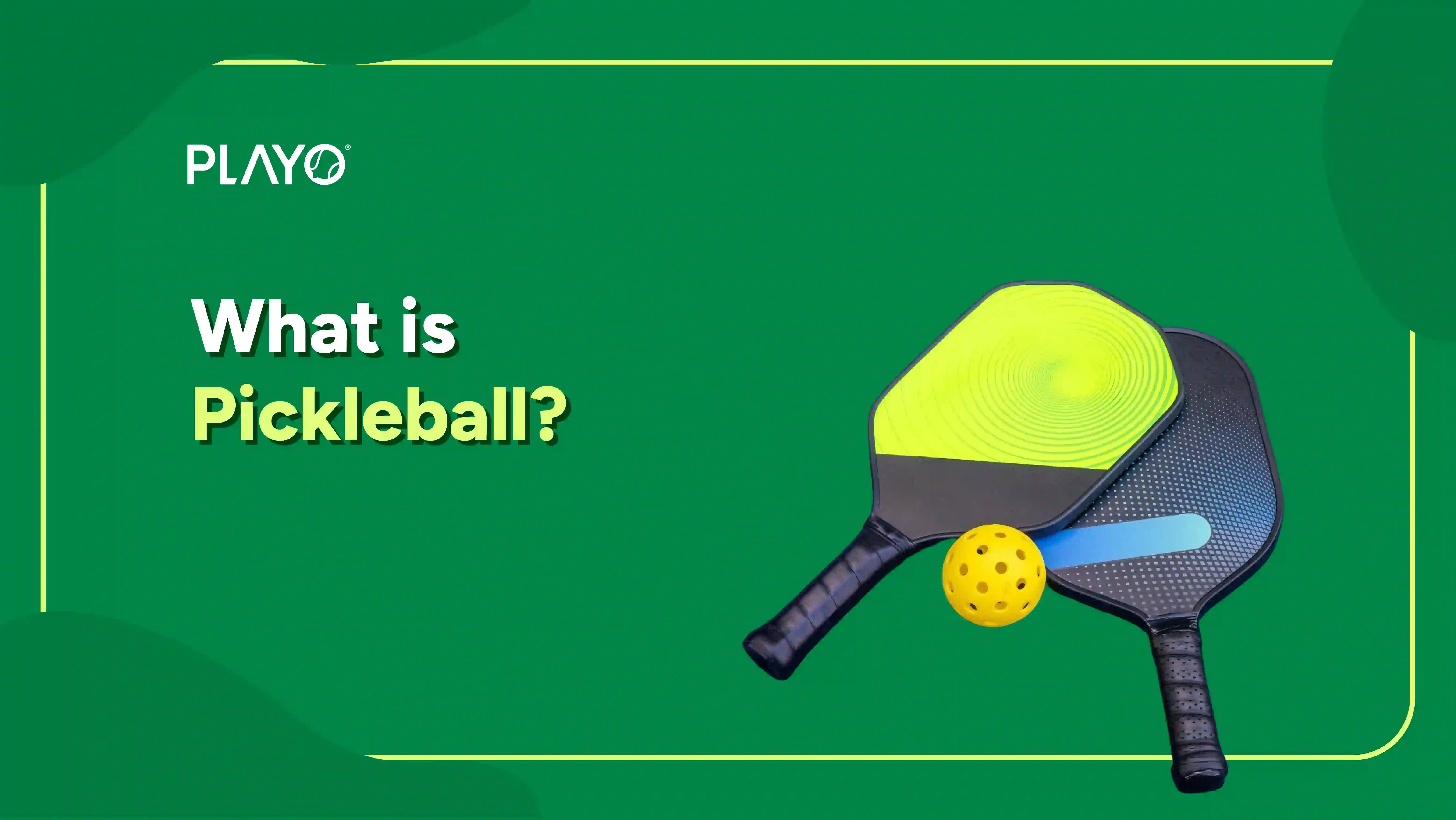
Pickleball is a paddle sport that combines elements of tennis, badminton, and table tennis. It is played using a solid paddle and a lightweight, perforated plastic ball over a low net. The game can be played as singles (one player on each side) or doubles (two players on each side), with doubles being the most popular format.
Unlike tennis, pickleball is played on a smaller court, making it easier to cover and less physically demanding. At the same time, it offers fast-paced rallies, strategic shot placement, and plenty of opportunities for friendly competition.
Its biggest advantage is accessibility. Most beginners can learn the basics within a single session, while experienced players continue to enjoy the tactical depth the game offers. This balance between simplicity and strategy is one of the biggest reasons pickleball appeals to players across different age groups.
Pickleball at a Glance
| Feature | Details |
| Invented | 1965 |
| Origin | Bainbridge Island, Washington, USA |
| Players | Singles or Doubles |
| Equipment | Paddle, perforated plastic ball, net |
| Court | Same dimensions as a badminton doubles court |
| Played | Indoors and outdoors |
The Origin of Pickleball
Pickleball was invented in the summer of 1965 on Bainbridge Island, Washington, by three friends: Joel Pritchard, Bill Bell, and Barney McCallum. The story goes that after returning home from a round of golf, Pritchard and Bell found their families looking for something fun to do. With an old badminton court in the backyard but not enough badminton rackets, they improvised using wooden paddles and a perforated plastic ball.
Over the following days and weeks, the trio refined the rules to create a game that was easy to learn, enjoyable, and suitable for players of all ages. Their goal was simple: to develop a sport the whole family could play together. Just two years later, in 1967, the first permanent pickleball court was built, marking an important milestone in the sport’s early development.
What started as a backyard pastime soon spread through neighbourhoods, schools, and recreation centres before evolving into an organised sport. Today, pickleball is played around the world, with national and international governing bodies promoting the game through tournaments, coaching programmes, and grassroots initiatives.
Read More: Pickleball Rules
Why is it Called Pickleball?
The unusual name has sparked curiosity ever since the sport was created, and two popular stories attempt to explain its origin.
The “Pickle Boat” Theory
The most widely accepted explanation comes from Joan Pritchard, the wife of inventor Joel Pritchard. She reportedly named the game after the “pickle boat” in rowing, a crew made up of leftover rowers from different teams. Since pickleball borrowed ideas from several sports, including tennis, badminton, and table tennis, the comparison seemed fitting.
The “Pickles the Dog” Story
Another popular story claims the game was named after the Pritchard family’s dog, Pickles, who loved chasing after the ball during games.
While this tale is widely shared, historical accounts indicate that the dog actually joined the family after the game had already been named. As a result, the “pickle boat” explanation is generally considered the more accurate origin.
Different Formats of Pickleball
Pickleball is played in three main formats: singles, doubles, and mixed doubles. While the court size, net height, and scoring rules remain the same, the way the game is played differs significantly in terms of player movement, strategy, and teamwork.
Singles
Singles features one player on each side of the court, meaning each player must cover the entire playing area alone. As a result, singles involves more running, quicker recovery between shots, and greater emphasis on fitness. Players typically hit deeper shots to move their opponent around the court and create open spaces. Singles is often faster-paced and more physically demanding than doubles.
Doubles
Doubles is played with two players on each side and is the most common format in pickleball. Since the court is shared, players cover less ground individually, making the game less physically taxing but far more strategic. Teams must communicate effectively, decide who takes shots down the middle, and work together to control the non-volley zone (kitchen). At higher levels, doubles places a greater emphasis on soft shots like dinks, resets, and third-shot drops rather than power.
Mixed Doubles
Mixed doubles follows the same rules as doubles, with each team consisting of one male and one female player. The format is popular in recreational play and is a standard event in competitive tournaments. While the rules don’t change, strategy often does. Teams focus on positioning, shot selection, and creating balanced court coverage based on each player’s strengths. Success in mixed doubles depends heavily on teamwork, communication, and tactical decision-making rather than individual athleticism alone.
Where is Pickleball Played?
One of the reasons pickleball has spread so quickly is its flexibility. The sport can be played on both indoor and outdoor courts, depending on the available facilities and weather conditions.
A standard pickleball court measures 20 feet (6.1 m) wide and 44 feet (13.4 m) long, the same dimensions as a badminton doubles court. The net stands 36 inches (91.4 cm) high at the sidelines and 34 inches (86.4 cm) at the centre. This compact court size makes pickleball easier to learn and less physically demanding than many other racket sports.
Many communities have dedicated pickleball courts, while others convert existing badminton or tennis courts using temporary lines and portable nets. Schools, sports clubs, recreation centres, parks, and residential communities are also increasingly adding pickleball facilities to meet the growing demand for the sport.
Basic Equipment Used in Pickleball
Getting started with pickleball doesn’t require expensive equipment. Here’s what you’ll need:
- Pickleball Paddle: Unlike a tennis racket, a pickleball paddle has a solid hitting surface and is typically made from composite materials, graphite, or wood.
- Pickleball Ball: The game uses a lightweight plastic ball with evenly spaced holes. Different balls are designed for indoor and outdoor play.
- Court Shoes: Comfortable court shoes with good grip and lateral support help improve movement and reduce the risk of injury.
If you’re planning to play regularly, it’s worth investing in quality beginner-friendly equipment. For a detailed breakdown of paddles, balls, serving techniques, and essential gear, check out our How to Play Pickleball guide.
Pickleball vs Tennis vs Badminton vs Padel
At first glance, pickleball may look like a mix of tennis, badminton, and table tennis. While it borrows elements from all three sports, it has its own unique rules, equipment, and style of play. Here’s how it compares.
Pickleball vs Tennis
Pickleball and tennis share many similarities, including a net, serves, rallies, and a point-based scoring system. However, pickleball is played on a much smaller court, about one-fourth the size of a tennis court, making it easier to cover and less physically demanding.
Instead of strung rackets, players use solid paddles, and the lightweight plastic ball travels slower than a tennis ball. This creates longer rallies that rely more on precision, placement, and strategy than on powerful shots. Another unique feature is the non-volley zone, commonly known as the kitchen, which prevents players from smashing the ball right at the net and encourages more tactical gameplay.
Pickleball vs Badminton
One of the biggest similarities between pickleball and badminton is the court size. A pickleball court has the same dimensions as a standard badminton doubles court, making it easy to convert existing badminton courts for pickleball.
The gameplay, however, is quite different. Badminton uses a shuttlecock that can travel at extremely high speeds, while pickleball uses a perforated plastic ball that moves more slowly and predictably. Players also use solid paddles instead of lightweight rackets, resulting in longer rallies and a greater emphasis on consistency and ball placement.
Pickleball vs Padel
Although both are paddle sports, pickleball and padel are quite different. Pickleball is played on an open 20 ft × 44 ft court using a perforated plastic ball, while padel is played on a larger enclosed court surrounded by glass walls and metal fencing, where players can use the walls during rallies.
The equipment also differs. Pickleball uses a lightweight plastic ball and a solid paddle, whereas padel uses a low-pressure ball similar to a tennis ball and a perforated paddle with no strings. Pickleball features a non-volley zone, known as the kitchen, which is not present in padel. As a result, pickleball focuses more on placement and soft shots, while padel involves faster rallies, wall rebounds, and continuous movement.
Health Benefits of Playing Pickleball
Pickleball isn’t just an enjoyable pastime; it’s also an excellent way to improve your physical and mental well-being. Because the game combines movement, coordination, and social interaction, it offers a wide range of health benefits for players of all ages.
1. Improves Cardiovascular Fitness: Even though pickleball is played on a smaller court than tennis, it still keeps players moving throughout a match. Regular play helps elevate your heart rate, improve endurance, and support overall cardiovascular health.
2. Enhances Balance and Coordination: The sport requires quick reactions, controlled footwork, and accurate paddle control. Over time, these movements improve hand-eye coordination, balance, and agility. These skills are particularly beneficial for older adults, helping them stay active and maintain mobility.
3. Supports Mental Well-being: Physical activity is known to reduce stress and boost mood, and pickleball is no exception. Playing regularly can help improve focus, reduce anxiety, and promote the release of endorphins, often called the body’s “feel-good” hormones.
4. Builds Friendships and Community: One of pickleball’s greatest strengths is its welcoming community. Recreational games, local leagues, and club events provide opportunities to meet new people and stay socially connected. This sense of belonging is one of the key reasons many players continue playing the sport for years.
Why is Pickleball So Popular?
Pickleball’s rapid rise isn’t the result of a single factor. Instead, several qualities have made it appealing to beginners, families, and competitive athletes alike.
1. It’s Easy to Learn: Unlike many racket sports that require extensive coaching before players can enjoy a rally, pickleball has a relatively gentle learning curve. New players often feel comfortable within their first session, making it an ideal sport for beginners.
2. It’s Accessible: The smaller court requires less running than tennis, making the game suitable for players with different fitness levels. Equipment is also relatively affordable, and many public parks now offer dedicated pickleball courts or shared facilities.
3. It Brings People Together: One of pickleball’s biggest strengths is its social nature. Doubles is the most common format, encouraging teamwork, communication, and interaction between players. Community leagues, recreational clubs, and open-play sessions make it easy to meet new people while staying active.
4. It’s for Every Generation: Children enjoy the simple gameplay, adults appreciate the competitive challenge, and seniors value the lower-impact movement compared to many other sports. Few sports successfully bring three generations together on the same court, but pickleball does exactly that.
Conclusion
From a family backyard game invented in 1965 to one of the fastest-growing sports in the world, pickleball has come a long way. Its simple rules, compact court, and unique blend of tennis, badminton, and table tennis make it an exciting sport that’s easy for beginners to learn yet challenging enough for experienced players to master.
Whether you’re a child picking up a paddle for the first time, an adult looking for a fun way to stay active, or a senior seeking a low-impact sport, pickleball has something to offer everyone. With its emphasis on strategy, fitness, and community, it’s easy to see why millions of people around the world have embraced the game and why its popularity continues to grow every year.
Download Playo on Android or iOS, or visit playo.co to start playing!
Frequently Asked Questions
Pickleball is a paddle sport that combines elements of tennis, badminton, and table tennis. It is believed to be named after the “pickle boat” in rowing, referring to a crew made up of rowers from different teams, reflecting the sport’s mix of different games.
Pickleball is played on a smaller court with solid paddles and a perforated plastic ball, while tennis uses a larger court, strung rackets, and a tennis ball. Pickleball also includes a non-volley zone called the “kitchen.”
Carmel-by-the-Sea, California, became the first city in California to ban pickleball on its public courts due to noise complaints from nearby residents.
No. Pickleball is played on an open court with a plastic ball and a non-volley zone, whereas padel is played on an enclosed court with glass walls using a low-pressure tennis ball.
The golden rule in pickleball is the two-bounce rule. The serve and the return of serve must each bounce once before either team can volley the ball.